









- Amazon Raises Fulfillment Fees Twice, Yet the Median Platform Fee Remains Around 40%Oct 22, 2026View details
- AliExpress and YouTube Partner to Expand Marketing Opportunities for Chinese Brands Going GlobalOct 22, 2026View details
- Publicis says AI marketing is developing at two speeds, with agentic AI helping win clientsOct 21, 2026View details
- Salesforce Plans to Acquire Braze for $5.66 Billion to Enhance AI Marketing CapabilitiesOct 21, 2026View details
- Levanta’s Inaugural China Summit Held in Shenzhen, Focusing on AI and Cross-Border Brand GrowthOct 20, 2026View details
- The October Edition of the 2026 GGE Shenzhen Cross-Border E-Commerce Expo OpensOct 20, 2026View details
Is post-launch maintenance of Eyingbao's foreign trade website system difficult?
After a foreign trade website goes live, whether it becomes “harder and harder to maintain” usually depends on two things: how frequently the company needs to make changes to the site, and which tasks the system leaves to the user. For a SaaS website system for foreign trade scenarios such as Yiyingbao, routine maintenance is generally not difficult. Product updates, multilingual content additions, inquiry form adjustments, and similar tasks can be completed by operations staff. However, if a company understands “maintenance” as continuously carrying out SEO, updating market content, handling advertising landing pages, and optimizing conversions, the difficulty has not disappeared—it has simply shifted from the server and code level to content, processes, and marketing execution.
Therefore, whether the Yiyingbao foreign trade website system is difficult to maintain cannot be judged solely by whether the backend is easy to use. For most manufacturing companies and foreign trade firms without dedicated development teams, a system-based website builder lowers the technical maintenance threshold. For companies hoping to rely on organic search and multiple channels for customer acquisition over the long term, whether maintenance is hassle-free later also depends on whether someone internally is continuously responsible for the website.
First, distinguish between technical maintenance and operational maintenance
When choosing a foreign trade website, many companies worry most about not being able to find someone when something goes wrong, having to contact a developer to change an image, or needing to rebuild pages when adding a language. These are technical maintenance issues. Cloud-based website-building systems usually centralize tasks such as hosting environments, program upgrades, basic security, page components, and backend permissions. Company users mainly edit content within the existing framework.
From this perspective, the maintenance logic of the Yiyingbao foreign trade website system is closer to “using business software” rather than maintaining a self-deployed website program. Daily tasks often include adding products, modifying specifications, replacing images, publishing news, configuring form fields, and supplementing language versions. As long as the backend editing process is clear and the company has sufficient materials prepared, business personnel can usually take on most update work after training.
However, operational maintenance is another matter. Whether English pages match buyers’ reading habits, whether product categories are easy for search engines to crawl, whether multilingual content is merely mechanically translated, and whether inquiries are assigned and followed up promptly are not issues that drag-and-drop website-building tools can solve automatically. A system can lower the execution threshold, but it cannot replace a company’s understanding of the market, products, and customers.

Which companies find maintenance easy, and which find it troublesome
If a company’s product line is relatively stable, the website’s primary purpose is to showcase capabilities and receive inquiries, and only a small number of products and case studies need to be updated each month, ongoing maintenance is usually relatively light. This is especially true for factory-based B2B companies. Once the page structure is defined, the maintenance schedule can gradually progress around new products, trade shows, certification materials, application content, and key markets, without requiring frequent redesigns.
The following types of companies are more likely to feel maintenance pressure:
- Product models, prices, inventory, or marketing campaigns change quickly and information needs to be synchronized frequently;
- They cover multiple country markets simultaneously but lack a clear multilingual content review mechanism;
- They use the official website for Google Ads, social media traffic acquisition, and SEO at the same time, but no one manages landing pages and data;
- They did not organize product information, target customers, and category logic during the initial website-building stage, and keep overturning the page structure later;
- They expect the website to generate stable inquiries, but only update it once during the initial launch period and leave it unmaintained afterward.
These difficulties do not come entirely from the system. Many official websites have high maintenance costs because there is no clear internal ownership: sales believes marketing should update it, marketing lacks product information, and technical staff are responsible only for system permissions. In the end, no one makes decisions even on minor changes. No matter how simple the backend is, the company falls into a cycle of “waiting for materials, waiting for confirmation, and waiting for translation.”
Where do maintenance differences lie compared with custom-developed websites
There are two common approaches to foreign trade websites: one is a SaaS website-building system, and the other is custom development or self-building based on open-source programs. Neither has absolute advantages or disadvantages; their maintenance methods differ.
Companies that choose SaaS systems are usually trading some degree of in-depth customization flexibility for a more standardized maintenance approach. For foreign trade websites aimed at acquiring inquiries with relatively clear requirements, this trade-off is often reasonable. Conversely, if a company requires a complex distributor system, deep integration with its internal ERP, special quotation rules, or highly personalized transaction processes, it cannot use “whether it is easy to maintain later” as the only criterion. It must also assess whether the platform can support critical business operations.
Multilingual content and SEO are often the dividing line in ongoing maintenance
Many companies only begin considering German, French, Spanish, or pages for other markets after launching an English website. Multilingual functionality itself may not be difficult to use; content management is the real challenge: which pages are worth localizing, how product terminology should be standardized, whether the same selling points and calls to action should be retained in different markets, and whether other language versions are updated in sync after old pages are revised.
If Chinese materials are simply translated and published in batches, maintenance may appear fast, but issues such as duplicate pages, inconsistent specifications, and awkward wording can easily arise later. For key markets, a more appropriate approach is to first identify core product pages, industry solution pages, brand capability pages, and inquiry pages, then gradually improve them according to market priority, rather than rolling out a large number of language pages at once that no one maintains.
The same applies to SEO. A website-building system can provide page editing, basic tag configuration, site structure, and content publishing capabilities, but ranking growth depends on continuous topic planning, content quality, product page completeness, external promotion, and page conversion performance. Interpreting “SEO can be done” as “traffic will come automatically after the website is built” is one of the most common misconceptions in foreign trade website maintenance.
Settle these four matters before launch to make later maintenance much easier
First, define the website owner. The person in charge does not necessarily need to know how to code, but should be able to determine page priorities, coordinate product information, and follow up on inquiry paths. Without a clearly responsible person, maintenance work can easily be broken into scattered tasks.
Second, organize a content library that can be continuously updated. This includes product specifications, application images, production capability materials, frequently asked questions, certificate files, video assets, and basic English copy. The efficiency of later updates depends more on whether these source materials are usable than on the location of buttons in the backend.
Third, establish a small but consistent update schedule. Rather than publishing a large number of low-quality pages in a short period, it is more suitable to review key products, forms, broken links, inquiry emails, and target-market content monthly. Companies using advertising should also regularly verify whether advertising landing pages align with actual sales priorities.
Fourth, clarify the boundaries before signing a contract or going live. For example, to what extent existing templates can be modified, how additional functions are handled, who manages the domain name and website data, whether migration is feasible, and which issues technical support covers. Whether maintenance is difficult is often determined by these boundaries as early as the procurement stage.
Whether the Yiyingbao foreign trade website system is difficult to maintain has an answer closer to “technically relatively manageable, but still requiring operational investment.” If a company only needs a stable overseas display and inquiry website that it can update itself, a systemized platform can reduce its reliance on developers. If it expects the official website to continuously generate search traffic, advertising conversions, and customers from multiple markets, it should regard maintenance as a long-term marketing task and reserve clear human resources for content, translation, data review, and lead follow-up.
Related Articles
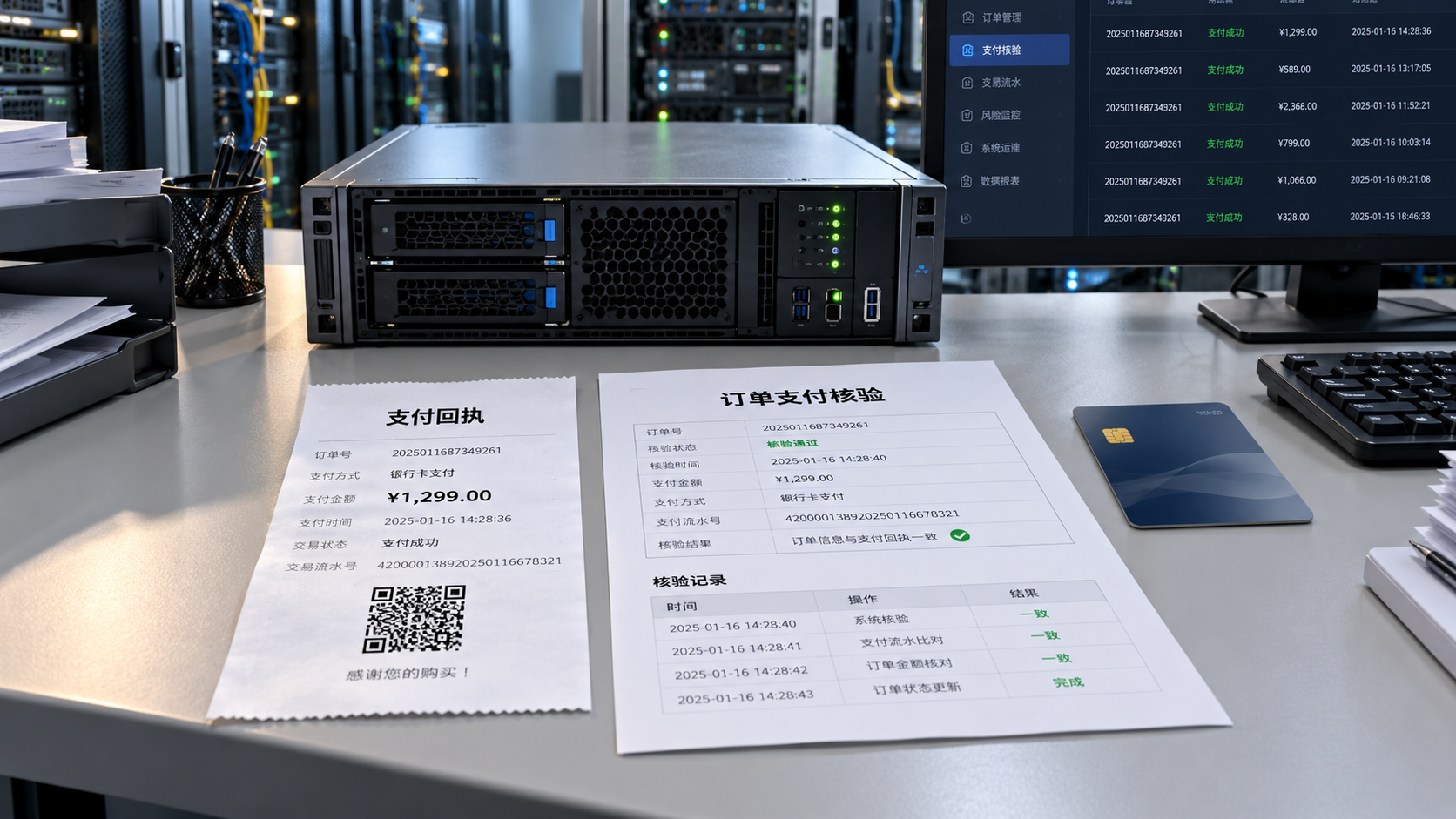
 How can duplicate charges be prevented after integrating payment processing into a cross-border e-commerce store?
 Why Are Website ICP Filings Usually Rejected?
 How to troubleshoot a website that won’t open after setting up a 301 redirect?
Related Products
 Yiyingbao SaaS Intelligent Website Building and Marketing SystemYiyingbao SaaS Intelligent Website Building and Marketing System, AI-powered no-code website building, rapid creation of multilingual B2B international websites in 10 minutes, global server acceleration, AI-powered SEO optimization, helping businesses connect efficiently with global markets. The perfect integration of technology and operation makes building an international trade website remarkably simple
 AI+SEM Intelligent Advertising Marketing SystemAI+SEM drives intelligent ad creation, empowering full-funnel precision advertising marketing. The system automatically generates weekly/monthly reports, AI recommends keywords and target countries, monitors core metrics in real-time with intelligent alerts, and enables one-click high-conversion ad solutions to help quickly acquire customers and improve ROI.
 AI+SEO Dual-Engine System Optimization ServicesYiyingbao’s AI+SEO dual-engine optimization system helps foreign trade enterprises acquire high-quality organic traffic through AI-powered keyword research, content generation, and comprehensive technical optimization, significantly improving search rankings and conversion rates.
 AI+SNS Social Media Marketing SystemYingbao AI+SNS Social Media Marketing System - Precision social capture for the social media era. Supports one-click content synchronization across major platforms like Facebook and LinkedIn. AI intelligently rewrites posts for enhanced relevance. 24/7 AI customer service and user profiling analysis empower businesses to efficiently expand into global markets.
 AI+SEO营销解决方案易营宝AI+SEO营销解决方案,通过AI批量写作、智能生成TDK、精准关键词扩词等功能,全面优化网站SEO效果,提升流量与转化率。助力企业构建高效智能网站新生态。
 AI+SEM Advertising Marketing SolutionsAI+SEM Advertising Marketing Solution leverages AI technology to deeply empower SEM ad campaigns. It automatically generates weekly/monthly reports using AI, presenting account data across multiple dimensions for comprehensive insights into campaign performance and trends. The system precisely recommends keywords and target countries, intelligently generates high-conversion ad copy, and enables one-click activation of efficient campaign plans to help businesses rapidly acquire customers. Simultaneously, it monitors core metrics in real time, intelligently identifies abnormal fluctuations, and issues timely alerts to ensure stable, high-return advertising results.
 Domain Name ServicesEasyWin provides professional domain name services, including intelligent queries, one-stop registration, brand protection, and full lifecycle management, helping businesses build a digital brand image.
 EasyOperate B2C Cross-Border E-Commerce Platform & Independent WebsiteEasyStore B2C Cross-border E-commerce Independent Store is an intelligent website building and cross-border e-commerce integrated solution independently developed by EasyStore Information Technology (Beijing) Co., Ltd. The system is specially designed for small and medium-sized as well as large export enterprises, integrating 'website building, operation, marketing, advertising, and conversion' into one, helping enterprises quickly establish cross-border e-commerce independent stores to achieve brand globalization and global sales growth.
The platform supports multiple languages, multiple currencies, and multi-channel marketing, with built-in AI intelligent translation and SEO optimization systems, suitable for mainstream markets such as Southeast Asia, Europe and America, Latin America, and the Middle East, assisting Chinese manufacturing enterprises in efficiently deploying international e-commerce strategies. SSL证书易营宝提供专业SSL安全证书服务,包括单域名和泛域名证书,确保网站数据传输加密、身份验证和完整性保护,助力企业建立安全可信的在线业务环境。









