









- Amazon Raises Fulfillment Fees Twice, Yet the Median Platform Fee Remains Around 40%Oct 22, 2026View details
- AliExpress and YouTube Partner to Expand Marketing Opportunities for Chinese Brands Going GlobalOct 22, 2026View details
- Publicis says AI marketing is developing at two speeds, with agentic AI helping win clientsOct 21, 2026View details
- Salesforce Plans to Acquire Braze for $5.66 Billion to Enhance AI Marketing CapabilitiesOct 21, 2026View details
- Levanta’s Inaugural China Summit Held in Shenzhen, Focusing on AI and Cross-Border Brand GrowthOct 20, 2026View details
- The October Edition of the 2026 GGE Shenzhen Cross-Border E-Commerce Expo OpensOct 20, 2026View details
What Are Practical SEO Optimization Tips for B2B Export Websites?
Mastering SEO optimization techniques for B2B foreign trade websites is key to helping companies continuously generate qualified overseas inquiries. Unlike consumer-facing traffic websites, B2B purchasing decisions have longer cycles, and visitors often arrive with specific questions: Can a particular specification be customized? Are the required certifications available? What is the minimum order quantity? Can the factory deliver consistently? Whether the website can answer these questions determines whether rankings bring qualified inquiries or merely a large volume of mismatched traffic.
Many companies understand SEO as "publishing more articles and building more backlinks." As a result, after six months, many pages may be indexed, yet inquiries show no significant change. The issue is usually not execution frequency, but that website fundamentals, keyword selection, and content depth have not been developed around the actual purchasing journey. The following methods are more suitable for B2B companies with established product systems that intend to serve overseas markets over the long term.
First, distinguish between keywords with search volume and keywords that attract buyers
The most common mistake in B2B keyword research is focusing only on broad industry terms. Broad keywords such as machinery, packaging, hardware, and electronic components may appear to have substantial search volume, but they may include maintenance personnel, students, industry peers, retail consumers, and even people simply looking for information. For foreign trade websites with limited budgets, these keywords can be included in the strategy, but they should not be the focus of early investment.
Long-tail searches with purchasing intent are more worthwhile to prioritize. These combine product names with materials, specifications, processes, application scenarios, purchasing models, or regional requirements. Expressions such as "customization capability," "bulk supply," "manufacturer," "supplier," and "factory" are generally closer to the inquiry stage than standalone product terms. However, manufacturer should not be mechanically inserted into every page. If a company is actually a trading company, solution integrator, or brand owner, the identity presented on its pages must align with its actual business. Overseas buyers can easily spot inconsistencies through company profiles, delivery-time statements, and qualification materials.
A practical way to assess this is to look directly at the search results page: Are the top-ranking pages product catalogs, factory websites, technical documents, or news and encyclopedia pages? If the results mainly consist of supplier pages, this indicates strong commercial intent. If most results are explanatory content, it is more suitable to address the topic with an article or guide rather than forcing it into a product page.
A product page is not an electronic catalog; its information should help buyers make decisions
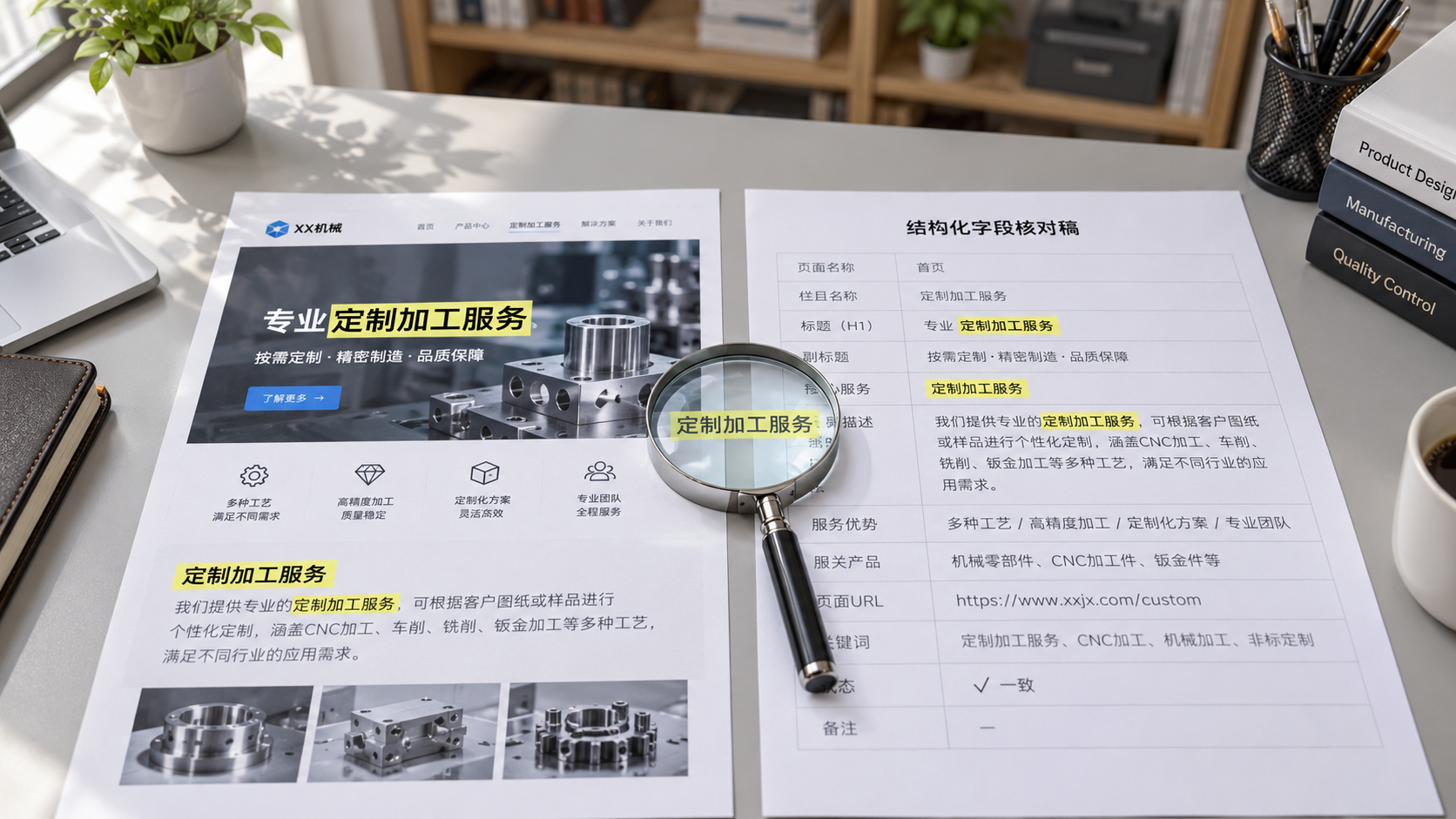
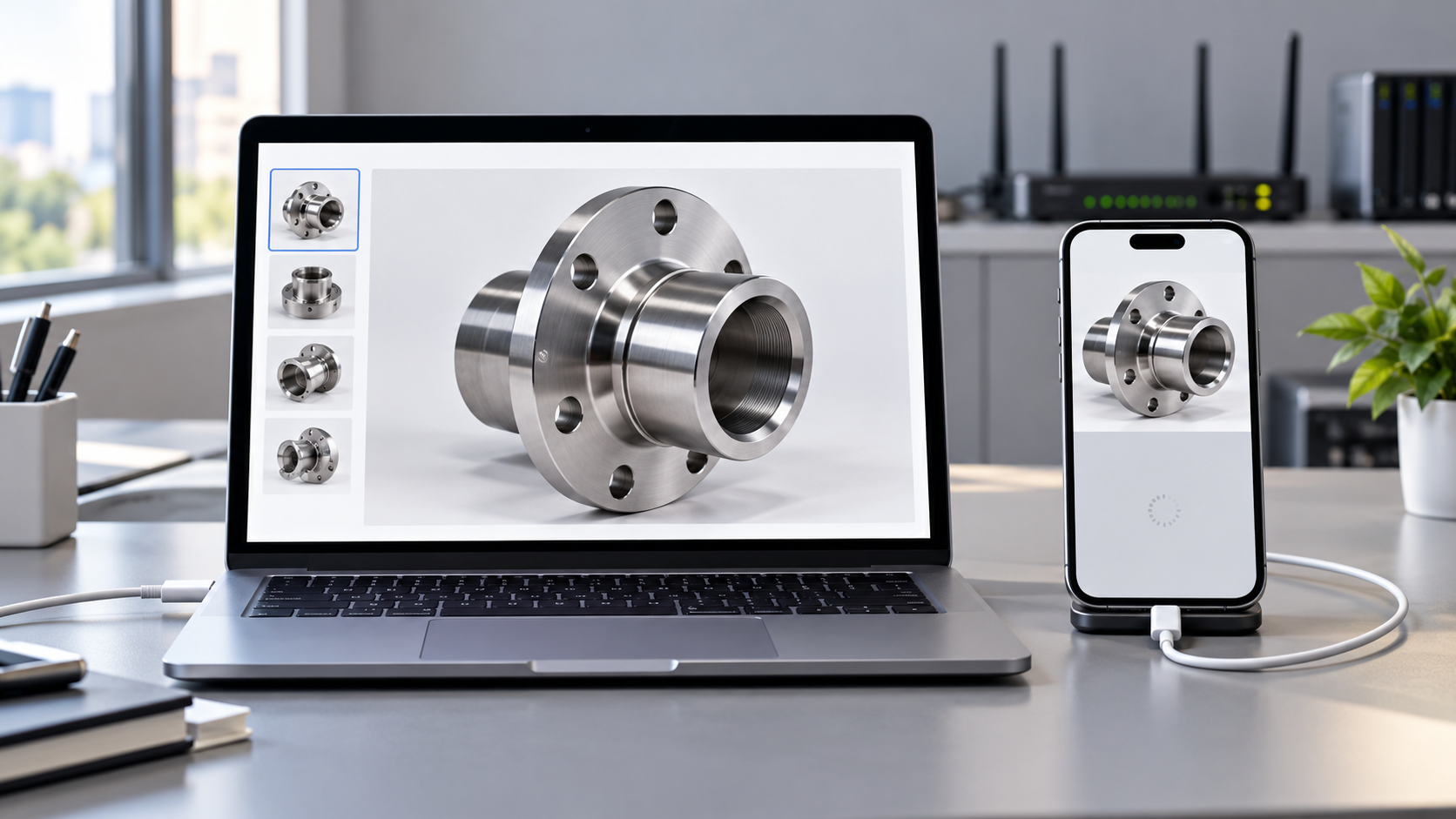
Many foreign trade websites have product pages containing only one image, a few lines of specifications, and "Contact Us." Such pages can display products, but they are unlikely to differentiate themselves in search results or alleviate purchasing concerns. B2B pages do not need to be elaborate, but they should at least clearly explain the product's application scenarios, key materials or processes, available specifications, customizable requirements, and information customers need to provide before making an inquiry.
Specifications should not be presented only as images. Text within images is unfriendly to both search crawling and accessibility reading. Key specifications, model differences, test conditions, and similar information should be presented as readable text or tables whenever possible. For product series with significant parameter differences, it is better to split them into several clearly positioned pages than to pile dozens of models onto one page. The former is more likely to match specific searches and makes it easier for the sales team to identify lead sources afterward.
Pages also need appropriate internal links. Technical articles can direct readers to relevant products, material information, or inquiry pages, while product pages can link to resources on installation, maintenance, and product selection. The value of internal linking is not limited to passing authority; more importantly, it helps buyers gradually move from "understanding" to "comparison" and "contact."

Without a stable technical foundation, more content will only be slowed down
Common technical issues on foreign trade websites are not complex, but they can significantly affect subsequent results: slow page loading, broken mobile layouts, uncanonicalized duplicate URLs, multilingual pages competing with each other, filter pages being indexed in large numbers, or old links becoming invalid immediately after a redesign. Especially for websites with many products, URL rules, category hierarchy, and sitemaps should be planned before launch. The cost of fixing them while operating the site later is high.
Multilingual websites are not simply about translation either. If an English main site and Spanish, German, Japanese, and other versions target different markets, titles, units, delivery information, and frequently asked questions should be adapted to local buyers' language habits. Machine translation can improve the efficiency of first drafts, but product terminology, safety instructions, certification statements, and after-sales commitments should still be reviewed by people familiar with the business. Incorrect translations do not just affect rankings; they directly undermine trust.
For this reason, choosing a website-building system should not be based solely on the number of templates. Companies planning long-term advertising and organic search efforts should pay more attention to whether they can independently edit titles and descriptions, manage redirects, publish structured content, support multiple languages, and conveniently connect analytics tools. A website is marketing infrastructure, not a one-time delivered brochure.
Content development should support sales, not treat a blog as a task
Truly effective B2B content often comes from questions repeatedly asked of sales, technical, and after-sales teams. Which materials do customers frequently compare? Which parameters are most easily missed before quotation? How should products be selected for different operating environments? What risks exist in transportation, installation, and maintenance? These questions are more suitable for a website than generic industry news.
Content does not need to be updated daily. One in-depth page that clearly explains selection logic, product limitations, and common mistakes generally has greater long-term value than ten rewritten news articles. It is important not to exaggerate the scope of application in technical content merely to attract traffic. Unverified performance specifications, certification status, or regulatory requirements should not be presented as absolute commitments. Compliance requirements in different countries and under different application conditions should also remind buyers to refer to documentation for the specific project.
SEO, advertising, and social media should not operate separately
SEO usually requires accumulation to deliver results, while advertising is suitable for quickly testing markets and keywords. In actual operations, companies can first use search ads to observe which product keywords generate qualified inquiries, then expand topics with stable commercial value into product pages, solution pages, and content clusters. Pages performing well in organic search can also serve as optimization references for advertising landing pages. Only by sharing a clear conversion-tracking system can companies determine whether gaps exist between visits, forms, emails, and genuine business opportunities.
The role of social media and short videos is not limited to "gaining followers." For factories and technology-oriented companies, content such as production processes, testing procedures, packaging methods, and team Q&A can provide the sense of authenticity that official websites struggle to convey, then guide visitors back to the relevant product or solution pages. The value of platforms like Yiyingbao, which cover intelligent website building, Google SEO, advertising, overseas social media, and AI search visibility optimization, lies in enabling websites, content, and customer acquisition channels to use relatively consistent data and page systems, rather than dispersing traffic across fragmented tools.
Do not focus only on rankings; first assess whether leads are worth following up
When evaluating SEO optimization for B2B foreign trade websites, keyword rankings are certainly worth monitoring, but the assessment should not stop there. More practical metrics include: which pages consistently gain impressions, which countries visitors come from, what content they viewed before submitting forms, and whether inquiries include clear specifications, purchase quantities, and company information. If traffic increases while the sales team consistently reports inaccurate leads, companies should revisit keyword intent, page commitments, and form qualification fields instead of blindly expanding their article output.
Yiyingbao Information Technology (Beijing) Co., Ltd. has continuously served businesses expanding into overseas markets since 2013. Its AI- and big-data-based website-building and marketing tools are suitable for teams that need to centrally manage multilingual official websites, promotional pages, and overseas customer acquisition channels. However, regardless of the system used, the most important factor remains whether the company itself can continuously provide authentic, clear, and verifiable information. SEO does not end once a website is placed in front of buyers; when buyers click through, whether the website is sufficiently professional and communication is sufficiently smooth ultimately determines whether that search can turn into the next stage of cooperation.
Related Articles
 How can you check whether Schema markup matches the visible page content?
 Why Are Core Web Vitals Still Failing After Website Speed Optimization?
 Why Does Google Indexing Keep Declining After a French Website Is Launched?

Related Products
 Yiyingbao SaaS Intelligent Website Building and Marketing SystemYiyingbao SaaS Intelligent Website Building and Marketing System, AI-powered no-code website building, rapid creation of multilingual B2B international websites in 10 minutes, global server acceleration, AI-powered SEO optimization, helping businesses connect efficiently with global markets. The perfect integration of technology and operation makes building an international trade website remarkably simple
 AI+SEM Intelligent Advertising Marketing SystemAI+SEM drives intelligent ad creation, empowering full-funnel precision advertising marketing. The system automatically generates weekly/monthly reports, AI recommends keywords and target countries, monitors core metrics in real-time with intelligent alerts, and enables one-click high-conversion ad solutions to help quickly acquire customers and improve ROI.
 AI+SEO Dual-Engine System Optimization ServicesYiyingbao’s AI+SEO dual-engine optimization system helps foreign trade enterprises acquire high-quality organic traffic through AI-powered keyword research, content generation, and comprehensive technical optimization, significantly improving search rankings and conversion rates.
 AI+SNS Social Media Marketing SystemYingbao AI+SNS Social Media Marketing System - Precision social capture for the social media era. Supports one-click content synchronization across major platforms like Facebook and LinkedIn. AI intelligently rewrites posts for enhanced relevance. 24/7 AI customer service and user profiling analysis empower businesses to efficiently expand into global markets.
 AI+SEO营销解决方案易营宝AI+SEO营销解决方案,通过AI批量写作、智能生成TDK、精准关键词扩词等功能,全面优化网站SEO效果,提升流量与转化率。助力企业构建高效智能网站新生态。
 AI+SEM Advertising Marketing SolutionsAI+SEM Advertising Marketing Solution leverages AI technology to deeply empower SEM ad campaigns. It automatically generates weekly/monthly reports using AI, presenting account data across multiple dimensions for comprehensive insights into campaign performance and trends. The system precisely recommends keywords and target countries, intelligently generates high-conversion ad copy, and enables one-click activation of efficient campaign plans to help businesses rapidly acquire customers. Simultaneously, it monitors core metrics in real time, intelligently identifies abnormal fluctuations, and issues timely alerts to ensure stable, high-return advertising results.
 Domain Name ServicesEasyWin provides professional domain name services, including intelligent queries, one-stop registration, brand protection, and full lifecycle management, helping businesses build a digital brand image.
 EasyOperate B2C Cross-Border E-Commerce Platform & Independent WebsiteEasyStore B2C Cross-border E-commerce Independent Store is an intelligent website building and cross-border e-commerce integrated solution independently developed by EasyStore Information Technology (Beijing) Co., Ltd. The system is specially designed for small and medium-sized as well as large export enterprises, integrating 'website building, operation, marketing, advertising, and conversion' into one, helping enterprises quickly establish cross-border e-commerce independent stores to achieve brand globalization and global sales growth.
The platform supports multiple languages, multiple currencies, and multi-channel marketing, with built-in AI intelligent translation and SEO optimization systems, suitable for mainstream markets such as Southeast Asia, Europe and America, Latin America, and the Middle East, assisting Chinese manufacturing enterprises in efficiently deploying international e-commerce strategies. SSL证书易营宝提供专业SSL安全证书服务,包括单域名和泛域名证书,确保网站数据传输加密、身份验证和完整性保护,助力企业建立安全可信的在线业务环境。









