









- How to Choose Topics for an Industry News Section to Attract More Organic Search TrafficJul 29, 2026View details
- Can Zhejiang foreign trade independent websites still be developed today? Look at changes in traffic and lead generationJul 28, 2026View details
- What New Signals Are Emerging in Enterprise Services SaaS Marketing ReportsJul 27, 2026View details
- What Does a Global Traffic Ecosystem Service Provider Do? What Are the Differences from a Single Advertising AgencyJul 16, 2026View details
- What should you focus on in the latest enterprise SaaS report? From renewal rates and delivery costs to overseas growth opportunitiesJul 12, 2026View details
- What signals are worth paying attention to in a cross-border marketing trend report? B2B companies should look at these 6 signalsJul 11, 2026View details
How to choose a multilingual support solution for foreign trade website development? Translation、CMS and SEO should be considered together
For a multilingual support solution for foreign trade website development, first check whether it is “suitable for long-term operation”
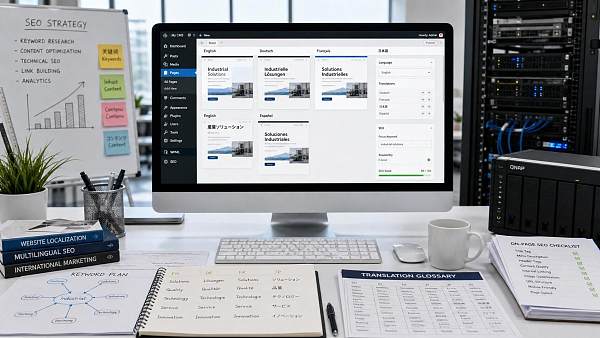
How should you choose a multilingual support solution for foreign trade website development? Many teams initially focus only on translation results, believing that the more languages the better, and that machine translation is faster and more cost-saving. But after the site truly enters the launch and promotion stage, the issue is often not “whether it can be translated,” but “whether it can be continuously managed, indexed by search engines, and converted steadily.”
The judgment mentioned in the introduction is very important. Technical evaluation should not only look at translation quality, but also consider CMS scalability, URL structure, content management methods, and SEO adaptability at the same time. This is because a multilingual website is not a one-time delivery, but a long-term operation system.
From an actual business perspective, multilingual support solutions for foreign trade website development usually fall into three paths: only implementing front-end translation switching, managing multilingual content based on a CMS, and building a full-site multilingual solution with SEO rules. The first two can be launched quickly, but they bring many follow-up issues; the third requires more detailed early-stage evaluation, but is more suitable for companies that truly want to acquire overseas customers.
Do not rush to choose a translation method; first confirm the website goals
When evaluating a multilingual support solution for foreign trade website development, the first step is not choosing a plugin, nor comparing prices, but clarifying what tasks the website needs to undertake. This is because display-oriented official websites, inquiry-oriented websites, and cross-border e-commerce stores have completely different requirements for multilingual systems.
If the website is mainly used for brand display, language switching can first meet basic readability requirements.
If the core goal is customer acquisition through Google SEO, you must pay attention to independent page indexing.
If the site needs to receive advertising traffic, you also need to look at landing page duplication efficiency and the reusability of conversion components.
This is also why many projects require rework later. In the early stage, multilingual functionality is treated as an interface feature, but later it is discovered that it is actually part of the content architecture, search entry points, and operation workflow. If the website goals are not clearly defined, the multilingual support solution for foreign trade website development can easily be chosen in the wrong direction.
At the translation level, the focus is not speed, but controllability
The most easily overestimated part of a multilingual solution is the translation engine itself. Machine translation, human translation, and AI-assisted translation can all be used, but technical evaluation should focus more on three questions: whether content can be managed by page, whether proofreading can be done by language version, and whether key pages can be optimized separately.
The reason is very practical. Product pages, industry solution pages, landing pages, and blog pages do not require the same translation precision. If the system can only translate the entire website with one click, it will be highly inefficient to later revise terminology, modify titles, or change call-to-action buttons. It may appear to save time on the surface, but in reality it increases operating costs.
A more reliable approach is to divide translation capability into three layers:
- Use AI translation for basic pages to improve launch speed.
- Apply human review to core inquiry pages to ensure accurate expression.
- Localize and rewrite SEO pages instead of translating them literally.
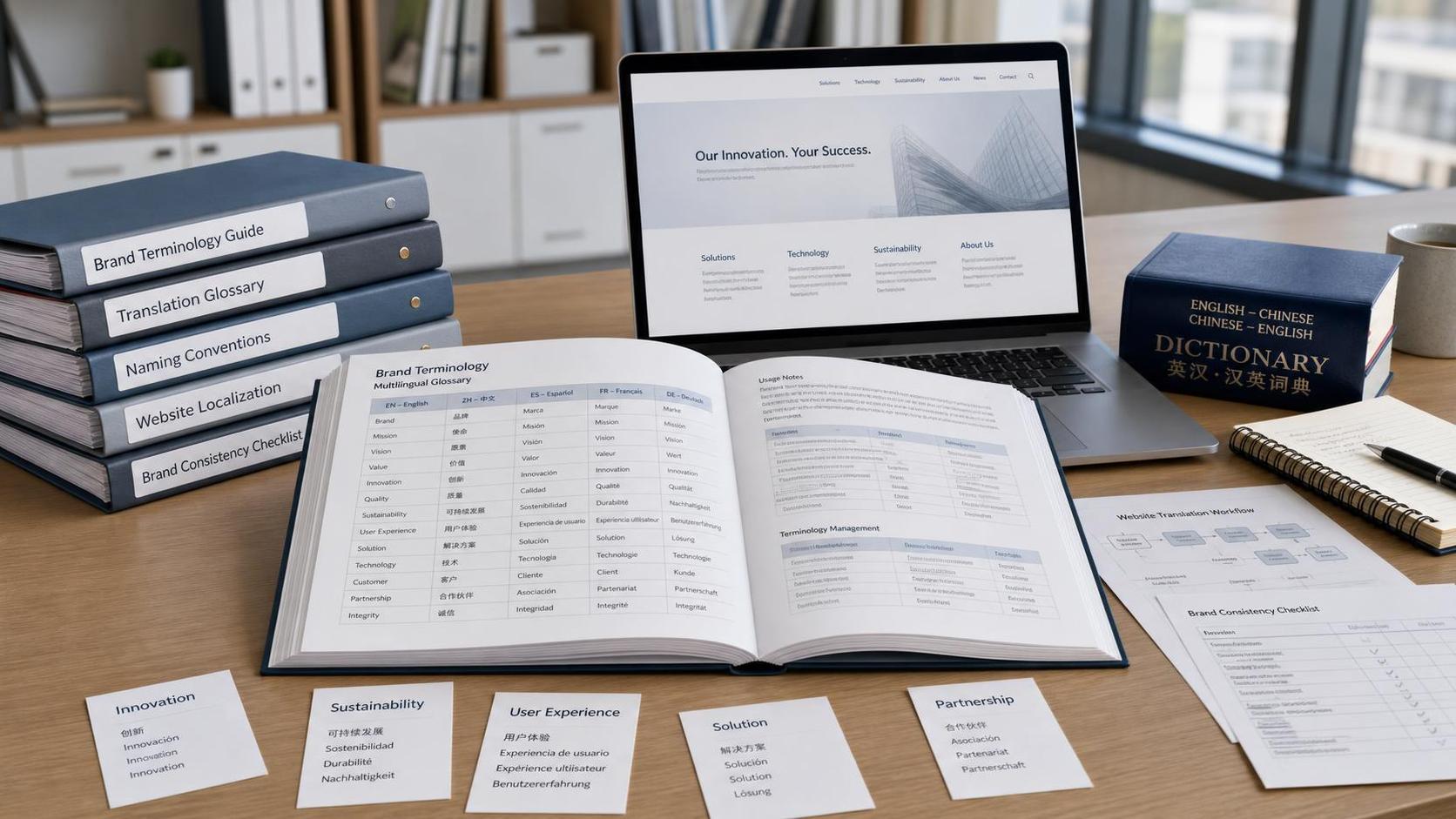
This type of multilingual support solution for foreign trade website development better matches real business rhythms. Cover first, then optimize by layer. This can control costs while preventing later growth from being blocked by content quality issues.
Whether the CMS can properly manage multiple languages determines later-stage efficiency
Many technical evaluations tend to overlook a key point here. A multilingual support solution for foreign trade website development is not only about switching languages on the front end; it also includes whether the back end can stably manage language versions, field mapping, page synchronization, and permission workflows. If the CMS capability is insufficient, once there are more pages later, the site will become difficult to control.
A qualified multilingual CMS should support at least the following items:
- Each language version can independently edit the title, description, and body content.
- The page structure can be reused, but content synchronization is not mandatory.
- Batch addition of languages and batch duplication of pages are supported.
- Multilingual field management is supported for modules such as products, cases, and blogs.
- Editing, review, and publishing permissions can be assigned to different markets.
In actual business, these capabilities are much more important than “whether there is a language plugin.” This is because companies expanding overseas often do not launch only two or three pages; instead, they continuously expand product libraries, market pages, news pages, and advertising pages. Without stable CMS support, any multilingual support solution for foreign trade website development will become slower and slower over time.
URL structure and SEO rules determine whether a multilingual website can be seen
If the website goal includes organic search traffic, then a multilingual support solution for foreign trade website development must put SEO at the front of the evaluation. Many websites have implemented multiple languages, but still never gain overseas rankings. The issue is usually not the content, but that the technical structure has not given search engines clear language signals.
During evaluation, focus on the following items:
- Whether independent language directories, subdomains, or country-site structures are supported.
- Whether each language page can have a separately configured URL.
- Whether hreflang annotations and canonical tags are supported.
- Whether multilingual sitemaps are generated automatically.
- Whether script-based switching that makes pages uncrawlable is avoided.
There is a common misconception here: using front-end scripts to switch one Chinese page into multiple languages may look fine to users, but search engines may only recognize one page. As a result, multilingual content can neither be independently indexed nor easily form keyword rankings in target markets.
Therefore, a multilingual support solution for foreign trade website development that is truly suitable for SEO must give each language version a clear, crawlable, and indexable independent page identity. This is a foundation, not a bonus item.
When selecting a solution, it is recommended to score it across three layers: “deployment, operation, and growth”
To make evaluation more practical, you can break down the multilingual support solution for foreign trade website development into three layers of indicators. This makes it easier to judge long-term value than simply listening to demonstrations and reviewing quotations, and it is also more suitable for technical teams and business teams to align together.
The first layer is deployment capability, focusing on whether launch is fast, language expansion is fast, and redesign costs are low.
The second layer is operation capability, focusing on content management, permission collaboration, page duplication, and translation workflows.
The third layer is growth capability, focusing on SEO, advertising landing pages, data tracking, and conversion support.
Judging from recent changes, more and more companies no longer purchase only “website building tools,” but place greater emphasis on integrated capabilities. The reason is straightforward: websites, SEO, advertising, social media, and AI search visibility have become difficult to separate. A multilingual website is only the entry point; traffic and conversions afterward are the results.
For a website and marketing service integrated platform like 易营宝, the value lies in handling AI intelligent website building, multilingual website construction, SEO optimization, advertising placement, and subsequent operations within the same system. For projects that need to balance efficiency and growth, this type of multilingual support solution for foreign trade website development is more likely to reduce the hidden costs caused by fragmented systems.
The conclusion is clear: choose a solution that can support growth, not one that only translates
Returning to the initial question, how should you choose a multilingual support solution for foreign trade website development? The core evaluation criteria are actually very clear: whether translation is controllable, whether the CMS can support long-term management, whether SEO can achieve independent indexing, and whether subsequent operations can be expanded at low cost.
If the solution can only solve “pages can display multiple languages,” then it is more like a temporary patch. If the solution can simultaneously solve content production, page management, search adaptation, and global promotion, then it truly has business value. For companies aiming to acquire overseas customers, this difference will directly affect growth efficiency over the next several years.
A more reliable approach is to first list the target markets, number of languages, content scale, and customer acquisition methods, and then evaluate them item by item across the three layers of deployment, operation, and growth. Once these issues are clearly understood, choosing a multilingual support solution for foreign trade website development will not be difficult, and repeated rework after launch will be much less likely.
Related Articles
Related Products
 Yiyingbao SaaS Intelligent Website Building and Marketing SystemYiyingbao SaaS Intelligent Website Building and Marketing System, AI-powered no-code website building, rapid creation of multilingual B2B international websites in 10 minutes, global server acceleration, AI-powered SEO optimization, helping businesses connect efficiently with global markets. The perfect integration of technology and operation makes building an international trade website remarkably simple
 AI+SEM Intelligent Advertising Marketing SystemAI+SEM drives intelligent ad creation, empowering full-funnel precision advertising marketing. The system automatically generates weekly/monthly reports, AI recommends keywords and target countries, monitors core metrics in real-time with intelligent alerts, and enables one-click high-conversion ad solutions to help quickly acquire customers and improve ROI.
 AI+SEO Dual-Engine System Optimization ServicesYiyingbao’s AI+SEO dual-engine optimization system helps foreign trade enterprises acquire high-quality organic traffic through AI-powered keyword research, content generation, and comprehensive technical optimization, significantly improving search rankings and conversion rates.
 AI+SNS Social Media Marketing SystemYingbao AI+SNS Social Media Marketing System - Precision social capture for the social media era. Supports one-click content synchronization across major platforms like Facebook and LinkedIn. AI intelligently rewrites posts for enhanced relevance. 24/7 AI customer service and user profiling analysis empower businesses to efficiently expand into global markets.
 AI+SEO营销解决方案易营宝AI+SEO营销解决方案,通过AI批量写作、智能生成TDK、精准关键词扩词等功能,全面优化网站SEO效果,提升流量与转化率。助力企业构建高效智能网站新生态。
 AI+SEM Advertising Marketing SolutionsAI+SEM Advertising Marketing Solution leverages AI technology to deeply empower SEM ad campaigns. It automatically generates weekly/monthly reports using AI, presenting account data across multiple dimensions for comprehensive insights into campaign performance and trends. The system precisely recommends keywords and target countries, intelligently generates high-conversion ad copy, and enables one-click activation of efficient campaign plans to help businesses rapidly acquire customers. Simultaneously, it monitors core metrics in real time, intelligently identifies abnormal fluctuations, and issues timely alerts to ensure stable, high-return advertising results.
 Domain Name ServicesEasyWin provides professional domain name services, including intelligent queries, one-stop registration, brand protection, and full lifecycle management, helping businesses build a digital brand image.
 EasyOperate B2C Cross-Border E-Commerce Platform & Independent WebsiteEasyStore B2C Cross-border E-commerce Independent Store is an intelligent website building and cross-border e-commerce integrated solution independently developed by EasyStore Information Technology (Beijing) Co., Ltd. The system is specially designed for small and medium-sized as well as large export enterprises, integrating 'website building, operation, marketing, advertising, and conversion' into one, helping enterprises quickly establish cross-border e-commerce independent stores to achieve brand globalization and global sales growth.
The platform supports multiple languages, multiple currencies, and multi-channel marketing, with built-in AI intelligent translation and SEO optimization systems, suitable for mainstream markets such as Southeast Asia, Europe and America, Latin America, and the Middle East, assisting Chinese manufacturing enterprises in efficiently deploying international e-commerce strategies. SSL证书易营宝提供专业SSL安全证书服务,包括单域名和泛域名证书,确保网站数据传输加密、身份验证和完整性保护,助力企业建立安全可信的在线业务环境。









