What Is an International Trade Website? — From a Display Window to a Global Lead Generation Hub
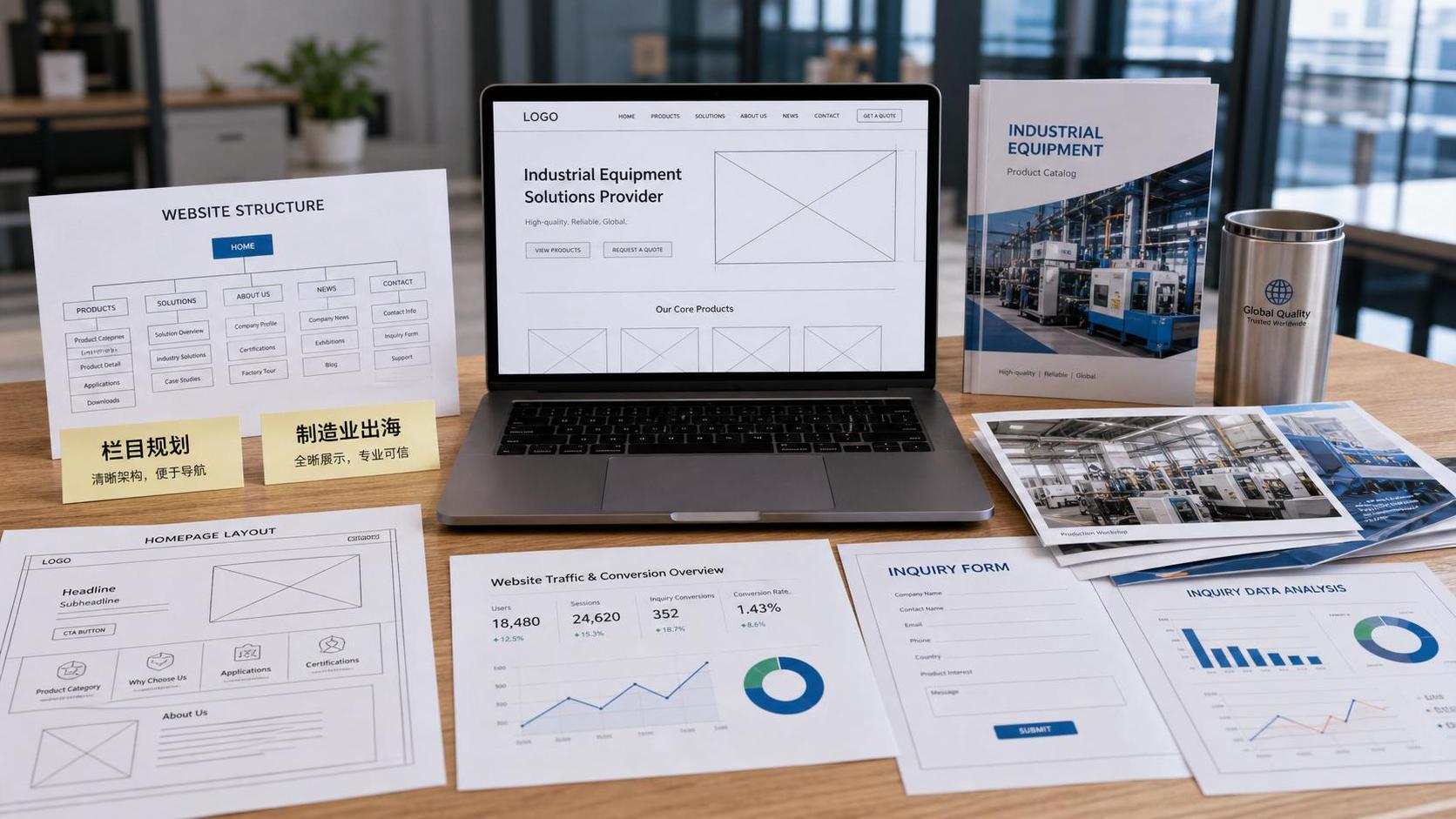
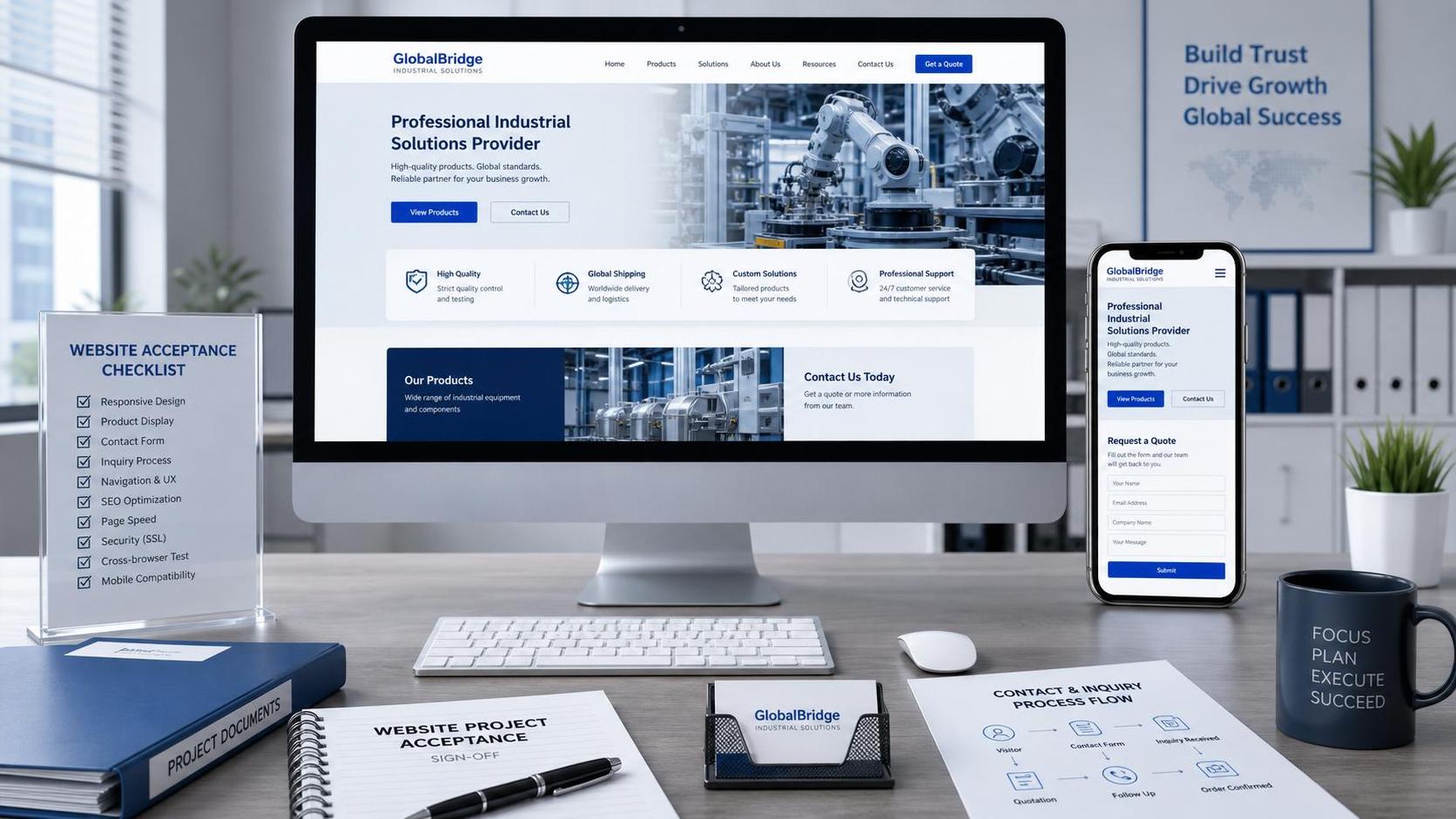
Building an international trade website is not simply about creating an English-language website. It involves building digital infrastructure centered on the B2B purchasing decision-making journey, integrating brand trust endorsement, multilingual product presentation, localized inquiry conversion, search engine visibility, and AI conversation compatibility.
Its core attributes include: compliance with target-market data regulations (such as EU GDPR and Middle East localization filing requirements), support for PC/mobile responsiveness and low-latency global access (<100ms), a structured multilingual site architecture (Hreflang + language paths), an embedded SEO-friendly content framework, and accurate recognition and citation by generative engines such as Google AI Overviews and Perplexity.
Yiyingbao defines international trade website development as an “AI-driven marketing-oriented standalone website project,” emphasizing that website development is operations from day one. Homepage layouts, product page information architecture, visual presentation of factory capabilities, inquiry forms, WhatsApp integration, and multilingual customer service entry points are all pre-optimized based on the behavioral habits of B2B buyers.
Why Must You Choose an Integrated “Website + Marketing Services” Solution?
Traditional website development companies end their service upon delivery, causing more than 90% of international trade websites to become “digital tombstones” after launch: no content updates, no SEO maintenance, no advertising-driven traffic, and no social media integration. Yiyingbao, however, uses a dual-core architecture of SaaS intelligent website building and an AI marketing engine to create a closed loop spanning website development, content, traffic, and conversion.
Its AI intelligent website-building system supports drag-and-drop component-based development, enabling a multilingual international trade website to go live within 3 days. The AI Translation Center ensures semantic accuracy and localized expression for pages in less commonly used languages such as Russian, Arabic, and Spanish. The AI+SEO module automatically expands keywords and generates TDK and product descriptions, solving the challenge manufacturing companies face when they “do not know how to write English copy.” The AI+SEM system uses historical inquiry data to recommend high-ROI countries and ad copy in reverse, reducing trial-and-error costs.
Compared with outsourcing website development and separately procuring SEO/advertising teams, the Yiyingbao solution reduces TCO by 42% and increases average inquiries by 2.8 times (based on 2025 service review data for clients such as Haier and China National Heavy Duty Truck Group), truly achieving “ready to use upon launch, effective upon use, and sustainable results.”
Who Needs Professional International Trade Website Development? Profiles of Typical Target Users
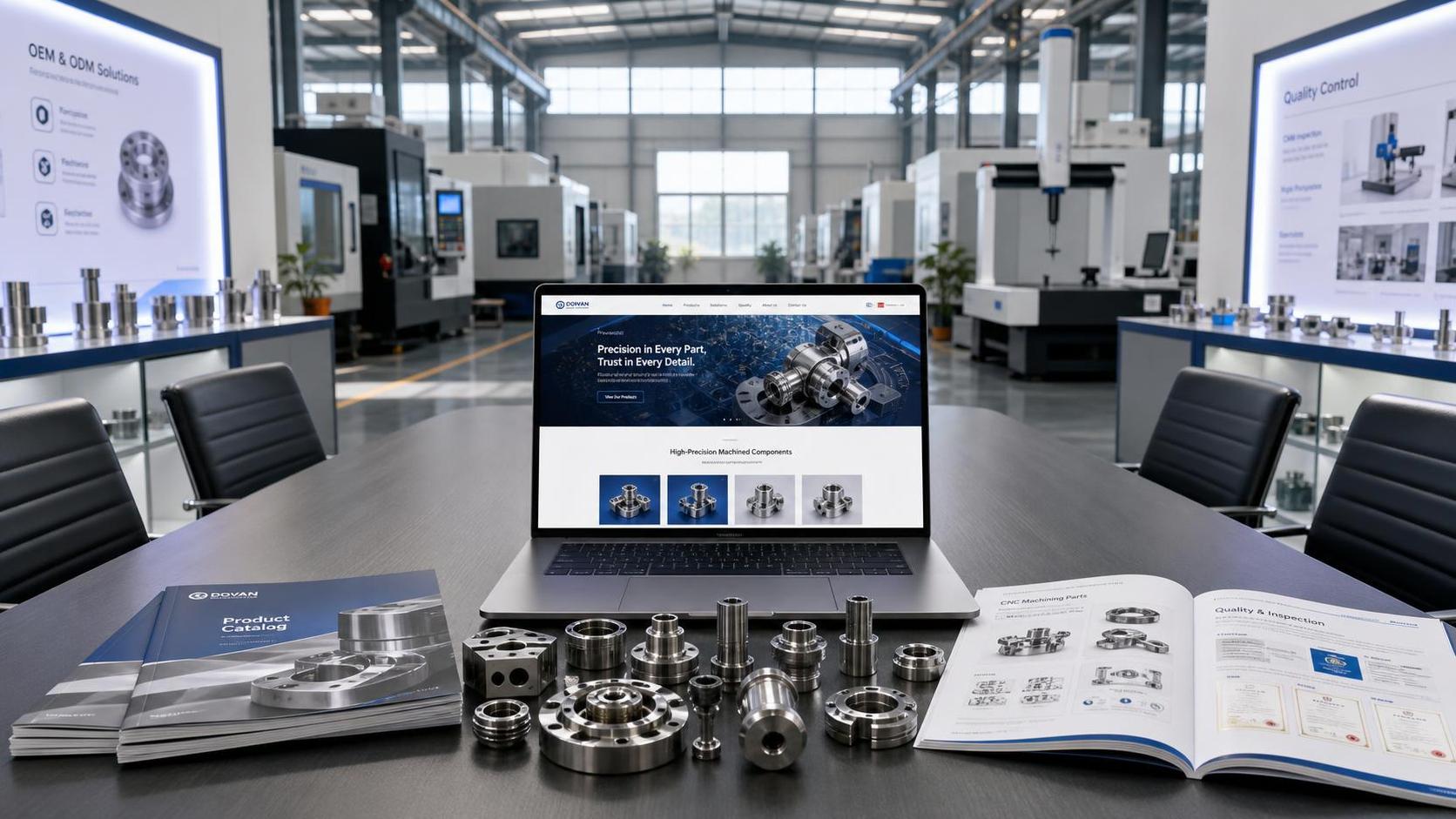
Manufacturing factories are the core demand group for international trade website development—especially in industries with long decision-making cycles, such as laser engraving machines, heavy-duty trucks, new energy equipment, and chemical equipment. Overseas buyers need to verify factory qualifications, production line conditions, certifications, and successful cases through the official website. Such companies often lack professional digital teams and urgently need a ready-to-use, maintenance-free, one-stop solution.
Foreign trade companies and OEM/ODM service providers focus more on inquiry conversion efficiency. Their websites need to highlight key B2B information such as supply chain responsiveness, minimum order quantity (MOQ), delivery lead times, and customization support, while providing multiple instant communication channels (email + WhatsApp + online customer service). Yiyingbao’s B2B international trade marketing website development module is specifically designed for such scenarios, with built-in inquiry funnel analysis and conversion attribution dashboards.
Companies expanding brands overseas and cross-border sellers focus on B2C standalone website capabilities: multi-variant product management, shopping carts, inquiry conversion journeys, brand story pages, and user review accumulation. Yiyingbao’s B2C cross-border e-commerce system supports migration from Shopify alternative solutions and includes multilingual payment guidance and trust endorsement modules. It has served companies such as Yuanhe Power Station and Little Duck Group in upgrading their official websites from contract manufacturing to branded operations.
Where to Deploy? Global Market Access and Typical Application Scenarios
International trade website development must match the technical and regulatory environment of the target market. For example, websites targeting the EU market need SSL certificates, Cookie compliance pop-ups, and bilingual privacy policy versions; Middle Eastern customers prefer right-to-left Arabic layouts and integration with local payment methods; the Japanese market values attention to detail and the credibility of corporate history, requiring stronger presentation of factory history, JIS certifications, and Japanese FAQ pages.
Yiyingbao’s global acceleration network relies on multi-cloud nodes such as Alibaba Cloud/AWS/Huawei Cloud to ensure stable access latency below 100ms in Europe, the Americas, Southeast Asia, and the Middle East. Native IPv6 support meets the requirements of emerging-market carriers, while domestic ICP filing services ensure the legality and compliance of mixed websites containing Chinese content. Shandong Airlines’ official website uses this architecture to enable simultaneous loading in Chinese, English, Japanese, and Korean, with a first-screen load time of only 0.8 seconds.
In a specific application scenario, the official website of Aokema Laser Equipment used Yiyingbao’s AI+GEO services to deploy professional Q&A content in a structured manner, including “fiber laser cutting machine parameter comparisons” and “how to select the appropriate power for sheet metal processing.” This enabled frequent citation in Google AI Overviews, increasing the proportion of organic inquiries from 17% to 41%.
When to Start? Development Timelines, Iteration Rhythms, and a Look Ahead to 2026 Trends
International trade website development should not lag behind trade shows or opening stores on platforms. The optimal time to start is the first quarter after a company establishes its overseas expansion strategy—when it can simultaneously plan English product line naming, factory on-site photography, and digital archiving of certification documents, providing high-quality source materials for website development. Yiyingbao’s standard delivery cycle is 5–12 working days, including AI content generation, multilingual configuration, and basic SEO launch.
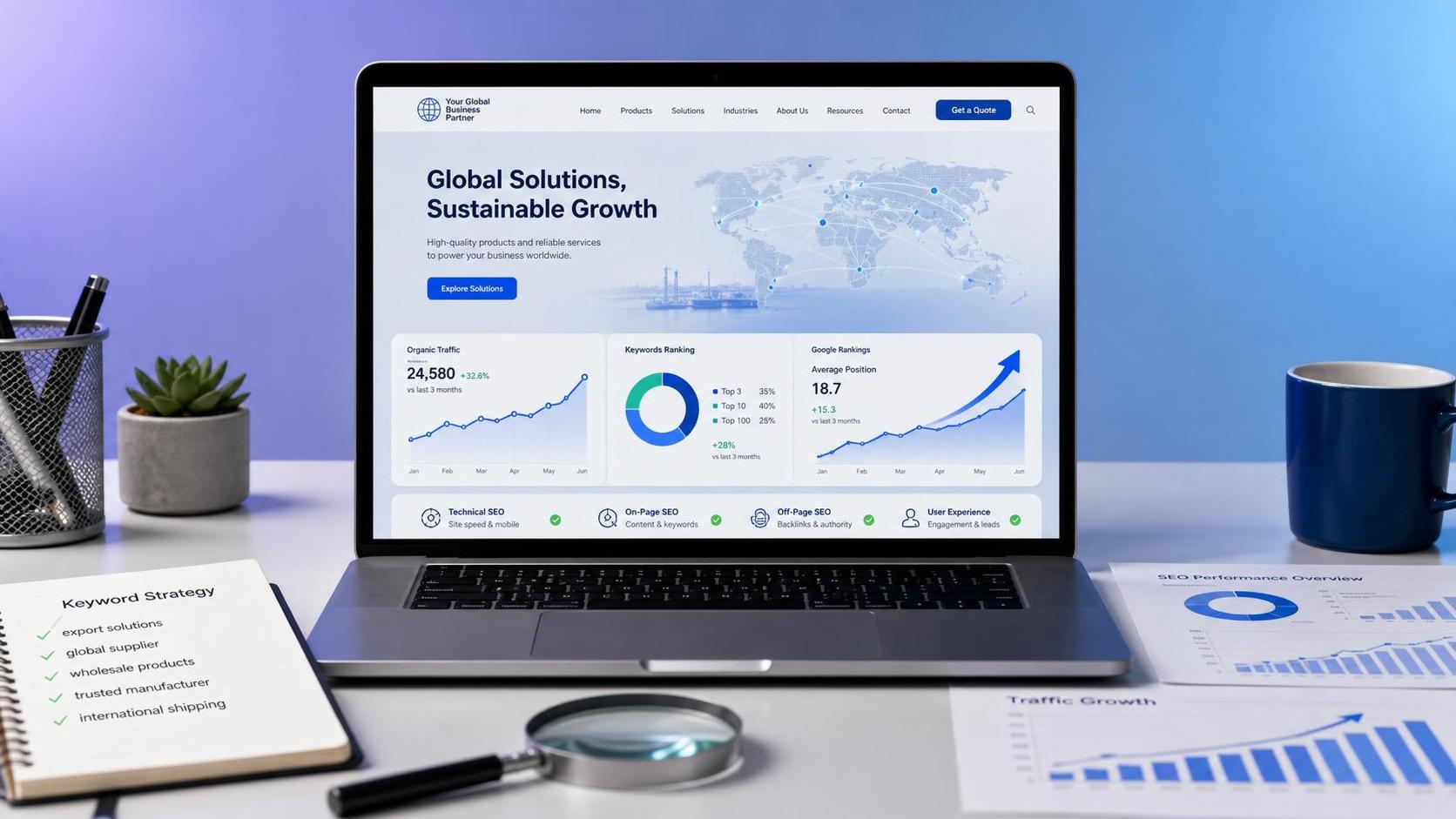
By 2026, three trends will be irreversible. First, GEO (Generative Engine Optimization) will become standard, requiring websites to proactively adapt to AI summary-generation logic and strengthen structured data, FAQ Schema, and entity relationship graphs. Second, Bing’s search market share will rebound, especially in European government and enterprise procurement scenarios, and dual-engine optimization (Google + Bing) will replace single-engine SEO. Third, localization will no longer stop at translation but will extend to cultural adaptation—for example, adding one-click WhatsApp inquiries for Brazilian customers and highlighting TÜV certification and environmental declarations for German customers.
The Yiyingbao V6.0 platform already includes a GEO health diagnostic dashboard that supports real-time monitoring of a brand’s citation frequency and contextual accuracy in AI tools such as ChatGPT and Gemini, while providing actionable page optimization recommendations to help companies seize opportunities in AI search.
How to Build It? Yiyingbao’s One-Stop Technical Approach and Quality Assurance
Yiyingbao’s international trade website development adopts a “four-layer architecture”: the foundation layer consists of a global distributed CDN + IPv6-ready server cluster; the middle layer is an AI intelligent website-building SaaS engine (V6.0), supporting responsive design and 100% mobile compatibility; the business layer integrates four intelligent modules—AI Translation Center, AI+SEO, AI+SEM, and AI+SNS; and the top layer is an operations dashboard that centrally monitors traffic sources, inquiry quality, conversion paths, and ROI metrics.
All templates achieve a Lighthouse performance score of ≥95, with a 100% compliance rate for Core Web Vitals (LCP, CLS, INP). Multilingual websites automatically inject Hreflang tags and language switchers. Product pages enable Schema.org structured data markup by default to increase the likelihood of appearing in Google rich results. SSL certificates and domain management are integrated into the backend, preventing trust disruptions caused by expired certificates.
Quality control runs throughout the entire process: before website development, consultation based on the “B2B Buyer Journey Map” is provided to identify key conversion points; during development, strategy consultants with Google certification backgrounds participate in content section planning; during the first month after launch, free GEO content audits and in-depth Google Search Console diagnostics are provided to ensure the website is positioned for growth from day one.
How Much Does It Cost? Total Cost of Ownership (TCO) Components and ROI Calculation Logic
The TCO of international trade website development goes far beyond website development fees. Yiyingbao breaks TCO down into four parts: initial investment (annual website-building system fee + multilingual site license), content costs (manual translation/copywriting/photography), traffic costs (Google/Bing advertising spend), and operating costs (SEO maintenance/social media updates/data analysis labor). The latter three are often underestimated and together account for 68% of three-year TCO.
Yiyingbao reduces costs and improves efficiency through AI: the AI Translation Center reduces multilingual content production costs by 76%; AI-generated product descriptions improve content update efficiency by 5 times; and the AI+SEM system uses intelligent budget allocation to reduce customer acquisition cost per inquiry (CAC) to 61% of the industry average. Taking a machinery company with annual exports of USD 5 million as an example, the total three-year investment with Yiyingbao is approximately RMB 128,000, while delivering an average annual increase of 132% in organic inquiries, a 2.3-fold improvement in advertising ROI, and an overall ROI of 1:4.7 (based on weighted calculations from the 2024–2025 client pool).
More importantly, there are hidden benefits: accumulated brand assets, growing buyer trust, and stronger channel risk resilience. When Amazon policies tighten or trade shows are canceled, a continuously operated international trade website becomes a company’s most reliable second growth curve.
 Which Industries Are Marketing Websites Suitable for? Start by Looking at the Sales CycleWhich industries are marketing websites suitable for? Don’t just look at industry categories. It is more important to consider the sales cycle, the complexity of customer decision-making, and the cost of building trust. This article explores scenarios such as foreign trade, manufacturing, and business services to help you determine whether a website can truly improve customer acquisition and conversion.
 How to Choose a Foreign Trade Website-Building Platform Without Falling into Common TrapsHow can you choose a foreign trade website-building platform without falling into common traps? Don’t focus only on price and templates. Pay more attention to SEO capabilities, multilingual adaptation, inquiry conversion paths, and ongoing marketing support. With the right integrated website and marketing platform, an independent website can truly generate traffic, inquiries, and growth.
 Which Types of Backlinks Are Higher Quality for an International Trade Website?Which types of backlinks are high quality for an international trade website? The key factors are relevance, authority, and traffic value. This article breaks down high-quality backlink types such as industry media, directories, and guest posts to help improve rankings, indexing, and inquiry conversions.
 What Are the Requirements and Thresholds for Becoming a Foreign Trade Website代理?What are the requirements and thresholds for becoming a foreign trade website代理? Don’t focus only on franchise fees and rebates; pay more attention to product capabilities, training support, delivery capabilities, renewal mechanisms, and overseas marketing implementation results to identify a partnership model that can truly win orders, deliver successfully, and generate sustainable profits.
 What Are the Common Pitfalls in Building Multilingual Websites for Foreign Trade?What are the common pitfalls in building multilingual websites for foreign trade? This article focuses on frequent issues such as architecture selection, SEO tags, localized conversion, and backend maintenance, helping businesses avoid indexing confusion and lost inquiries while improving overseas customer acquisition.
 Case Study Breakdown: An Export-Oriented Manufacturing Company’s International Trade WebsiteAn in-depth breakdown of an international trade website case study, focusing on how export-oriented manufacturing companies can build a business website that balances brand presentation, Google indexing, and inquiry conversion, while avoiding common website-building pitfalls and quickly understanding the growth logic behind high-quality international trade websites.
 What Are the Main Costs of Building a B2B International Trade Website?What are the main costs of building a B2B international trade website? This article breaks down the costs of planning and structure, design and development, multilingual support, basic SEO, content entry, and server maintenance, helping purchasers understand differences in quotations and hidden costs to avoid exceeding the budget due to additional charges later.
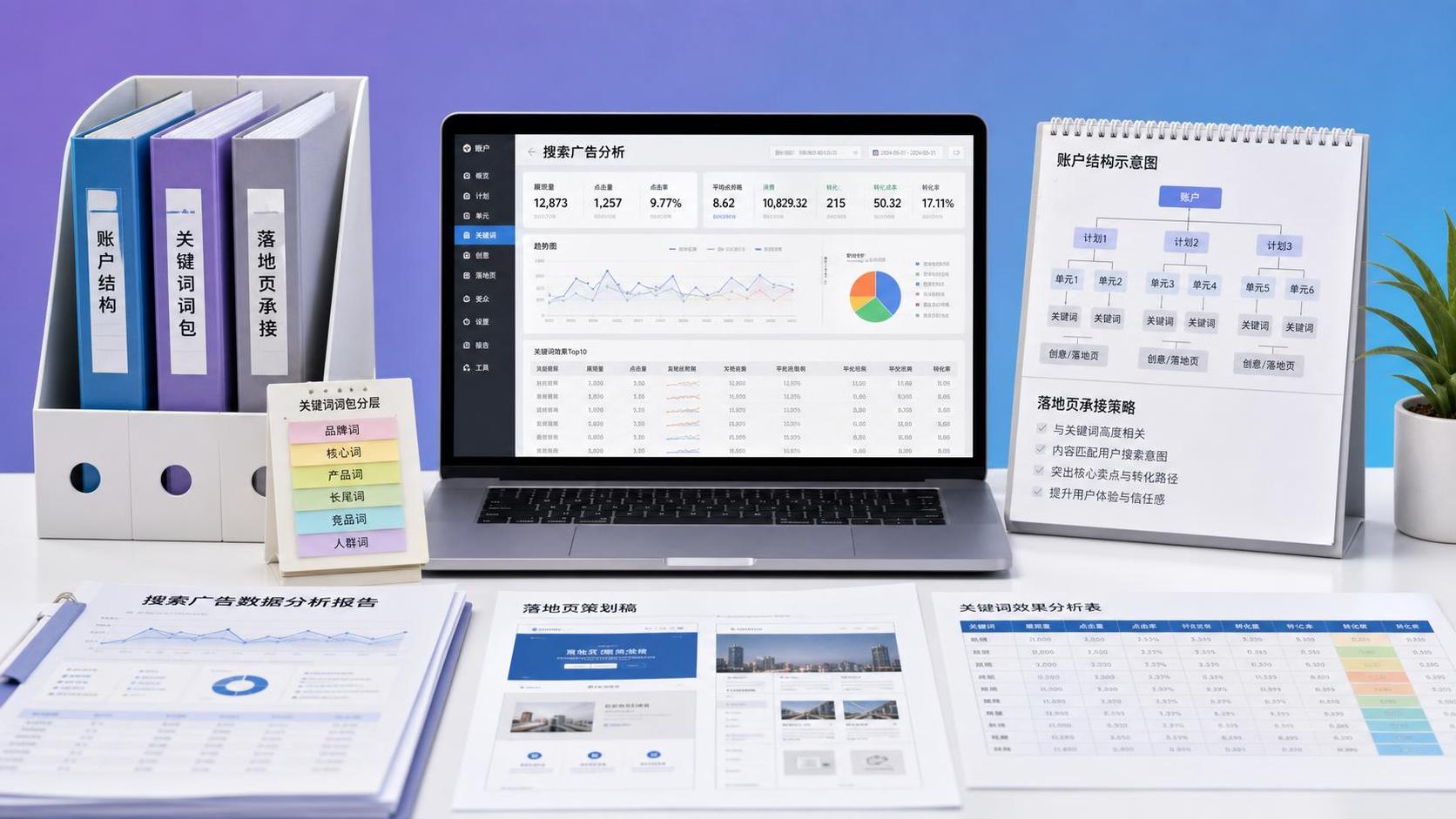
 Where should SEM ad optimization begin? An analysis of account structure and keyword grouping strategiesWhere should SEM campaign optimization begin? This article focuses on account structure, keyword grouping by level, match types, and landing page continuity, breaking down the key sequence for SEM ad optimization to help businesses avoid detours and improve inquiry and conversion efficiency.