









- China’s Ministry of Commerce Responds to Additional Charges on Low-Value Imports Imposed by the EUNov 06, 2026View details
- Two Internet Development Reports Released at the 2026 World Internet ConferenceNov 05, 2026View details
- Internet Business Revenue of Enterprises Above the Designated Size Reached RMB 1.716 Trillion in the First Three Quarters, with Profits Up 17.6%Nov 05, 2026View details
- Shopify's Third-Quarter Revenue and GMV Fall Short of Expectations, Sending Shares Tumbling Before the Market OpensNov 04, 2026View details
- Temu Sellers See a Decline in Traffic as the Platform’s Traffic Allocation ShiftsNov 04, 2026View details
- UK Regulator Requires E-Commerce Businesses to Clearly Display Total Prices Including Mandatory Delivery ChargesNov 04, 2026View details
Can a website localization platform adapt content for different regions?
A website localization platform can adapt content for different regions, but only if it does more than support translation—it must also manage regional differences, content versions, and publishing workflows. Whether it can truly meet your needs depends on whether it allows the same language’s pages to be tailored for different markets, and whether your team can control edits, reviews, and publication.
For example, when a company serves multiple English-speaking markets, product specifications, units of measurement, delivery terms, and inquiry methods may differ. If the platform can only generate one set of English pages, project managers may have to compensate by manually copying pages, which can lead to inconsistent versions during subsequent updates.
First, distinguish language versions from regional versions
Multilingual functionality addresses whether users can understand the content. Regional adaptation must also answer whether the content they see is appropriate for their market. One language may serve multiple markets, while a single country may require more than one language. When evaluating a platform, confirm how it organizes the relationships between languages, regions, and pages instead of looking only at the number of languages it supports.
You can test this using an actual product page: keep the product name and technical information consistent while changing the units, application descriptions, contact details, and calls to action for different markets. If changes to one region also affect other pages, check whether the platform supports independent overrides or version inheritance.
Information such as product models, certification status, and supply scope should not be generated through translation alone. The project team needs to identify the source of this information and who is responsible for maintaining it, and confirm that pages for each region reference the correct version. For local legal requirements, privacy notices, or industry access requirements, arrange for reviewers familiar with the target market to check the content.
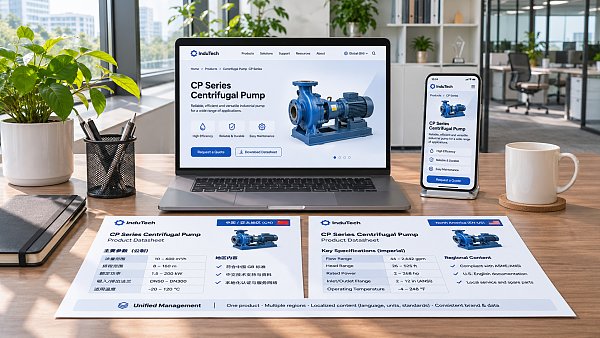
Which content needs to be controlled separately by region?
Not every page needs to be rebuilt. First divide the content into two categories—content that can be shared and content that needs to be adapted—to determine whether the platform’s structure is flexible enough.
- Copy and messaging: Headings, product uses, industry terminology, and button text should match local readers’ expectations. Machine translation can be used for a first draft, but key selling points and technical specifications should be reviewed by a person.
- Images and page modules: Equipment settings, people shown, promotional slogans, and case studies may need to be replaced. Confirm that the platform can hide, replace, or adjust modules by region, rather than only change text.
- Transaction and conversion information: Currency, tax display, payment methods, delivery information, and inquiry form fields may vary by market. For B2B pages, also check contact ownership, form notifications, and lead assignment.
- Formatting and reading direction: Dates, numbers, decimal separators, time zones, and units of measurement should follow local conventions. For right-to-left languages, also check the navigation, icons, forms, and mobile layout.
When evaluating the platform, don’t just check whether the corresponding fields are available in the admin panel; review the published pages as well. For example, a translated button may become longer, causing text to wrap or overlap on mobile. After an image is replaced, text embedded in the image may also remain in the original language.
Run a pilot to assess management costs
Platform demos typically show how to create a page, but ongoing maintenance after launch is often a greater concern for project managers. Choose a representative page that includes navigation, product specifications, images, forms, and downloadable materials. Ask the supplier to configure it for the markets you plan to enter, then review the following workflow.
- Create versions: Confirm how shared content is distinguished from region-specific content. When adding a region, can the page inherit the base version while allowing necessary fields to be edited independently?
- Submit changes: Change a product specification on the source page and see which regional versions are updated automatically, which need to be retranslated or reviewed, and whether the platform notifies the relevant people.
- Manage reviews: Check whether translation, business review, and publishing permissions can be separated; whether content that has not completed review can be published by mistake; and whether edits can be tracked after content is sent back for revision.
- Publish and roll back: Preview the desktop and mobile versions separately, and confirm that regional pages, forms, and downloadable materials work. Then check whether you can restore an approved version if the wrong content is published.
During the pilot, also record how many times you need to manually copy, export, and re-upload content. If every change to shared specifications has to be made page by page, maintenance costs may rise significantly as the number of regions and pages grows, even if the initial site setup is fast.
Verify technical capabilities on actual pages
For users and search engines to access regional content correctly, you also need to verify URLs, language annotations, and redirect behavior. Ask whether the platform supports stable, accessible URLs for different languages or regions, along with the relevant language and region annotations. Also check for mixed content across versions, incorrect redirects, or important pages that cannot be accessed.
Automatic region detection can reduce the steps users need to take, but visitors should not be prevented from switching versions. During testing, visit the URLs for different versions directly, check whether users are forcibly redirected to another page, and confirm that the navigation provides clear language or region options. For pages intended for search, check whether titles, descriptions, and internal links can be maintained separately.
Website performance also affects delivery. After adding regional images, scripts, or third-party forms, spot-check loading and form submissions in the target access environment. If the platform relies on external systems for payment processing, customer support, or lead assignment, confirm who maintains the integrations, how issues are diagnosed, and whether the data can be exported.
Define scope and responsibilities before choosing
For projects with few markets and limited page differences, a solution that is easy to configure and has manageable manual maintenance costs may be preferable. If multiple regions need frequent product information updates or independent reviews, give greater weight to content inheritance, permissions, version history, and bulk update capabilities. Greater flexibility usually also requires clearly defined content rules to prevent regional pages from becoming difficult to manage over time.
When confirming the scope of the purchase, distinguish between features supported natively by the platform, features that can be implemented through configuration, and features that require additional development. Ask the supplier to clarify who is responsible for translation, page creation, integration, and ongoing maintenance. Also confirm the number of regional versions covered, content migration arrangements, account permissions, and data export terms at the end of the service, so that features demonstrated during the sales process are included in the agreed delivery scope.
Final acceptance should be based on the agreed pages: each region displays the correct content, there is a clear process for handling changes to shared information across relevant versions, reviewers can verify changes, and users can access the pages and submit forms successfully. The platform’s regional adaptation capabilities are truly manageable only when all these steps can be carried out consistently.
Related Articles
 Can a website localization platform adapt content for different regions?
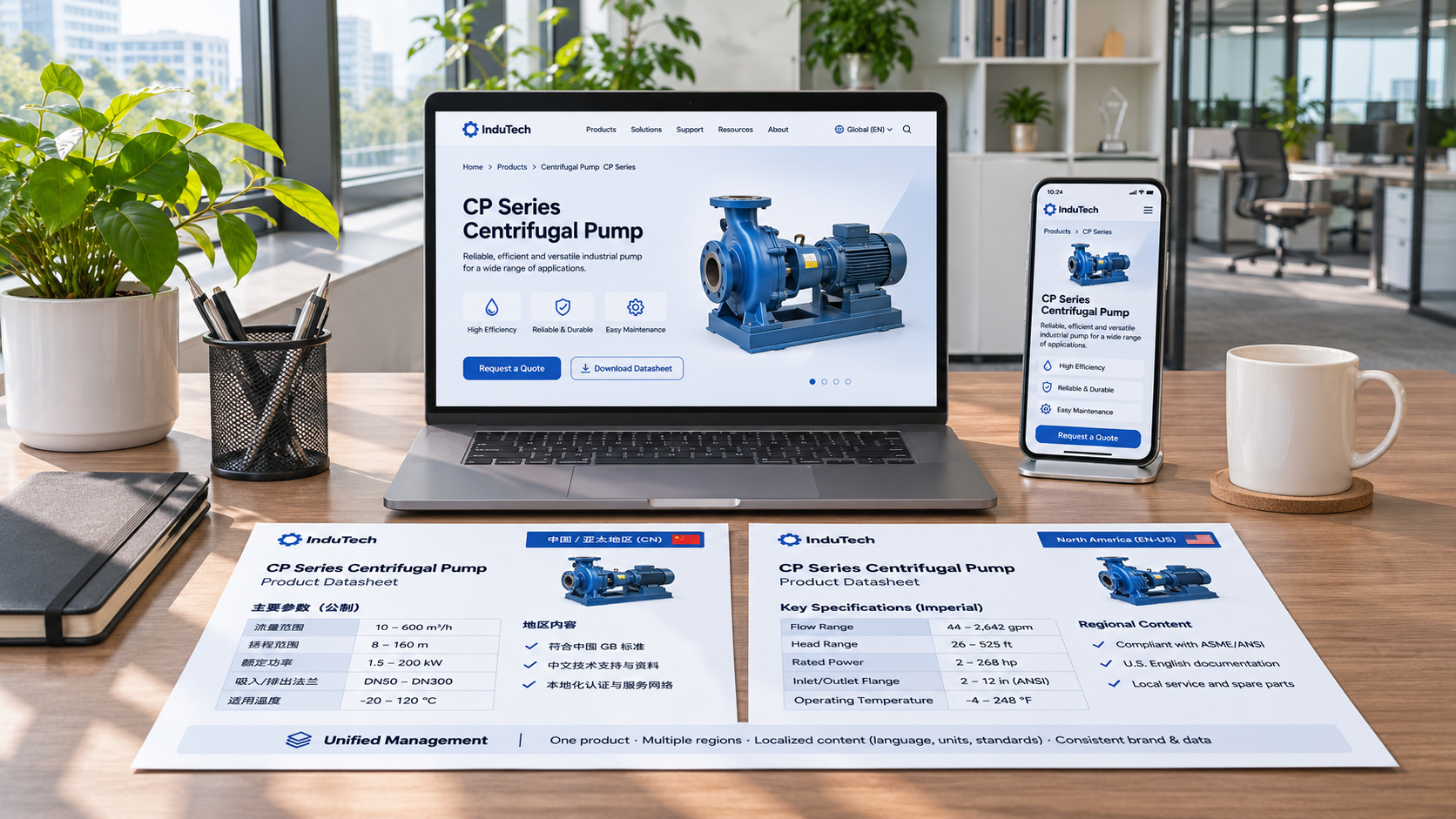
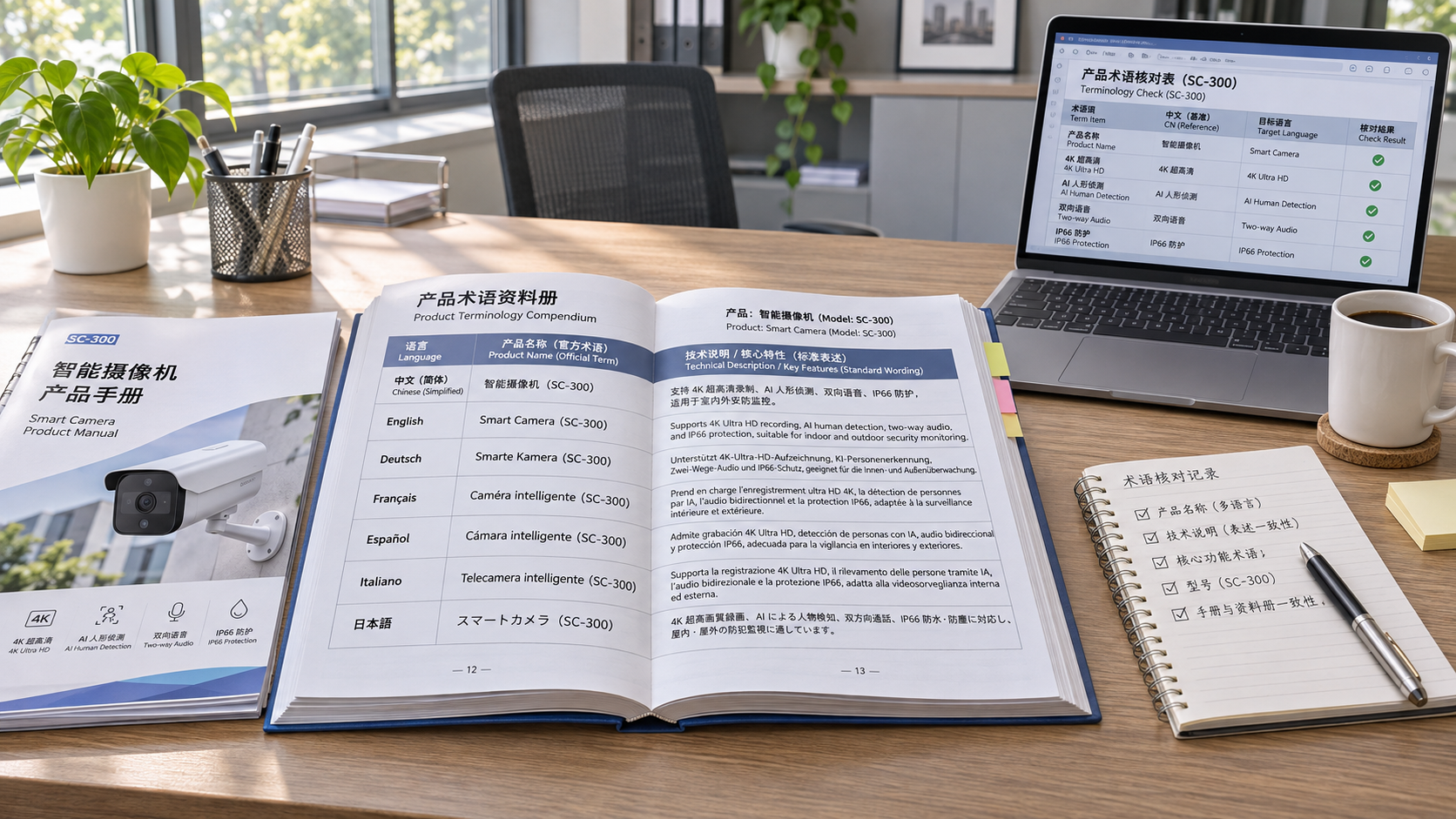
 How can AI translation keep product terminology consistent?
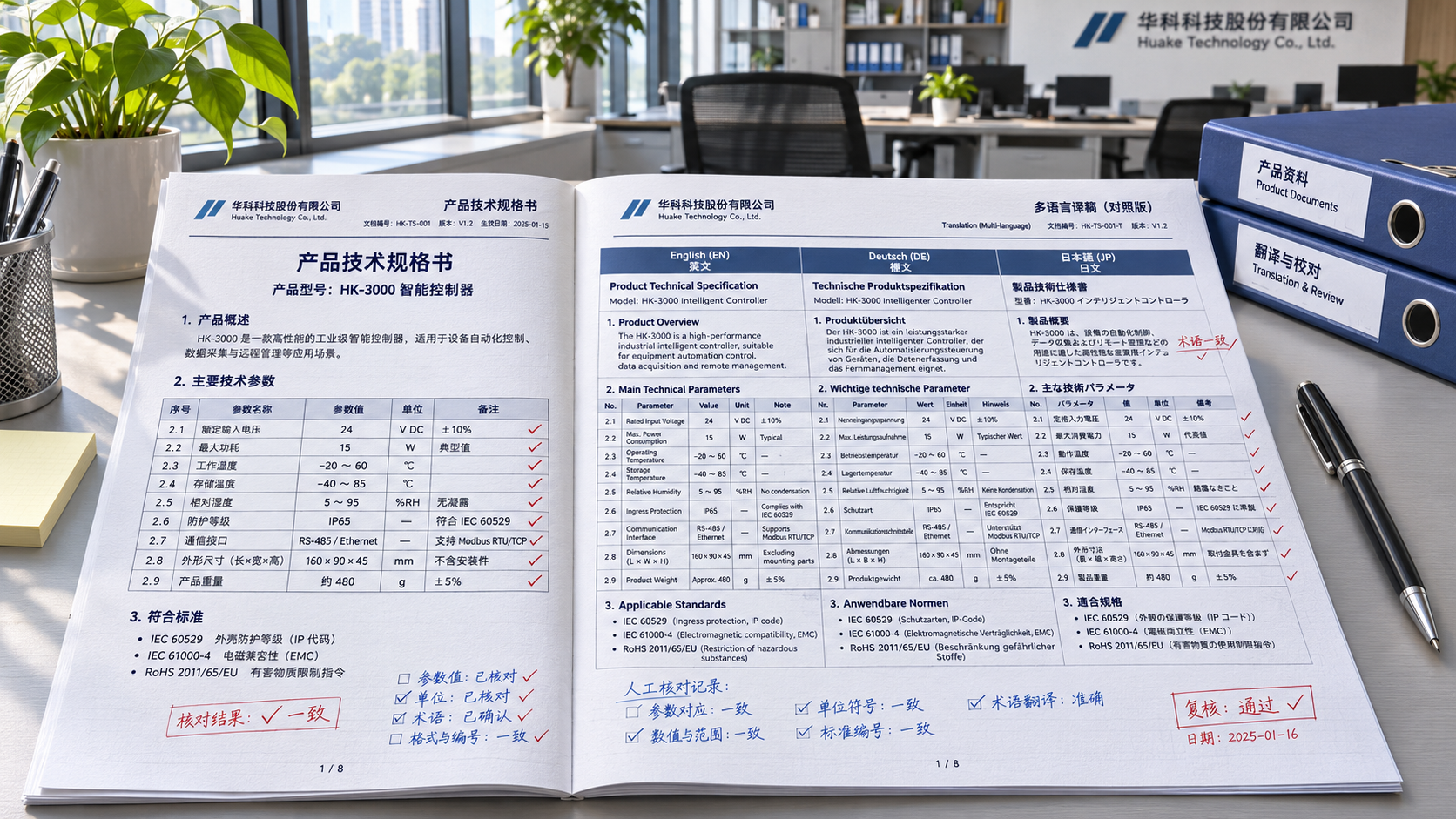
 How Can You Avoid Product Specification Errors When Translating a B2B Website?
Related Products
 Yiyingbao SaaS Intelligent Website Building and Marketing SystemYiyingbao SaaS Intelligent Website Building and Marketing System, AI-powered no-code website building, rapid creation of multilingual B2B international websites in 10 minutes, global server acceleration, AI-powered SEO optimization, helping businesses connect efficiently with global markets. The perfect integration of technology and operation makes building an international trade website remarkably simple
 AI+SEM Intelligent Advertising Marketing SystemAI+SEM drives intelligent ad creation, empowering full-funnel precision advertising marketing. The system automatically generates weekly/monthly reports, AI recommends keywords and target countries, monitors core metrics in real-time with intelligent alerts, and enables one-click high-conversion ad solutions to help quickly acquire customers and improve ROI.
 AI+SEO Dual-Engine System Optimization ServicesYiyingbao’s AI+SEO dual-engine optimization system helps foreign trade enterprises acquire high-quality organic traffic through AI-powered keyword research, content generation, and comprehensive technical optimization, significantly improving search rankings and conversion rates.
 AI+SNS Social Media Marketing SystemYingbao AI+SNS Social Media Marketing System - Precision social capture for the social media era. Supports one-click content synchronization across major platforms like Facebook and LinkedIn. AI intelligently rewrites posts for enhanced relevance. 24/7 AI customer service and user profiling analysis empower businesses to efficiently expand into global markets.
 AI+SEO营销解决方案易营宝AI+SEO营销解决方案,通过AI批量写作、智能生成TDK、精准关键词扩词等功能,全面优化网站SEO效果,提升流量与转化率。助力企业构建高效智能网站新生态。
 AI+SEM Advertising Marketing SolutionsAI+SEM Advertising Marketing Solution leverages AI technology to deeply empower SEM ad campaigns. It automatically generates weekly/monthly reports using AI, presenting account data across multiple dimensions for comprehensive insights into campaign performance and trends. The system precisely recommends keywords and target countries, intelligently generates high-conversion ad copy, and enables one-click activation of efficient campaign plans to help businesses rapidly acquire customers. Simultaneously, it monitors core metrics in real time, intelligently identifies abnormal fluctuations, and issues timely alerts to ensure stable, high-return advertising results.
 Domain Name ServicesEasyWin provides professional domain name services, including intelligent queries, one-stop registration, brand protection, and full lifecycle management, helping businesses build a digital brand image.
 EasyOperate B2C Cross-Border E-Commerce Platform & Independent WebsiteEasyStore B2C Cross-border E-commerce Independent Store is an intelligent website building and cross-border e-commerce integrated solution independently developed by EasyStore Information Technology (Beijing) Co., Ltd. The system is specially designed for small and medium-sized as well as large export enterprises, integrating 'website building, operation, marketing, advertising, and conversion' into one, helping enterprises quickly establish cross-border e-commerce independent stores to achieve brand globalization and global sales growth.
The platform supports multiple languages, multiple currencies, and multi-channel marketing, with built-in AI intelligent translation and SEO optimization systems, suitable for mainstream markets such as Southeast Asia, Europe and America, Latin America, and the Middle East, assisting Chinese manufacturing enterprises in efficiently deploying international e-commerce strategies. SSL证书易营宝提供专业SSL安全证书服务,包括单域名和泛域名证书,确保网站数据传输加密、身份验证和完整性保护,助力企业建立安全可信的在线业务环境。









