









- Can the average annual growth rate reflect real opportunities in overseas markets?Oct 07, 2026View details
- Which customer acquisition channels will be affected by cross-border marketing trends in 2026?Sep 06, 2026View details
- Which homogenization risks should be considered in an analysis of the AI-powered website building industry?Aug 30, 2026View details
- How Will AI Marketing Trends 2026 Change Advertising Budget AllocationAug 28, 2026View details
- Is the EV SSL certificate market shrinking or upgrading? How should companies assess certificate procurement?Aug 11, 2026View details
- Why the old AMP SEO 2020 practices no longer work and what has changed in current optimization prioritiesAug 02, 2026View details
How Can Agricultural Product Export Websites Build Trust with Overseas Buyers Through Traceability Certification?
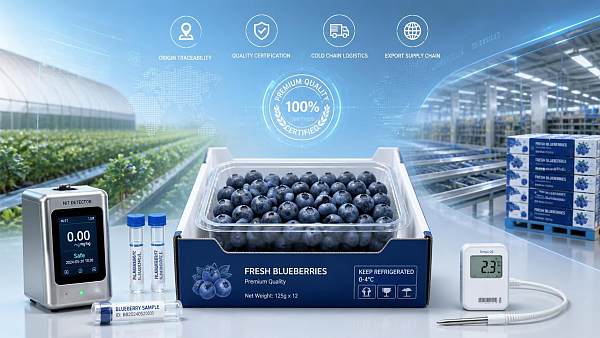
When a European buyer opens an agricultural supplier's website, they usually do not only look at whether the product images appear fresh or the packaging looks attractive. They are more likely to ask a series of questions: Which growing base did this batch of blueberries come from? How much time elapsed between harvesting and pre-cooling? Who conducted the pesticide residue testing? Is the organic certificate still valid? If a quality dispute arises, can it be traced back to the field plot, batch, and shipment records?
These questions represent the most concrete form of “trust” in agricultural export transactions. For companies seeking to enter overseas markets, agricultural export website development should not be merely an online product catalog. It should become a digital trust system that clearly communicates quality control, compliance capabilities, and supply reliability. When traceability certifications, test reports, and origin information are properly organized, the website can turn the claim “our products are good” into evidence that overseas buyers can see, verify, and be willing to discuss further.
Why Overseas Buyers Place Special Importance on “Traceability”
Agricultural products are characterized by strong seasonality, significant differences in standards, and long transportation chains. Buyers bear not only purchasing costs, but also customs clearance risks, retail complaints, brand reputation, and food safety responsibilities. Therefore, they often conduct their first round of screening through supplier websites: companies without clear origin information, batch management, or certification documentation may be classified as “suppliers pending verification,” even if their quotations are competitive.
Focus areas vary across markets and product categories. EU buyers generally pay greater attention to pesticide residues, sustainable cultivation, origin, and supply chain responsibility; North American importers emphasize food safety management, packaging labels, and recall capability; while Middle Eastern and Southeast Asian markets may have higher requirements for halal certification, freshness preservation capabilities, and delivery reliability. A company website does not need to be filled with every certificate; instead, it should present a genuinely relevant chain of evidence based on the target market, export category, and customer type.
In other words, traceability is not an isolated QR code, but an information path that can answer: “Where did it come from, how was it grown, how was it tested, who is responsible, and when was it shipped?” The clearer this path is, the more efficient the review process will be for buyers’ internal procurement, quality control, and compliance teams.
Turning Certification Documents from “Attachments” into Understandable Trust Content
Many companies also have certificate sections on their websites, but common issues include unclear scanned copies, no explanation of validity periods, or no link between certificate names and specific products or growing bases. For buyers, such documents are difficult to assess and do not help search engines understand the company’s compliance capabilities.
A more effective approach is to organize page information around “product—origin—batch—testing—certification.” For example, on the detail page for a specific type of fruit or vegetable, in addition to specifications, packaging, supply period, and MOQ, clear information modules can be provided:
- Cultivation and Origin: Describe the core production area, an overview of the growing base, and climate or varietal advantages, while avoiding unverifiable absolute claims.
- Batch Traceability: Display publicly available information such as batch numbering rules, harvest date, sorting and packaging date, and cold-chain checkpoints; where trade secrets are involved, explain what information can be accessed after buyer review.
- Quality Testing: Display pesticide residue, microbiological, heavy metal, or physicochemical indicator reports by product relevance, and specify the testing date, institution, and applicable batch.
- Certifications and Standards: Present organic certifications, good agricultural practices, food safety systems, or market-access qualifications in relation to the applicable growing bases, products, and validity periods.
- Download and Verification Request Access: For documents requiring further verification, provide controlled downloads, email requests, or contact methods for procurement specialists, rather than simply piling up a large number of PDFs.
The core of this presentation method is not simply to “display” the documents, but to ensure that buyers do not need to repeatedly guess the relationship between them. Especially when dealing with new customers for the first time, every piece of verifiable information on the page lowers their psychological threshold for submitting an inquiry.
Agricultural Export Website Development: The Key Is Building Two Browsing Paths
When planning a website, company decision-makers often structure sections according to internal organizational functions: About Us, Products, News, and Contact Us. This structure is convenient to manage, but it does not fully align with overseas buyers’ decision-making paths. Agricultural product websites are better suited to establishing two paths simultaneously: “procurement by product” and “verification by trust.”
The first path serves procurement personnel. Visitors can enter product pages from categories and quickly confirm specification grades, packaging methods, production seasons, container loading recommendations, delivery ports, and inquiry methods. For customers in different countries, multilingual content should not be limited to literal translation; units of measurement, commonly used trade terms, packaging practices, and compliance notices also need to be localized.
The second path serves quality control, compliance, and management personnel. The website should enable them to conveniently find farm or factory introductions, quality control processes, certification centers, explanations of test reports, cold-chain and warehouse management, and social responsibility or sustainability practices. A procurement manager may be attracted by the product, but it is often this review path that truly drives supplier approval.
Ideally, the two paths converge on the product detail page: while learning about the goods, buyers can also see the relevant origin documentation, quality control processes, and traceability information, then submit an inquiry through a clear inquiry form for sales follow-up. In this way, the website is not only a lead-generation entry point, but also completes part of the supplier due diligence process in advance.
Which Details Are Most Likely to Undermine Credibility
Trust is difficult to build but quick to lose. The first type of issue is outdated or inconsistent certification information. Certification numbers, certificate names, legal entity names, and validity periods on the website should be subject to regular review; where the scope of a qualification is limited, it should also be stated truthfully to avoid misleading buyers.
The second issue is “all promotion, no evidence.” Claims such as “natural,” “green,” “pollution-free,” and “highest grade” may even create compliance risks in certain markets if they lack supporting testing, standards, or origin evidence. Compared with generalized statements, clearly specifying applicable standards, testing items, and quality control points is more persuasive.
The third issue is having the documents but slow loading, poor mobile presentation, or no response after a form is submitted. Overseas buyers often browse websites on mobile phones or under different network conditions, and page performance, file access experience, and response speed all influence their assessment of supply capabilities. In particular, when there are many certificates and reports, clarity and loading efficiency need to be balanced rather than directly placing high-capacity files on the page.
Moving from Website Display to a Follow-Up-Ready Lead Generation Loop
The value of traceability content goes beyond display. Companies should also know which markets’ visitors most often view certification pages, which product pages generate higher-quality inquiries, and whether customers leave their contact information because of origin, test reports, or delivery-time information. This enables sales teams to supplement relevant batch documentation, sample arrangements, or qualification documents in their first response, rather than sending a generic quotation email.
For export companies serving multiple overseas markets and needing to balance website development and promotion, traceability content can be integrated into a unified digital marketing system. Yiyingbao’s B2B foreign trade solutions cover multilingual standalone website development, SEO optimization, buyer behavior tracking, intelligent customer service, and inquiry management, making them suitable for connecting product information, certification pages, and overseas customer acquisition channels. After a website attracts target buyers through search, advertising, or social media, companies can further identify the content they are interested in and reduce lead loss through follow-up across multiple time zones.
Before Making a Decision, Use This Checklist to Assess Whether Your Website Can Truly Be “Trusted”
Before launch or redesign, companies may check from a buyer’s perspective: Can target customers find relevant certifications within three clicks? Can every core product be matched with origin, specification, and testing information? Do certificates specify the legal entity and validity period? Do English and other language versions accurately convey the meaning of standards? Can reports be viewed smoothly and inquiries submitted on mobile devices? Can the marketing team track the impact of certification content on inquiry conversion?
If most of these questions do not have clear answers, agricultural export website development is still at the “display stage.” However, when the traceability system is transformed into a clear, verifiable, and accessible information architecture, the website communicates more than just a product catalog; it conveys the certainty that gives overseas buyers confidence to establish cooperation. For agricultural export companies, this certainty often builds long-term orders more effectively than a single eye-catching promotion.
Related Articles

Related Products
 Yiyingbao SaaS Intelligent Website Building and Marketing SystemYiyingbao SaaS Intelligent Website Building and Marketing System, AI-powered no-code website building, rapid creation of multilingual B2B international websites in 10 minutes, global server acceleration, AI-powered SEO optimization, helping businesses connect efficiently with global markets. The perfect integration of technology and operation makes building an international trade website remarkably simple
 AI+SEM Intelligent Advertising Marketing SystemAI+SEM drives intelligent ad creation, empowering full-funnel precision advertising marketing. The system automatically generates weekly/monthly reports, AI recommends keywords and target countries, monitors core metrics in real-time with intelligent alerts, and enables one-click high-conversion ad solutions to help quickly acquire customers and improve ROI.
 AI+SEO Dual-Engine System Optimization ServicesYiyingbao’s AI+SEO dual-engine optimization system helps foreign trade enterprises acquire high-quality organic traffic through AI-powered keyword research, content generation, and comprehensive technical optimization, significantly improving search rankings and conversion rates.
 AI+SNS Social Media Marketing SystemYingbao AI+SNS Social Media Marketing System - Precision social capture for the social media era. Supports one-click content synchronization across major platforms like Facebook and LinkedIn. AI intelligently rewrites posts for enhanced relevance. 24/7 AI customer service and user profiling analysis empower businesses to efficiently expand into global markets.
 AI+SEO营销解决方案易营宝AI+SEO营销解决方案,通过AI批量写作、智能生成TDK、精准关键词扩词等功能,全面优化网站SEO效果,提升流量与转化率。助力企业构建高效智能网站新生态。
 AI+SEM Advertising Marketing SolutionsAI+SEM Advertising Marketing Solution leverages AI technology to deeply empower SEM ad campaigns. It automatically generates weekly/monthly reports using AI, presenting account data across multiple dimensions for comprehensive insights into campaign performance and trends. The system precisely recommends keywords and target countries, intelligently generates high-conversion ad copy, and enables one-click activation of efficient campaign plans to help businesses rapidly acquire customers. Simultaneously, it monitors core metrics in real time, intelligently identifies abnormal fluctuations, and issues timely alerts to ensure stable, high-return advertising results.
 Domain Name ServicesEasyWin provides professional domain name services, including intelligent queries, one-stop registration, brand protection, and full lifecycle management, helping businesses build a digital brand image.
 EasyOperate B2C Cross-Border E-Commerce Platform & Independent WebsiteEasyStore B2C Cross-border E-commerce Independent Store is an intelligent website building and cross-border e-commerce integrated solution independently developed by EasyStore Information Technology (Beijing) Co., Ltd. The system is specially designed for small and medium-sized as well as large export enterprises, integrating 'website building, operation, marketing, advertising, and conversion' into one, helping enterprises quickly establish cross-border e-commerce independent stores to achieve brand globalization and global sales growth.
The platform supports multiple languages, multiple currencies, and multi-channel marketing, with built-in AI intelligent translation and SEO optimization systems, suitable for mainstream markets such as Southeast Asia, Europe and America, Latin America, and the Middle East, assisting Chinese manufacturing enterprises in efficiently deploying international e-commerce strategies. SSL证书易营宝提供专业SSL安全证书服务,包括单域名和泛域名证书,确保网站数据传输加密、身份验证和完整性保护,助力企业建立安全可信的在线业务环境。









