









- Can the average annual growth rate reflect real opportunities in overseas markets?Oct 07, 2026View details
- Which customer acquisition channels will be affected by cross-border marketing trends in 2026?Sep 06, 2026View details
- Which homogenization risks should be considered in an analysis of the AI-powered website building industry?Aug 30, 2026View details
- How Will AI Marketing Trends 2026 Change Advertising Budget AllocationAug 28, 2026View details
- Is the EV SSL certificate market shrinking or upgrading? How should companies assess certificate procurement?Aug 11, 2026View details
- Why the old AMP SEO 2020 practices no longer work and what has changed in current optimization prioritiesAug 02, 2026View details
How Can a Foreign Trade Website for Heavy Machinery Present Operating Parameters and Generate Engineering Project Inquiries?
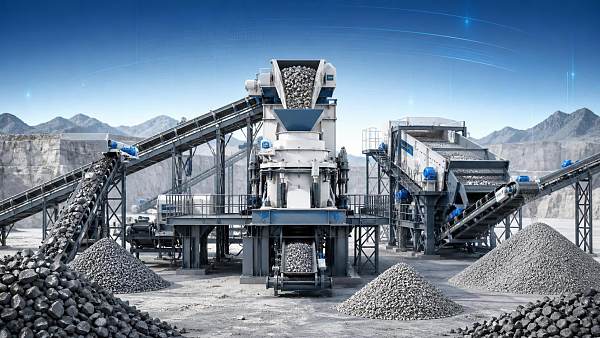
For overseas project inquiries involving heavy machinery, quality differences often do not lie in “whether there is traffic,” but in whether visitors can determine within a short period whether the equipment is suitable for site conditions. For equipment used in excavation, crushing, screening, lifting, conveying, mining, and road construction, simply displaying appearance, tonnage, or descriptions such as “high efficiency” cannot support engineering decisions. A website must clearly explain operating conditions, performance limits, configuration requirements, and delivery interfaces before it can turn ordinary browsing into project discussions that can move forward.
The core of building a foreign trade website for heavy machinery is not translating a product catalog into English or other languages, but reorganizing the manufacturer’s internal technical documentation into information that project teams can compare, verify, and submit for internal evaluation. Website pages should undertake part of the preliminary technical clarification work: enabling visitors to understand what the equipment can do while also making clear under which conditions it can perform these tasks reliably.
Operating condition parameters should not only list values; they should establish a relationship between “parameters—site conditions—results”
Many equipment detail pages list data such as engine power, operating weight, bucket capacity, maximum lifting capacity, and processing capacity in one place. These are basic details, but the actual suitability of engineering equipment depends on the relationship between parameters rather than the level of any single indicator. Taking crushing and screening equipment as an example, rated throughput depends on feed size, moisture content, hardness, feed continuity, finished product specifications, and screen configuration. Simply stating “how many tons can be processed per hour” can make it difficult for project teams to determine the material conditions to which the figure applies.
A more effective presentation is to specify the test or design conditions alongside key performance parameters. For example:
- Material type, maximum feed size, target discharge particle size, and moisture condition corresponding to processing capacity;
- Limitations among digging depth, dumping height, swing range, and working radius for excavation equipment;
- Radius, boom length, outrigger condition, and ground bearing conditions corresponding to the rated load of lifting equipment;
- The relationship between rated payload, gradeability, turning radius, and road gradient and surface conditions for mining transport equipment;
- Requirements of diesel, hydraulic, electric-drive, and other power solutions for ambient temperature, fuel quality, power supply conditions, and maintenance resources.
These explanations are not supplementary technical details, but necessary information for avoiding ineffective inquiries and subsequent disputes. Project teams will not normally enter the procurement process simply because a page contains more parameters, but when they see complete operating-condition limits, they are more willing to submit material data, construction organization requirements, or site drawings for the next round of confirmation.
Describe “application scenarios” as assessable operating tasks
Descriptions such as “suitable for mining, construction, ports, and infrastructure” have broad coverage but little assessment value. The same mining project may involve entirely different processes such as overburden stripping, mining and loading, underground transportation, aggregate processing, and tailings handling. Likewise, within the same construction site, earthwork excavation, lifting in confined areas, pile foundation construction, and demolition operations have different requirements for equipment configuration.
Application scenarios on a website should be developed by operating task. Compared with stating “suitable for mining,” more valuable information includes whether the equipment is used for surface stripping or hard-rock loading in an open-pit mine; which stage it serves in a continuous production line; whether it needs to integrate with existing feeders, belt conveyors, or dust removal equipment; whether mobile equipment involves frequent relocation; and whether local height, width, road transport, or noise-control restrictions apply.
Each scenario page does not need to expand into a lengthy industry introduction, but it should at least answer three practical questions: what is being handled, what are the site constraints, and how does this model meet the task through its configuration? If the equipment depends on track width, boom type, crushing chamber type, number of screen decks, cab protection rating, or remote-control modules, the options and applicable conditions should also be clearly listed to avoid incorrectly presenting optional functions as standard configurations.
The role of project cases is to demonstrate matching logic, not to showcase “success stories”
A common issue with cases on engineering websites is that they contain only equipment photos, country names, and vague feedback, without verifiable project conditions. Such content can serve a certain branding purpose, but it is difficult to help potential customers determine whether their own projects can be replicated. Truly valuable cases should focus on how equipment was deployed under specific constraints.
Cases can use a concise engineering information structure: project task, original operating conditions, equipment model and configuration, supporting systems, installation or commissioning scope, and conditions that need to be controlled during operation. When confidential information such as customer names, production capacity data, or site locations is involved, there is no need to disclose it forcibly; scenario characteristics can be retained through descriptions such as “high-moisture aggregate processing line,” “mountain road construction project,” or “demolition operation in a restricted site,” while removing sensitive information.
In particular, it is important to distinguish between “equipment has been delivered” and “equipment has achieved stable operating capability.” The former only indicates the fact of supply, while the latter requires clear operating prerequisites. For cost-sensitive scenarios such as coal mining, aggregates, and port loading and unloading, project teams will also focus on the relationship between equipment and production organization, energy consumption, wear parts, and downtime maintenance. For an understanding of operational stages and cost allocation logic, refer to Research on Optimizing the Application of Activity-Based Costing in Cost Accounting for Coal Mining Enterprises, which focuses on assessing resource consumption in the context of specific operating activities rather than comparing equipment purchase prices alone. This approach also applies to the presentation of website cases: explaining which process the equipment performs is more credible than broadly emphasizing “cost savings.”
Technical documentation should support preliminary screening rather than turning the download section into a document warehouse
Heavy equipment projects usually require drawings, layout dimensions, foundation loads, interface requirements, spare parts lists, and maintenance intervals, but this does not mean that all documents should be placed directly on the website. On the one hand, excessively scattered public documentation increases the visitor’s screening cost; on the other hand, documents involving customized structures, control solutions, or commercially sensitive information should not be made available without conditions.
A more reasonable hierarchy is as follows: product pages provide core dimensions, capacity ranges, power options, transport dimensions, standard configurations, and major options sufficient for preliminary assessment; the technical download section provides general brochures, operation and maintenance overviews, outline drawings, or selection tables; documentation involving foundation drawings, flow diagrams, electrical interfaces, specific component brands, and customized quotations is provided after project conditions are collected through a form.
Form fields should not be limited to name, email, and message. For engineering project inquiries, it is more necessary to obtain information that can advance technical evaluation, such as material name and particle size, target output, operating hours, site altitude or temperature, existing system interfaces, project country, and expected procurement or commissioning time. Fields should vary dynamically according to equipment category: lifting equipment requires information related to load charts, crushing equipment requires raw material and finished product specifications, while complete production lines require site dimensions and process flow requirements.
Multilingual pages must maintain parameter consistency and unit readability
In overseas project communication, the risks caused by parameter misinterpretation are far greater than for general consumer products. Multilingual website development should not only handle text translation, but also establish unified management of models, units, terminology, and versions. Metric and imperial units should be clearly switchable or displayed side by side; qualifying terms such as “rated,” “maximum,” “theoretical,” and “recommended” must not be lost during translation; and configuration ranges, delivery time descriptions, and certification information on pages in different languages should not contradict one another.
For CE, EPA, EU machinery regulation requirements, or market access conditions in specific countries, pages should use cautious wording. Whether equipment meets a particular requirement usually depends on the export destination, power configuration, product category, delivery batch, and applicable regulatory version. If confirmation has not been completed for a specific model and market, absolute statements such as “globally certified” or “available in all countries” should not be used. A more feasible approach is to specify the types of documents that can be provided and the market access matters that need to be confirmed during the project inquiry stage.
Inquiry entry points should match the project decision-making path
“Contact Us” can be retained, but it should not be the only call to action on equipment pages. Visitors to engineering equipment websites are at different stages: some are initially screening models, some need layout drawings, some already have clear tender parameters, and others wish to replace a single machine in an existing production line. Corresponding entry points can include “Get Selection Table,” “Submit Material Conditions,” “Request Foundation and Layout Documentation,” “Confirm Spare Parts Support Scope,” or “Discuss Customized Configuration.”
The value of these entry points lies in lowering the threshold for initial communication and allowing submitted information to naturally enter the evaluation process of sales and technical teams. Page commitments should also remain measured: technical support, language response, after-sales network, or remote diagnostic capabilities that can be provided should be bounded by the company’s actual delivery capabilities. Project-based customers place greater importance on whether subsequent responses address operating conditions than on whether automated replies are sufficiently fast.
A heavy machinery website capable of obtaining engineering project inquiries is essentially a front-end technical clarification system. It needs to connect equipment performance, operating-condition limitations, configuration differences, case evidence, and documentation request paths. Only when visitors can use this information to determine that “this equipment is worth entering technical discussions for” has the website completed a task more important than product display: screening inquiries with a project basis and retaining a complete information starting point for subsequent solution development, quotation, and delivery evaluation.
Related Articles

Related Products
 Yiyingbao SaaS Intelligent Website Building and Marketing SystemYiyingbao SaaS Intelligent Website Building and Marketing System, AI-powered no-code website building, rapid creation of multilingual B2B international websites in 10 minutes, global server acceleration, AI-powered SEO optimization, helping businesses connect efficiently with global markets. The perfect integration of technology and operation makes building an international trade website remarkably simple
 AI+SEM Intelligent Advertising Marketing SystemAI+SEM drives intelligent ad creation, empowering full-funnel precision advertising marketing. The system automatically generates weekly/monthly reports, AI recommends keywords and target countries, monitors core metrics in real-time with intelligent alerts, and enables one-click high-conversion ad solutions to help quickly acquire customers and improve ROI.
 AI+SEO Dual-Engine System Optimization ServicesYiyingbao’s AI+SEO dual-engine optimization system helps foreign trade enterprises acquire high-quality organic traffic through AI-powered keyword research, content generation, and comprehensive technical optimization, significantly improving search rankings and conversion rates.
 AI+SNS Social Media Marketing SystemYingbao AI+SNS Social Media Marketing System - Precision social capture for the social media era. Supports one-click content synchronization across major platforms like Facebook and LinkedIn. AI intelligently rewrites posts for enhanced relevance. 24/7 AI customer service and user profiling analysis empower businesses to efficiently expand into global markets.
 AI+SEO营销解决方案易营宝AI+SEO营销解决方案,通过AI批量写作、智能生成TDK、精准关键词扩词等功能,全面优化网站SEO效果,提升流量与转化率。助力企业构建高效智能网站新生态。
 AI+SEM Advertising Marketing SolutionsAI+SEM Advertising Marketing Solution leverages AI technology to deeply empower SEM ad campaigns. It automatically generates weekly/monthly reports using AI, presenting account data across multiple dimensions for comprehensive insights into campaign performance and trends. The system precisely recommends keywords and target countries, intelligently generates high-conversion ad copy, and enables one-click activation of efficient campaign plans to help businesses rapidly acquire customers. Simultaneously, it monitors core metrics in real time, intelligently identifies abnormal fluctuations, and issues timely alerts to ensure stable, high-return advertising results.
 Domain Name ServicesEasyWin provides professional domain name services, including intelligent queries, one-stop registration, brand protection, and full lifecycle management, helping businesses build a digital brand image.
 EasyOperate B2C Cross-Border E-Commerce Platform & Independent WebsiteEasyStore B2C Cross-border E-commerce Independent Store is an intelligent website building and cross-border e-commerce integrated solution independently developed by EasyStore Information Technology (Beijing) Co., Ltd. The system is specially designed for small and medium-sized as well as large export enterprises, integrating 'website building, operation, marketing, advertising, and conversion' into one, helping enterprises quickly establish cross-border e-commerce independent stores to achieve brand globalization and global sales growth.
The platform supports multiple languages, multiple currencies, and multi-channel marketing, with built-in AI intelligent translation and SEO optimization systems, suitable for mainstream markets such as Southeast Asia, Europe and America, Latin America, and the Middle East, assisting Chinese manufacturing enterprises in efficiently deploying international e-commerce strategies. SSL证书易营宝提供专业SSL安全证书服务,包括单域名和泛域名证书,确保网站数据传输加密、身份验证和完整性保护,助力企业建立安全可信的在线业务环境。









