









- Levanta’s Inaugural China Summit Held in Shenzhen, Focusing on AI and Cross-Border Brand GrowthOct 20, 2026View details
- The October Edition of the 2026 GGE Shenzhen Cross-Border E-Commerce Expo OpensOct 20, 2026View details
- Dongguan’s foreign trade imports and exports reached RMB 1.29 trillion in the first three quarters, a record high for the same periodOct 20, 2026View details
- Liaoning Holds Province-Wide Meeting to Advance Cross-Border E-Commerce, Emphasizing the Need to Explore Differentiated Development PathsOct 20, 2026View details
- Advanced Manufacturing Seizes Global Opportunities as Guangdong’s Q3 Foreign Trade Surpasses RMB 3 Trillion for the First TimeOct 20, 2026View details
- Can the average annual growth rate reflect real opportunities in overseas markets?Oct 07, 2026View details
How can PV and renewable energy export website development present technical parameters and improve the quality of overseas leads?
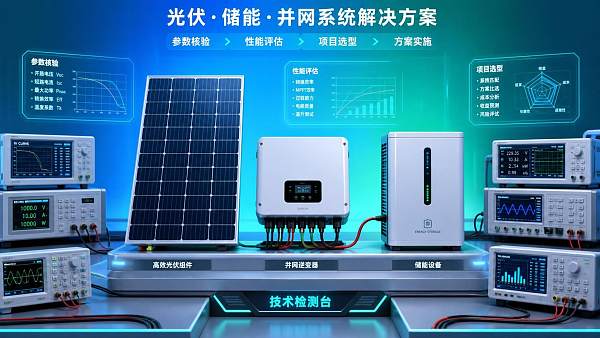
A technical page for a photovoltaic new energy export website should not simply copy parameter tables from a product catalog onto a webpage. Overseas buyers, EPC contractors, or technical reviewers at distributors typically need to determine within a short period whether the product can fit project conditions, whether performance claims are substantiated, whether compliance documentation is complete, and whether the supplier has the capability for continuous delivery. The website’s task is to organize the information required for these assessments in a verifiable, comparable, and downloadable manner.
If parameters contain only descriptions such as “high efficiency,” “low degradation,” and “suitable for multiple scenarios,” they will often result in general inquiries. If parameters lack corresponding test conditions, version control, and certification documents, technical personnel may still turn to repeated email requests for documentation even if they are interested. The prerequisite for high-quality leads is not a more prominent form, but a website that first helps visitors complete an initial technical screening.
Parameter presentation should first address “whether comparison is possible” before visual design
Modules, inverters, energy storage systems, and mounting products have different parameter dimensions, but the presentation principle is the same: products in the same category must use consistent fields, units, and test conditions. Visitors will proceed to the inquiry or product selection stage only when they can compare models side by side.
Taking PV modules as an example, the page should normally place rated power, module efficiency, open-circuit voltage, short-circuit current, and voltage and current at maximum power point in the core parameter section, while clearly specifying the test conditions corresponding to these electrical performance data. Do not place values under standard test conditions together with performance under different temperatures, irradiance levels, or installation conditions in the same table, as this can easily lead to misunderstandings of performance.
Environmental adaptability parameters should likewise not be condensed into a single selling point. Dimensions, weight, maximum system voltage, mechanical load, operating temperature range, connector and cable information are directly related to transportation, mounting structure design, string configuration, and on-site installation. For solutions in coastal, high-temperature, high-humidity, desert, or snowy regions, applicable conditions and product capabilities should be stated separately: the former explains application recommendations, while the latter provides verifiable product parameters or test documentation.
Certifications are not an icon wall; the focus is on scope of applicability and document linkage
Many new energy websites stack certification logos at the bottom of the page without explaining which product series, factory configuration, or market each certification applies to. For technical reviews, this type of presentation has limited informational value and may even increase compliance risks.
A more effective approach is to establish a “Certifications and Documents” section on each product model or series page. Certificate name, applicable products, document version, issuing entity, and download access should correspond to one another. If the same product differs due to market, material configuration, or specifications, these differences should also be clearly distinguished on the page. Documents still under application or update, or applicable only to certain models, should not be listed together with documentation for products already covered.
A common misconception here is to treat certification as a marketing label. In actual projects, buyers are more concerned with whether the documents can support market access, tendering, and project filing procedures in their location. The website does not need to list every standard term, but it should let visitors know where the documentation is, what it covers, and whether it corresponds to the current model.
Power degradation and performance claims should define their explanatory boundaries
“Low degradation” is a common expression on photovoltaic product pages, but it has little technical value if the period, calculation basis, applicable products, and warranty conditions are not specified. The page should separately explain initial performance, annual degradation statements, long-term power guarantees, and product warranties to prevent readers from confusing different commitments.
Likewise, content such as bifaciality, low-light performance, temperature coefficient, and PID resistance is best presented in the form of “parameters or test basis + application implications.” For example, the temperature coefficient affects output performance in high-temperature environments, but it cannot independently determine project power generation; the actual gain of bifacial modules is also affected by ground reflectivity, layout, shading, and installation method. Clearly stating these prerequisites makes it easier to build trust than displaying a single prominent performance figure.
For energy storage or inverter products, avoid using a single peak value in place of complete operating conditions. Rated power, capacity, operating voltage range, protection rating, grid connection requirements, cycle or operating conditions, and other information should be established as standardized fields by product category. The purpose of a technical page is not to promise suitability for every scenario, but to enable suitable project parties to confirm compatibility more quickly.
Use application data to answer project questions instead of displaying generic scenario images
Overseas visitors typically do not ask only whether a product is advanced; they further assess whether it is suitable for rooftops, ground-mounted power plants, commercial and industrial energy storage, off-grid systems, or specific climate regions. Therefore, application pages are best organized by project conditions rather than simply by country or industry category.
For example, rooftop scenarios focus on load capacity, dimensions, installation methods, and fire safety-related requirements; ground-mounted projects are more concerned with power range, system voltage, environmental resistance, delivery, and O&M support; distributed energy storage requires emphasis on battery configuration, compatibility relationships, protection logic, and installation conditions. Each scenario page does not need to create fictional cases, but it can explain which parameters should be matched during product selection and link to the relevant models, installation manuals, and technical documentation.
This structure also helps search engines understand the page topic. Rather than placing all products on a single “Solar Products” page, it is better to establish clear linking relationships among product series pages, individual model pages, application solution pages, and the resource center. This not only facilitates indexing, but also enables visitors arriving from search to complete their assessment along the path of “application conditions—model—documentation—inquiry.”
Inquiry forms should collect project conditions, not only contact information
No matter how complete the technical content is, if a form asks only for a name, email address, and message, the sales team will still need to spend considerable time screening leads. Photovoltaic new energy export website development should set a small number of high-value fields based on product type, allowing visitors to provide basic project background without feeling burdened.
- Target market or project location, used to assess local compliance and delivery requirements;
- Application type, such as residential rooftop, commercial and industrial, ground-mounted power plant, or energy storage support;
- Expected purchase volume, project capacity, or anticipated delivery time;
- Product series, power range, or technology route of interest;
- Whether datasheets, certification documents, quotations, or technical selection support are required.
There should not be too many fields. Visitors at the early research stage are generally unwilling to complete full project information, while users who have entered the procurement or engineering evaluation stage are more willing to leave clear requirements. “Download Complete Documentation Package,” “Get Technical Selection Advice,” and “Request a Quote” can be set as different actions, matched with different form depths. Basic contact information can be the focus when downloading documentation, while project conditions can be added for formal quotations, making it easier to distinguish research-oriented leads from procurement-oriented leads.
Multilingual pages cannot translate copy alone
Overseas technical personnel do not have entirely consistent requirements for units, terminology, and documentation practices. When building multilingual websites, product names, parameter units, manual versions, installation instructions, and form options need to be localized simultaneously, rather than translating only titles and introductory text. In particular, model naming, power units, dimension units, and electrical terminology should remain consistent throughout the same language site.
Yiyingbao’s intelligent website building and multilingual website solutions are suitable for managing product documentation, application pages, SEO content, and inquiry entry points within the same site structure. For companies that need to operate multiple overseas markets simultaneously, what matters more is not the number of pages, but ensuring that models, parameters, documents, and conversion paths across language versions do not lose their corresponding relationships.
Before development, a documentation review can be completed first: which parameters can be publicly displayed, which documents can be downloaded, which models correspond to which certifications and markets, and which project conditions must be confirmed during the inquiry stage. If an enterprise is establishing budgeting, document approval, or cross-departmental collaboration mechanisms internally, relevant management methods may refer to the budget management concepts in Research on Comprehensive Budget Management in Administrative and Public Institutions, incorporating website content maintenance into ongoing operations rather than leaving it unupdated for a long time after launch.
Ultimately, whether a technical parameter page is effective does not depend on how much information it contains, but on whether visitors can make accurate judgments based on it. When models are comparable, conditions are traceable, documents are verifiable, and forms reflect project maturity, the inquiries obtained by the website will generally be closer to actual procurement and engineering requirements.
Related Articles


Related Products
 Yiyingbao SaaS Intelligent Website Building and Marketing SystemYiyingbao SaaS Intelligent Website Building and Marketing System, AI-powered no-code website building, rapid creation of multilingual B2B international websites in 10 minutes, global server acceleration, AI-powered SEO optimization, helping businesses connect efficiently with global markets. The perfect integration of technology and operation makes building an international trade website remarkably simple
 AI+SEM Intelligent Advertising Marketing SystemAI+SEM drives intelligent ad creation, empowering full-funnel precision advertising marketing. The system automatically generates weekly/monthly reports, AI recommends keywords and target countries, monitors core metrics in real-time with intelligent alerts, and enables one-click high-conversion ad solutions to help quickly acquire customers and improve ROI.
 AI+SEO Dual-Engine System Optimization ServicesYiyingbao’s AI+SEO dual-engine optimization system helps foreign trade enterprises acquire high-quality organic traffic through AI-powered keyword research, content generation, and comprehensive technical optimization, significantly improving search rankings and conversion rates.
 AI+SNS Social Media Marketing SystemYingbao AI+SNS Social Media Marketing System - Precision social capture for the social media era. Supports one-click content synchronization across major platforms like Facebook and LinkedIn. AI intelligently rewrites posts for enhanced relevance. 24/7 AI customer service and user profiling analysis empower businesses to efficiently expand into global markets.
 AI+SEO营销解决方案易营宝AI+SEO营销解决方案,通过AI批量写作、智能生成TDK、精准关键词扩词等功能,全面优化网站SEO效果,提升流量与转化率。助力企业构建高效智能网站新生态。
 AI+SEM Advertising Marketing SolutionsAI+SEM Advertising Marketing Solution leverages AI technology to deeply empower SEM ad campaigns. It automatically generates weekly/monthly reports using AI, presenting account data across multiple dimensions for comprehensive insights into campaign performance and trends. The system precisely recommends keywords and target countries, intelligently generates high-conversion ad copy, and enables one-click activation of efficient campaign plans to help businesses rapidly acquire customers. Simultaneously, it monitors core metrics in real time, intelligently identifies abnormal fluctuations, and issues timely alerts to ensure stable, high-return advertising results.
 Domain Name ServicesEasyWin provides professional domain name services, including intelligent queries, one-stop registration, brand protection, and full lifecycle management, helping businesses build a digital brand image.
 EasyOperate B2C Cross-Border E-Commerce Platform & Independent WebsiteEasyStore B2C Cross-border E-commerce Independent Store is an intelligent website building and cross-border e-commerce integrated solution independently developed by EasyStore Information Technology (Beijing) Co., Ltd. The system is specially designed for small and medium-sized as well as large export enterprises, integrating 'website building, operation, marketing, advertising, and conversion' into one, helping enterprises quickly establish cross-border e-commerce independent stores to achieve brand globalization and global sales growth.
The platform supports multiple languages, multiple currencies, and multi-channel marketing, with built-in AI intelligent translation and SEO optimization systems, suitable for mainstream markets such as Southeast Asia, Europe and America, Latin America, and the Middle East, assisting Chinese manufacturing enterprises in efficiently deploying international e-commerce strategies. SSL证书易营宝提供专业SSL安全证书服务,包括单域名和泛域名证书,确保网站数据传输加密、身份验证和完整性保护,助力企业建立安全可信的在线业务环境。









