









- Fujian Announces the First Batch of Provincial-Level Cross-Border E-Commerce Industrial Parks and Key Brands for CultivationNov 14, 2026View details
- Amazon Global Store Announces the Launch of the 2026 Black Friday Global Shopping SeasonNov 14, 2026View details
- CCTV.com Examines APEC’s Role in China’s Foreign TradeNov 12, 2026View details
- China’s Tariff Commission of the State Council Adjusts Additional Tariffs on U.S. Goods: 24% Tariff Suspended for Two MonthsNov 10, 2026View details
- APEC Shenzhen Spotlight: Cross-Border E-Commerce Orders Promote Asia-Pacific Trade and Economic CooperationNov 08, 2026View details
- China-Europe Railway Express and CIIE Hold Business Matchmaking Event, Focusing on Cross-Border E-commerce B2B ExportsNov 07, 2026View details
What are the fundamental differences between B2B website translation and B2C website translation?
What Is the Fundamental Difference Between B2B and B2C Website Translation?
What is the fundamental difference between B2B and B2C website translation? The former focuses on the decision-making journey and professional trust, while the latter focuses on the consumer experience and immediate conversion. When building multilingual websites, many companies still understand “translation” as replacing Chinese text sentence by sentence with a foreign language. Only after the site goes live do they find that traffic is poorly matched, inquiry quality is low, or products can be seen but are difficult to purchase. The issue is usually not the language itself, but the failure to distinguish between the audiences, content tasks, and marketing actions involved in the two types of websites.
For business evaluators, multilingual solutions should not be assessed solely by the number of languages, translation unit price, or delivery speed. More importantly, who are the target visitors, what actions does the website expect them to take, and can the company internally handle subsequent leads, quotations, fulfillment, and customer service? The boundary between B2B and B2C translation begins with these business realities.
Both Are “Localization,” but They Serve Different Decision-Making Processes
B2B purchasing decisions are often not made by a single person after viewing a webpage. Procurement personnel, technical managers, end-user departments, finance teams, and even compliance personnel may each focus on supply capacity, technical specifications, minimum order quantities, lead times, certification documents, after-sales boundaries, and long-term cooperation risks. Therefore, B2B website translation is not simply about conveying product selling points; it is about helping different roles establish a basis for evaluation.
For example, a manufacturing company may directly translate “high quality, customizable, fast delivery” into the target language. While this may appear correct, it may not answer the questions overseas buyers truly have: To what extent can the product be customized? What drawings or samples need to be provided? How are materials, dimensional tolerances, and testing methods confirmed? How are production arrangements for bulk orders communicated? If this information is incomplete, visitors may still leave or submit general inquiries that cannot be effectively followed up.
B2C is different. Consumers usually complete the process of “seeing—understanding—liking—comparing—ordering” within a relatively short period. Translation should focus on product names, use scenarios, specification options, review wording, shipping information, return and exchange policies, payment methods, and checkout prompts. The language needs to be closer to everyday consumer contexts and remain consistent with visuals, prices, inventory, and promotional rules. Ambiguity in a button, a size guide, or a shipping notice can directly interrupt a purchase.
The Challenge of B2B Translation Is That Professional Information Must Be More Than Simply “Correctly Translated”
B2B pages often contain specification sheets, material descriptions, process flows, industry terminology, certification statements, and project capability introductions. Two types of risks are especially common here: one is inconsistent terminology, where the same component, process, or performance indicator is described differently across product pages, case study pages, and downloadable materials; the other is directly transferring Chinese business expressions, resulting in commitment styles unfamiliar to readers in the target market.
For example, “customization supported” can mean very different things across product categories. It may mean changing colors or packaging, or it may involve mold development, material substitution, or engineering design. A more suitable approach for overseas procurement communication is not to repeatedly emphasize “customizable,” but to break down the actual capabilities into adjustable items, upfront information requirements, sample procedures, and boundaries requiring further confirmation. This helps potential customers understand how to cooperate while preventing sales teams from receiving large volumes of requests that cannot be assessed.
Therefore, B2B translation usually requires establishing a terminology database and content hierarchy first. Brand introductions can be relatively concise, product category pages need to match industry search habits, specific product pages should retain key parameters, and application pages should explain what problems the products solve. For companies with downloadable materials, inquiry forms, and multiple regional sites, units, date formats, telephone country codes, privacy notices, and form field logic must also be standardized. Language is only the final presentation; the preceding information governance often has a greater impact on quality.

B2C Cannot Overlook “Minor Friction” in the Transaction Journey
B2C website content is typically updated more frequently. New products, inventory, discounts, bundle sales, holiday campaigns, and user reviews may all change. If the translation workflow is disconnected from the e-commerce system, situations often arise where the main page has been updated while product details still contain outdated copy, or promotional conditions are inconsistent across language sites. Consumers may not question translation quality, but they may abandon their orders directly because of the effort required to understand the information or a lack of trust.
Payment, logistics, and after-sales information in particular cannot be handled through literal conversion alone. Users in different markets may prioritize estimated delivery times, tax displays, return windows, and customer service access points differently. Statements involving local laws, taxation, or consumer rights should be confirmed by the company based on sales-market requirements and actual fulfillment capabilities, rather than allowing translators to make commitments on behalf of business departments. The baseline for e-commerce localization is consistency between page language, system configuration, and actual service capabilities.
Once Search and Advertising Are Involved, Translation Must Not Be Separated From the Marketing System
A common misconception among many companies is to complete the translation of the entire website first and consider search engine optimization or advertising landing pages afterward. In actual implementation, search expressions in the target market often do not correspond one-to-one with Chinese product names. B2B buyers may search for applications, materials, processes, or solutions; B2C users may enter through categories, use scenarios, styles, or problem-related terms. If page titles, category structures, and body content are organized only according to the source language, real search demand may not be captured even if the translation is fluent.
A more prudent approach is to plan language versions, site structure, keyword research, content production, and conversion paths together during the website-building stage. B2B content can be built around products, industry applications, proof of capabilities, and inquiry handling; B2C should create a coherent path connecting products, collection pages, campaign pages, advertising materials, and social media content. Whether different regions should use separate domains, how subdirectories should be configured, and which pages should be prioritized for localization should also be determined based on budget, operational teams, and market priorities.
When Evaluating Suppliers, Do Not Only Ask “How Many Languages Can You Translate?”
The questions truly worth confirming include: Are terminology and prohibited expressions reviewed before translation? Who verifies product parameters? Can multilingual content be continuously maintained in the backend? How are new products, advertising pages, and social media materials synchronized? How do inquiry or order data flow back? After a website redesign, how are historical language versions handled? For B2B projects, attention should also be given to whether forms and lead grading can be designed by product line, region, and customer type. For B2C projects, it is necessary to confirm whether the e-commerce platform, payment, logistics, inventory, and multilingual content can work together reliably.
Since 2013, Yiyingbao Information Technology (Beijing) Co., Ltd. has focused on global digital marketing services, with artificial intelligence and big data at its core, covering intelligent website building, SEO optimization, social media marketing, and advertising. It provides enterprise-level SaaS website-building and overseas marketing services for foreign trade companies, manufacturing plants, cross-border sellers, and globalizing brands. Its multilingual websites, cross-border e-commerce platforms, search optimization, and advertising capabilities are suitable for evaluation within the same business chain, rather than treating translation as a one-time outsourcing task.
Ultimately, B2B website translation addresses “why customers can confidently continue the discussion,” while B2C website translation addresses “why users are willing to buy now.” Before launching a project, companies should first define their primary business model, priority markets, key pages, and personnel responsible for ongoing operations, and then determine the depth of translation and system configuration. This is usually more effective than pursuing the broadest possible language coverage from the outset.
Related Articles
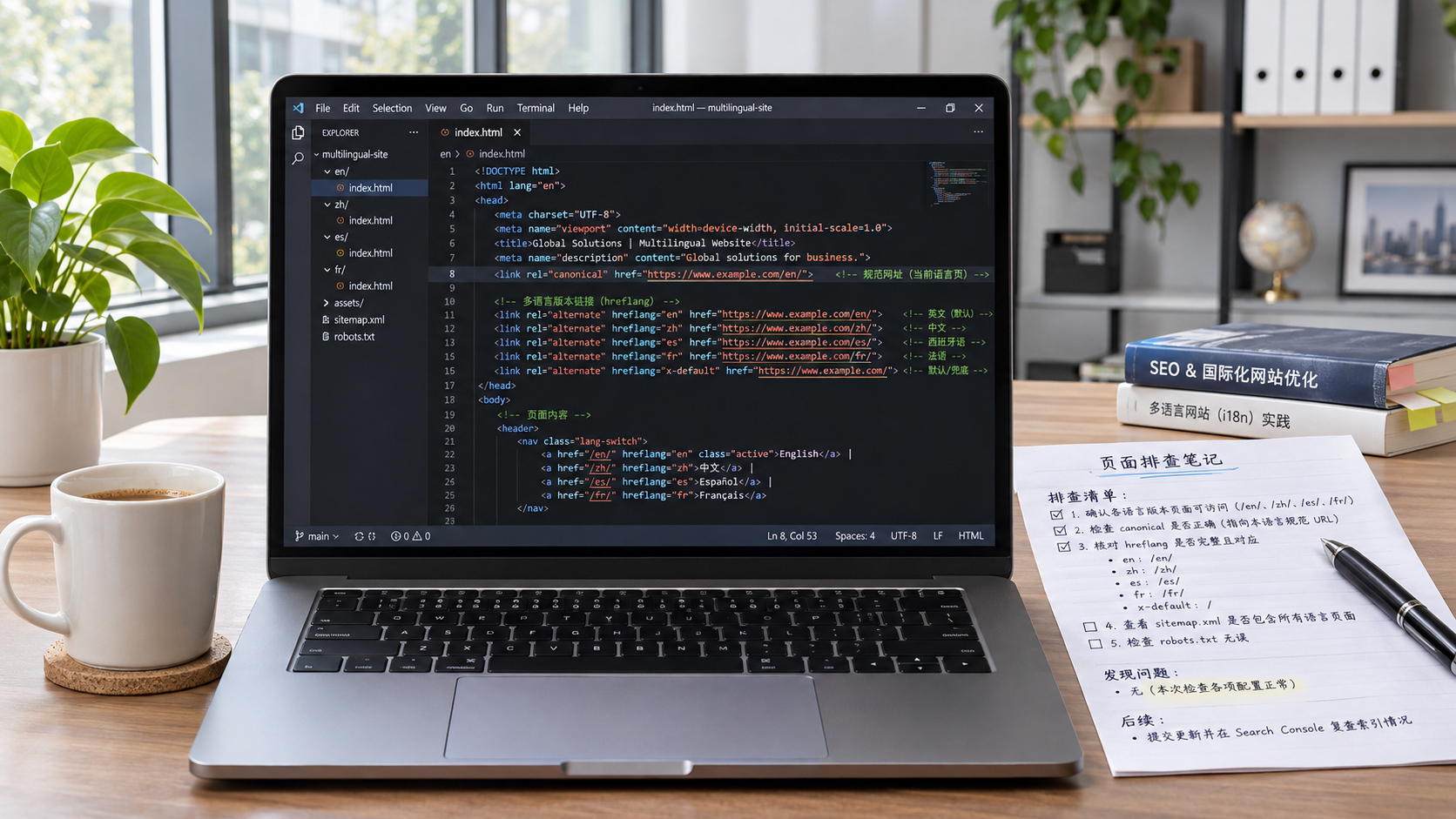
 Why Might a Page Not Be Indexed Even When hreflang Is Configured Correctly?
 How Should a B2C Multilingual Website Set Currencies for Different Regions?
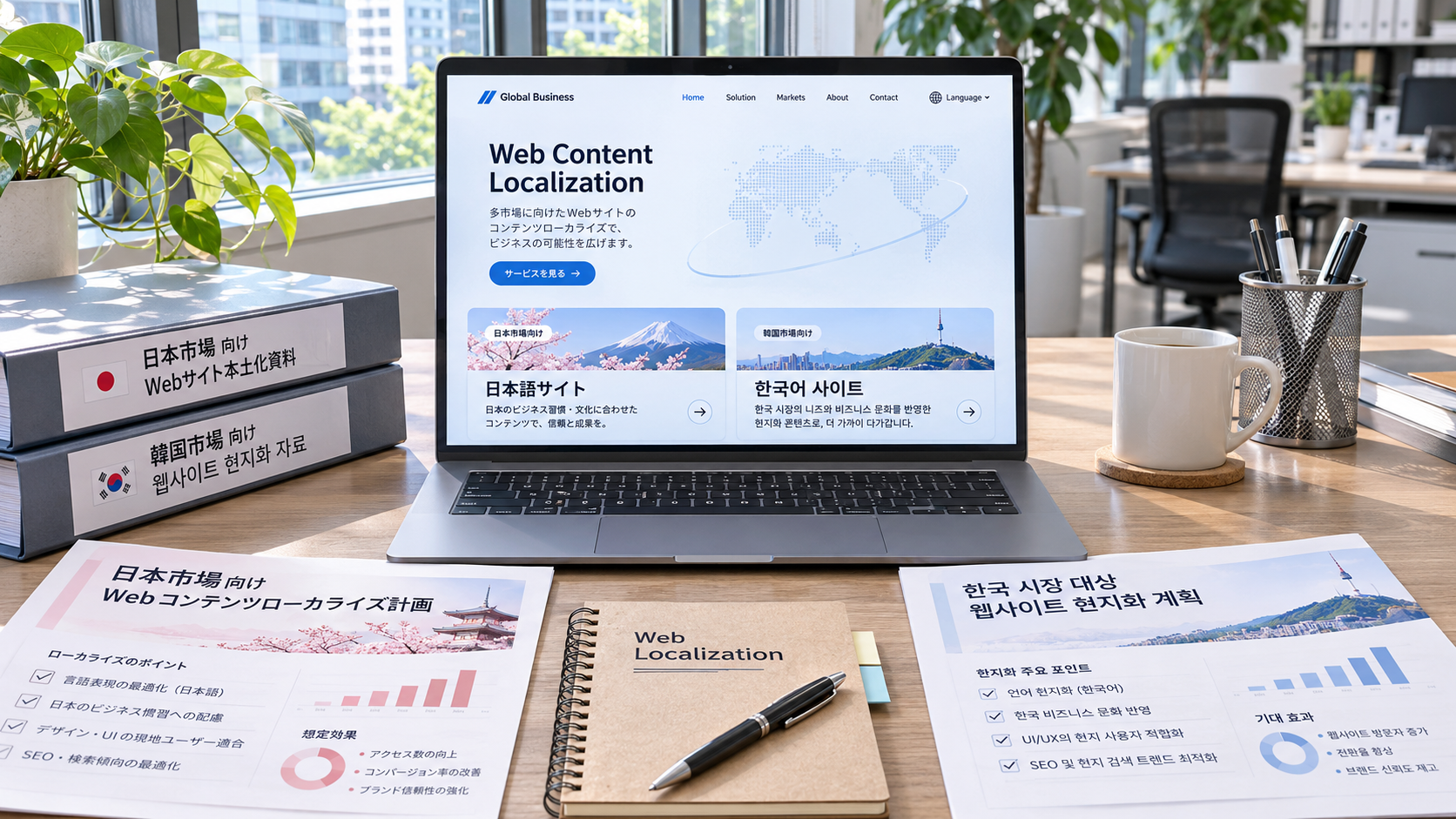
 Can a Korean-language website reach Japanese customers when expanding into the Japanese and South Korean markets?

Related Products
 Yiyingbao SaaS Intelligent Website Building and Marketing SystemYiyingbao SaaS Intelligent Website Building and Marketing System, AI-powered no-code website building, rapid creation of multilingual B2B international websites in 10 minutes, global server acceleration, AI-powered SEO optimization, helping businesses connect efficiently with global markets. The perfect integration of technology and operation makes building an international trade website remarkably simple
 AI+SEM Intelligent Advertising Marketing SystemAI+SEM drives intelligent ad creation, empowering full-funnel precision advertising marketing. The system automatically generates weekly/monthly reports, AI recommends keywords and target countries, monitors core metrics in real-time with intelligent alerts, and enables one-click high-conversion ad solutions to help quickly acquire customers and improve ROI.
 AI+SEO Dual-Engine System Optimization ServicesYiyingbao’s AI+SEO dual-engine optimization system helps foreign trade enterprises acquire high-quality organic traffic through AI-powered keyword research, content generation, and comprehensive technical optimization, significantly improving search rankings and conversion rates.
 AI+SNS Social Media Marketing SystemYingbao AI+SNS Social Media Marketing System - Precision social capture for the social media era. Supports one-click content synchronization across major platforms like Facebook and LinkedIn. AI intelligently rewrites posts for enhanced relevance. 24/7 AI customer service and user profiling analysis empower businesses to efficiently expand into global markets.
 AI+SEO营销解决方案易营宝AI+SEO营销解决方案,通过AI批量写作、智能生成TDK、精准关键词扩词等功能,全面优化网站SEO效果,提升流量与转化率。助力企业构建高效智能网站新生态。
 AI+SEM Advertising Marketing SolutionsAI+SEM Advertising Marketing Solution leverages AI technology to deeply empower SEM ad campaigns. It automatically generates weekly/monthly reports using AI, presenting account data across multiple dimensions for comprehensive insights into campaign performance and trends. The system precisely recommends keywords and target countries, intelligently generates high-conversion ad copy, and enables one-click activation of efficient campaign plans to help businesses rapidly acquire customers. Simultaneously, it monitors core metrics in real time, intelligently identifies abnormal fluctuations, and issues timely alerts to ensure stable, high-return advertising results.
 Domain Name ServicesEasyWin provides professional domain name services, including intelligent queries, one-stop registration, brand protection, and full lifecycle management, helping businesses build a digital brand image.
 EasyOperate B2C Cross-Border E-Commerce Platform & Independent WebsiteEasyStore B2C Cross-border E-commerce Independent Store is an intelligent website building and cross-border e-commerce integrated solution independently developed by EasyStore Information Technology (Beijing) Co., Ltd. The system is specially designed for small and medium-sized as well as large export enterprises, integrating 'website building, operation, marketing, advertising, and conversion' into one, helping enterprises quickly establish cross-border e-commerce independent stores to achieve brand globalization and global sales growth.
The platform supports multiple languages, multiple currencies, and multi-channel marketing, with built-in AI intelligent translation and SEO optimization systems, suitable for mainstream markets such as Southeast Asia, Europe and America, Latin America, and the Middle East, assisting Chinese manufacturing enterprises in efficiently deploying international e-commerce strategies. SSL证书易营宝提供专业SSL安全证书服务,包括单域名和泛域名证书,确保网站数据传输加密、身份验证和完整性保护,助力企业建立安全可信的在线业务环境。









