









- Fujian Announces the First Batch of Provincial-Level Cross-Border E-Commerce Industrial Parks and Key Brands for CultivationNov 14, 2026View details
- Amazon Global Store Announces the Launch of the 2026 Black Friday Global Shopping SeasonNov 14, 2026View details
- CCTV.com Examines APEC’s Role in China’s Foreign TradeNov 12, 2026View details
- China’s Tariff Commission of the State Council Adjusts Additional Tariffs on U.S. Goods: 24% Tariff Suspended for Two MonthsNov 10, 2026View details
- APEC Shenzhen Spotlight: Cross-Border E-Commerce Orders Promote Asia-Pacific Trade and Economic CooperationNov 08, 2026View details
- China-Europe Railway Express and CIIE Hold Business Matchmaking Event, Focusing on Cross-Border E-commerce B2B ExportsNov 07, 2026View details
What Is AI Website Building, and How Does It Differ from Template-Based Website Building?
Many people ask, “What does AI website building mean?” What they really want to know is often not whether it can automatically generate a page, but rather: How different is it from conventional template-based website building? Can it be used for corporate websites, foreign trade lead generation, or cross-border sales? Does faster launch also bring issues such as repetitive content, poor search indexing, or an inability to make later revisions?
A practical conclusion can be given first: AI website building is not “choosing a template and then automatically filling in text.” Instead, it uses artificial intelligence to generate and help refine website structures, page copy, product information, multilingual content, and basic marketing elements based on a company's industry, products, target markets, languages, and marketing objectives. It is typically still supported by a website-building system, but compresses the preliminary planning, content drafting, and page configuration that previously required manual work into a much shorter time.
Template-based website building can also enable a fast launch, but its core logic is “layout first, then users fill in the content.” AI website building is closer to “first understand the input information, then generate an initial website solution suited to the business.” The two are not entirely opposed. Many mature platforms actually combine template components with AI generation capabilities: templates ensure page stability, responsive adaptation, and controllable functionality, while AI improves efficiency in website building and operation.
What can AI website building specifically do?
The capabilities of different systems vary greatly, but when companies use AI website building, they will typically encounter several types of functions: generating homepage and site-section structures from a brief business description; automatically drafting content such as company profiles, product pages, and industry application pages; generating or rewriting multilingual pages for different markets; recommending page titles, descriptions, internal links, and call-to-action buttons; and rapidly generating multiple versions for advertising landing pages, inquiry forms, or e-commerce product pages.
Take a company exporting industrial components as an example. In the traditional process, it often first needs to determine the website sections, then organize English selling points, product specifications, application industries, and inquiry paths before creating pages one by one. AI can first provide a structural draft of “product categories—application scenarios—technical capabilities—quality control—inquiry entry points” and produce an editable English draft. Company personnel must then add accurate model numbers, certifications, lead times, service scope, and image materials before the pages have a foundation for external use.
Therefore, the most valuable aspect of AI is reducing the workload of starting from scratch, rather than replacing companies in providing factual information. It can generate wording, but it cannot inherently know whether a company's process advantages are valid, whether product specifications are accurate, or whether certain promotional language is permitted in a particular market.

What are the main differences compared with template-based website building?
On the surface, the difference with AI website building lies in “generation speed.” For marketing websites, the more significant difference is actually in subsequent iteration. After a template website goes live, if product selling points, language expression, and landing pages need to be adjusted separately for North America, Europe, or Southeast Asia, considerable manual editing is often still required. Platforms with more comprehensive AI capabilities can quickly create initial page drafts for the same product in different languages, for different application scenarios, and for different promotional channels, making it easier for teams to continue refining them.
However, “generating faster” does not mean “the website will necessarily be better.” If the information provided to AI consists only of a company name and a few general descriptions of its main business, the output can easily remain at generic statements such as “high quality, professional service, and global delivery,” which lack differentiation. Template-based website building at least exposes the problem of insufficient content preparation; AI website building may enable a seemingly complete website to go live faster while concealing the fact that product positioning, materials, and conversion paths are not yet ready.
In foreign trade and marketing scenarios, page appearance is not the only consideration
For B2B foreign trade companies, a website typically serves to be found through search, receive advertising clicks, build trust, and collect inquiries. Whether AI website building is suitable depends on whether the generated website can continue to be operated, not merely whether it can be published on the same day.
- Whether content is controllable: Whether the company can revise AI-generated text section by section and add technical specifications, application boundaries, delivery information, and compliance statements, rather than only accepting fixed copy.
- Whether multilingual content suits the business: Multilingual pages should not be merely word-for-word translations. Product terminology, units of measurement, inquiry practices, and market priorities need to leave room for human proofreading.
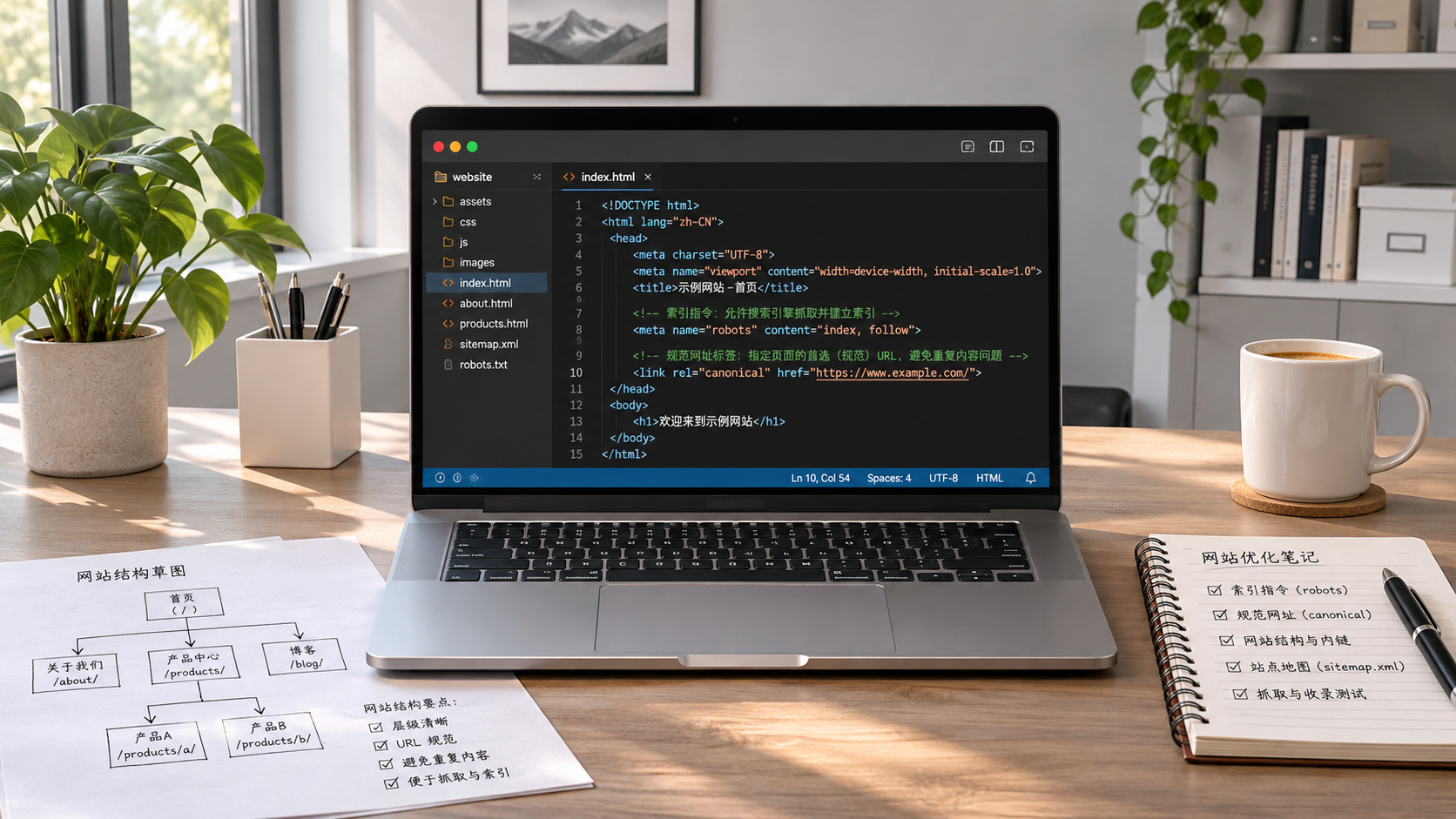
- Whether search optimization is supported: Page titles, descriptions, URLs, sitemaps, image alt text, internal links, and page loading performance all affect the feasibility of subsequent SEO work.
- Whether it can support promotion: Advertising landing pages require clear selling points, forms, contact details, and conversion tracking. If the system cannot conveniently create, test, and adjust pages, the value of AI generation will be limited.
- Whether data and asset ownership is clear: Whether domain names, page content, product data, form leads, and traffic data can be exported, migrated, or continuously used should be confirmed before selecting a system.
Especially in industries with complex products, high average order values, or long purchasing decision cycles, website content cannot merely pursue “looking like a complete official website.” Buyers will look for specifications, materials, production capacity, quality control, customization capabilities, application cases, and contact details. AI can help organize this information into pages that are easier to read, but the information itself must come from materials the company can verify.
Which situations are suitable, and which require a slower approach?
Companies that need to quickly build a brand website, product catalog, inquiry website, or campaign landing page, or that plan to conduct multilingual market testing, are generally suitable for using AI website building as a starting point. It is also suitable for teams with many product lines and frequent content updates: the system can first generate page frameworks and copy drafts, which product, sales, and marketing personnel then review and refine, reducing repetitive editing work.
If a company has not yet clarified its target customers, key products, and website objectives, using AI to generate dozens of pages first will not solve the problem. In medical, financial, legal, and heavily regulated product sectors, as well as fields with highly specialized technical specifications, generated content should not be published directly. More rigorous terminology review, qualification statement review, and regional compliance assessment are needed in these cases.
In addition, when website design is highly customized, interactions are complex, or deep integration is required with systems such as ERP, CRM, inventory, membership, and quotation systems, the scope that AI website building can cover needs to be assessed specifically. Generating pages and completing complex business systems are two different matters: the former can be fast, while the latter still depends on clear requirements, interface capabilities, and development delivery.
To evaluate an AI website-building tool, consider four questions first
First, does it generate a single visual page or a complete website information architecture? Second, can every generated module be freely edited, reused, and expanded? Third, can content, multilingual versions, SEO settings, and form leads be managed centrally? Fourth, when conducting Google SEO, advertising, and social media traffic acquisition later, can the website continuously provide adjustable landing pages?
These four questions are more aligned with companies' long-term needs than “generating a website in a few minutes.” The appropriate positioning of AI website building is to gradually transform website construction from a one-time project into marketing infrastructure that can be continuously updated. For those conducting research, there is no need to regard it as a replacement for template-based website building, nor should they expect it to automatically complete brand strategy and content review. Only after clearly understanding its generation capabilities, editing flexibility, marketing integration capabilities, and responsibility for human review should they decide whether to adopt it; this will lead to a more prudent judgment.
Related Articles
 Can an AI website builder demo show how pages look on mobile?
 Is Your AI-Generated Website Not Being Indexed by Search Engines? Follow These Steps to Troubleshoot SEO Issues
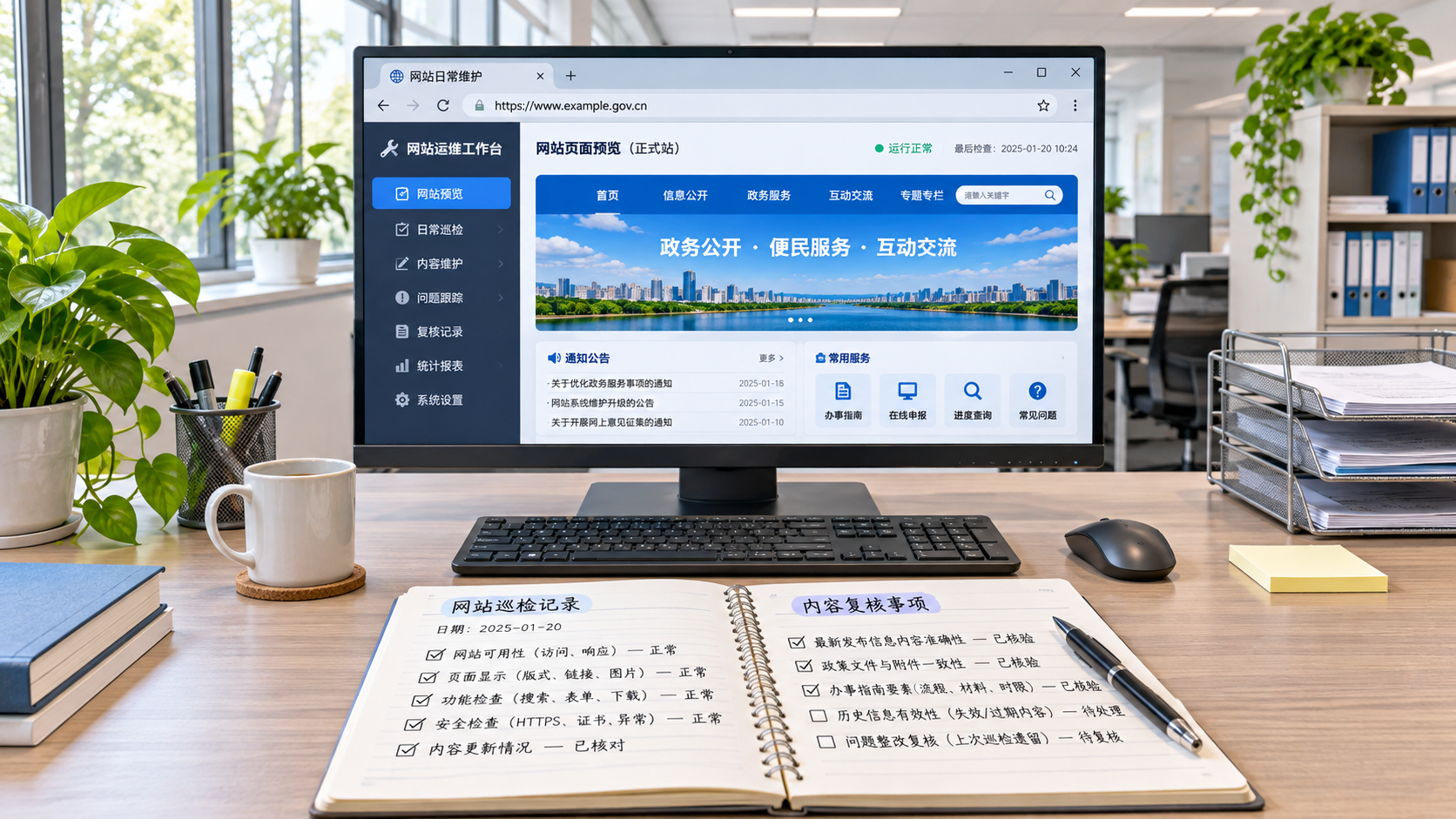
 What Website Maintenance Tasks Can AI Handle? Automated Monitoring, Updates, and Human Review

Related Products
 Yiyingbao SaaS Intelligent Website Building and Marketing SystemYiyingbao SaaS Intelligent Website Building and Marketing System, AI-powered no-code website building, rapid creation of multilingual B2B international websites in 10 minutes, global server acceleration, AI-powered SEO optimization, helping businesses connect efficiently with global markets. The perfect integration of technology and operation makes building an international trade website remarkably simple
 AI+SEM Intelligent Advertising Marketing SystemAI+SEM drives intelligent ad creation, empowering full-funnel precision advertising marketing. The system automatically generates weekly/monthly reports, AI recommends keywords and target countries, monitors core metrics in real-time with intelligent alerts, and enables one-click high-conversion ad solutions to help quickly acquire customers and improve ROI.
 AI+SEO Dual-Engine System Optimization ServicesYiyingbao’s AI+SEO dual-engine optimization system helps foreign trade enterprises acquire high-quality organic traffic through AI-powered keyword research, content generation, and comprehensive technical optimization, significantly improving search rankings and conversion rates.
 AI+SNS Social Media Marketing SystemYingbao AI+SNS Social Media Marketing System - Precision social capture for the social media era. Supports one-click content synchronization across major platforms like Facebook and LinkedIn. AI intelligently rewrites posts for enhanced relevance. 24/7 AI customer service and user profiling analysis empower businesses to efficiently expand into global markets.
 AI+SEO营销解决方案易营宝AI+SEO营销解决方案,通过AI批量写作、智能生成TDK、精准关键词扩词等功能,全面优化网站SEO效果,提升流量与转化率。助力企业构建高效智能网站新生态。
 AI+SEM Advertising Marketing SolutionsAI+SEM Advertising Marketing Solution leverages AI technology to deeply empower SEM ad campaigns. It automatically generates weekly/monthly reports using AI, presenting account data across multiple dimensions for comprehensive insights into campaign performance and trends. The system precisely recommends keywords and target countries, intelligently generates high-conversion ad copy, and enables one-click activation of efficient campaign plans to help businesses rapidly acquire customers. Simultaneously, it monitors core metrics in real time, intelligently identifies abnormal fluctuations, and issues timely alerts to ensure stable, high-return advertising results.
 Domain Name ServicesEasyWin provides professional domain name services, including intelligent queries, one-stop registration, brand protection, and full lifecycle management, helping businesses build a digital brand image.
 EasyOperate B2C Cross-Border E-Commerce Platform & Independent WebsiteEasyStore B2C Cross-border E-commerce Independent Store is an intelligent website building and cross-border e-commerce integrated solution independently developed by EasyStore Information Technology (Beijing) Co., Ltd. The system is specially designed for small and medium-sized as well as large export enterprises, integrating 'website building, operation, marketing, advertising, and conversion' into one, helping enterprises quickly establish cross-border e-commerce independent stores to achieve brand globalization and global sales growth.
The platform supports multiple languages, multiple currencies, and multi-channel marketing, with built-in AI intelligent translation and SEO optimization systems, suitable for mainstream markets such as Southeast Asia, Europe and America, Latin America, and the Middle East, assisting Chinese manufacturing enterprises in efficiently deploying international e-commerce strategies. SSL证书易营宝提供专业SSL安全证书服务,包括单域名和泛域名证书,确保网站数据传输加密、身份验证和完整性保护,助力企业建立安全可信的在线业务环境。









