- Fujian Announces the First Batch of Provincial-Level Cross-Border E-Commerce Industrial Parks and Key Brands for CultivationNov 14, 2026View details
- Amazon Global Store Announces the Launch of the 2026 Black Friday Global Shopping SeasonNov 14, 2026View details
- CCTV.com Examines APEC’s Role in China’s Foreign TradeNov 12, 2026View details
- China’s Tariff Commission of the State Council Adjusts Additional Tariffs on U.S. Goods: 24% Tariff Suspended for Two MonthsNov 10, 2026View details
- APEC Shenzhen Spotlight: Cross-Border E-Commerce Orders Promote Asia-Pacific Trade and Economic CooperationNov 08, 2026View details
- China-Europe Railway Express and CIIE Hold Business Matchmaking Event, Focusing on Cross-Border E-commerce B2B ExportsNov 07, 2026View details
What Is the Difference in Identity Verification Strength Between DV and EV SSL?
What Is the Difference in Identity Verification Strength Between DV and EV SSL?
When discussing dv vs ev ssl in the context of website security and brand trust building, it is not enough to look only at certificate price or issuance speed. Both enable websites to establish encrypted connections through HTTPS, protecting data transmitted between browsers and servers; what truly differentiates them is the depth to which the certificate authority verifies “who is behind the website” before issuance. For personnel responsible for website quality, security compliance, and overseas business risk control, this difference can affect phishing risks, buyers’ judgments, brand credibility, and responsibility boundaries for subsequent website operations and maintenance.
A common misconception is that EV SSL encryption is necessarily stronger than DV SSL encryption. In fact, the certificate type does not directly determine which cipher suite, key exchange method, or server security configuration is used for a TLS session. As long as qualified certificates are used and properly deployed, both DV and EV can support modern HTTPS encryption. Whether a website is truly secure also depends on private key management, certificate chain configuration, TLS versions, server patching, redirect policies, content security policies, and routine monitoring. The core value of EV is not “more advanced encryption,” but “stricter identity verification.”
DV Verifies Domain Control, While EV Verifies Organizational Identity and Authorization
DV, or Domain Validation certificates, focus on verifying whether an applicant can control a particular domain name. Common validation methods include adding designated records to the domain’s DNS, receiving verification information through a specified email address, or placing a verification file in the website directory. Once verification is completed, the certificate authority can confirm that the applicant has a certain level of control over the domain, but it usually does not further verify its registered business entity, actual operating status, or the applicant’s position and authorization.
EV, or Extended Validation certificates, verify not only domain control but also an organization’s legal existence, operational status, registered address, telephone number, and application authorization in greater depth. Specific procedures may vary among certificate authorities, but the principle is to extend verification from “whether this domain can be controlled” to “whether the applicant is an identifiable, verifiable organization and whether the application has been authorized.” Therefore, EV review periods are typically longer, and changes to organizational information also require more careful handling during renewal or reissuance.
It is worth noting that browsers have largely stopped using prominent “green address bars” to display EV identity in recent years. Visitors will not necessarily see a clear indicator simply because a website uses EV, but organizational information can still be checked in the certificate details. For security managers, this means EV should not be treated as a visual marketing tool for general visitors, but rather as one link in a verifiable identity chain.

What Types of Risks Does Identity Verification Strength Address?
The risk of DV is not that it “does not encrypt,” but that it cannot sufficiently help visitors determine the business entity behind a domain name. If an attacker registers a domain similar to a brand name and completes control validation for that domain, they may also obtain a DV certificate and a browser lock icon. For companies that rely on their official websites to receive high-value purchase inquiries, distributor applications, payment materials, or technical documents, this misconception that “HTTPS means secure” deserves attention.
EV makes it more difficult to impersonate the identity of a legitimate company, but it is not a universal safeguard against imitation, malicious redirects, or account leaks. Similar domain names, fake social media pages, email domain spoofing, and compromised websites can all bypass users’ intuitive judgment. A more prudent approach is to incorporate certificate selection into comprehensive external digital asset governance: standardize domain registration information and renewal permissions, establish certificate expiration reminders, restrict private key and DNS modification permissions, and continuously inspect brand-similar domains, abnormal redirect pages, and search advertising landing pages.
Certificates Should Not Be Selected Based on Website Type Alone
Many companies use a simple rule of “EV for the official website and DV for all other pages,” but this is not always appropriate in practice. The assessment should be based on the business responsibilities carried by the website. For a multilingual website that only displays product catalogs and has no account system or sensitive interactions, DV is often sufficient; however, if the site is the primary entry point for overseas distributors to verify supplier identity, and its pages handle sample requests, quotation documents, compliance material downloads, or pre-payment communications, the verifiability of organizational identity deserves greater evaluation.
Conversely, using EV cannot replace fundamental security requirements. For pages involving account login, orders, payments, or personal information collection, priority should be given to checking whether HTTPS-enforced redirects are enabled across the entire website, whether mixed content exists, whether forms are submitted to trusted domains, whether multi-factor authentication is enabled for backend systems, and whether clear personnel are responsible for logs and vulnerability remediation. For cross-border online stores, confirmation should also take into account payment service providers, data protection requirements in target markets, and the company’s own data flows.
In Website Development and Marketing Delivery, Certificates Should Not Be the Last Item to Check
Website launches often involve technology, marketing, foreign trade operations, and third-party service providers. If certificates are handled only at the last minute before launch, issues can easily arise, such as unclear domain ownership, unmaintained verification email accounts, missed certificate renewals, and advertising landing pages using non-standard subdomains. Especially when multiple languages, websites, and regional campaigns are running in parallel, certificate coverage should be planned together with the domain architecture: records should be retained for who manages the primary domain, www domain, language directories, and country- or business-specific subdomains, as well as which websites require separate certificates.
In intelligent website development, multilingual website, and overseas marketing projects, Yiyingbao considers domains, HTTPS deployment, page publishing, and promotional workflows from a unified delivery perspective. For companies serving markets such as North America, Europe, Southeast Asia, and the Middle East, the focus is not on blindly pursuing the highest-level certificate, but on ensuring consistency among website entity information, brand domains, advertising accounts, social media pages, and inquiry forms, thereby reducing identity concerns after customers enter the website from search results.
Answer Three Questions Before Making a Decision
First, does the website serve the purpose of allowing unfamiliar customers to verify the company’s identity? Second, if the domain is imitated, could it lead to the loss of high-value inquiries, payment misdirection, or brand complaints? Third, does the company have a management mechanism for maintaining organizational information, authorized contacts, and certificate renewals? The more the answers to the first two questions lean toward “yes,” the clearer the value of EV usually becomes; if the website is in a rapid testing, short-term campaign, or low-risk content publishing stage, DV is more convenient for flexible deployment.
DV and EV are not a binary choice between security and insecurity, but rather a match between risks and different levels of identity verification strength. After certificate selection is determined, certificate validity periods, domain resolution, TLS configurations, and website content sources should still be checked regularly. For companies expanding overseas, what truly withstands scrutiny from buyers, search platforms, and security teams is not a certificate alone, but a consistent and sustainably maintained digital identity system.
Related Articles
 New SWIFT rules take effect on November 14: payment messages with fully unstructured addresses will be rejected
 1Password Launches Secure Agent Access Feature: 1Password for Agents
 DebugBear confirms service has been restored following a DNS hijacking incident



Related Products
 Yiyingbao SaaS Intelligent Website Building and Marketing SystemYiyingbao SaaS Intelligent Website Building and Marketing System, AI-powered no-code website building, rapid creation of multilingual B2B international websites in 10 minutes, global server acceleration, AI-powered SEO optimization, helping businesses connect efficiently with global markets. The perfect integration of technology and operation makes building an international trade website remarkably simple
 AI+SEM Intelligent Advertising Marketing SystemAI+SEM drives intelligent ad creation, empowering full-funnel precision advertising marketing. The system automatically generates weekly/monthly reports, AI recommends keywords and target countries, monitors core metrics in real-time with intelligent alerts, and enables one-click high-conversion ad solutions to help quickly acquire customers and improve ROI.
 AI+SEO Dual-Engine System Optimization ServicesYiyingbao’s AI+SEO dual-engine optimization system helps foreign trade enterprises acquire high-quality organic traffic through AI-powered keyword research, content generation, and comprehensive technical optimization, significantly improving search rankings and conversion rates.
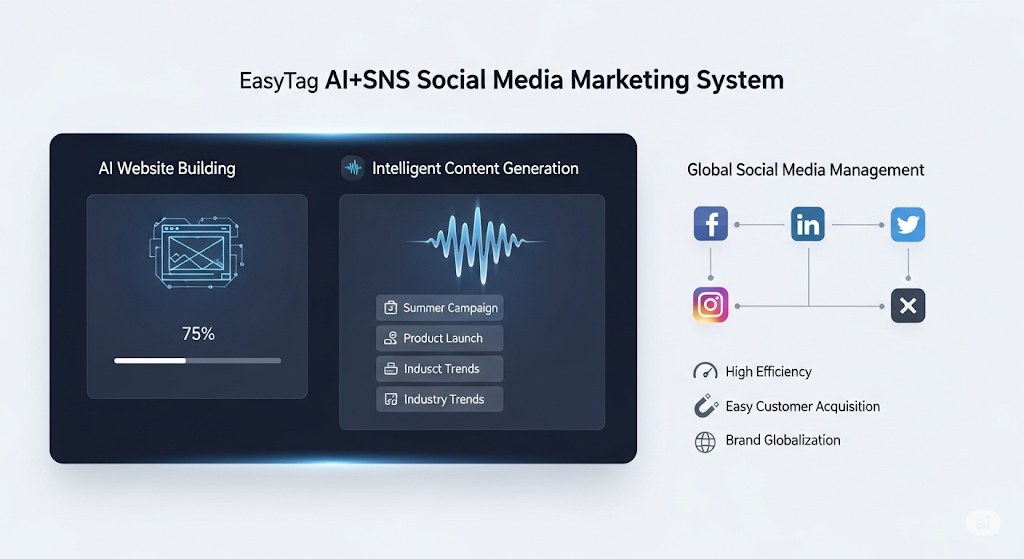
 AI+SNS Social Media Marketing SystemYingbao AI+SNS Social Media Marketing System - Precision social capture for the social media era. Supports one-click content synchronization across major platforms like Facebook and LinkedIn. AI intelligently rewrites posts for enhanced relevance. 24/7 AI customer service and user profiling analysis empower businesses to efficiently expand into global markets.
 AI+SEO营销解决方案易营宝AI+SEO营销解决方案,通过AI批量写作、智能生成TDK、精准关键词扩词等功能,全面优化网站SEO效果,提升流量与转化率。助力企业构建高效智能网站新生态。
 AI+SEM Advertising Marketing SolutionsAI+SEM Advertising Marketing Solution leverages AI technology to deeply empower SEM ad campaigns. It automatically generates weekly/monthly reports using AI, presenting account data across multiple dimensions for comprehensive insights into campaign performance and trends. The system precisely recommends keywords and target countries, intelligently generates high-conversion ad copy, and enables one-click activation of efficient campaign plans to help businesses rapidly acquire customers. Simultaneously, it monitors core metrics in real time, intelligently identifies abnormal fluctuations, and issues timely alerts to ensure stable, high-return advertising results.
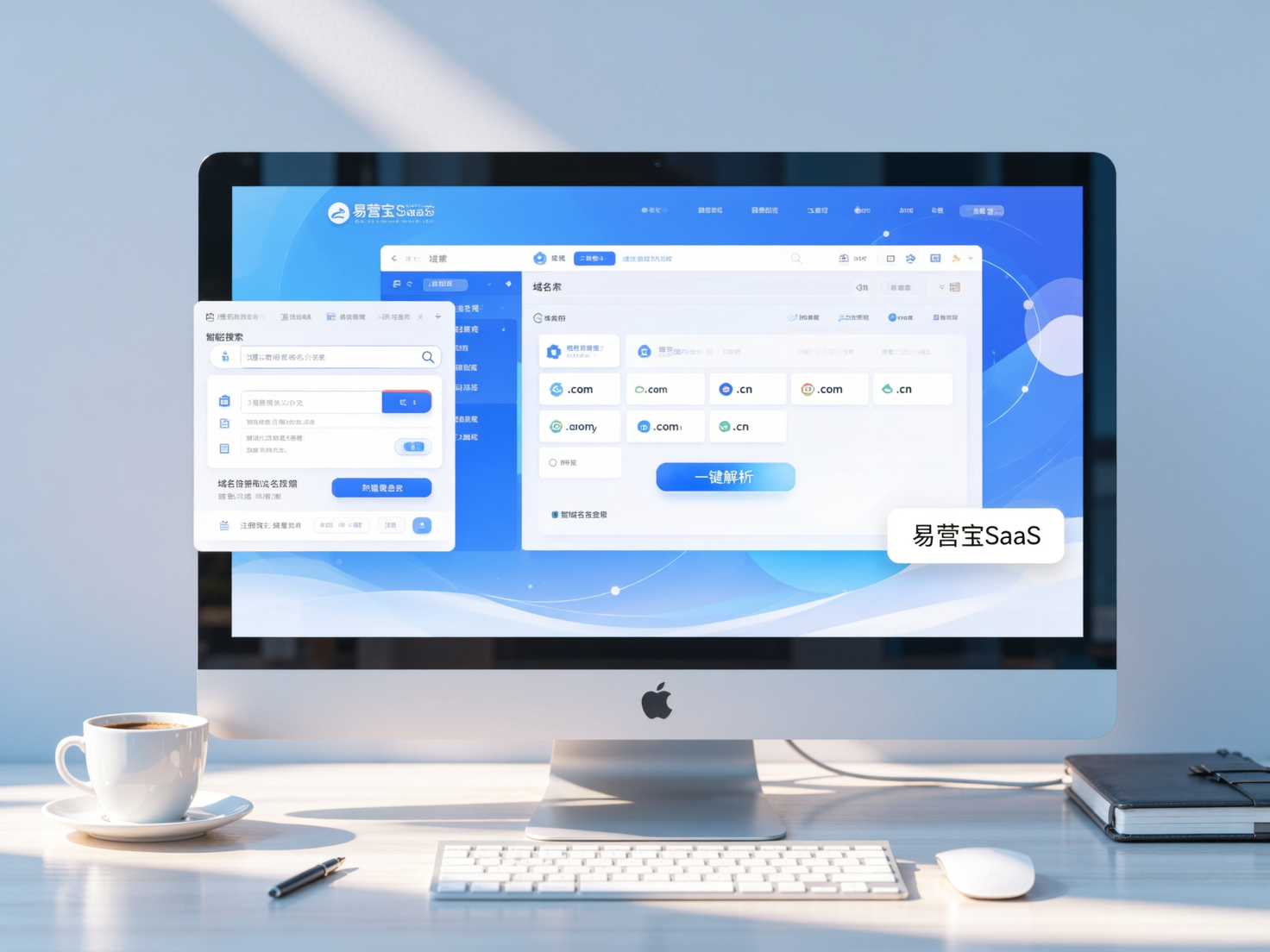
 Domain Name ServicesEasyWin provides professional domain name services, including intelligent queries, one-stop registration, brand protection, and full lifecycle management, helping businesses build a digital brand image.
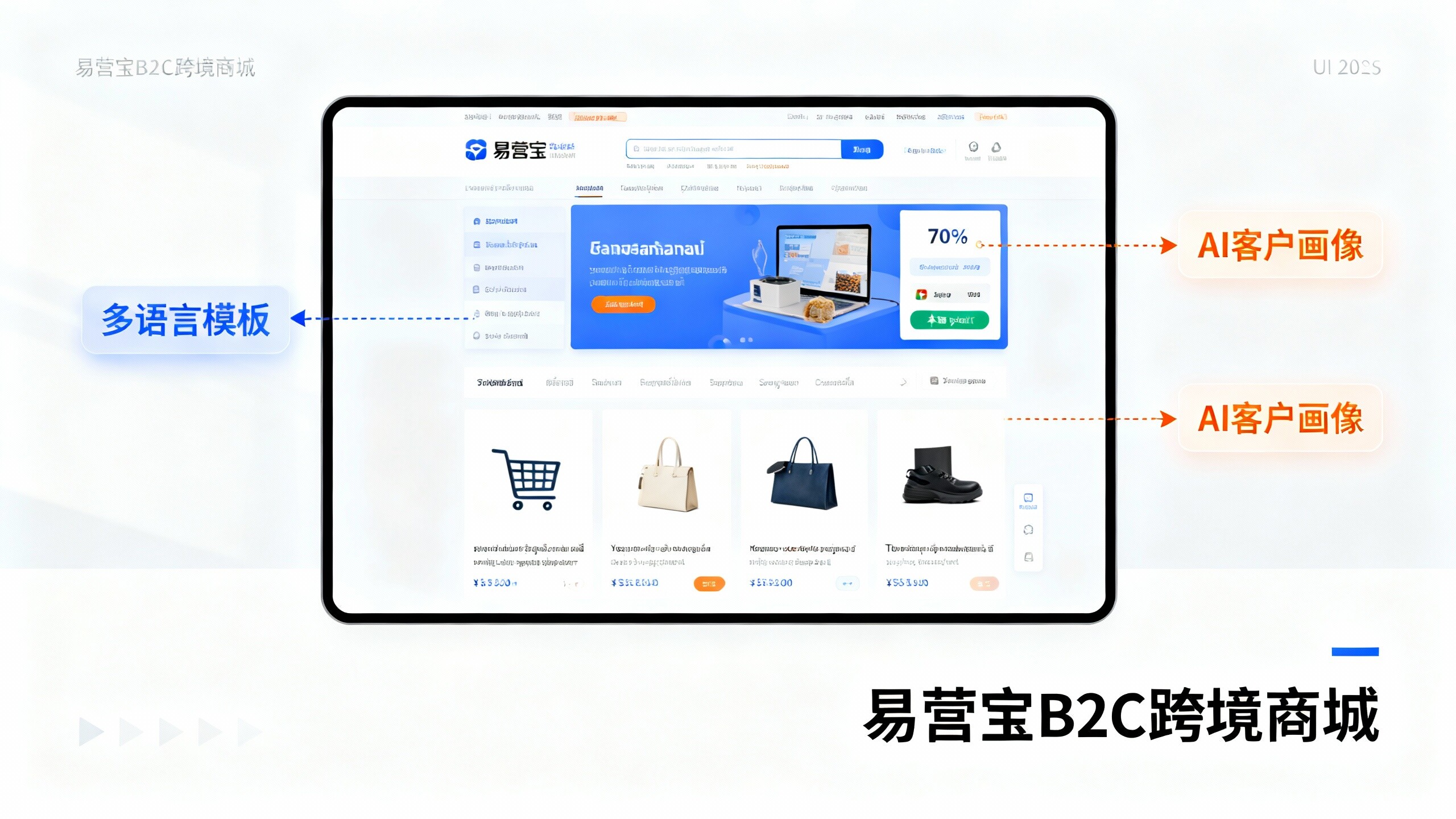
 EasyOperate B2C Cross-Border E-Commerce Platform & Independent WebsiteEasyStore B2C Cross-border E-commerce Independent Store is an intelligent website building and cross-border e-commerce integrated solution independently developed by EasyStore Information Technology (Beijing) Co., Ltd. The system is specially designed for small and medium-sized as well as large export enterprises, integrating 'website building, operation, marketing, advertising, and conversion' into one, helping enterprises quickly establish cross-border e-commerce independent stores to achieve brand globalization and global sales growth.
The platform supports multiple languages, multiple currencies, and multi-channel marketing, with built-in AI intelligent translation and SEO optimization systems, suitable for mainstream markets such as Southeast Asia, Europe and America, Latin America, and the Middle East, assisting Chinese manufacturing enterprises in efficiently deploying international e-commerce strategies. SSL证书易营宝提供专业SSL安全证书服务,包括单域名和泛域名证书,确保网站数据传输加密、身份验证和完整性保护,助力企业建立安全可信的在线业务环境。