









- Amazon Reportedly Sends Exclusivity Warning Letters to Multiplatform SellersNov 03, 2026View details
- New TikTok Shop Cross-Border Returns Rules for Southeast Asia Take Effect on November 5Nov 03, 2026View details
- U.S. Tightens De Minimis Exemption Channel and Revises Section 321 Data PilotNov 03, 2026View details
- Amazon FBA Fuel and Logistics Surcharge in 10 European Countries to Increase to 2% on November 2Nov 02, 2026View details
- EU Customs Code reform to take effect on November 1, with new handling fees for direct-mail small parcelsNov 01, 2026View details
- EU Plans to Raise Tax on Incoming Small Parcels to €5Oct 31, 2026View details
How to Compare the Total Costs of AI Writing and Human Localization
A comparison of AI writing and human localization costs should account for everything needed to get content published and working properly. AI can reduce the cost of the initial draft, but review, revisions, page adaptation, and future updates still require investment. Human localization usually has a higher upfront cost, but may reduce rework involving linguistic revisions and cultural expression. Which option is more cost-effective depends on the intended use of the content, the quality of the source materials, and the potential impact of errors.
For multilingual websites, a reasonable approach is to allocate the budget by page: AI can take on more work for standardized information and highly repetitive content, while pages that directly affect inquiries, payments, and brand perception require more substantial human involvement.
Compare Both Quotes Against the Same Delivery Standard First
AI writing and human localization are not exactly the same service. The former may deliver only a generated draft; the latter may include translation, terminology consistency, tone adjustments, and localization, or it may simply involve translating the text. The service name alone does not explain what will actually be delivered.
For example, even for the same product introduction page, there may be a gap between “translation complete” and “ready to publish”—including parameter checks, search term adjustments, button text shortening, and mobile layout checks. Comparing only an AI tool subscription fee with a per-word human translation rate can leave out these tasks.
Total comparable cost = source material preparation + content production + review and revisions + page implementation + ongoing maintenance. Work performed by in-house employees should also be included; otherwise, outsourcing costs are merely being shifted to internal labor hours.

Will the Savings on AI Drafts Be Spent on Rework?
The clearer the source materials, the easier it is for AI to deliver efficiency gains. When product specifications are complete, terminology has already been standardized, and page structures are similar, AI can generate drafts in batches for centralized review. In this case, people mainly handle checks, making the overall investment easier to control.
If the source materials contain contradictions, or the requirement is simply to “write for the local market,” AI may produce fluent-sounding content that is inaccurate in terms of business meaning. Reviewers may need to trace every detail back to its source or even rewrite the entire page. A cheaper draft does not necessarily mean a lower total cost.
Review capability also affects the outcome. If the person responsible for checking the content is unfamiliar with both the target language and the product, it will be difficult to determine whether the content is usable. Repeatedly asking AI to polish its own output cannot replace human judgment about facts and local expression.
Human localization also requires management. Without a terminology glossary, brand voice guidelines, and a clearly defined scope of revisions, multiple rounds of communication may be needed. A higher quote is meaningful only if it includes the corresponding research, review, and adaptation work.
Page Purpose Should Determine How the Budget Is Allocated
Product specifications, help documentation backed by reliable existing materials, and product pages with similar structures are good candidates for an “AI draft + human review” approach. The key facts must be supported by sources, reviewers must be able to identify errors, and the batch content must genuinely have reusable structures.
Homepages, core product pages, ad landing pages, and checkout prompts are better suited to greater investment in human localization. They need not only to communicate accurately, but also to help readers quickly understand the value, overcome concerns, and take action. Even a grammatically correct sentence can affect conversion if its promise is vague, its tone is awkward, or its call to action is unclear.
Texts involving contractual liability, privacy, payments, and after-sales commitments should be reviewed by people with relevant expertise. General language services do not automatically include legal or business liability review; this should be specified separately.
Using different levels of treatment for different pages on the same website is usually more reasonable than choosing the lowest-cost or most comprehensive option for every page. The budget should prioritize high-value, high-risk, and high-traffic pages.
Multilingual Websites Have an Easily Overlooked Implementation Cost
After the text is approved, you still need to check title length, whether buttons wrap onto multiple lines, whether form prompts are clear, and whether text in images has also been updated. Expressions vary in length across languages, so the original page layout may not be reusable as is.
SEO is also more than translating Chinese keywords. Local users may use different names for a product, so page titles, descriptions, and body copy need to be adjusted to reflect actual search needs. Multilingual pages also require configurations such as language tags and corresponding links. Whether these tasks are included in the quote can have a significant impact on the final cost.
When evaluating a platform such as 易营宝 that covers intelligent website building, multilingual websites, and SEO services, you can review content processing and website implementation together in one quote: who is responsible for language review, who handles page adaptation, and which tasks are included in the service scope. The value of an integrated service should be reflected in specific deliverables and coordination costs.
Run a Small-Scale Pilot to Calculate Your Own Costs
Rather than purchasing content for an entire website upfront, a more effective approach is to select representative pages and have different options produce content using the same source materials and acceptance criteria. The sample should include both standardized content and content requiring more substantial adjustments to its expression, so the entire project is not judged based only on simple pages.
In addition to the cost of the initial draft, record the time spent internally on preparing source materials, reviewing, communicating, and publishing. During evaluation, focus on factual accuracy, terminology consistency, suitability of the expression for the page’s purpose, and the extent of revisions required before publication.
Divide the total pilot investment by the number of pages that pass acceptance to get the “cost per usable page”—a figure closer to the actual budget than a per-thousand-word rate. If page complexity varies considerably, calculate the cost by group rather than combining short product pages with long solution pages.
Before signing a long-term service agreement, clarify the number of revision rounds, acceptance criteria, delivery of source files, and update pricing. When product specifications change, long-term maintenance is easier to manage if only the affected sections need updating and the corresponding language versions are updated as well. Ultimately, choose a combination that can consistently deliver acceptable pages while keeping internal investment manageable, rather than focusing only on which option generates text more cheaply.
Related Articles
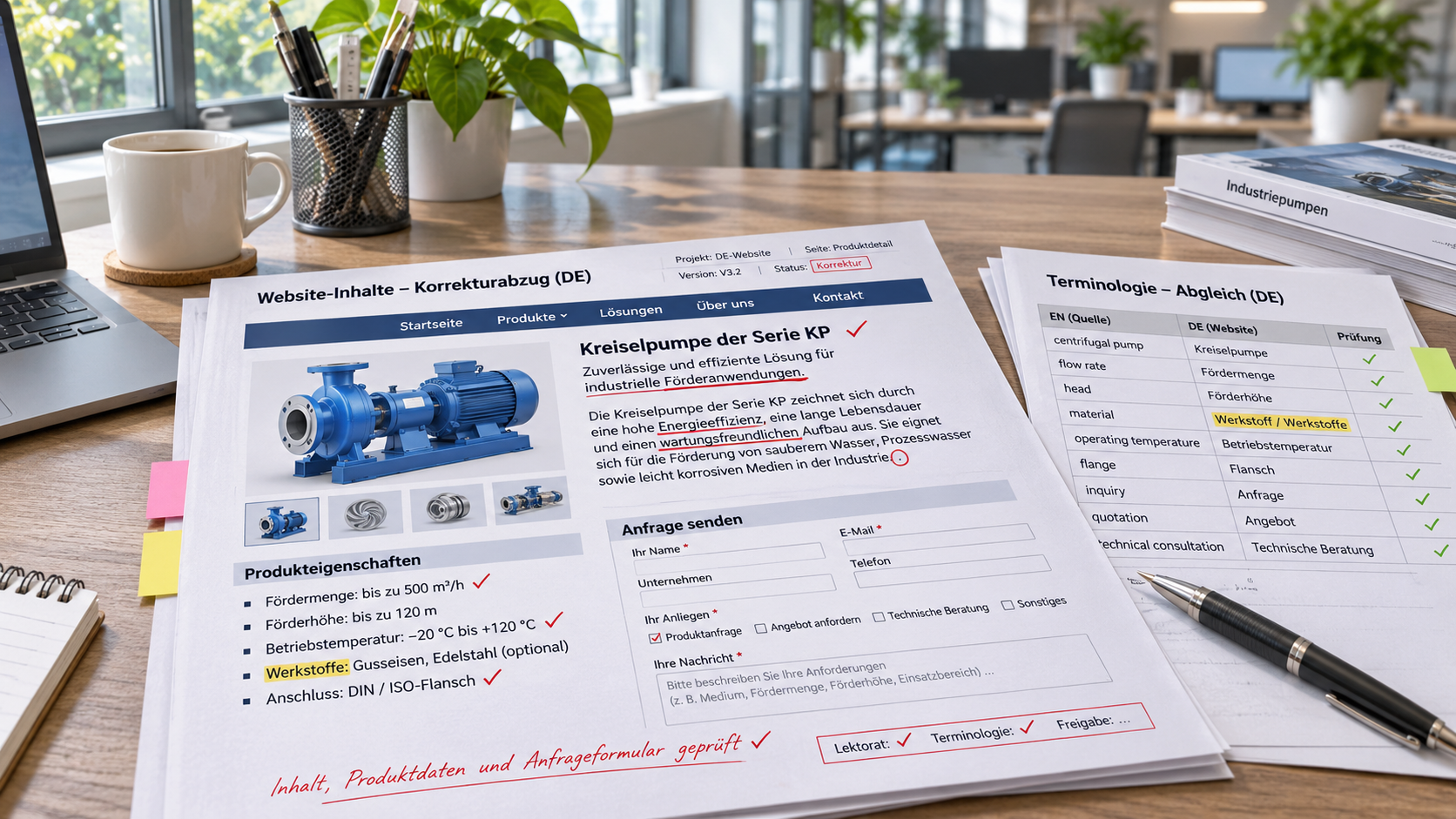
 How Can German Website Development Avoid the Impact of Machine Translation on Inquiries?
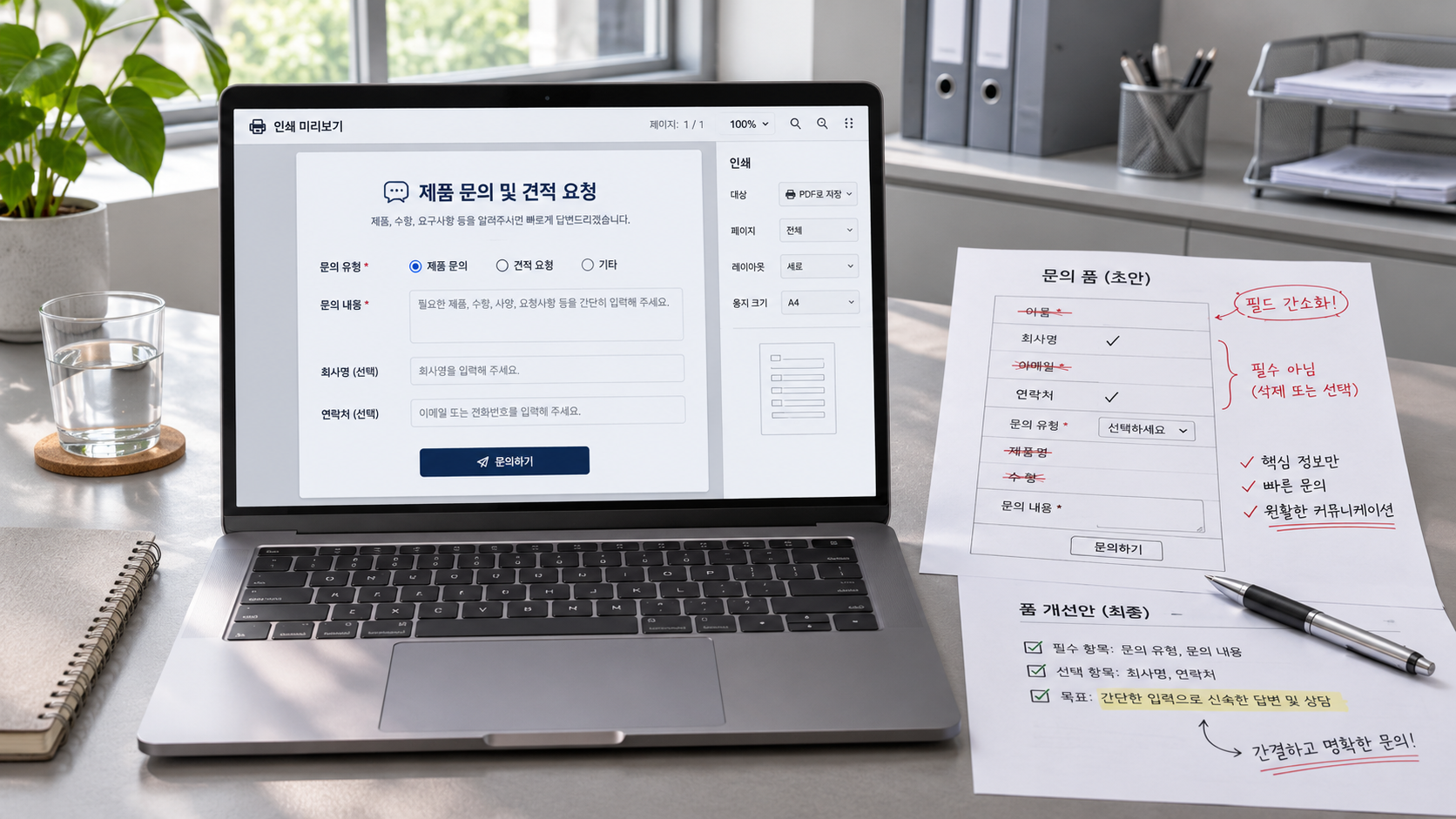
 How should inquiry forms be designed for Korean-language websites?
 How Should Units of Measurement for Different Markets Be Handled in Product Page Translation?

Related Products
 Yiyingbao SaaS Intelligent Website Building and Marketing SystemYiyingbao SaaS Intelligent Website Building and Marketing System, AI-powered no-code website building, rapid creation of multilingual B2B international websites in 10 minutes, global server acceleration, AI-powered SEO optimization, helping businesses connect efficiently with global markets. The perfect integration of technology and operation makes building an international trade website remarkably simple
 AI+SEM Intelligent Advertising Marketing SystemAI+SEM drives intelligent ad creation, empowering full-funnel precision advertising marketing. The system automatically generates weekly/monthly reports, AI recommends keywords and target countries, monitors core metrics in real-time with intelligent alerts, and enables one-click high-conversion ad solutions to help quickly acquire customers and improve ROI.
 AI+SEO Dual-Engine System Optimization ServicesYiyingbao’s AI+SEO dual-engine optimization system helps foreign trade enterprises acquire high-quality organic traffic through AI-powered keyword research, content generation, and comprehensive technical optimization, significantly improving search rankings and conversion rates.
 AI+SNS Social Media Marketing SystemYingbao AI+SNS Social Media Marketing System - Precision social capture for the social media era. Supports one-click content synchronization across major platforms like Facebook and LinkedIn. AI intelligently rewrites posts for enhanced relevance. 24/7 AI customer service and user profiling analysis empower businesses to efficiently expand into global markets.
 AI+SEO营销解决方案易营宝AI+SEO营销解决方案,通过AI批量写作、智能生成TDK、精准关键词扩词等功能,全面优化网站SEO效果,提升流量与转化率。助力企业构建高效智能网站新生态。
 AI+SEM Advertising Marketing SolutionsAI+SEM Advertising Marketing Solution leverages AI technology to deeply empower SEM ad campaigns. It automatically generates weekly/monthly reports using AI, presenting account data across multiple dimensions for comprehensive insights into campaign performance and trends. The system precisely recommends keywords and target countries, intelligently generates high-conversion ad copy, and enables one-click activation of efficient campaign plans to help businesses rapidly acquire customers. Simultaneously, it monitors core metrics in real time, intelligently identifies abnormal fluctuations, and issues timely alerts to ensure stable, high-return advertising results.
 Domain Name ServicesEasyWin provides professional domain name services, including intelligent queries, one-stop registration, brand protection, and full lifecycle management, helping businesses build a digital brand image.
 EasyOperate B2C Cross-Border E-Commerce Platform & Independent WebsiteEasyStore B2C Cross-border E-commerce Independent Store is an intelligent website building and cross-border e-commerce integrated solution independently developed by EasyStore Information Technology (Beijing) Co., Ltd. The system is specially designed for small and medium-sized as well as large export enterprises, integrating 'website building, operation, marketing, advertising, and conversion' into one, helping enterprises quickly establish cross-border e-commerce independent stores to achieve brand globalization and global sales growth.
The platform supports multiple languages, multiple currencies, and multi-channel marketing, with built-in AI intelligent translation and SEO optimization systems, suitable for mainstream markets such as Southeast Asia, Europe and America, Latin America, and the Middle East, assisting Chinese manufacturing enterprises in efficiently deploying international e-commerce strategies. SSL证书易营宝提供专业SSL安全证书服务,包括单域名和泛域名证书,确保网站数据传输加密、身份验证和完整性保护,助力企业建立安全可信的在线业务环境。









