









- Amazon Raises Fulfillment Fees Twice, Yet the Median Platform Fee Remains Around 40%Oct 22, 2026View details
- AliExpress and YouTube Partner to Expand Marketing Opportunities for Chinese Brands Going GlobalOct 22, 2026View details
- Publicis says AI marketing is developing at two speeds, with agentic AI helping win clientsOct 21, 2026View details
- Salesforce Plans to Acquire Braze for $5.66 Billion to Enhance AI Marketing CapabilitiesOct 21, 2026View details
- Levanta’s Inaugural China Summit Held in Shenzhen, Focusing on AI and Cross-Border Brand GrowthOct 20, 2026View details
- The October Edition of the 2026 GGE Shenzhen Cross-Border E-Commerce Expo OpensOct 20, 2026View details
Can AI website translation software replace human localization?
Can AI Website Translation Software Replace Human Localization?
AI website translation software can significantly accelerate the launch of multilingual websites, but it cannot replace human localization in every scenario. For technical evaluators, the real question is not whether it translates quickly, but whether the translation can accurately convey the business, align with market conventions, and continuously support organic search and conversions.
This is especially important for corporate websites targeting overseas customer acquisition, B2B lead-generation sites, and cross-border online stores, where language content simultaneously serves product explanation, brand communication, SEO indexing, and sales persuasion. An ambiguous term, incorrect unit, or inappropriate cultural expression can affect visitor trust and may even prevent high-quality traffic from turning into inquiries.
Therefore, a more reasonable conclusion is that AI website translation software is suitable for large-scale initial translation, batch updates, and basic content expansion; human localization should still be responsible for high-value pages, market adaptation, brand expression, and key conversion paths. Companies need to establish a human-machine collaboration mechanism rather than simply choosing one over the other.
First, Distinguish Between “Machine Translation” and “Localization”

The goal of website translation is to convert one language into another, whereas the goal of localization is to make content appear natural, credible, and actionable in the target market. The latter involves not only text, but also terminology, dates, currencies, units of measurement, images, compliance notices, payment methods, and call-to-action design.
For example, Chinese pages often use “Contact Us for a Quote.” After direct translation, this may not be the best expression in English-speaking markets. For industrial procurement professionals, “Request a Quote” is generally more aligned with B2B processes; for retail consumers, “Shop Now” or “Add to Cart” better matches their purchase expectations.
AI website translation software is generally good at syntactic conversion, bulk content generation, and repetitive paragraph processing, but it does not inherently understand a company’s sales strategy across different countries. Without a clear brand terminology database, page objectives, and review rules, a translation may be grammatically correct while still deviating from the actual marketing intent.
During technical evaluation, “readability” and “usability” should be verified separately. The former focuses on whether the target language is fluent, while the latter examines whether customers can understand product differences, find the information they need, accept pricing expressions, and smoothly complete key actions such as submitting an inquiry, registering, or placing an order.
What Content Is AI Website Translation Software Best Suited to Handle?
For companies with many product SKUs, broad market coverage, and frequent page updates, the primary value of AI website translation software lies in shortening content production cycles. Product parameter tables, help centers, shipping instructions, FAQs, backend fields, and basic blog content typically have stable structures and highly repetitive expressions.
In these scenarios, systems can combine page structure recognition, translation memory, and glossaries to prevent the same product name from being translated into multiple versions across different pages. For multilingual standalone websites, this consistency is more important than one-time manual polishing and can also reduce the costs of subsequent content maintenance and version tracking.
AI is also suitable for globalization testing based on a “broad first, deep later” approach. Companies can quickly publish basic versions in English, German, French, Spanish, and other languages, observe indexing, traffic, time on page, and inquiry data in different markets, and then invest budgets in languages and pages that already show demand signals.
However, batch publishing does not mean batch compliance. Technical teams should confirm whether the tool supports manual edit write-back, page-level publishing controls, version rollback, source-content change notifications, and multilingual URL management. Without these capabilities, translation efficiency may be offset by later maintenance.
Which Key Pages Must Still Be Localized by Humans?
Homepages, core product pages, industry solution pages, pricing pages, advertising landing pages, and form pages should be prioritized for human localization. These pages directly affect whether users understand a company’s value and determine whether traffic generated by Google Ads, organic search, and social media referrals can convert into qualified business opportunities.
Professional terminology is one of the most common risk areas. Manufacturing, medical devices, chemicals, electronic components, and software services often have established industry expressions. If AI translates based on general corpora, it may produce wording that is “close in meaning but not how procurement professionals speak,” thereby weakening professional credibility.
Content involving regulations, certifications, quality commitments, delivery lead times, after-sales terms, and privacy policies should also not rely solely on automatic translation. Different markets interpret liability statements and compliance information differently, so critical content should be published only after review by personnel familiar with the target language and industry rules.
Brand language also requires human oversight. If a company emphasizes premium customization, engineering capabilities, or rapid response, the tone of the translation must align with that positioning. Direct translation can often preserve information, but it is difficult to accurately convey commercial language that is “rigorous,” “professional,” or “motivating to purchase.”
How Should Technical Evaluators Verify Translation Quality?
Do not use only “manually spot-checking a few passages” as the acceptance standard. It is advisable to establish a test sheet covering six metrics: accuracy, terminology consistency, cultural adaptation, SEO completeness, page presentation, and conversion impact, and to set sampling ratios based on page value and market priority.
Accuracy testing should cover product names, models, specifications, materials, dimensions, certifications, and after-sales policies. Terminology consistency testing should check whether navigation, detail pages, PDF materials, form fields, and ad copy use consistent wording, preventing users from seeing contradictory information at different touchpoints.
SEO testing should not focus only on body text. It should also check whether multilingual titles, descriptions, image alt text, structured data, internal links, hreflang tags, and URL rules are generated correctly. If AI translates only visible text while overlooking page elements relied upon by search engines, multilingual traffic growth will be limited.
For startup teams, they can also draw on the approach to resource allocation and stage validation in Research on Financing Strategies for Small and Micro Technology Enterprises in Their Startup Stage from an Angel Investment Perspective: first validate results in high-value markets, then expand investment in translation and localization, avoiding prematurely spreading content costs across regions without demand.
Human-Machine Collaboration Is More Reliable Than “Full Automation”
A mature multilingual website development process typically begins with content classification. Pages should be divided into three categories: those that can be published automatically, those requiring spot checks, and those requiring mandatory human review, with different publishing permissions configured for each category. This preserves AI speed while concentrating human resources where risks are highest.
The second step is to establish corporate terminology assets. Technical teams should consolidate product names, model rules, industry abbreviations, prohibited terms, brand tone, and fixed CTAs, and enable AI website translation software to prioritize these resources. The more complete the glossary, the fewer revisions are required after bulk generation and the more stable long-term maintenance becomes.
The third step is to use real business data for continuous refinement. After launch, teams should observe indexing volume, keyword rankings, bounce rates, form completion rates, and inquiry quality for pages in different languages. When a market has high traffic but low conversion, the issue may not be traffic, but insufficient page expression and localization depth.
Yiyingbao serves foreign trade companies and brands expanding overseas by placing multilingual website building, AI translation, SEO optimization, and marketing page management within the same digital workflow. For teams that need to balance content scale, search visibility, and overseas inquiries, this unified management helps reduce version control issues caused by cross-tool collaboration.
Conclusion: What Is Replaced Is Repetitive Work, Not Market Judgment
AI website translation software will not completely replace human localization, but it will reshape the focus of human work. In the past, people spent substantial effort on initial translation and repetitive revisions; in the future, they should focus more on terminology governance, market expression, compliance review, conversion optimization, and quality decisions for high-value content.
Technical evaluators should avoid measuring tool value by “translation cost per word” and instead assess whether it can shorten launch cycles, maintain multilingual consistency, support SEO technical specifications, and ensure that human review resources are truly invested in pages that affect revenue and brand trust.
Ultimately, the right solution for global business is not complete automation, but allowing AI to handle scale and efficiency while localization experts handle judgment and trust. Only by integrating translation capabilities into the website-building, content, search, and conversion system can a multilingual website become an overseas digital asset that continuously generates customers.
Related Articles
 Building a Website for the Russian-Speaking Market: Is Translating the Website Enough?
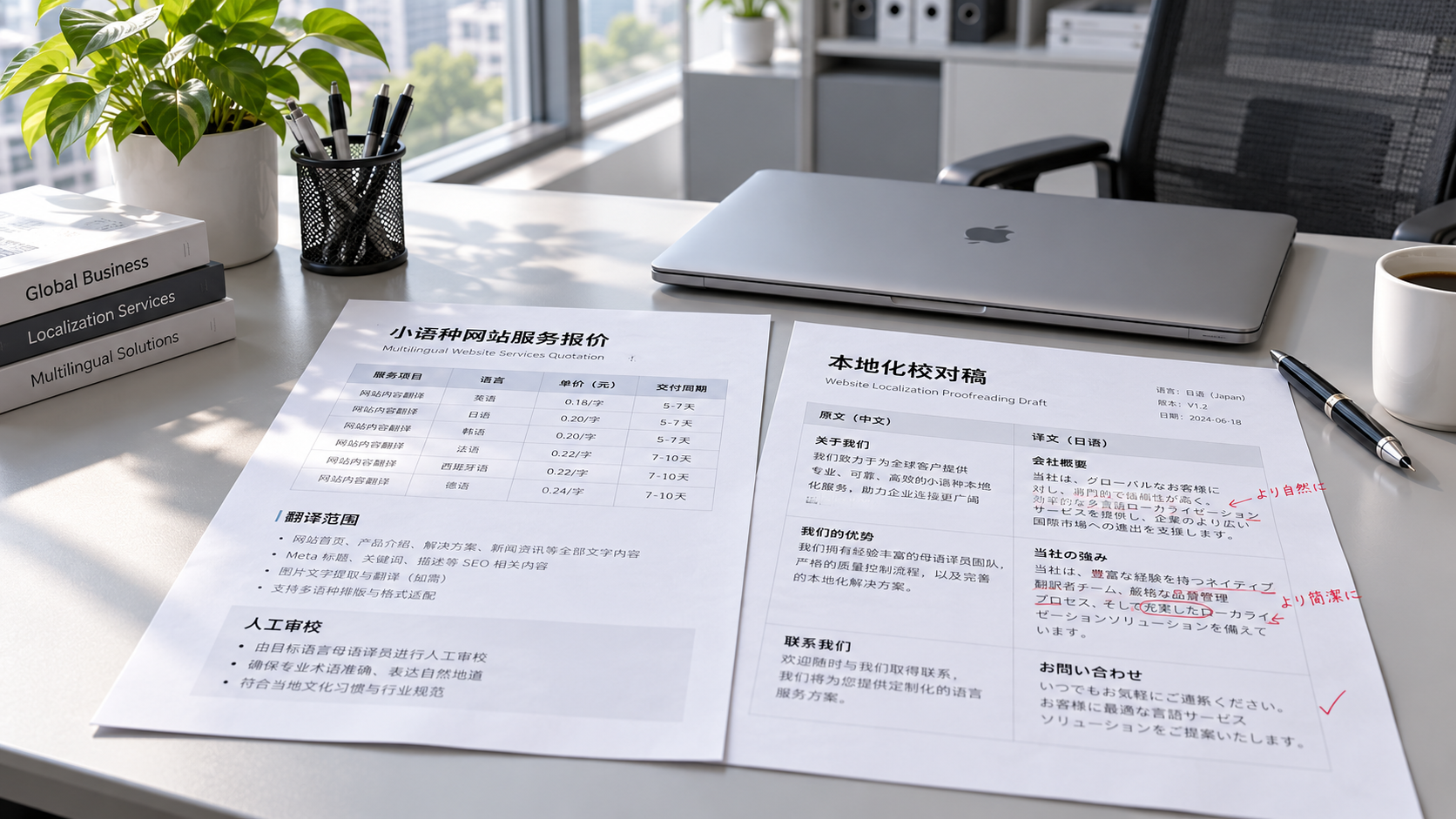
 Does the quote for building a website in a less commonly used language include localization and translation?
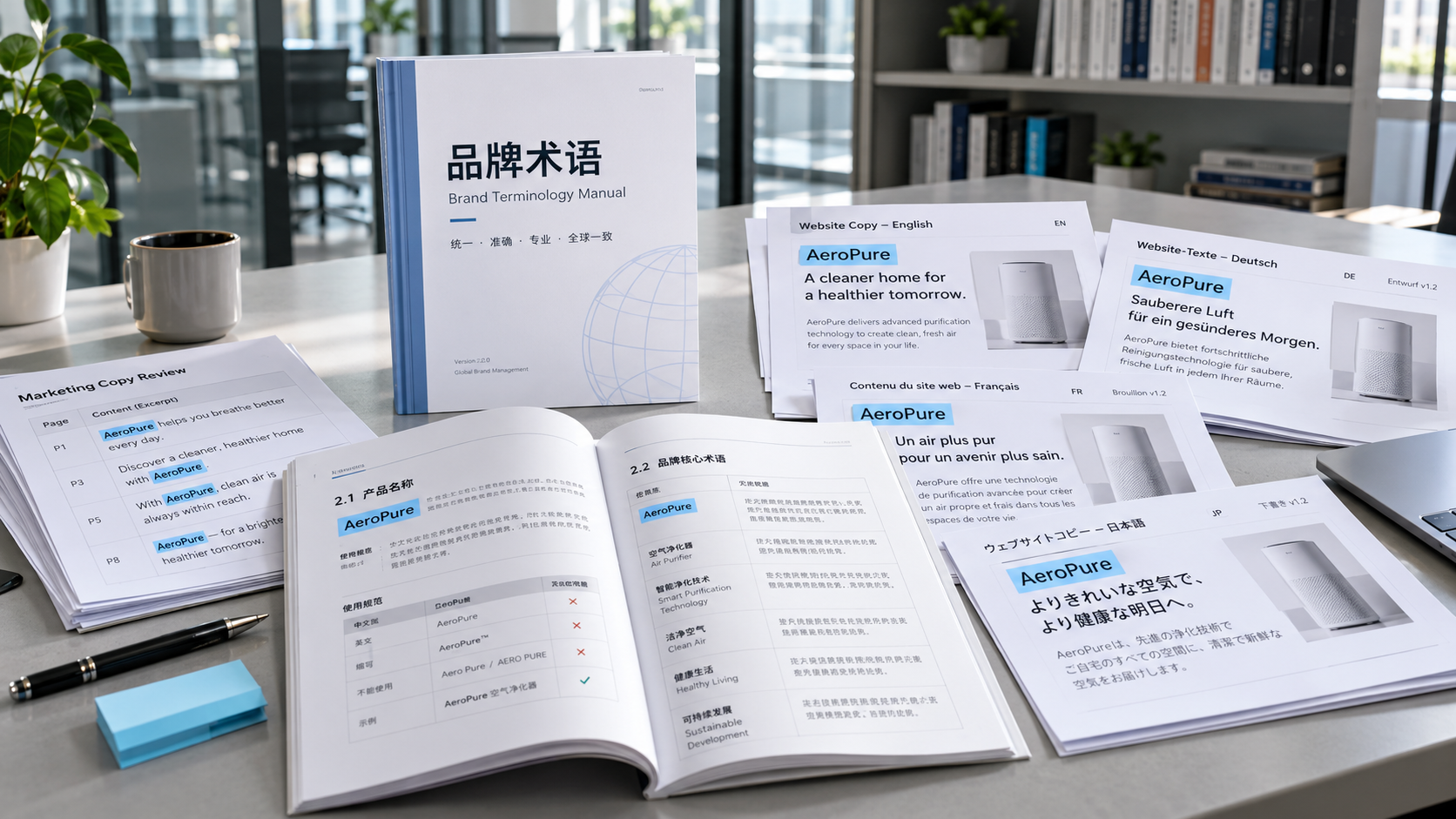
 Can an AI translation platform standardize brand terminology across multilingual websites?

Related Products
 Yiyingbao SaaS Intelligent Website Building and Marketing SystemYiyingbao SaaS Intelligent Website Building and Marketing System, AI-powered no-code website building, rapid creation of multilingual B2B international websites in 10 minutes, global server acceleration, AI-powered SEO optimization, helping businesses connect efficiently with global markets. The perfect integration of technology and operation makes building an international trade website remarkably simple
 AI+SEM Intelligent Advertising Marketing SystemAI+SEM drives intelligent ad creation, empowering full-funnel precision advertising marketing. The system automatically generates weekly/monthly reports, AI recommends keywords and target countries, monitors core metrics in real-time with intelligent alerts, and enables one-click high-conversion ad solutions to help quickly acquire customers and improve ROI.
 AI+SEO Dual-Engine System Optimization ServicesYiyingbao’s AI+SEO dual-engine optimization system helps foreign trade enterprises acquire high-quality organic traffic through AI-powered keyword research, content generation, and comprehensive technical optimization, significantly improving search rankings and conversion rates.
 AI+SNS Social Media Marketing SystemYingbao AI+SNS Social Media Marketing System - Precision social capture for the social media era. Supports one-click content synchronization across major platforms like Facebook and LinkedIn. AI intelligently rewrites posts for enhanced relevance. 24/7 AI customer service and user profiling analysis empower businesses to efficiently expand into global markets.
 AI+SEO营销解决方案易营宝AI+SEO营销解决方案,通过AI批量写作、智能生成TDK、精准关键词扩词等功能,全面优化网站SEO效果,提升流量与转化率。助力企业构建高效智能网站新生态。
 AI+SEM Advertising Marketing SolutionsAI+SEM Advertising Marketing Solution leverages AI technology to deeply empower SEM ad campaigns. It automatically generates weekly/monthly reports using AI, presenting account data across multiple dimensions for comprehensive insights into campaign performance and trends. The system precisely recommends keywords and target countries, intelligently generates high-conversion ad copy, and enables one-click activation of efficient campaign plans to help businesses rapidly acquire customers. Simultaneously, it monitors core metrics in real time, intelligently identifies abnormal fluctuations, and issues timely alerts to ensure stable, high-return advertising results.
 Domain Name ServicesEasyWin provides professional domain name services, including intelligent queries, one-stop registration, brand protection, and full lifecycle management, helping businesses build a digital brand image.
 EasyOperate B2C Cross-Border E-Commerce Platform & Independent WebsiteEasyStore B2C Cross-border E-commerce Independent Store is an intelligent website building and cross-border e-commerce integrated solution independently developed by EasyStore Information Technology (Beijing) Co., Ltd. The system is specially designed for small and medium-sized as well as large export enterprises, integrating 'website building, operation, marketing, advertising, and conversion' into one, helping enterprises quickly establish cross-border e-commerce independent stores to achieve brand globalization and global sales growth.
The platform supports multiple languages, multiple currencies, and multi-channel marketing, with built-in AI intelligent translation and SEO optimization systems, suitable for mainstream markets such as Southeast Asia, Europe and America, Latin America, and the Middle East, assisting Chinese manufacturing enterprises in efficiently deploying international e-commerce strategies. SSL证书易营宝提供专业SSL安全证书服务,包括单域名和泛域名证书,确保网站数据传输加密、身份验证和完整性保护,助力企业建立安全可信的在线业务环境。









