









- Amazon Raises Fulfillment Fees Twice, Yet the Median Platform Fee Remains Around 40%Oct 22, 2026View details
- AliExpress and YouTube Partner to Expand Marketing Opportunities for Chinese Brands Going GlobalOct 22, 2026View details
- Publicis says AI marketing is developing at two speeds, with agentic AI helping win clientsOct 21, 2026View details
- Salesforce Plans to Acquire Braze for $5.66 Billion to Enhance AI Marketing CapabilitiesOct 21, 2026View details
- Levanta’s Inaugural China Summit Held in Shenzhen, Focusing on AI and Cross-Border Brand GrowthOct 20, 2026View details
- The October Edition of the 2026 GGE Shenzhen Cross-Border E-Commerce Expo OpensOct 20, 2026View details
Which global businesses are suitable for Eyingbao multilingual independent website development?
Whether Eyingbao multilingual standalone website development is suitable depends not on whether you “need a multilingual website,” but on whether overseas customer acquisition is already constrained by language, content maintenance, and coordination between marketing pages. Businesses with complex product materials, coverage across multiple language markets, and inquiries generated through both search and advertising channels often need to manage site structure, page content, and promotional landing pages within the same operational framework.
It is particularly suitable when an existing corporate website can only display basic information, while overseas customers still struggle to quickly understand product applications, specification differences, delivery capabilities, or the cooperation process after entering the site. Especially when customers in different countries focus on different aspects, directly translating Chinese pages sentence by sentence into foreign languages often causes information to lose focus: engineering procurement teams examine materials, dimensions, tolerances, testing methods, and customization scope; trading customers pay more attention to minimum order quantities, packaging, lead times, and quotation procedures; brand channels focus more on product line positioning, visual presentation, and after-sales information. The value of a multilingual standalone website lies in reorganizing this information according to the market and visit purpose, rather than simply adding several language-switching buttons.
B2B businesses with complex products and longer inquiry cycles
Businesses involving industrial components, machinery and equipment, building materials, chemical raw materials, hardware tools, electronic components, and similar products are generally not suited to relying only on single-page advertising landing pages. Such products have numerous models and strongly interrelated parameters, and customers often submit inquiries only after multiple visits. The website needs to accommodate product categories, application scenarios, technical documentation, FAQs, the scope of case studies, and contact entry points, while enabling search engines to identify the topic of each page.
When adopting multilingual website development for this type of business, it is necessary to first determine whether product information can be broken down appropriately. For example, the configuration description of the same equipment may vary under different voltage conditions, climates, installation spaces, or industry processes; simply translating a Chinese parameter table and copying it to every language page can easily result in mixed units, incorrect model matching, or omitted optional configurations. A more reasonable approach is to first establish unified product fields and then allow pages for different markets to select their display priorities. This avoids repeated rework across multiple language versions when new models are added, parameters are adjusted, or old products are discontinued.
When sales personnel need to further confirm an inquiry based on drawings, operating environments, or purchase quantities, the form should not contain only “Name, Email, and Message.” Fields such as model, application industry, target quantity, location, and customization requirements should align with the actual quotation process. Too many fields can reduce willingness to submit, while too few increase the cost of subsequent communication; therefore, they should be designed around the initial assessment of whether the lead is worth following up.
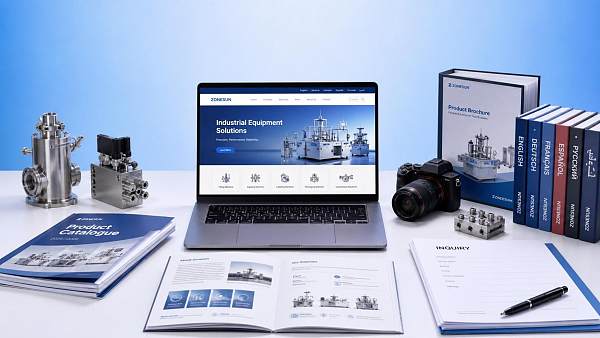
Businesses operating in multiple regions with limited localization resources
When targeting different markets such as North America, Europe, Southeast Asia, the Middle East, or Latin America, language is only the most superficial difference. Product terminology familiar to customers, units of measurement, delivery wording, image preferences, and trust-related information may all vary. English pages may not cover every need: some markets rely more heavily on local-language search, while customers in other regions, even when using English, have clear expectations regarding price currencies, contact methods, delivery coverage, and payment information.
Eyingbao multilingual standalone website development is more suitable for businesses that have identified their overseas expansion direction but do not want to maintain a separate independent website for every country. The prerequisite is that language versions share reusable product frameworks and brand content, rather than requiring completely separate products, pricing systems, and fulfillment rules for every country. If inventory, taxes, settlement, delivery, and product assortments vary greatly across markets, the site architecture needs to be divided by region at the start of the project instead of relying on translation plugins as a remedy after launch.
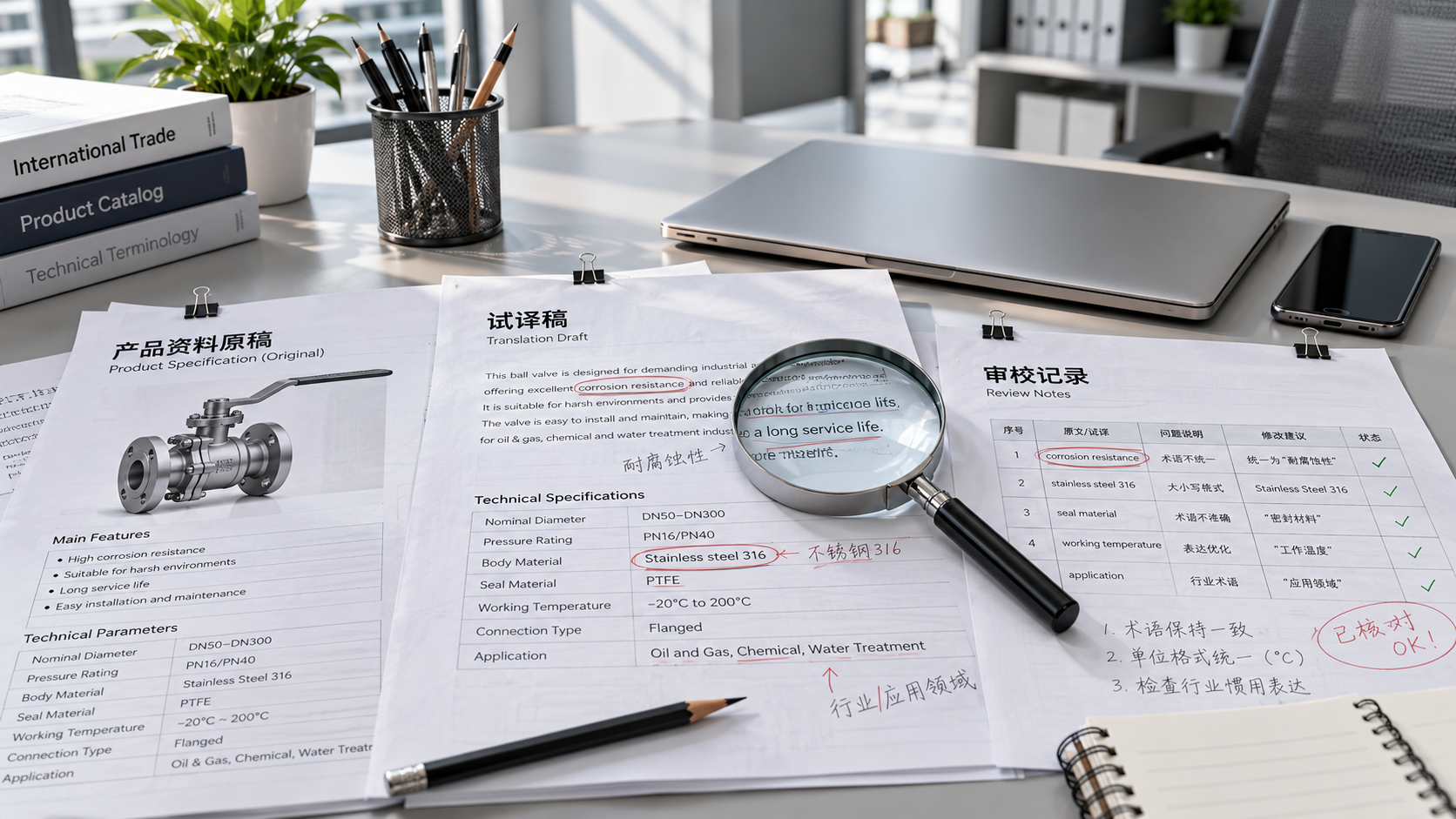
Localized content should not be generated by machines only once. Technical terminology, industry abbreviations, prohibited product-use scenarios, and after-sales boundaries require human review, especially descriptions of material performance, load-bearing capacity, temperature resistance ranges, and installation conditions. Translation deviations affect not only readability but may also cause potential customers to question the level of professionalism. AI is more suitable for improving the efficiency of first drafts, page frameworks, and content updates, while key parameters should still be based on verified materials.
Sites that rely on search, advertising, and social media for customer acquisition
If traffic sources include not only organic search but also search ads, social media ads, or short-video content, the website cannot focus solely on homepage visuals. Advertising visitors often enter directly through a specific category page, campaign page, or application page; search visitors may enter through long-tail questions, model terms, or material terms. Therefore, pages need to form a clear path: advertising pages address a single selling point and a clear action, product pages explain specifications and differences, content pages explain selection logic, and contact pages reduce barriers to submission.
A common misjudgment is to attribute poor advertising conversion entirely to campaign settings. If keywords, ad copy, and landing-page titles are inconsistent, or if a landing page displays only images without explaining the applicable scope, lead-time conditions, and next steps, inquiry quality may remain low even when traffic is accurate. Conversely, if SEO pages extensively copy advertising copy, they may struggle to address complex search needs because of insufficient information. The purpose of coordinating website development and marketing is to ensure that users entering through different channels receive information that matches their search intent, rather than directing all traffic to the same page.
When cross-department budgets, orders, and channel expenses are involved, website projects should also retain traceable records for pages, campaigns, and leads. For discussions on how digital processes can integrate with internal management, refer to the relevant discussion in Approaches to Enterprise Financial Management Informatization Development in the Context of the Digital Economy. The focus here is not to increase the number of reports, but to avoid having lead sources, cost attribution, and conversion status managed separately across different channels, making it impossible to determine later whether page adjustments have genuinely generated business impact.
Four conditions to confirm before development
- Whether product materials are usable: At a minimum, there should be relatively stable categories, model naming conventions, image copyright ownership, and parameter sources. When product materials are still changing frequently, organizing the data structure first is more effective than rushing to publish pages.
- Whether target markets are prioritized: First identify the main languages and core countries, create complete pages for priority markets, and then expand to secondary languages. Launching too many languages at once often dilutes content review and subsequent maintenance capabilities.
- Whether lead handling rules are already in place: Before launch, clarify who is responsible for assigning website inquiries, how quickly to respond, and what information needs to be supplemented. Traffic without a handling mechanism is difficult to turn into stable results even if it grows.
- Whether someone is responsible for content updates: New products, discontinued models, trade show information, inventory policies, and campaign pages all require ongoing maintenance. A multilingual website does not automatically complete overseas communication after going live; outdated content directly affects search performance and customer trust.
Situations where it should not be regarded as a universal alternative solution
If a business has not yet identified its priority products for overseas promotion, and images, quotations, logistics, and after-sales policies have not been prepared, building a multilingual website first can easily expose internal information gaps on the pages. Even if the page structure is complete, customers may still leave because they cannot obtain key procurement information. Completing product prioritization and organizing basic materials before entering the website development stage will reduce overall rework.
For businesses that rely heavily on transactions within platforms, have no need to build brand equity, and sell products with very short life cycles, a standalone website may not necessarily be the priority investment. Conversely, when there is a need to build search content, accumulate customer visit data, demonstrate customization capabilities, or avoid concentrating all customer-acquisition channels on a single third-party platform, the long-term value of a multilingual standalone website becomes clearer.
The final criterion can be reduced to one specific question: can the website enable potential customers in different markets to understand the products, confirm suitability conditions, and make effective contact without relying on repeated manual explanations? For businesses that can organize content, language versions, and promotional pages around this objective, adopting Eyingbao multilingual standalone website development will better meet actual needs.
Related Articles
 Choosing an AI-powered multilingual website service for export businesses: How can you verify translation quality?
 Can a multilingual website translation platform preserve existing SEO settings?
 How can you test responsive design compatibility in a global website-building SaaS platform?
Related Products
 Yiyingbao SaaS Intelligent Website Building and Marketing SystemYiyingbao SaaS Intelligent Website Building and Marketing System, AI-powered no-code website building, rapid creation of multilingual B2B international websites in 10 minutes, global server acceleration, AI-powered SEO optimization, helping businesses connect efficiently with global markets. The perfect integration of technology and operation makes building an international trade website remarkably simple
 AI+SEM Intelligent Advertising Marketing SystemAI+SEM drives intelligent ad creation, empowering full-funnel precision advertising marketing. The system automatically generates weekly/monthly reports, AI recommends keywords and target countries, monitors core metrics in real-time with intelligent alerts, and enables one-click high-conversion ad solutions to help quickly acquire customers and improve ROI.
 AI+SEO Dual-Engine System Optimization ServicesYiyingbao’s AI+SEO dual-engine optimization system helps foreign trade enterprises acquire high-quality organic traffic through AI-powered keyword research, content generation, and comprehensive technical optimization, significantly improving search rankings and conversion rates.
 AI+SNS Social Media Marketing SystemYingbao AI+SNS Social Media Marketing System - Precision social capture for the social media era. Supports one-click content synchronization across major platforms like Facebook and LinkedIn. AI intelligently rewrites posts for enhanced relevance. 24/7 AI customer service and user profiling analysis empower businesses to efficiently expand into global markets.
 AI+SEO营销解决方案易营宝AI+SEO营销解决方案,通过AI批量写作、智能生成TDK、精准关键词扩词等功能,全面优化网站SEO效果,提升流量与转化率。助力企业构建高效智能网站新生态。
 AI+SEM Advertising Marketing SolutionsAI+SEM Advertising Marketing Solution leverages AI technology to deeply empower SEM ad campaigns. It automatically generates weekly/monthly reports using AI, presenting account data across multiple dimensions for comprehensive insights into campaign performance and trends. The system precisely recommends keywords and target countries, intelligently generates high-conversion ad copy, and enables one-click activation of efficient campaign plans to help businesses rapidly acquire customers. Simultaneously, it monitors core metrics in real time, intelligently identifies abnormal fluctuations, and issues timely alerts to ensure stable, high-return advertising results.
 Domain Name ServicesEasyWin provides professional domain name services, including intelligent queries, one-stop registration, brand protection, and full lifecycle management, helping businesses build a digital brand image.
 EasyOperate B2C Cross-Border E-Commerce Platform & Independent WebsiteEasyStore B2C Cross-border E-commerce Independent Store is an intelligent website building and cross-border e-commerce integrated solution independently developed by EasyStore Information Technology (Beijing) Co., Ltd. The system is specially designed for small and medium-sized as well as large export enterprises, integrating 'website building, operation, marketing, advertising, and conversion' into one, helping enterprises quickly establish cross-border e-commerce independent stores to achieve brand globalization and global sales growth.
The platform supports multiple languages, multiple currencies, and multi-channel marketing, with built-in AI intelligent translation and SEO optimization systems, suitable for mainstream markets such as Southeast Asia, Europe and America, Latin America, and the Middle East, assisting Chinese manufacturing enterprises in efficiently deploying international e-commerce strategies. SSL证书易营宝提供专业SSL安全证书服务,包括单域名和泛域名证书,确保网站数据传输加密、身份验证和完整性保护,助力企业建立安全可信的在线业务环境。









