









- Can the average annual growth rate reflect real opportunities in overseas markets?Oct 07, 2026View details
- Which customer acquisition channels will be affected by cross-border marketing trends in 2026?Sep 06, 2026View details
- Which homogenization risks should be considered in an analysis of the AI-powered website building industry?Aug 30, 2026View details
- How Will AI Marketing Trends 2026 Change Advertising Budget AllocationAug 28, 2026View details
- Is the EV SSL certificate market shrinking or upgrading? How should companies assess certificate procurement?Aug 11, 2026View details
- Why the old AMP SEO 2020 practices no longer work and what has changed in current optimization prioritiesAug 02, 2026View details
Which page elements need to be optimized to improve indexing efficiency?
Many people search for “quels éléments d'une page faut-il optimiser”. On the surface, they are asking which page elements should be optimized, but what they are actually more concerned about is why some pages remain unindexed long after publication, and why, with the same content framework, other websites can enter the index while their own sites remain stuck at “Discovered – currently not indexed” or “Crawled – currently not indexed”. For companies operating overseas websites, B2B lead-generation sites, and multilingual marketing websites, this is not simply a content issue. It is a comprehensive matter involving page quality assessment, site structure, crawl efficiency, and business objectives.
This is particularly important in an integrated “website + marketing services” scenario. Whether pages are indexed quickly and consistently directly affects whether subsequent SEO investment can generate cumulative returns. If the page entry points have not entered the effective index, discussions about rankings, inquiries, and conversions are essentially unfounded. Therefore, what is truly worth optimizing is not one isolated element, but the complete set of signals search engines use to determine “whether this page is worth indexing”.
First, correct a common misconception: slow indexing does not necessarily mean you “haven’t published enough content”
When many companies see a low indexing rate, their first reaction is to continue adding articles, expanding product pages, and increasing keyword density. However, based on actual projects, low indexing efficiency is often not caused by insufficient content volume, but by the page failing to establish clear indexable value. Search engines are not concerned with the number of pages, but whether a page is independent and complete, whether it duplicates other pages on the site, whether it has a clear topic, and whether it can be crawled efficiently.
In other words, the core of page optimization is not to “complete every SEO item”, but to enable search engines to determine at lower cost that the page has a clear topic, content support, structural signals, and internal support, and is not a low-quality template page.
The five types of page elements that usually have the greatest impact on indexing efficiency
1. Title tags and topic definition: determining whether the page enters the “candidate list”
The title tag remains the primary entry point for identifying a page topic, but its role is not limited to containing keywords. For indexing, what matters more is whether the title clearly defines the page’s unique topic. If a page title is too broad or too long, or if the titles of multiple pages differ only in city names, product models, or slightly adjusted word order, search engines can easily classify them as mass-generated pages or pages with minimal differentiation.
This issue is particularly common on B2B websites. For example, manufacturing companies may create many combination pages such as “product + application industry”, “product + country”, or “product + material”, while the body content is highly repetitive and only the titles change. Even if such pages are crawled, they may not be prioritized for indexing.
A more reliable approach is to ensure that the title accurately reflects the page’s core value and forms consistent signals with the opening paragraph, H tags, and main content. The more focused the page topic, the easier it is for the indexing assessment to be completed.
2. Main body content: not longer is always better; it needs to provide “independent information gain”
For many unindexed pages, the problem lies in the body content. Search engines do not lack “introductory content”; they pay more attention to what additional information this page provides compared with other pages on the site. For corporate websites, pages that are more likely to be indexed generally have the following characteristics: a clearly defined subject, a specific scenario, detailed explanations, and actual differences.
For example, for product pages, simply listing specifications and adding a generic introduction usually does not provide a strong signal. However, if the page also explains applicable operating conditions, delivery methods, common selection mistakes, regional adaptation limitations, FAQs, or certification details, its independence will be significantly enhanced. The same applies to service pages. Vague statements such as “professional team, customized solutions, and extensive experience” are far less effective than clearly explaining the delivery process, applicable industries, budget range【to be verified】, and factors affecting the timeline.
The purpose of page content is not to write for algorithms, but to reduce the likelihood that search engines will determine that the page duplicates other pages.
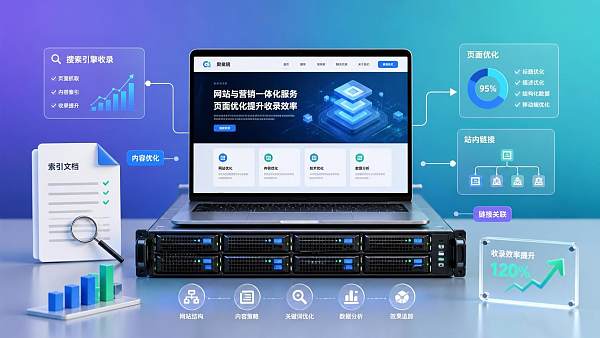
3. Page structure and information hierarchy: helping search engines quickly understand the key points
One factor that is often underestimated is page structure. A disorganized structure does not necessarily make indexing impossible, but it significantly reduces the likelihood that the page will be understood efficiently. This is especially common on marketing websites, where many pages contain large numbers of modules for visual effect, including large above-the-fold images, carousels, and floating components, while the information that actually supports the topic is pushed much deeper.
From the perspective of indexing efficiency, a page should at least enable search engines to quickly understand three things: what the page is about, where the core information is, and how it relates to other pages. A clear H-level hierarchy, readable body paragraphs, and modules that are not excessively fragmented are basic requirements. Technically speaking, this also reduces the risk that the page’s visible content will be weaker than the noise generated by the template.
A practical standard is this: if the header navigation, footer, forms, and recommendation sections are removed, is the remaining body content still sufficient to support an independent topic? If not, indexing efficiency is usually unlikely to be high.
4. Internal links and site relationships: determining whether a page is an “orphan page”
Many companies create new pages but fail to provide them with appropriate internal linking entry points. As a result, although the pages exist, they are highly isolated within the site structure and can only be discovered through the sitemap or external submission. For search engines, the importance of such pages is naturally lower.
Effective internal linking is not about mechanically adding anchor text to pages that link to one another; it is about establishing topical relationships. For example, an “industry solutions page” should link to the corresponding product pages, case studies, and FAQ pages. A “country site page” should be associated with logistics, payment methods, language versions, or local-market content. A “technical article page” should link back to related services or core topic pages. The value of doing this is that it allows search engines to see a clear topic cluster rather than a collection of scattered URLs.
This is even more important for multilingual websites. If hreflang, language-switching paths, and regional version relationships are unclear, search engines may treat multiple pages as duplicate versions, affecting the indexing pace and, in serious cases, causing the wrong version to enter the index.
5. Technical crawlability: the hard threshold most easily overlooked in indexing issues
When discussing page optimization, technical fundamentals cannot be avoided. No matter how complete the content of a page is, indexing efficiency will decline significantly if there are obstacles in its technical signals. Common problems include incorrect blocking by robots, incorrect canonical references, residual noindex directives, body content that is invisible after JS rendering, duplicate URL parameter pages, excessively slow loading speeds, and missing mobile content.
One practical situation should be emphasized here: after a corporate website is redesigned, migrated, or connected to marketing tools, the most likely problems often concern technical configurations rather than content. In particular, when using templated website-building systems, generating landing pages in batches, or running multiple sites in parallel, the “default settings” at the technical level may directly affect indexing efficiency.
Therefore, determining what should be optimized on a page requires more than looking at the visible text. It is also necessary to check whether the page has stable, clear, and non-conflicting indexing signals.
Which pages are most worth prioritizing for optimization instead of applying equal effort everywhere?
From a business perspective, not all pages deserve the same level of investment. When assessing optimization priorities, it is advisable to begin by dividing pages into three categories:
- High-value entry pages: core product pages, service pages, solution pages, and key country site pages. These pages directly serve commercial intent, so indexing quality should be prioritized.
- Topic-supporting pages: case studies, FAQs, technical articles, and industry application pages. They supplement topical relevance and improve the completeness of the site structure.
- Low-value duplicate pages: filter pages, parameter combination pages, and low-differentiation template pages. If not properly controlled, these pages may instead dilute the crawl budget.
For B2B companies, the most common issue is not “too few pages”, but “too many low-quality pages”. Once a website contains a large number of similar pages, search engines will reassess the content efficiency of the entire site, and indexing decisions will become more conservative.
Page optimization should not focus only on SEO; it must also consider whether the subsequent lead-generation chain can support the traffic
This is also the key difference between an integrated services scenario and standalone SEO services. Page indexing is only the initial stage of the traffic chain. If the page topic, keywords, subsequent advertising strategy, landing-page segmentation, and regional targeting are inconsistent, improved indexing may not necessarily generate qualified leads.
For example, when entering a new market, companies often conduct organic search and paid advertising simultaneously. At this stage, page optimization must consider not only whether search engines can quickly understand the page, but also whether subsequent advertising tests can in turn support the assessment of the page topic. Some teams completely separate SEO pages from SEM landing pages, causing organic traffic to fail to accumulate and advertising data to be unable to help determine which topics are worth developing over the long term.
In this scenario, tools capable of data integration can provide greater reference value. For example, solutions such as AI+SEM Intelligent Advertising and Marketing System are not valuable because they “replace page optimization”, but because they help teams identify more quickly which page topics have genuine demand in target markets and which content is worth developing further through keyword and regional recommendations, creative generation, campaign monitoring, and data visualization. For cross-border e-commerce and long-term lead-generation operations, this type of integration is usually closer to business results than simply looking at the number of indexed pages.
To determine whether a page is worth continuing to optimize, look at these signals
The significance of these signals is that they help teams distinguish whether they need to improve technical issues or revise content, preventing repeated investment in the wrong direction.
A more practical conclusion: optimizing page elements is essentially about optimizing the cost of search-engine judgment
Returning to the original question, quels éléments d'une page faut-il optimiser, the answer is not a fixed checklist. What truly needs to be optimized is the set of page elements that affect the cost of search-engine judgment: whether the title is clear, whether the content is independent, whether the structure is readable, whether internal links form a coherent system, and whether the technical signals are stable.
For information researchers, this assessment is particularly important. What you need to evaluate is not merely “whether SEO actions have been taken”, but whether these actions can support continuity between indexing, rankings, and subsequent lead generation. Websites with effective page optimization are usually not those that have accumulated the most keywords, but those that have clarified page value first, organized structural relationships, and removed technical obstacles.
If the current site already has a certain content foundation but indexing efficiency remains low, instead of continuing to expand the number of pages, it is better to first check which pages actually lack independent value, which topics have not yet been properly supported by the site structure, and which technical configurations are quietly offsetting the previous investment in content. The answers to most indexing problems are hidden here.
Related Articles
Related Products
 Yiyingbao SaaS Intelligent Website Building and Marketing SystemYiyingbao SaaS Intelligent Website Building and Marketing System, AI-powered no-code website building, rapid creation of multilingual B2B international websites in 10 minutes, global server acceleration, AI-powered SEO optimization, helping businesses connect efficiently with global markets. The perfect integration of technology and operation makes building an international trade website remarkably simple
 AI+SEM Intelligent Advertising Marketing SystemAI+SEM drives intelligent ad creation, empowering full-funnel precision advertising marketing. The system automatically generates weekly/monthly reports, AI recommends keywords and target countries, monitors core metrics in real-time with intelligent alerts, and enables one-click high-conversion ad solutions to help quickly acquire customers and improve ROI.
 AI+SEO Dual-Engine System Optimization ServicesYiyingbao’s AI+SEO dual-engine optimization system helps foreign trade enterprises acquire high-quality organic traffic through AI-powered keyword research, content generation, and comprehensive technical optimization, significantly improving search rankings and conversion rates.
 AI+SNS Social Media Marketing SystemYingbao AI+SNS Social Media Marketing System - Precision social capture for the social media era. Supports one-click content synchronization across major platforms like Facebook and LinkedIn. AI intelligently rewrites posts for enhanced relevance. 24/7 AI customer service and user profiling analysis empower businesses to efficiently expand into global markets.
 AI+SEO营销解决方案易营宝AI+SEO营销解决方案,通过AI批量写作、智能生成TDK、精准关键词扩词等功能,全面优化网站SEO效果,提升流量与转化率。助力企业构建高效智能网站新生态。
 AI+SEM Advertising Marketing SolutionsAI+SEM Advertising Marketing Solution leverages AI technology to deeply empower SEM ad campaigns. It automatically generates weekly/monthly reports using AI, presenting account data across multiple dimensions for comprehensive insights into campaign performance and trends. The system precisely recommends keywords and target countries, intelligently generates high-conversion ad copy, and enables one-click activation of efficient campaign plans to help businesses rapidly acquire customers. Simultaneously, it monitors core metrics in real time, intelligently identifies abnormal fluctuations, and issues timely alerts to ensure stable, high-return advertising results.
 Domain Name ServicesEasyWin provides professional domain name services, including intelligent queries, one-stop registration, brand protection, and full lifecycle management, helping businesses build a digital brand image.
 EasyOperate B2C Cross-Border E-Commerce Platform & Independent WebsiteEasyStore B2C Cross-border E-commerce Independent Store is an intelligent website building and cross-border e-commerce integrated solution independently developed by EasyStore Information Technology (Beijing) Co., Ltd. The system is specially designed for small and medium-sized as well as large export enterprises, integrating 'website building, operation, marketing, advertising, and conversion' into one, helping enterprises quickly establish cross-border e-commerce independent stores to achieve brand globalization and global sales growth.
The platform supports multiple languages, multiple currencies, and multi-channel marketing, with built-in AI intelligent translation and SEO optimization systems, suitable for mainstream markets such as Southeast Asia, Europe and America, Latin America, and the Middle East, assisting Chinese manufacturing enterprises in efficiently deploying international e-commerce strategies. SSL证书易营宝提供专业SSL安全证书服务,包括单域名和泛域名证书,确保网站数据传输加密、身份验证和完整性保护,助力企业建立安全可信的在线业务环境。









