









- Can the average annual growth rate reflect real opportunities in overseas markets?Oct 07, 2026View details
- Which customer acquisition channels will be affected by cross-border marketing trends in 2026?Sep 06, 2026View details
- Which homogenization risks should be considered in an analysis of the AI-powered website building industry?Aug 30, 2026View details
- How Will AI Marketing Trends 2026 Change Advertising Budget AllocationAug 28, 2026View details
- Is the EV SSL certificate market shrinking or upgrading? How should companies assess certificate procurement?Aug 11, 2026View details
- Why the old AMP SEO 2020 practices no longer work and what has changed in current optimization prioritiesAug 02, 2026View details
How can an automotive parts foreign trade website redesign minimize SEO ranking fluctuations?
Redesigning an automotive parts export website is often not as simple as “switching to a better-looking set of pages.” For companies already acquiring organic traffic through Google, a redesign also affects product page rankings, the value of historical backlinks, indexing of multilingual pages, and inquiry paths. Once URLs change, content is removed, or language versions become disorganized, previously stable keyword rankings may fluctuate significantly within weeks, and the sales team will be the first to notice fewer inquiries.
A useful reference is the question of how to design B2B inquiry pages for packaging industry export websites. Behind it lies the same growth logic for export websites: search traffic is not the end goal, and page engagement, trust building, and inquiry conversion must not be sacrificed during a redesign. Automotive parts websites involve more complex product parameters and more detailed fitment relationships, making it even more important to plan SEO migration and B2B conversion design together.
Before and after a redesign, what truly needs comparison is not the visual effect
When selecting a new website, many companies tend to focus on homepage visuals, animation effects, and template styles. However, from the perspective of search engines and overseas buyers, at least four core assets need to be reviewed one by one before and after the redesign: whether page URLs are retained, whether valuable content is preserved, whether page topics remain clear, and whether the inquiry process is smooth.
For products such as brake pads, filters, suspension components, vehicle lights, and engine parts, old pages may have accumulated long-tail keyword authority for terms such as “brake pads for Toyota” and “OEM auto filters supplier,” even if their design is ordinary. Deleting these pages means voluntarily giving up search entry points built up over time.
Conduct a “page asset inventory” first, then decide which content can be removed
Before starting the redesign, it is recommended not to rush the design team into producing drafts. Instead, first export the website’s existing URLs and categorize pages based on Google Search Console, web analytics tools, and inquiry records. Pages that generate impressions, clicks, backlinks, or historical inquiries should be prioritized for protection; only pages with no long-term indexing, duplicate content, or no business value are suitable for consolidation or removal.
Product model pages deserve particular attention. Some pages may have low monthly traffic but precisely match a specific purchasing need. For example, when buyers search for a specific OE number, part dimensions, or compatible vehicle model, they often land not on the homepage but on an inconspicuous detail page. Such pages can have their layout and presentation optimized on the new website, but should not simply be replaced with category pages.
Page consolidation should also follow the principle of “similar search intent.” For example, it is reasonable to integrate multiple identical product pages into a single series page. However, forcibly merging “wheel hub assembly” and “wheel bearing” may blur the page topic, affecting rankings and making it difficult for buyers to confirm product scope.
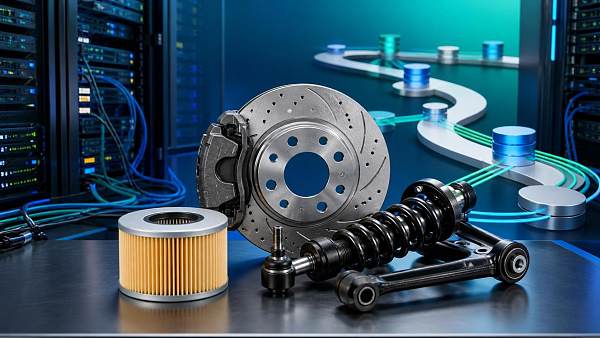
A 301 redirect is not a bulk operation, but a matching relationship between old and new pages
The most common technical issue in automotive parts export website redesigns is redirecting a large number of old URLs to the homepage, or redirecting them all to one product category page. Although this avoids 404 errors, search engines may find insufficient relevance between old and new pages, making it difficult for existing signals to be effectively inherited. For users, being taken to a broad category when looking for a specific model can also easily cause them to leave directly.
A more suitable approach is one-to-one mapping: an old brake disc page redirects to its corresponding new brake disc page; an old vehicle fitment page redirects to a new page that retains fitment information; products that have been discontinued with no replacement can redirect to the closest alternative model or related series page. The redirect mapping table should be completed before launch, and technical personnel should test status codes, redirect paths, and mobile performance.
Do not overlook internal links at the same time. Old links in navigation, product recommendations, blog articles, and PDF download pages will create unnecessary redirect loss if they still point to old URLs. After the new website goes live, submit the new Sitemap and continuously monitor index coverage, crawl issues, core keyword positions, and organic traffic changes, rather than checking once on launch day and considering the work complete.
Applying the conversion logic of how to design B2B inquiry pages for packaging industry export websites
B2B buyers in the packaging industry usually confirm materials, dimensions, minimum order quantities, printing methods, lead times, and customization capabilities on a page. Automotive parts buyers follow a similar decision-making process, except that vehicle model, year, OE/OEM number, quality standards, and sample requirements also need to be included. Neither type of website should consider its conversion design complete simply by placing “Contact Us” at the bottom of the page.
An automotive parts product page capable of receiving search traffic should enable buyers to find key information quickly: the product name and core model, fitment range, technical parameters, factory or quality control details, packaging and delivery information, and the next actionable step for requesting a quotation. If buyers come from a search engine, they typically do not know the brand and need clear information to reduce their decision-making effort.
Inquiry forms do not need to be overly long. Basic contact information, purchase quantity, target market, and product requirements can be required fields; fields such as OE number, vehicle model list, and drawing uploads should be provided according to product characteristics. For parts that require model matching, button copy such as “Send OE Number for Matching” or “Request Fitment Confirmation” is more aligned with purchasing scenarios than a generic “Submit.”
A multilingual redesign cannot simply translate the English pages once
Automotive parts exports often target multiple markets, including North America, Europe, the Middle East, and Latin America. Search terms, vehicle model systems, units of measurement, and purchasing habits vary across regions. Terminology used on English pages may not align with local search expressions when directly translated into Spanish, Russian, or Arabic pages.
During a redesign, first determine whether each language website has independent business objectives and a content plan. Pages targeting the European market can emphasize certifications, traceability, and fitment standards; pages for markets such as the Middle East and Africa can explain durability, bulk supply capacity, and logistics coordination more clearly. Technically, each language must have an accessible independent URL, with canonical and hreflang correctly configured to prevent search engines from misidentifying content as duplicate.
Which post-launch fluctuations are normal, and which require immediate action?
After a website redesign, short-term fluctuations in some keywords are not uncommon. Search engines need to recrawl pages, understand structural changes, and process redirect relationships. The key is not to pursue “zero fluctuation,” but to avoid issues such as continuous declines, important pages disappearing, brand terms becoming unsearchable, or large numbers of 404 errors on core product pages.
During the first two weeks after launch, it is recommended to focus on checking whether the homepage, main category pages, and key product pages can be crawled; whether redirects are accurate; whether robots files and noindex tags are blocking pages by mistake; whether forms, WhatsApp, and email buttons can submit normally; and whether mobile loading speed has become significantly slower. After that, track impressions, clicks, indexing, and inquiry sources weekly, and observe at least one complete crawl and ranking adjustment cycle.
When serving export companies with website development and overseas marketing, Yiyingbao typically incorporates page migration, SEO structure, multilingual configuration, and inquiry engagement into the redesign plan, rather than viewing website launch as the endpoint. For automotive parts companies, a redesign truly worth investing in is one that enables the search assets accumulated by the old website to be inherited smoothly while making the new website easier for global buyers to understand, trust, and submit inquiries through.
Related Articles


Related Products
 Yiyingbao SaaS Intelligent Website Building and Marketing SystemYiyingbao SaaS Intelligent Website Building and Marketing System, AI-powered no-code website building, rapid creation of multilingual B2B international websites in 10 minutes, global server acceleration, AI-powered SEO optimization, helping businesses connect efficiently with global markets. The perfect integration of technology and operation makes building an international trade website remarkably simple
 AI+SEM Intelligent Advertising Marketing SystemAI+SEM drives intelligent ad creation, empowering full-funnel precision advertising marketing. The system automatically generates weekly/monthly reports, AI recommends keywords and target countries, monitors core metrics in real-time with intelligent alerts, and enables one-click high-conversion ad solutions to help quickly acquire customers and improve ROI.
 AI+SEO Dual-Engine System Optimization ServicesYiyingbao’s AI+SEO dual-engine optimization system helps foreign trade enterprises acquire high-quality organic traffic through AI-powered keyword research, content generation, and comprehensive technical optimization, significantly improving search rankings and conversion rates.
 AI+SNS Social Media Marketing SystemYingbao AI+SNS Social Media Marketing System - Precision social capture for the social media era. Supports one-click content synchronization across major platforms like Facebook and LinkedIn. AI intelligently rewrites posts for enhanced relevance. 24/7 AI customer service and user profiling analysis empower businesses to efficiently expand into global markets.
 AI+SEO营销解决方案易营宝AI+SEO营销解决方案,通过AI批量写作、智能生成TDK、精准关键词扩词等功能,全面优化网站SEO效果,提升流量与转化率。助力企业构建高效智能网站新生态。
 AI+SEM Advertising Marketing SolutionsAI+SEM Advertising Marketing Solution leverages AI technology to deeply empower SEM ad campaigns. It automatically generates weekly/monthly reports using AI, presenting account data across multiple dimensions for comprehensive insights into campaign performance and trends. The system precisely recommends keywords and target countries, intelligently generates high-conversion ad copy, and enables one-click activation of efficient campaign plans to help businesses rapidly acquire customers. Simultaneously, it monitors core metrics in real time, intelligently identifies abnormal fluctuations, and issues timely alerts to ensure stable, high-return advertising results.
 Domain Name ServicesEasyWin provides professional domain name services, including intelligent queries, one-stop registration, brand protection, and full lifecycle management, helping businesses build a digital brand image.
 EasyOperate B2C Cross-Border E-Commerce Platform & Independent WebsiteEasyStore B2C Cross-border E-commerce Independent Store is an intelligent website building and cross-border e-commerce integrated solution independently developed by EasyStore Information Technology (Beijing) Co., Ltd. The system is specially designed for small and medium-sized as well as large export enterprises, integrating 'website building, operation, marketing, advertising, and conversion' into one, helping enterprises quickly establish cross-border e-commerce independent stores to achieve brand globalization and global sales growth.
The platform supports multiple languages, multiple currencies, and multi-channel marketing, with built-in AI intelligent translation and SEO optimization systems, suitable for mainstream markets such as Southeast Asia, Europe and America, Latin America, and the Middle East, assisting Chinese manufacturing enterprises in efficiently deploying international e-commerce strategies. SSL证书易营宝提供专业SSL安全证书服务,包括单域名和泛域名证书,确保网站数据传输加密、身份验证和完整性保护,助力企业建立安全可信的在线业务环境。









