









- Which customer acquisition channels will be affected by cross-border marketing trends in 2026?Sep 06, 2026View details
- Which homogenization risks should be considered in an analysis of the AI-powered website building industry?Aug 30, 2026View details
- How Will AI Marketing Trends 2026 Change Advertising Budget AllocationAug 28, 2026View details
- Is the EV SSL certificate market shrinking or upgrading? How should companies assess certificate procurement?Aug 11, 2026View details
- Why the old AMP SEO 2020 practices no longer work and what has changed in current optimization prioritiesAug 02, 2026View details
- How to Choose Topics for an Industry News Section to Attract More Organic Search TrafficJul 29, 2026View details
What are the three cost variables to look at first when optimizing a PPC budget?
When optimizing the budget for PPC campaigns, do not rush to cut the budget or focus only on the spending figures in the platform dashboard. For front-line campaign managers, what truly determines whether an account can maintain a stable ROI is usually not “how much has been spent,” but whether the three cost variables—cost per click, cost per conversion, and traffic quality—remain within controllable ranges.
If any one of these three factors is distorted, increasing the budget may amplify waste. However, when the relationships among them are clear, account efficiency can often improve significantly even without changing the budget. For those responsible for hands-on operations, the order of analysis is more important than the optimization actions themselves.
Why PPC Budget Optimization Should Not Start with Total Spending
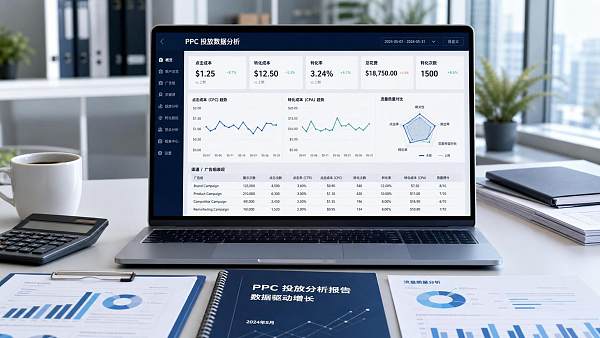
When costs rise, many account managers immediately reduce the budget, pause keywords, or shorten delivery hours. Although this may appear to limit losses in the short term, it can easily cut off effective traffic as well, resulting in fewer leads and making it difficult to restore the data performance later.
The core of PPC budget optimization is not simply reducing expenditure, but identifying “which spending is worthwhile and which is not.” Therefore, at the operational level, the first step is to break down the cost structure behind the budget instead of looking only at total spending or daily fluctuations.
From an execution perspective, the three variables that deserve priority attention are whether CPC has risen abnormally, whether CPA has remained out of control, and whether the quality of the traffic entering the account has deviated from the target customer profile. Together, they determine budget efficiency.
First, Check Click Costs: Is the Increase Caused by Competition or Account Deterioration?
CPC is the earliest signal that can be observed during budget optimization. When many campaign managers notice that spending is accelerating, it is often because the same budget is generating fewer clicks and the account has already become more expensive at the traffic-entry stage.
However, an increase in CPC does not necessarily mean that bids should be reduced immediately. You first need to determine whether the increase is caused by a temporary rise in industry competition, such as a peak season, promotional period, or increased competitor spending, or by a decline in the account’s ad relevance, quality score, or creative click-through rate, which has caused the system to increase the cost of acquiring traffic.
If the change is caused by the competitive environment, the focus should be on keyword portfolio segmentation, device bidding, geographic bidding, and time-of-day controls. Separate high-cost, low-intent traffic instead of shrinking the entire account. This approach is better for protecting core inquiry-entry points.
If the problem lies within the account itself, return to the ad creatives, keyword match types, landing-page experience, and historical click-through rate for investigation. Broad-match keywords deserve particular attention: if the search-term report has clearly deviated from the intended direction, even inexpensive clicks may still be wasting the budget.
In practice, you can start by reviewing three groups of data: the CPC difference between core and broad keywords, changes in click costs across devices, and the correlation between CTR over the past 7 days and the past 30 days. Looking only at average CPC is not very meaningful; breaking it down reveals which level the budget problem comes from.
Second, Check Conversion Costs: Are There Fewer Conversions or Are Front-End Traffic Costs Higher?
If CPC determines the price of the ticket for purchasing traffic, CPA, or cost per conversion, determines whether customer acquisition is ultimately cost-effective. In many accounts, clicks appear normal while lead costs continue to rise. The problem is usually in the conversion path, not just in bidding.
There are two common reasons for rising conversion costs. The first is that front-end traffic acquisition has become more expensive: the number of clicks has not decreased, but each click costs more. The second is that traffic costs have not changed significantly, but the landing-page conversion rate has declined, so the same number of clicks produces fewer conversions than before.
This is why CPA should not be viewed in isolation when optimizing PPC budgets. You need to understand it through the logic of “cost per click × conversion rate.” Only by identifying whether the problem is at the front end or the back end can you avoid making misguided adjustments.
For example, if click costs are essentially stable but form submission rates, inquiry rates, or add-to-cart rates have clearly declined, the priority should be to investigate page loading speed, form design, above-the-fold information, trust elements, and the mobile experience instead of immediately lowering keyword bids.
Conversely, if the page conversion rate remains stable but CPA continues to rise, the problem is more likely to be on the traffic acquisition side. At this point, review keyword intent, audience quality, whether the ad creatives are attracting an overly broad audience, and whether the system’s automatic expansion has exceeded its limits.
For campaign operators, the most practical approach is not to monitor one overall CPA every day, but to review conversion costs separately by campaign, ad group, audience segment, and landing page. Only when the data is broken down sufficiently can budget optimization become actionable rather than remain a superficial judgment.
The Third and Most Easily Overlooked Factor: Poor Traffic Quality Makes Even a Reduced Budget Ineffective
Poor account performance is often not caused by excessive spending, but by attracting the wrong people. Once traffic quality deviates, CPC may not appear high, and even conversion data may not look particularly poor, but the resulting sales opportunities and inquiry quality can be clearly inadequate.
This situation is especially common in B2B overseas lead generation and cross-border independent-site promotion. For example, search terms and ad copy may appear relevant, but the users attracted may only be conducting general information searches without purchase intent. Alternatively, geographic targeting may be too broad, bringing in a large volume of low-value clicks.
Traffic quality cannot be assessed solely through clicks and conversion data within the platform. You must also consider time on site, bounce behavior, page depth, repeat visits, the proportion of invalid forms, sales feedback, and final deal outcomes to determine whether the budget is truly being spent on target customers.
For operators, the most direct optimization methods include narrowing keyword match types, adding negative keywords, separating ad groups by purchasing stage, restricting low-value regions, filtering for high-intent audiences, and making ad copy more explicit so that non-target users are filtered out.
The more an ad is written so that “anyone can click it,” the less stable traffic quality usually becomes. By contrast, clearly stating the product type, applicable users, service scope, or purchasing scenario in the copy may not generate the highest click volume, but it is more conducive to controlling budget waste and improving true ROI.
In Practice, In What Order Should These Three Cost Variables Be Investigated?
In a real account, click cost, conversion cost, and traffic quality do not exist independently. A more effective investigation sequence is usually to first determine whether traffic has deviated, then assess whether clicks are being purchased at a high cost, and finally determine whether the conversion path is successfully capturing effective traffic.
The reason is simple. If traffic quality itself is poor, a low CPC is meaningless, and an attractive CPA may merely reflect inflated conversions or low-value leads. Only after confirming that you are reaching the right people can you determine whether subsequent bid and page optimization efforts are worthwhile.
The second step is to examine click costs and confirm whether the cost of acquiring target traffic remains within a normal range. If high-quality traffic is becoming increasingly expensive, reallocate the budget by prioritizing high-intent keywords, key markets, and ad structures with more stable conversion performance.
The third step is to examine conversion costs and verify whether the traffic generated in the first two steps is being effectively received. If the traffic is relevant and click prices are reasonable but conversions remain poor, the problem is likely to lie in the page, form, content persuasiveness, or conversion-path setup.
The value of this sequence is that it helps operators reduce misjudgments. Many budget optimization efforts fail not because the operator does not know how to adjust the account, but because the order is wrong: they cut the outcome metrics first without first identifying the true cause of the deterioration.
The Most Important Analytical Habits for PPC Budget Optimization
First, do not look only at aggregated platform data. Develop the habit of analyzing problems by dimension. Once the data is broken down by keyword, region, device, time period, audience, and landing page, the reasons behind many cases of “budget getting out of control” become clear, and the actions become more precise.
Second, do not treat short-term fluctuations as long-term trends. PPC accounts are strongly affected by the bidding environment, holidays, creative fatigue, and conversion delays. When evaluating changes in cost variables, it is best to compare data from the past 7, 14, and 30 days at the same time.
Third, budget optimization is not a one-point adjustment, but a process of continuous filtering. Removing low-quality traffic, protecting high-intent entry points, and repairing conversion handoffs often need to be carried out simultaneously. If only one of these actions is taken, the results are usually less stable and scaling is more difficult.
For companies that need to acquire overseas inquiries or cross-border orders over the long term, PPC never operates in isolation. It is directly related to website quality, landing-page structure, accumulated SEO performance, social media traffic acquisition, and data feedback capabilities. These factors also create differences in account optimization results.
For data-driven platforms such as 易营宝, which cover intelligent website building, SEO optimization, advertising, and overseas marketing, the value lies in viewing front-end customer acquisition and back-end conversion support as one integrated system. This reduces the judgment bias caused by campaign teams focusing only on the advertising dashboard.
Conclusion: Examine the Variables Before Cutting the Budget
Ultimately, PPC budget optimization is not an exercise in “saving money,” but a process of “improving budget output efficiency.” For operators, the three cost variables that deserve priority attention are click cost, conversion cost, and traffic quality.
Traffic quality determines whether the budget is being spent on the target audience, click cost determines the price of acquiring traffic, and conversion cost determines whether customer acquisition is ultimately viable. Only by placing all three within the same analytical framework can optimization actions become more accurate.
Therefore, when account costs fluctuate, do not rush to reduce the budget. First ask: Is the traffic relevant? Are the clicks expensive? Where are conversions being lost? Once these three questions are clear, PPC budget optimization becomes truly actionable, and the account’s ROI is more likely to improve consistently.
Related Articles


Related Products
 Yiyingbao SaaS Intelligent Website Building and Marketing SystemYiyingbao SaaS Intelligent Website Building and Marketing System, AI-powered no-code website building, rapid creation of multilingual B2B international websites in 10 minutes, global server acceleration, AI-powered SEO optimization, helping businesses connect efficiently with global markets. The perfect integration of technology and operation makes building an international trade website remarkably simple
 AI+SEM Intelligent Advertising Marketing SystemAI+SEM drives intelligent ad creation, empowering full-funnel precision advertising marketing. The system automatically generates weekly/monthly reports, AI recommends keywords and target countries, monitors core metrics in real-time with intelligent alerts, and enables one-click high-conversion ad solutions to help quickly acquire customers and improve ROI.
 AI+SEO Dual-Engine System Optimization ServicesYiyingbao’s AI+SEO dual-engine optimization system helps foreign trade enterprises acquire high-quality organic traffic through AI-powered keyword research, content generation, and comprehensive technical optimization, significantly improving search rankings and conversion rates.
 AI+SNS Social Media Marketing SystemYingbao AI+SNS Social Media Marketing System - Precision social capture for the social media era. Supports one-click content synchronization across major platforms like Facebook and LinkedIn. AI intelligently rewrites posts for enhanced relevance. 24/7 AI customer service and user profiling analysis empower businesses to efficiently expand into global markets.
 AI+SEO营销解决方案易营宝AI+SEO营销解决方案,通过AI批量写作、智能生成TDK、精准关键词扩词等功能,全面优化网站SEO效果,提升流量与转化率。助力企业构建高效智能网站新生态。
 AI+SEM Advertising Marketing SolutionsAI+SEM Advertising Marketing Solution leverages AI technology to deeply empower SEM ad campaigns. It automatically generates weekly/monthly reports using AI, presenting account data across multiple dimensions for comprehensive insights into campaign performance and trends. The system precisely recommends keywords and target countries, intelligently generates high-conversion ad copy, and enables one-click activation of efficient campaign plans to help businesses rapidly acquire customers. Simultaneously, it monitors core metrics in real time, intelligently identifies abnormal fluctuations, and issues timely alerts to ensure stable, high-return advertising results.
 Domain Name ServicesEasyWin provides professional domain name services, including intelligent queries, one-stop registration, brand protection, and full lifecycle management, helping businesses build a digital brand image.
 EasyOperate B2C Cross-Border E-Commerce Platform & Independent WebsiteEasyStore B2C Cross-border E-commerce Independent Store is an intelligent website building and cross-border e-commerce integrated solution independently developed by EasyStore Information Technology (Beijing) Co., Ltd. The system is specially designed for small and medium-sized as well as large export enterprises, integrating 'website building, operation, marketing, advertising, and conversion' into one, helping enterprises quickly establish cross-border e-commerce independent stores to achieve brand globalization and global sales growth.
The platform supports multiple languages, multiple currencies, and multi-channel marketing, with built-in AI intelligent translation and SEO optimization systems, suitable for mainstream markets such as Southeast Asia, Europe and America, Latin America, and the Middle East, assisting Chinese manufacturing enterprises in efficiently deploying international e-commerce strategies. SSL证书易营宝提供专业SSL安全证书服务,包括单域名和泛域名证书,确保网站数据传输加密、身份验证和完整性保护,助力企业建立安全可信的在线业务环境。









