









- Fujian Announces the First Batch of Provincial-Level Cross-Border E-Commerce Industrial Parks and Key Brands for CultivationNov 14, 2026View details
- Amazon Global Store Announces the Launch of the 2026 Black Friday Global Shopping SeasonNov 14, 2026View details
- CCTV.com Examines APEC’s Role in China’s Foreign TradeNov 12, 2026View details
- China’s Tariff Commission of the State Council Adjusts Additional Tariffs on U.S. Goods: 24% Tariff Suspended for Two MonthsNov 10, 2026View details
- APEC Shenzhen Spotlight: Cross-Border E-Commerce Orders Promote Asia-Pacific Trade and Economic CooperationNov 08, 2026View details
- China-Europe Railway Express and CIIE Hold Business Matchmaking Event, Focusing on Cross-Border E-commerce B2B ExportsNov 07, 2026View details
How should ad groups in Google Ads be segmented by product?
How Should anzeigengruppe in Google Ads Be Split by Product?
In a Google Ads account, anzeigengruppe usually refers to an “ad group.” When many operators first take over an account, they put the same type of product, multiple specifications, or even entirely different application scenarios into one ad group, believing that as long as there are enough keywords and the budget is high enough, they can cover more search traffic. After running for a period of time, common issues begin to emerge: search terms become increasingly mixed, ad copy cannot be written precisely, landing pages become disconnected from user intent, and lead quality becomes difficult to assess.
The core of splitting anzeigengruppe by product is not to make the account structure as granular as possible, but to ensure that “what users search for, the keywords that trigger the ads, the ads they see, and the pages they enter” all point to the same purchasing question as much as possible. For export-oriented manufacturers, cross-border brands, and B2B service providers, this consistency deserves greater priority than simply expanding the number of keywords.
First Clarify: Product Segmentation Does Not Mean One SKU per Ad Group
Product catalogs are often organized according to internal management methods, such as model, material, size, series, or inventory code. Search ads, however, should be organized more around how overseas buyers search. When procurement personnel search for “industrial water pump manufacturer,” they are concerned with industrial water pump supply capabilities; when they search for “stainless steel centrifugal pump,” they have already expressed requirements for material and structure. These two searches do not necessarily need to fall under the same anzeigengruppe.
To determine whether a separate ad group is needed, consider three dimensions: whether the product has an independent set of search terms; whether the ad needs to emphasize different selling points; and whether the website has an independent page that can directly address the demand. If two of the three conditions are met, it is usually worth considering a split. Conversely, if the differences involve only color or minor specification changes, and users would not search for these differences separately, splitting too early will only result in sparse data and higher maintenance costs.
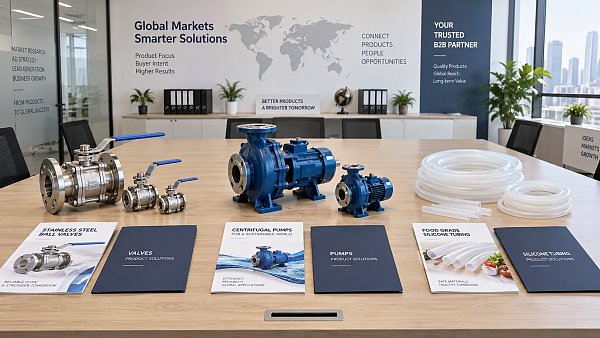
Especially in B2B advertising, a “product series” is often more suitable as a foundational level than an individual model. For example, a valve company can first segment by ball valves, butterfly valves, and gate valves. When ball valves themselves have stable search volume, and the conversion paths for high-pressure, flanged, sanitary-grade, and other variations differ significantly, more granular ad groups can then be created.
An Executable Segmentation Logic: Three Levels of Product, Intent, and Market Assessment
The ad group structure should ideally start with the website rather than with a keyword tool. First, list the product pages, industry solution pages, and inquiry pages that can independently receive traffic, then work backward to identify the search demand that should be covered. For products without corresponding landing pages, even if their keywords have search volume, it is not advisable to rush into creating ad groups. Directing users to a generic homepage usually makes it difficult to clearly explain specifications, lead times, certifications, or customization capabilities.
Market language also affects segmentation methods. Product naming conventions in English, German, French, and Spanish do not fully correspond to one another. If a company advertises in multiple language markets, it is recommended to prioritize controlling language and region at the campaign level, then build anzeigengruppe according to product logic within each market. Do not mix keywords in different languages within the same ad group; otherwise, ad copy, landing page language, and search term reports will all be unfavorable for subsequent optimization.
Within an Ad Group, Keywords Should Focus on the Same “Answerable Question”
Once an ad group has been created, more keywords are not necessarily better. A practical test is: for any keyword in the group, can the same set of ad headlines, the same selling points, and the same landing page be used to answer it? If the answer is no, the group theme is already too broad.
For example, “custom metal fabrication” and “sheet metal enclosure manufacturer” are both related to metal processing, but the former covers a very broad range, while the latter points to a specific product. The former may be suitable for a custom fabrication capability page, while the latter is better suited to an electrical enclosure page. If the two are forcibly combined, the ad will either be too general or can only favor one type of demand, leaving the other clicks without proper follow-up.
For search ads, it is recommended that each ad group retain one clear core theme and be configured with keywords using different match types around it. Broad match can help discover new search expressions, but it requires negative keywords and ongoing review of search term reports; phrase match and exact match are generally more convenient for controlling initial traffic. The specific combination to use should be determined based on budget, conversion tracking quality, and the ambiguity of product terminology, rather than being set only according to a fixed template.
Ad Copy and Landing Pages Determine Whether Segmentation Truly Works
Many accounts appear to have created multiple anzeigengruppe by product, but every ad group uses the same responsive search ads. The result is still “the structure has been split, but the content has not.” Product-based ads should at least reflect the category name, core application, or key specifications, and clearly state delivery information that buyers care about, such as whether customization is supported, whether the minimum order quantity needs to be discussed, whether samples are available, and which regions can be served. Information that cannot be confirmed should not be included in ads.
The corresponding relationship with landing pages must not be overlooked. After users enter a page from “food grade silicone tubing supplier,” the first screen should quickly confirm the theme of food-grade silicone tubing, rather than displaying only the company overview or all rubber and plastic products. The page should also provide verifiable product parameters, application descriptions, inquiry access, and necessary trust information. The page experience after an ad click affects conversion assessment and can also reveal whether the ad group segmentation is reasonable.
The Four Segmentation Methods Most Prone to Problems
The first is the “mixed-bag group”: putting all product terms, brand terms, competitor terms, and industry terms together. The data may appear concentrated, but it is actually impossible to determine which product truly generates effective inquiries. The second is “overly granular models”: creating a separate group for every model without sufficient search volume and budget. These groups are rarely triggered over the long term, and the management interface instead loses focus.
The third is neglecting negative keywords. Product terms themselves often include non-purchase intent such as repair, used, recruitment, tutorials, drawings, and free, which need to be gradually excluded based on search term reports. The fourth is splitting only by product name without addressing audience intent. Retail terms aimed at end consumers, bulk purchasing terms aimed at engineering contractors, and customization terms from buyers seeking contract manufacturers often require different ad promises and page paths.
After Segmentation, How to Determine Whether an Ad Group Should Be Retained, Merged, or Further Refined
Do not make decisions based solely on click-through rate. When reviewing an ad group, more valuable indicators include whether search terms still revolve around the same product theme, whether ads accurately cover major queries, whether the page generates identifiable valid actions, and whether the sales team can determine what type of demand a lead belongs to. If a group consistently shows several entirely different search directions, consider creating new groups; if multiple segmented groups lack sufficient impressions and clicks for a long time, and their pages and copy have no clear differences, they can be merged back into the product series level.
Conversion tracking is the foundation of this step. B2B businesses should not look only at form submissions, but should also distinguish, as much as possible, phone calls, email clicks, file downloads, key page visits, and subsequently confirmed valid inquiries. Online behavior is not equivalent to real business opportunities, but without layered records, even the most detailed ad groups make it difficult to determine which products should receive more budget.
In work that coordinates intelligent website building, multilingual pages, and overseas promotion, Yiyingbao typically first organizes product categories, target-market languages, and the existing capacity of pages to receive traffic, then designs campaign and ad group structures. For companies simultaneously conducting Google SEO, advertising, and social media traffic generation, this unified planning is particularly necessary: the product themes used in ad groups, website directories, and content development directions should correspond to one another rather than operate independently.
Splitting anzeigengruppe by product is essentially about creating a traceable demand map. Start with products that have the clearest search intent, the most complete pages, and higher commercial value. There is no need to restructure the entire account at once. Once search terms, page behavior, and inquiry feedback gradually accumulate, decide which products are worth segmenting further and which traffic should be narrowed or excluded. Only then can the structure better withstand long-term optimization.
Related Articles
 How do you measure the overall conversion performance of multilingual overseas advertising?
 How do you evaluate campaign experience when choosing a Meta ads management service?
 Which scenarios are better suited to data-driven advertising than manual ad placement?



Related Products
 Yiyingbao SaaS Intelligent Website Building and Marketing SystemYiyingbao SaaS Intelligent Website Building and Marketing System, AI-powered no-code website building, rapid creation of multilingual B2B international websites in 10 minutes, global server acceleration, AI-powered SEO optimization, helping businesses connect efficiently with global markets. The perfect integration of technology and operation makes building an international trade website remarkably simple
 AI+SEM Intelligent Advertising Marketing SystemAI+SEM drives intelligent ad creation, empowering full-funnel precision advertising marketing. The system automatically generates weekly/monthly reports, AI recommends keywords and target countries, monitors core metrics in real-time with intelligent alerts, and enables one-click high-conversion ad solutions to help quickly acquire customers and improve ROI.
 AI+SEO Dual-Engine System Optimization ServicesYiyingbao’s AI+SEO dual-engine optimization system helps foreign trade enterprises acquire high-quality organic traffic through AI-powered keyword research, content generation, and comprehensive technical optimization, significantly improving search rankings and conversion rates.
 AI+SNS Social Media Marketing SystemYingbao AI+SNS Social Media Marketing System - Precision social capture for the social media era. Supports one-click content synchronization across major platforms like Facebook and LinkedIn. AI intelligently rewrites posts for enhanced relevance. 24/7 AI customer service and user profiling analysis empower businesses to efficiently expand into global markets.
 AI+SEO营销解决方案易营宝AI+SEO营销解决方案,通过AI批量写作、智能生成TDK、精准关键词扩词等功能,全面优化网站SEO效果,提升流量与转化率。助力企业构建高效智能网站新生态。
 AI+SEM Advertising Marketing SolutionsAI+SEM Advertising Marketing Solution leverages AI technology to deeply empower SEM ad campaigns. It automatically generates weekly/monthly reports using AI, presenting account data across multiple dimensions for comprehensive insights into campaign performance and trends. The system precisely recommends keywords and target countries, intelligently generates high-conversion ad copy, and enables one-click activation of efficient campaign plans to help businesses rapidly acquire customers. Simultaneously, it monitors core metrics in real time, intelligently identifies abnormal fluctuations, and issues timely alerts to ensure stable, high-return advertising results.
 Domain Name ServicesEasyWin provides professional domain name services, including intelligent queries, one-stop registration, brand protection, and full lifecycle management, helping businesses build a digital brand image.
 EasyOperate B2C Cross-Border E-Commerce Platform & Independent WebsiteEasyStore B2C Cross-border E-commerce Independent Store is an intelligent website building and cross-border e-commerce integrated solution independently developed by EasyStore Information Technology (Beijing) Co., Ltd. The system is specially designed for small and medium-sized as well as large export enterprises, integrating 'website building, operation, marketing, advertising, and conversion' into one, helping enterprises quickly establish cross-border e-commerce independent stores to achieve brand globalization and global sales growth.
The platform supports multiple languages, multiple currencies, and multi-channel marketing, with built-in AI intelligent translation and SEO optimization systems, suitable for mainstream markets such as Southeast Asia, Europe and America, Latin America, and the Middle East, assisting Chinese manufacturing enterprises in efficiently deploying international e-commerce strategies. SSL证书易营宝提供专业SSL安全证书服务,包括单域名和泛域名证书,确保网站数据传输加密、身份验证和完整性保护,助力企业建立安全可信的在线业务环境。









