









- APEC Shenzhen Spotlight: Cross-Border E-Commerce Orders Promote Asia-Pacific Trade and Economic CooperationNov 08, 2026View details
- China-Europe Railway Express and CIIE Hold Business Matchmaking Event, Focusing on Cross-Border E-commerce B2B ExportsNov 07, 2026View details
- China’s Ministry of Commerce Responds to Additional Charges on Low-Value Imports Imposed by the EUNov 06, 2026View details
- Two Internet Development Reports Released at the 2026 World Internet ConferenceNov 05, 2026View details
- Internet Business Revenue of Enterprises Above the Designated Size Reached RMB 1.716 Trillion in the First Three Quarters, with Profits Up 17.6%Nov 05, 2026View details
- Shopify's Third-Quarter Revenue and GMV Fall Short of Expectations, Sending Shares Tumbling Before the Market OpensNov 04, 2026View details
What Campaign Objectives Are Google Display Ads Best Suited For? A Guide to Targeting and Billing
When preparing to expand into overseas markets, businesses often face a question: how can they introduce their brand to potential customers before those customers search for the product by name? Google Display Ads offer one approach—reaching users through images, text, and other formats across placements such as relevant websites and apps. They can be used to increase visibility and support lead nurturing and conversions, but different objectives call for different targeting, bidding, and measurement approaches.
What Are Google Display Ads, and How Do They Differ from Search Ads?
Google Display Ads are typically served through the Google Display Network and may appear on partner websites, apps, and other eligible placements. Users may see ads related to their interests, browsing context, or the advertiser’s targeting criteria while reading industry news, viewing product content, or using apps.
The main difference between display and Google Search Ads is when they reach users: Search Ads typically respond to search terms users have already entered, while Display Ads more often reach users proactively as they browse content. Display Ads are therefore suitable for expanding awareness and maintaining engagement with audiences. However, users’ purchase intent at any given moment can vary, so their performance cannot be assessed simply by using the cost per inquiry associated with Search Ads.
Which Marketing Objectives Are Suited to Display Ads?
Brand awareness and new product awareness. When an industrial equipment manufacturer enters a new market, local procurement professionals may not be familiar with its brand. Display Ads can combine geographic targeting, industry-relevant content, and visual assets to introduce the company and its products to a wider pool of potential audiences. In addition to impressions, businesses should consider metrics such as reach and viewable impressions to avoid focusing solely on increasing numbers.
Reaching potential customers. If a business wants to reach people interested in a particular type of product or service, it can use audience segments and content targeting to explore which audiences and page contexts are more responsive. For B2B businesses, an ad does not necessarily need to generate an order immediately; it can also encourage users to learn about product applications, download materials, or submit an inquiry.
Re-engaging visitors who have already shown interest. Users who viewed a product page but did not submit an inquiry may simply need more time to compare options. Remarketing audiences that comply with applicable policies and privacy requirements can help businesses show relevant information to these users again. However, ads do not guarantee that users will ultimately convert; audience size, creative relevance, and landing page experience all affect results.
Supporting website conversions. For accounts with clear objectives and properly configured conversion tracking, Display Ads can also be optimized for actions such as form submissions, registrations, or purchases. Keep in mind that for high-value products and businesses with long decision cycles, subsequent sales follow-up is often also needed to assess the true value generated by advertising.
How to Choose Targeting: Start with the Audience, Then Consider the Context
Display ad targeting is not as simple as “choosing an industry.” Businesses generally need to consider their target markets, product characteristics, and budget to define who they want to reach and where they want their ads to appear.
- Location and language: Set the campaign’s geographic scope by target country or region, language, and other criteria. For multilingual websites, try to match the ad language to the landing page language, and consider delivery, service, and inquiry-handling capabilities in the target region.
- Audience segments: Select audiences based on signals such as users’ interests and purchase intent, or use custom segments to find potential audiences based on indicators such as relevant keywords and URLs. The system identifies users who may be relevant; this does not mean every user is actively looking to make a purchase.
- Content targeting: Use keywords, topics, or specific placements to try to show ads alongside relevant content. Available settings may vary across campaign types, so placements should still be reviewed after launch to ensure they meet brand requirements.
- Remarketing: Use eligible audience data, such as website visitors, to re-engage people who have interacted with the business. When creating audiences and using related data, comply with Google policies and applicable privacy and consent management requirements.
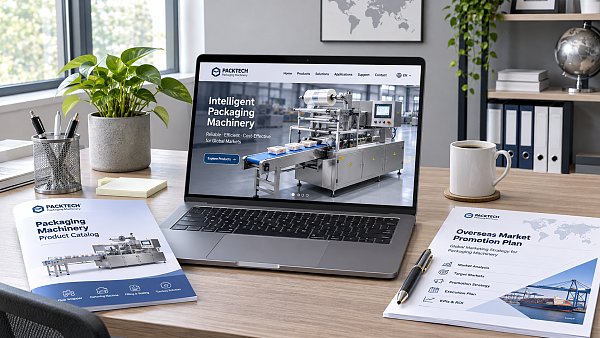
For example, an exporter of packaging equipment could first test potential audiences interested in packaging machinery in its target markets, then see which audiences generate higher-quality website visits. It could also test more specific product information for visitors who have viewed product pages. More audience criteria are not necessarily better: overly narrow targeting may limit traffic, while overly broad targeting may increase irrelevant impressions. Some campaigns may also use optimized targeting, so the actual reach may not exactly match the initial audience settings. Check the account to verify.
How Billing Works: What You Pay Depends on the Bidding Strategy
There is no single price for Google Display Ads that applies to every account. Actual costs are affected by factors such as competition, target audience, placements, ad quality, and bidding strategy. A daily budget also does not represent a fixed price per click or per inquiry.
- CPC (cost per click): Typically charges for clicks on the ad and is suitable for campaigns focused on website traffic. A click creates an opportunity for a visit; it does not necessarily result in a qualified inquiry.
- vCPM (viewable cost per thousand impressions): Charges for viewable impressions and is suitable for campaigns focused on exposure. It measures whether an ad meets the viewability standard; it does not guarantee that users will remember the ad or take action.
- Conversion-focused bidding: Smart Bidding strategies, such as Maximize Conversions, Target CPA, or Target ROAS, use conversion data in the auction. A target cost or return is an optimization goal, not a guaranteed value for each conversion; the specific strategies available depend on the campaign settings.
The optimization objective and actual billing method do not always correspond directly across bidding strategies. Before launching a campaign, confirm which strategies are supported and review the billing information in the account, then set clear budget limits. For inquiry-generation campaigns, it is also advisable to track lead quality after form submissions to avoid mistaking a large volume of invalid submissions for growth.
What Else Should Businesses Prepare Before Launching a Campaign?
The ad creative and landing page should answer the same question: what will users get when they click through? Pages for overseas buyers should clearly present product applications, specifications or service scope, and contact information, and remain easy to read on mobile devices. If an ad promises information about a particular piece of equipment but links to a homepage with only general information, visitors may leave quickly.
Performance measurement should also match the objective. For brand awareness, businesses can monitor reach, viewable impressions, and subsequent visits to the brand. For lead generation, they should check that conversion tracking is working properly and analyze leads with input from the sales team. Looking only at click-through rate or cost per click can make it easy to overlook what happens after the click.
Budget planning should also be considered in the context of overall business objectives. When determining overseas market investment, manufacturers can refer to the strategic perspective and comprehensive budgeting approaches discussed in An Exploration of Approaches to Improving Comprehensive Budget Management in Manufacturing Enterprises Under Strategic Guidance, and assess advertising budgets alongside market expansion objectives and sales capacity, rather than making decisions based only on the click price of a single campaign.
Businesses building an overseas lead generation system can also consider coordinating Display Ads with multilingual websites, Search Ads, and SEO content: Display Ads expand reach and support ongoing communication, the website provides information about products and a way to make inquiries, and search channels reach users who are actively looking for information. Yiyingbao provides services including intelligent website building, Google Ads campaign management, and SEO. Businesses can select the services they need based on their stage of development and continue to monitor traffic and conversion quality after launching campaigns.
Related Articles
 What is the difference between phrase match and exact match in Google Ads?
 How should you allocate your TikTok advertising budget?
 Google Ads Update: DSA Upgraded to AI Max, PMax to Extract Images by Default


Related Products
 Yiyingbao SaaS Intelligent Website Building and Marketing SystemYiyingbao SaaS Intelligent Website Building and Marketing System, AI-powered no-code website building, rapid creation of multilingual B2B international websites in 10 minutes, global server acceleration, AI-powered SEO optimization, helping businesses connect efficiently with global markets. The perfect integration of technology and operation makes building an international trade website remarkably simple
 AI+SEM Intelligent Advertising Marketing SystemAI+SEM drives intelligent ad creation, empowering full-funnel precision advertising marketing. The system automatically generates weekly/monthly reports, AI recommends keywords and target countries, monitors core metrics in real-time with intelligent alerts, and enables one-click high-conversion ad solutions to help quickly acquire customers and improve ROI.
 AI+SEO Dual-Engine System Optimization ServicesYiyingbao’s AI+SEO dual-engine optimization system helps foreign trade enterprises acquire high-quality organic traffic through AI-powered keyword research, content generation, and comprehensive technical optimization, significantly improving search rankings and conversion rates.
 AI+SNS Social Media Marketing SystemYingbao AI+SNS Social Media Marketing System - Precision social capture for the social media era. Supports one-click content synchronization across major platforms like Facebook and LinkedIn. AI intelligently rewrites posts for enhanced relevance. 24/7 AI customer service and user profiling analysis empower businesses to efficiently expand into global markets.
 AI+SEO营销解决方案易营宝AI+SEO营销解决方案,通过AI批量写作、智能生成TDK、精准关键词扩词等功能,全面优化网站SEO效果,提升流量与转化率。助力企业构建高效智能网站新生态。
 AI+SEM Advertising Marketing SolutionsAI+SEM Advertising Marketing Solution leverages AI technology to deeply empower SEM ad campaigns. It automatically generates weekly/monthly reports using AI, presenting account data across multiple dimensions for comprehensive insights into campaign performance and trends. The system precisely recommends keywords and target countries, intelligently generates high-conversion ad copy, and enables one-click activation of efficient campaign plans to help businesses rapidly acquire customers. Simultaneously, it monitors core metrics in real time, intelligently identifies abnormal fluctuations, and issues timely alerts to ensure stable, high-return advertising results.
 Domain Name ServicesEasyWin provides professional domain name services, including intelligent queries, one-stop registration, brand protection, and full lifecycle management, helping businesses build a digital brand image.
 EasyOperate B2C Cross-Border E-Commerce Platform & Independent WebsiteEasyStore B2C Cross-border E-commerce Independent Store is an intelligent website building and cross-border e-commerce integrated solution independently developed by EasyStore Information Technology (Beijing) Co., Ltd. The system is specially designed for small and medium-sized as well as large export enterprises, integrating 'website building, operation, marketing, advertising, and conversion' into one, helping enterprises quickly establish cross-border e-commerce independent stores to achieve brand globalization and global sales growth.
The platform supports multiple languages, multiple currencies, and multi-channel marketing, with built-in AI intelligent translation and SEO optimization systems, suitable for mainstream markets such as Southeast Asia, Europe and America, Latin America, and the Middle East, assisting Chinese manufacturing enterprises in efficiently deploying international e-commerce strategies. SSL证书易营宝提供专业SSL安全证书服务,包括单域名和泛域名证书,确保网站数据传输加密、身份验证和完整性保护,助力企业建立安全可信的在线业务环境。









