









- China’s Tariff Commission of the State Council Adjusts Additional Tariffs on U.S. Goods: 24% Tariff Suspended for Two MonthsNov 10, 2026View details
- APEC Shenzhen Spotlight: Cross-Border E-Commerce Orders Promote Asia-Pacific Trade and Economic CooperationNov 08, 2026View details
- China-Europe Railway Express and CIIE Hold Business Matchmaking Event, Focusing on Cross-Border E-commerce B2B ExportsNov 07, 2026View details
- China’s Ministry of Commerce Responds to Additional Charges on Low-Value Imports Imposed by the EUNov 06, 2026View details
- Two Internet Development Reports Released at the 2026 World Internet ConferenceNov 05, 2026View details
- Internet Business Revenue of Enterprises Above the Designated Size Reached RMB 1.716 Trillion in the First Three Quarters, with Profits Up 17.6%Nov 05, 2026View details
Building a Website for Precision Machining Exports: How to Showcase Tolerances, Materials, and Capabilities
An overseas project manager visiting a precision machining supplier’s website is usually not there to admire photos of equipment. They want to quickly determine whether a part can be manufactured, how critical dimensions will be controlled, and whether the materials and inspection records meet project requirements. The value of building a precision machining website for international business lies in organizing information scattered across drawings, process documents, and engineers’ experience into content that customers can understand and that encourages further discussion.
Help customers understand the limits of your capabilities, not just see “high precision”
Tolerances are among the details purchasing and engineering teams consider when screening suppliers, but simply stating “±0.01 mm achievable” can easily be misleading. The same dimensional requirement can vary significantly in difficulty depending on the material, part design, machining length, and inspection conditions.
A website is better served by presenting “capability details + applicable conditions + verification method.” For example, when describing milling capabilities for a particular type of aluminum alloy part, explain the size range the company can actually handle, typical tolerance requirements, and commonly used inspection methods. Note that final feasibility depends on drawing and process evaluations. Without sufficient evidence, do not present the best result achieved on an individual sample as a standard applicable to every order.
For overseas customers, pay attention to units and terminology as well. Dimensions can be provided in both millimeters and inches, with the units clearly indicated. For geometric tolerances and surface roughness, refer to the actual drawing requirements or applicable standards. The page does not need to reproduce the entire engineering specification, but it should help project managers understand which requirements can be assessed preliminarily before an inquiry and which need further confirmation by an engineer.
Materials pages: Move beyond a “materials list” to project selection information
Many websites list aluminum, steel, stainless steel, and engineering plastics in a row, yet customers still cannot tell whether the supplier has experience relevant to their projects. A more useful approach is to break materials down by grade based on actual machining experience and add information relevant to project decisions.
- Material range: List the common grades the company can actually source and machine, distinguishing regularly stocked materials from those that require project-specific confirmation.
- Machining and treatment: Explain the machining methods available and whether surface or post-processing, such as anodizing and heat treatment, is carried out by partners.
- Documentation support: If material certificates, batch information, or other quality documents can be provided with an order, specify the conditions. Avoid making broad commitments about items that cannot be covered.
Material descriptions can also link to relevant process pages. For example, while browsing stainless steel machining information, customers should be able to continue to details on suitable part types, surface treatment options, and an inquiry form, without repeatedly returning to the menu to find information.
Present machining capabilities along the project workflow
Equipment models and quantities are useful references, but they do not directly answer the question, “Can this project be delivered?” Organize the capabilities page along a familiar evaluation path for customers: explain, step by step, what the company is responsible for, from drawing review and machining methods through inspection, packaging, and delivery coordination.
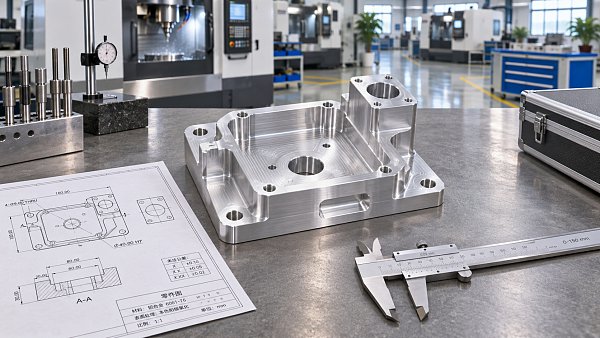
When presenting processes, describe CNC milling, turning, multi-axis machining, or other services based on actual business operations, and include images of typical parts, materials, size ranges, and key operations. Before featuring customer projects, obtain authorization and, where necessary, remove drawing identifiers, customer names, and sensitive dimensions. If no cases are authorized for publication, self-produced samples can be used to showcase complex structures and machining details, provided their nature is clearly stated.
The quality control section should not consist solely of photos of inspection equipment. Project managers are more concerned with how critical dimensions are determined, whether first-article inspection is performed, how in-process inspections are arranged, and what records can be provided at shipment. If the inspection plan needs to be determined based on the drawings, order quantity, and customer requirements, say so directly to avoid giving customers the impression that every order includes the same inspection scope.
Turn technical information into a practical inquiry process
Even a comprehensive technical page cannot replace a drawing review. For project managers, a good website should make the next steps clear: where to upload files, what information to provide, and who will follow up after an inquiry is received.
Inquiry forms can include the fields needed for engineering evaluation, such as drawings or 3D files, material grade, estimated quantity, critical tolerances, surface treatment, and target delivery date. For projects that are not yet fully defined, allowing customers to describe the application or ask questions is more helpful than requiring them to fill in every technical parameter. For confidential drawings, explain how files are received and how to discuss confidentiality agreements, and implement appropriate file protection measures based on the company’s actual circumstances.
Website language also affects communication efficiency. For English-speaking markets, terminology should be consistent across navigation, capability descriptions, form instructions, and automatic replies. When expanding into other regions, plan multilingual content according to target customer needs. Machine translation can help prepare a first draft, but tolerances, material grades, and inspection terminology need human review to prevent technical meanings from being distorted.
Before building the website, decide which content merits investment
For project managers, website development is not just a design task; it also requires coordination among engineering, quality, sales, and management teams. Start by selecting key customer acquisition markets and priority processes, reviewing existing technical materials, and then deciding which pages to launch first. Rather than publishing a large number of pages with little detail all at once, it is better to first develop content for several types of parts and materials the company can genuinely handle.
Budget planning should also cover ongoing maintenance. Website information needs to be updated when equipment capabilities change, material supply is adjusted, or inspection processes are revised. For ideas on how manufacturing companies can improve budget management from a strategic perspective, see An Analysis of Approaches to Improving Comprehensive Budget Management in Manufacturing Enterprises Under Strategic Guidance, and plan content development and ongoing operational investment in line with your own resources.
For implementation, 易营宝 provides intelligent website development, multilingual website development, and overseas marketing services. It can plan capability pages and inquiry processes around a company’s existing materials and promote them through channels such as SEO, advertising, and social media. When selecting a solution, focus on confirming who provides and reviews the page content, how inquiry leads are routed, and whether the website can be continuously updated after launch, rather than comparing only the number of pages.
A trustworthy precision machining website for international business does not need to claim that it can do everything. It should clearly explain what the company can do, what the assessment is based on, and which matters require further confirmation, so overseas customers can feel confident about the first step in working together before submitting their drawings.
Related Articles
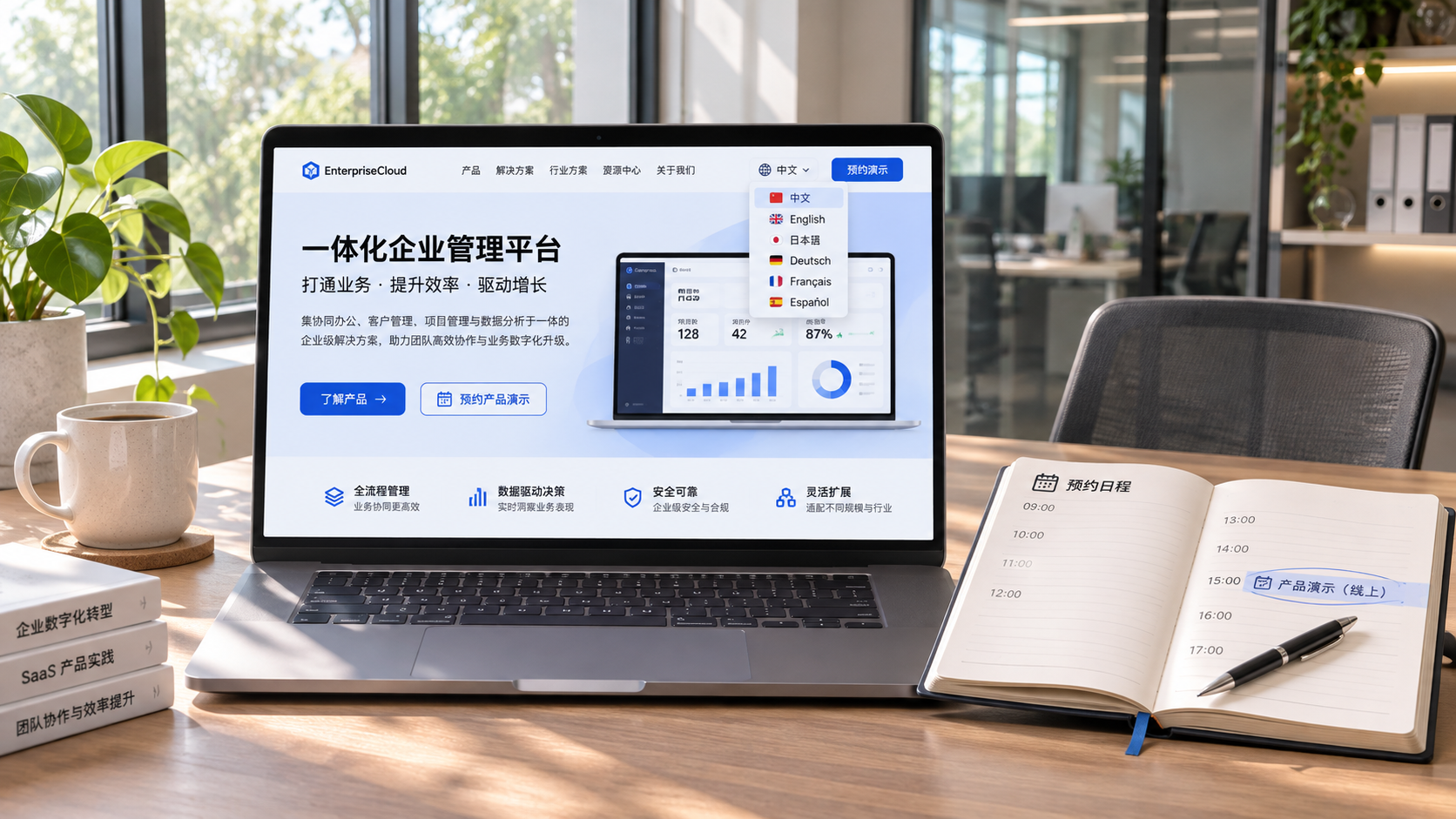
 How Can a Product Demo Landing Page Increase Demo Booking Rates?
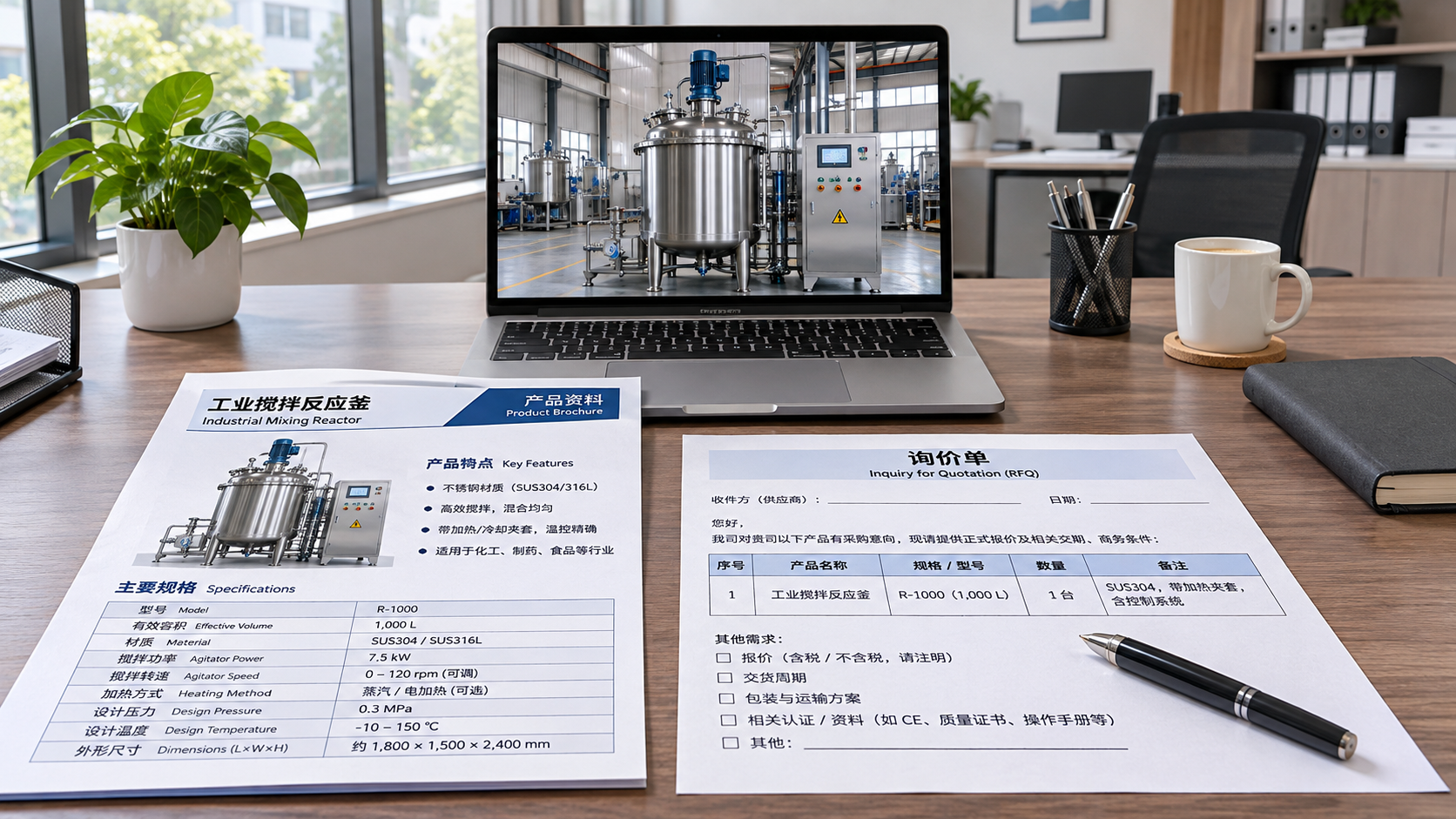
 How Can B2B Search Traffic Be Converted into Inquiries? From Keywords to Form Layout
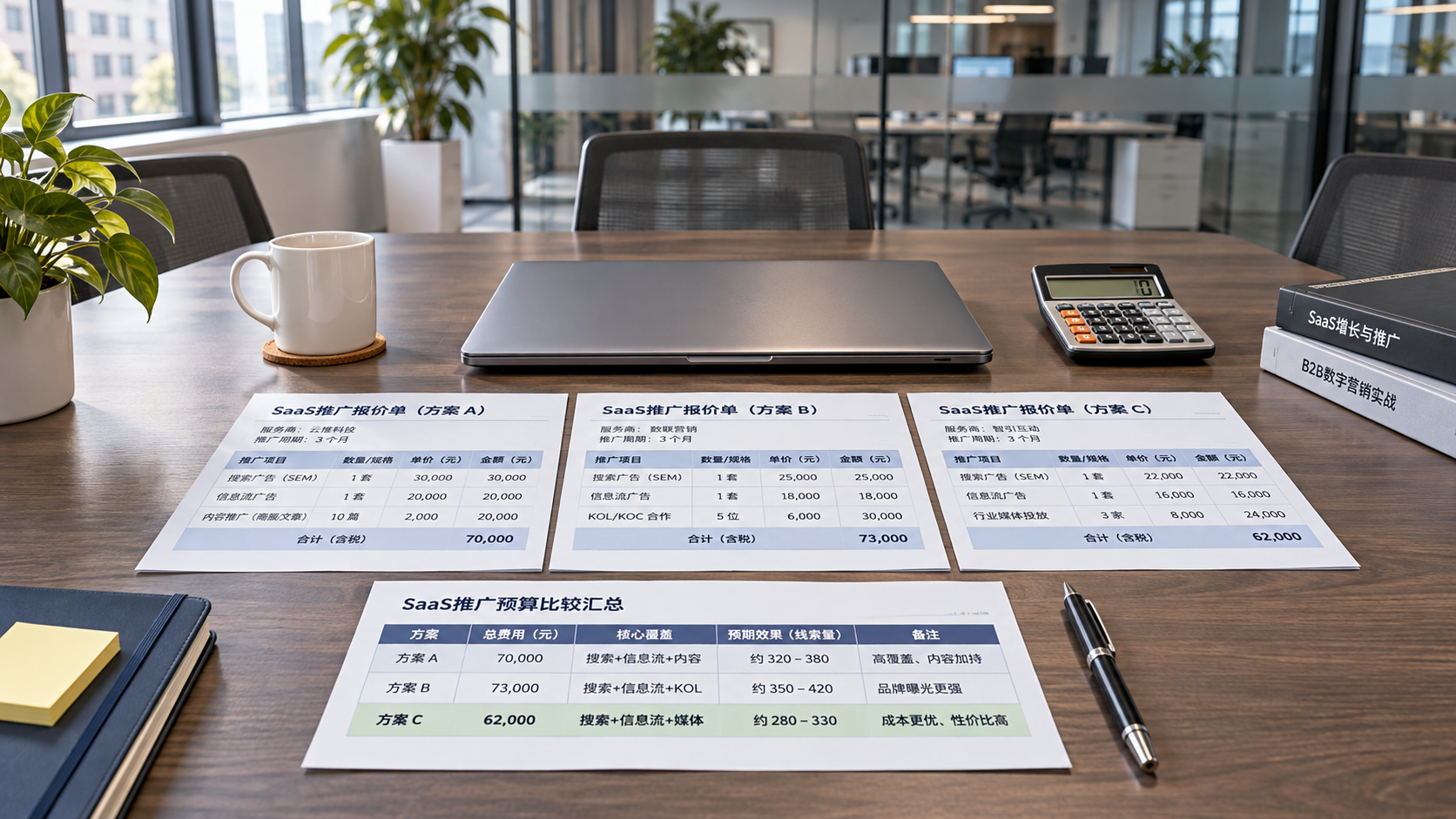
 How Much Does SaaS Promotion Cost? Channel Pricing and Customer Acquisition Cost Analysis
Related Products
 Yiyingbao SaaS Intelligent Website Building and Marketing SystemYiyingbao SaaS Intelligent Website Building and Marketing System, AI-powered no-code website building, rapid creation of multilingual B2B international websites in 10 minutes, global server acceleration, AI-powered SEO optimization, helping businesses connect efficiently with global markets. The perfect integration of technology and operation makes building an international trade website remarkably simple
 AI+SEM Intelligent Advertising Marketing SystemAI+SEM drives intelligent ad creation, empowering full-funnel precision advertising marketing. The system automatically generates weekly/monthly reports, AI recommends keywords and target countries, monitors core metrics in real-time with intelligent alerts, and enables one-click high-conversion ad solutions to help quickly acquire customers and improve ROI.
 AI+SEO Dual-Engine System Optimization ServicesYiyingbao’s AI+SEO dual-engine optimization system helps foreign trade enterprises acquire high-quality organic traffic through AI-powered keyword research, content generation, and comprehensive technical optimization, significantly improving search rankings and conversion rates.
 AI+SNS Social Media Marketing SystemYingbao AI+SNS Social Media Marketing System - Precision social capture for the social media era. Supports one-click content synchronization across major platforms like Facebook and LinkedIn. AI intelligently rewrites posts for enhanced relevance. 24/7 AI customer service and user profiling analysis empower businesses to efficiently expand into global markets.
 AI+SEO营销解决方案易营宝AI+SEO营销解决方案,通过AI批量写作、智能生成TDK、精准关键词扩词等功能,全面优化网站SEO效果,提升流量与转化率。助力企业构建高效智能网站新生态。
 AI+SEM Advertising Marketing SolutionsAI+SEM Advertising Marketing Solution leverages AI technology to deeply empower SEM ad campaigns. It automatically generates weekly/monthly reports using AI, presenting account data across multiple dimensions for comprehensive insights into campaign performance and trends. The system precisely recommends keywords and target countries, intelligently generates high-conversion ad copy, and enables one-click activation of efficient campaign plans to help businesses rapidly acquire customers. Simultaneously, it monitors core metrics in real time, intelligently identifies abnormal fluctuations, and issues timely alerts to ensure stable, high-return advertising results.
 Domain Name ServicesEasyWin provides professional domain name services, including intelligent queries, one-stop registration, brand protection, and full lifecycle management, helping businesses build a digital brand image.
 EasyOperate B2C Cross-Border E-Commerce Platform & Independent WebsiteEasyStore B2C Cross-border E-commerce Independent Store is an intelligent website building and cross-border e-commerce integrated solution independently developed by EasyStore Information Technology (Beijing) Co., Ltd. The system is specially designed for small and medium-sized as well as large export enterprises, integrating 'website building, operation, marketing, advertising, and conversion' into one, helping enterprises quickly establish cross-border e-commerce independent stores to achieve brand globalization and global sales growth.
The platform supports multiple languages, multiple currencies, and multi-channel marketing, with built-in AI intelligent translation and SEO optimization systems, suitable for mainstream markets such as Southeast Asia, Europe and America, Latin America, and the Middle East, assisting Chinese manufacturing enterprises in efficiently deploying international e-commerce strategies. SSL证书易营宝提供专业SSL安全证书服务,包括单域名和泛域名证书,确保网站数据传输加密、身份验证和完整性保护,助力企业建立安全可信的在线业务环境。









