









- CBP Finalizes Electronic Rail Export Manifest Rule, Effective October 26, 2026Oct 26, 2026View details
- Amazon’s 2026 peak season surcharge takes effect on October 25Oct 26, 2026View details
- AI Is Eating SaaS: Three Real-World Cases in One AfternoonOct 25, 2026View details
- Exiger CEO: The SaaS Apocalypse Is Real, but It Means Something DifferentOct 25, 2026View details
- Hengqin Cooperation Zone Shares Cross-Border E-Commerce Developments, Focusing on Macao-Hengqin Collaboration and International MarketsOct 24, 2026View details
- A Shenyang study highlights the development of the “cross-border e-commerce + industrial cluster” modelOct 24, 2026View details
When Should You Split Facebook Ad Sets by Language?
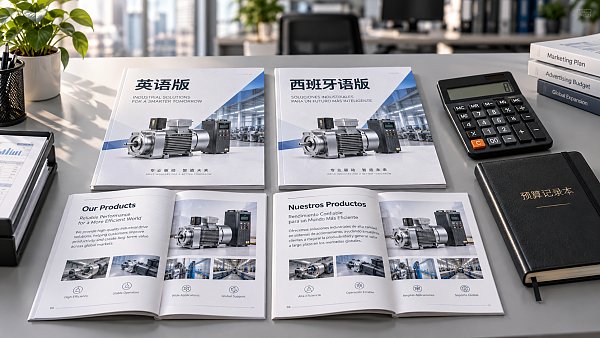
When running ads in English and Spanish for the same batch of products, the English creative continues to spend budget while the Spanish creative receives almost no impressions. In this situation, you do not necessarily need to split the ad sets immediately. Splitting ad sets by language is more valuable only when each language needs an independently controlled budget, conversion performance shows a persistent difference, or different landing pages and service processes are required. Otherwise, splitting can further fragment an already limited budget and conversion signals.
The decision-making sequence for multilingual Facebook ad campaigns should be: first check whether the language journey is consistent, then determine whether there is enough data, and finally decide whether to split the ad sets. Do not create two ad sets simply because the ads use two languages; likewise, do not assume that a market has no demand just because one language version has low spend.
First, distinguish between needing different copy and needing separate campaigns
If only the translation differs, while the product, offer, conversion goal, and customer follow-up process are the same, you can first test language variations within the same ad set or use the multilingual ad features currently available in your account. Specific features and combination restrictions depend on what is available in the Ads Manager interface.
However, testing within the same ad set does not ensure an even distribution of traffic. The system allocates impressions based on predicted performance. Therefore, if one version receives more budget, that only indicates that the system currently favors delivering it; it does not confirm the other language’s true customer acquisition potential.
You should also distinguish between “country” and “language”: a country may have multiple language groups, while a single language may span several countries. If differences in prices, shipping costs, or purchasing power are the main factors, prioritize organizing tests by market conditions to avoid mistaking regional differences for language differences.
These are situations where splitting has a clear purpose
“Ensuring that a language gets an opportunity to be tested” is a valid reason to split ad sets, but it does not mean that language has been proven more effective. Keep exploratory budget separate from the budget for stable customer acquisition, so that spend by a test ad set is not mistaken for a decline in overall campaign efficiency.
Budget sufficiency is not determined by the daily budget alone
A more practical question is: How many optimization events is each ad set expected to receive after the split? As a rough estimate, divide the ad set’s budget for the period by its historical cost per optimization event. If historical data is insufficient, this can help with test planning, but it should not be treated as a performance forecast.
If most ad sets are unlikely to receive meaningful feedback within a full conversion cycle, you should not split into multiple languages at the same time. Keep the primary language, then select the highest-priority language for the business for a separate test, rather than launching every language at once.
- For e-commerce, review the number and value of purchases; do not look only at cost per click.
- For B2B inquiries, consider the qualified lead rate, sales acceptance, and subsequent progress; do not compare only the cost per form submission.
- When conversions take longer, allow leads time to mature before making a decision based on follow-up that is not yet complete.
When using campaign-level budgets, splitting into multiple ad sets does not mean that each language will receive a fixed amount of spend. To control test spend, confirm the current budget level and available spend-limit settings. If stricter comparability is required, use the experiment features supported by the account.
Before splitting, ensure the language experience works from ad to form
If an ad is in Spanish but the click leads to an English homepage where users must find the language switcher, the primary issue is the landing experience. Splitting ad sets only changes the campaign structure; it cannot fix the page experience.
Click each ad preview and check the destination URL, page copy, product pricing information, form fields, submission confirmation, and language used for subsequent contact. Multilingual pages should link directly to the corresponding language version whenever possible, avoiding browser-language detection or automatic redirects that send users back to the default language.
Also check that the same conversion events are recorded correctly across all versions. Missing tracking, duplicate event triggers, or failed redirects after submission on a language-specific page can all create misleading cost differences. We recommend marking language versions through ad names and URL parameters, then cross-checking them against on-site analytics and lead records. Do not infer users’ actual language from the ad copy alone.
When splitting, change only one variable wherever possible
- Define the test question. Are you validating language demand, ensuring exposure, or comparing lead quality? First, choose one primary evaluation metric.
- Keep conditions as consistent as possible. Keep the product, offer, optimization event, placements, and campaign period comparable. If the page and service must differ, record those differences.
- Check audience overlap. Language settings do not precisely identify users’ native languages, nor do they guarantee that different ad sets are completely mutually exclusive. Avoid distinguishing multiple broad audiences solely by the language of the ad copy.
- Allow enough time for observation. Account for normal business fluctuations and conversion delays. Avoid frequently changing budgets, creative, and audiences during the test; otherwise, it will be difficult to determine what caused the results.
After the test, keep the separate language ad set if it consistently generates conversions that meet business requirements and genuinely requires a different budget or follow-up process. If it continues to lack meaningful feedback and there is no difference in management requirements, consider merging it rather than continuing to subdivide. The final structure should give every ad set a clear campaign purpose and data that can be evaluated.
Related Articles
 Multiple Amazon Peak-Season Fees Are Rising, Putting Pressure on Seller Profit Margins
 When Should You Split Facebook Ad Sets by Language?
 How should LinkedIn ads be targeted to B2B customers in Germany?


Related Products
 Yiyingbao SaaS Intelligent Website Building and Marketing SystemYiyingbao SaaS Intelligent Website Building and Marketing System, AI-powered no-code website building, rapid creation of multilingual B2B international websites in 10 minutes, global server acceleration, AI-powered SEO optimization, helping businesses connect efficiently with global markets. The perfect integration of technology and operation makes building an international trade website remarkably simple
 AI+SEM Intelligent Advertising Marketing SystemAI+SEM drives intelligent ad creation, empowering full-funnel precision advertising marketing. The system automatically generates weekly/monthly reports, AI recommends keywords and target countries, monitors core metrics in real-time with intelligent alerts, and enables one-click high-conversion ad solutions to help quickly acquire customers and improve ROI.
 AI+SEO Dual-Engine System Optimization ServicesYiyingbao’s AI+SEO dual-engine optimization system helps foreign trade enterprises acquire high-quality organic traffic through AI-powered keyword research, content generation, and comprehensive technical optimization, significantly improving search rankings and conversion rates.
 AI+SNS Social Media Marketing SystemYingbao AI+SNS Social Media Marketing System - Precision social capture for the social media era. Supports one-click content synchronization across major platforms like Facebook and LinkedIn. AI intelligently rewrites posts for enhanced relevance. 24/7 AI customer service and user profiling analysis empower businesses to efficiently expand into global markets.
 AI+SEO营销解决方案易营宝AI+SEO营销解决方案,通过AI批量写作、智能生成TDK、精准关键词扩词等功能,全面优化网站SEO效果,提升流量与转化率。助力企业构建高效智能网站新生态。
 AI+SEM Advertising Marketing SolutionsAI+SEM Advertising Marketing Solution leverages AI technology to deeply empower SEM ad campaigns. It automatically generates weekly/monthly reports using AI, presenting account data across multiple dimensions for comprehensive insights into campaign performance and trends. The system precisely recommends keywords and target countries, intelligently generates high-conversion ad copy, and enables one-click activation of efficient campaign plans to help businesses rapidly acquire customers. Simultaneously, it monitors core metrics in real time, intelligently identifies abnormal fluctuations, and issues timely alerts to ensure stable, high-return advertising results.
 Domain Name ServicesEasyWin provides professional domain name services, including intelligent queries, one-stop registration, brand protection, and full lifecycle management, helping businesses build a digital brand image.
 EasyOperate B2C Cross-Border E-Commerce Platform & Independent WebsiteEasyStore B2C Cross-border E-commerce Independent Store is an intelligent website building and cross-border e-commerce integrated solution independently developed by EasyStore Information Technology (Beijing) Co., Ltd. The system is specially designed for small and medium-sized as well as large export enterprises, integrating 'website building, operation, marketing, advertising, and conversion' into one, helping enterprises quickly establish cross-border e-commerce independent stores to achieve brand globalization and global sales growth.
The platform supports multiple languages, multiple currencies, and multi-channel marketing, with built-in AI intelligent translation and SEO optimization systems, suitable for mainstream markets such as Southeast Asia, Europe and America, Latin America, and the Middle East, assisting Chinese manufacturing enterprises in efficiently deploying international e-commerce strategies. SSL证书易营宝提供专业SSL安全证书服务,包括单域名和泛域名证书,确保网站数据传输加密、身份验证和完整性保护,助力企业建立安全可信的在线业务环境。









