









- Can the average annual growth rate reflect real opportunities in overseas markets?Oct 07, 2026View details
- Which customer acquisition channels will be affected by cross-border marketing trends in 2026?Sep 06, 2026View details
- Which homogenization risks should be considered in an analysis of the AI-powered website building industry?Aug 30, 2026View details
- How Will AI Marketing Trends 2026 Change Advertising Budget AllocationAug 28, 2026View details
- Is the EV SSL certificate market shrinking or upgrading? How should companies assess certificate procurement?Aug 11, 2026View details
- Why the old AMP SEO 2020 practices no longer work and what has changed in current optimization prioritiesAug 02, 2026View details
Is Yiyingbao's multilingual website building system renewal expensive?
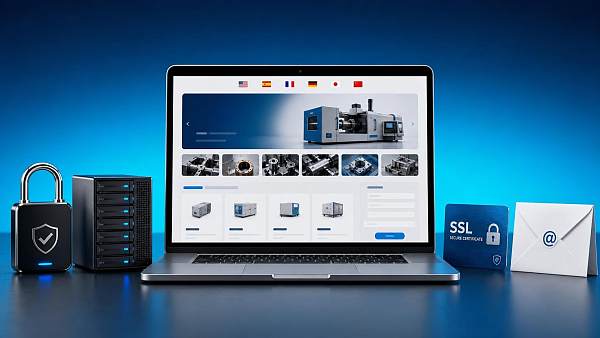
Whether a renewal is “expensive” cannot be determined solely by the amount shown on the bill for the following year. Once a multilingual website enters stable operation, ongoing costs include server and security maintenance, program upgrades, language version management, search engine indexing fundamentals, form and inquiry workflows, content updates, and issue resolution. If the renewal covers a relatively complete scope and the website can still reliably receive organic search traffic, advertising visits, and social media traffic, the annual fee alone does not indicate whether the actual investment is too high.
When discussing whether renewing the Yingbao multilingual website-building system is expensive, the initial website-building cost should first be separated from the renewal cost. Initial fees usually correspond to one-time work such as planning, page production, site configuration, and content migration; renewal fees should mainly correspond to continuously available technical resources and operational foundations. Including initial production costs in renewal expectations, or viewing renewal simply as a “domain name custody fee,” can easily lead to misjudgment.
First confirm what the renewal actually includes
Although both may be described as “website renewal,” the actual included services can vary greatly. Contracts, service orders, or backend subscription records should be checked item by item, particularly website hosting, bandwidth or traffic limits, SSL certificates, CDN, security protection, backup frequency, system version updates, plugin licenses, multilingual page capacity, form email sending quotas, and other items. Some items are charged annually as a package, while certain functions may incur separate costs based on traffic volume, number of languages, or extension modules.
If a website serves multiple countries and language markets, language is not simply a matter of translating a paragraph and copying it to a new page. Language versions require independent page path rules, language-switching logic, title and description configurations, sitemaps, canonical links, and necessary regional tags. Information such as product specifications, delivery times, certification materials, and after-sales service boundaries must also remain consistent across pages in each language. If renewal includes ongoing maintenance of these fundamental functions, its cost will generally be higher than that of a website with only single-page display functions.
It is also necessary to distinguish between “editable” and “managed operation services.” Allowing users to modify products, articles, images, and navigation in the backend does not mean that renewal necessarily includes translation, content writing, page restructuring, or keyword research. For work requiring manual handling, the number of pages included each year, number of revisions, response time, and charging method for work beyond the scope should be clearly specified. If the scope is not clearly stated, even a low fee may appear expensive later because every modification requires additional budget.
Price assessments should be based on verifiable operational items
When comparing renewal quotations, it is advisable not to compare only the “annual total price.” Instead, divide services into several categories: basic operation, feature licensing, content maintenance, and marketing execution. Basic operation determines whether the website can be accessed normally; feature licensing affects whether forms, online stores, language management, or data analytics remain available; content maintenance involves information updates and page adjustments; marketing execution may include SEO technical work, advertising landing page production, or social media asset configuration. The workload and delivery standards differ among these categories, so combining them into one amount makes it difficult to reach an accurate conclusion.
For example, a website may have an inquiry form but no email delivery testing, causing information submitted by overseas customers to be blocked by email policies; pages may have multilingual versions but lack handling of redirects and indexing relationships between languages, so search engines may crawl duplicate or incorrect versions; when product images are replaced, only visual assets may be updated without synchronizing image filenames, alt text, and page parameters, leaving long-term content inconsistency issues. These matters may not require frequent handling, but someone needs to be responsible for checking and fixing them.
Reasonable situations for relatively high renewal fees usually involve websites with substantial ongoing resource consumption or maintenance requirements, such as a large number of language sites, frequent product catalog updates, cross-border payment or order functions, requirements for high access stability, integration of multiple forms or third-party tools, or the need to regularly address search indexing issues. Conversely, for display websites with few pages, content that remains unchanged for long periods, no complex interactions, and limited traffic, renewing at a high standard over the long term requires further verification of service necessity.
Several easily overlooked hidden costs
Domain names, DNS, corporate email, and website hosting are sometimes managed by different parties. Before renewal, confirm domain registration information, DNS management permissions, backend administrator accounts, source file or content export methods, and the data retention period after expiration. If critical permissions are entirely outside your own control, subsequent migration, service replacement, or troubleshooting of access failures will all increase time costs. The concern here is not that migration must occur, but that normal management and handover conditions should be retained.
Maintenance of multilingual content is also often underestimated. Once the original text changes, technical documents, specification sheets, packaging information, transportation restrictions, installation instructions, and after-sales terms may all need to be synchronized across language versions. Machine translation can easily cause discrepancies in units, models, dimensions, material names, and applicable conditions. For information-dense pages involving machinery and equipment, chemical materials, electronic components, and similar products, incorrect descriptions may lead to inaccurate inquiries or even repeated communication. Therefore, if a renewal plan includes content modification, it is necessary to confirm whether it covers professional terminology proofreading or only page entry.
SEO-related fees should also be evaluated based on deliverables rather than simply whether “optimization” is stated. At the foundational level, it should be possible to manage robots rules, XML sitemaps, page titles, descriptions, structured data, redirects, and 404 pages. Ongoing work may involve broken link checks, duplicate page handling, crawl anomaly inspections, and link preservation after old pages are redesigned. Search rankings and inquiry volume are affected by many factors, including products, prices, content, market competition, and external channels, and should not be promised as fixed outcomes of renewal; however, whether technical issues have been identified and resolved should be verifiable.
A simple review can be conducted before renewal
First, check whether the website has remained normally accessible over a period of time. Focus on testing the homepage, product detail pages, language switching, mobile menus, inquiry forms, and telephone or email links. Form testing should not only check whether a successful submission message appears, but also confirm whether the receiving mailbox receives the information, whether all fields are complete, and whether spam filtering settings are in place.
Then conduct spot checks on several pages in different languages. Check whether product models, dimension units, minimum order quantities, delivery descriptions, image descriptions, and downloadable materials are consistent; whether discontinued products still appear in navigation or sitemaps; and whether pages with modified URLs redirect correctly. If these basic items continuously fail, even a very low renewal fee may not create real value.
Finally, require vague terms in the quotation, such as “included,” “assistance,” and “maintenance,” to be converted into actionable items. For example, specify what can be handled monthly or annually, how urgent access failures will be addressed, whether version updates will affect existing pages, how data can be exported if features are no longer renewed, and how additional languages, expanded pages, and third-party code integration will be charged. Only after clarifying these boundaries can you determine whether fees are paid for actual resources and work, or for unclear service descriptions.
Frequently Asked Questions
Can the domain name and hosting be renewed without renewing the website-building system?
This depends on the website’s program deployment method and functional dependencies. If pages, databases, forms, and language modules are hosted by the website-building system, after system services are discontinued, the website may no longer be editable, some functions may fail, or it may even become inaccessible. Before expiration, confirm the available scope and data export conditions.
If renewal includes SEO, will rankings be guaranteed?
This cannot be determined based on that alone. SEO maintenance can reduce technical obstacles and keep pages crawlable and content structures functioning normally, but rankings also depend on factors such as page quality, topic competitiveness, external references, and changes in search demand. A more practical approach is to verify maintenance records and issue resolution results.
If a website has not been updated for years, does renewal only require retaining the minimum configuration?
If the site has no new content or marketing plans, it is indeed possible to assess whether functions should be streamlined. However, security certificates, backups, compatibility, email delivery, and basic access stability must still be retained. Before reducing the configuration, confirm that existing language pages, forms, and historical links will not be affected.
Whether renewal is cost-effective ultimately depends on whether the website is still serving display, lead generation, or conversion purposes, and whether the fees paid correspond to clearly defined resources, permissions, and maintenance work. First verify the service boundaries, site status, and potential additional costs, then compare quotations to make an assessment that is closer to reality.
Related Articles



Related Products
 Yiyingbao SaaS Intelligent Website Building and Marketing SystemYiyingbao SaaS Intelligent Website Building and Marketing System, AI-powered no-code website building, rapid creation of multilingual B2B international websites in 10 minutes, global server acceleration, AI-powered SEO optimization, helping businesses connect efficiently with global markets. The perfect integration of technology and operation makes building an international trade website remarkably simple
 AI+SEM Intelligent Advertising Marketing SystemAI+SEM drives intelligent ad creation, empowering full-funnel precision advertising marketing. The system automatically generates weekly/monthly reports, AI recommends keywords and target countries, monitors core metrics in real-time with intelligent alerts, and enables one-click high-conversion ad solutions to help quickly acquire customers and improve ROI.
 AI+SEO Dual-Engine System Optimization ServicesYiyingbao’s AI+SEO dual-engine optimization system helps foreign trade enterprises acquire high-quality organic traffic through AI-powered keyword research, content generation, and comprehensive technical optimization, significantly improving search rankings and conversion rates.
 AI+SNS Social Media Marketing SystemYingbao AI+SNS Social Media Marketing System - Precision social capture for the social media era. Supports one-click content synchronization across major platforms like Facebook and LinkedIn. AI intelligently rewrites posts for enhanced relevance. 24/7 AI customer service and user profiling analysis empower businesses to efficiently expand into global markets.
 AI+SEO营销解决方案易营宝AI+SEO营销解决方案,通过AI批量写作、智能生成TDK、精准关键词扩词等功能,全面优化网站SEO效果,提升流量与转化率。助力企业构建高效智能网站新生态。
 AI+SEM Advertising Marketing SolutionsAI+SEM Advertising Marketing Solution leverages AI technology to deeply empower SEM ad campaigns. It automatically generates weekly/monthly reports using AI, presenting account data across multiple dimensions for comprehensive insights into campaign performance and trends. The system precisely recommends keywords and target countries, intelligently generates high-conversion ad copy, and enables one-click activation of efficient campaign plans to help businesses rapidly acquire customers. Simultaneously, it monitors core metrics in real time, intelligently identifies abnormal fluctuations, and issues timely alerts to ensure stable, high-return advertising results.
 Domain Name ServicesEasyWin provides professional domain name services, including intelligent queries, one-stop registration, brand protection, and full lifecycle management, helping businesses build a digital brand image.
 EasyOperate B2C Cross-Border E-Commerce Platform & Independent WebsiteEasyStore B2C Cross-border E-commerce Independent Store is an intelligent website building and cross-border e-commerce integrated solution independently developed by EasyStore Information Technology (Beijing) Co., Ltd. The system is specially designed for small and medium-sized as well as large export enterprises, integrating 'website building, operation, marketing, advertising, and conversion' into one, helping enterprises quickly establish cross-border e-commerce independent stores to achieve brand globalization and global sales growth.
The platform supports multiple languages, multiple currencies, and multi-channel marketing, with built-in AI intelligent translation and SEO optimization systems, suitable for mainstream markets such as Southeast Asia, Europe and America, Latin America, and the Middle East, assisting Chinese manufacturing enterprises in efficiently deploying international e-commerce strategies. SSL证书易营宝提供专业SSL安全证书服务,包括单域名和泛域名证书,确保网站数据传输加密、身份验证和完整性保护,助力企业建立安全可信的在线业务环境。









