









- Which customer acquisition channels will be affected by cross-border marketing trends in 2026?Sep 06, 2026View details
- Which homogenization risks should be considered in an analysis of the AI-powered website building industry?Aug 30, 2026View details
- How Will AI Marketing Trends 2026 Change Advertising Budget AllocationAug 28, 2026View details
- Is the EV SSL certificate market shrinking or upgrading? How should companies assess certificate procurement?Aug 11, 2026View details
- Why the old AMP SEO 2020 practices no longer work and what has changed in current optimization prioritiesAug 02, 2026View details
- How to Choose Topics for an Industry News Section to Attract More Organic Search TrafficJul 29, 2026View details
Is it difficult to integrate the order system of a cross-border e-commerce store?
Is it troublesome to integrate the order system of a cross-border e-commerce store? The answer is: it can be, but the root cause of the trouble usually lies not in the “order system” itself, but in whether the platform supports an integrated architecture, whether the interfaces are standardized, and whether the business processes have been clearly mapped out in advance. For companies operating independent websites, cross-border e-commerce stores, or international brands, order system integration is not merely a technical issue. It is an operational issue that directly affects fulfillment efficiency, inventory coordination, customer experience, and subsequent marketing conversion.
When building a cross-border e-commerce store in the early stages, many companies focus more on page design, traffic acquisition, and payment capabilities. Only after order volumes gradually increase do they discover that order data is scattered across the store, payment, ERP, logistics, and customer service systems. If they still rely on manually importing orders, checking inventory, or switching repeatedly between multiple platforms, overall operational efficiency will decline significantly.
Therefore, when users search for “Is it troublesome to integrate a cross-border e-commerce order system?”, they are not really looking for a simple yes-or-no answer. Instead, they want to determine three things: whether their business will encounter integration difficulties, how to reduce implementation costs, and what kind of platform will be easier to manage and more suitable for long-term development.
What Usually Makes Cross-Border E-Commerce Order System Integration Difficult?
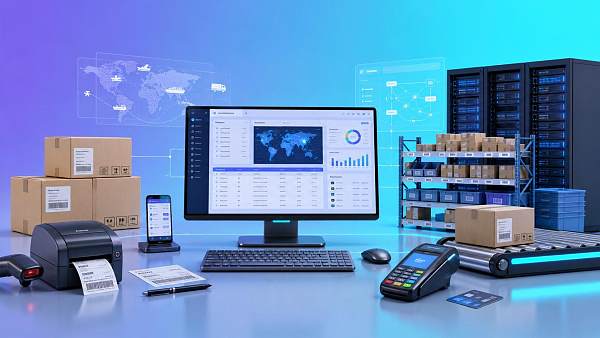
From an actual business perspective, the reason cross-border e-commerce order system integration causes headaches for many companies is usually not that order creation itself is complicated. Rather, an order is connected to multiple processes, including payment, inventory, warehousing, logistics, taxes and fees, customer service, and marketing attribution. If any one of these links is not connected, manual processing costs will increase.
For example, after a customer places an order in the store, the system needs to synchronize the payment status, reserve inventory, generate shipping information, send the logistics tracking number, and, when necessary, return refund, cancellation, and delivery confirmation statuses. If these actions depend on multiple third-party plugins or disconnected systems, subsequent maintenance and troubleshooting will become increasingly difficult.
Another common situation is that a company initially adopts a combination of “one system for website building, one for orders, one for marketing, and another for data statistics.” This may be quick to get started with in the short term, but over time it can easily lead to inconsistent fields, incompatible interfaces, data delays, and unclear boundaries of responsibility.
So, is cross-border e-commerce order system integration troublesome? If a company uses a fragmented solution assembled from separate tools, integration is usually indeed quite troublesome. If it uses an integrated platform that supports coordination among the store, orders, marketing, and data, the integration difficulty will be significantly reduced, and subsequent operations will be more stable.
What Companies Care About Most Is Not Just Whether Integration Is Possible, but Whether the System Can Run Reliably After Integration
When evaluating systems, many managers first ask, “Can it connect to an ERP?”, “Can it connect to logistics?”, or “Can it connect to payment systems?” These questions are certainly important, but what matters even more is whether daily business operations can run stably, accurately, and efficiently after integration is completed. Being able to connect does not necessarily mean that the system will be genuinely useful.
For example, can order statuses be synchronized automatically? Can abnormal orders be identified promptly? Will refund and return processes affect inventory data? Can the sources of orders generated by marketing channels be tracked accurately? These are all core issues after system implementation. The details that truly affect operational efficiency are often these.
For cross-border sellers and international brands, an order system that merely “records orders” has limited value. A more mature system should serve as the central hub for order processing, connecting front-end store transactions, back-end fulfillment and shipping, and subsequent repurchase marketing to create a complete data loop.
This is why more and more companies no longer focus solely on website-building functions when developing cross-border e-commerce stores. Instead, they pay close attention to whether orders, marketing, SEO, advertising landing pages, and customer data can operate collaboratively within the same system. As the business grows, system coordination capabilities are more important than individual functions.
To Determine Whether Order System Integration Will Be Difficult, Start by Looking at These Four Dimensions
First, determine whether the platform itself has an integrated architecture. If store, order, membership, payment, and marketing capabilities are natively integrated into one platform, many processes will not require additional interface development, naturally reducing integration difficulty. These platforms are generally more suitable for companies that want to launch quickly and operate stably.
Second, assess whether standard interfaces and expansion capabilities are mature. Some systems support integration but require extensive customized development. Later, whenever a new country site, payment method, or logistics provider is added, the process has to be modified again. Such systems may be usable in the early stages, but expansion costs will continue to rise later.
Third, check whether the order process is suited to cross-border scenarios. Cross-border e-commerce stores involve multiple languages, currencies, regional taxes and fees, overseas logistics, and time-zone differences. If a system can only handle local e-commerce logic, a large number of manual corrective actions will be required in actual use, increasing the burden on the team.
Fourth, consider whether the service provider understands the business rather than only the technology. Order system integration does not end with simply opening an API. It also requires an understanding of the company's actual business processes, including order creation methods, fulfillment routes, inventory strategies, promotion logic, and after-sales rules. Integration without sufficient business understanding can easily lead to frequent rework after launch.
Which Types of Cross-Border Companies Need to Pay More Attention to Order System Integration?
If a company currently has a small order volume, few SKUs, and a simple operational process, a lightweight solution may be sufficient for the time being. However, once the business enters a stage of multi-site, multi-channel, or multi-region operations, the coordination capabilities of the order system will quickly become a bottleneck. Planning ahead will be more cost-effective.
The first type is companies operating branded independent websites. These companies need to handle not only order fulfillment, but also advertising, customer retention, remarketing, and repurchase operations. If order data cannot be connected with the marketing system, advertising attribution and customer lifecycle analysis will be affected, making it difficult to continuously optimize advertising efficiency.
The second type is traditional foreign trade companies transforming to operate B2C cross-border e-commerce stores. They are generally more familiar with inquiry-based business models and have less experience with online payments, logistics tracking, returns and exchanges, and consumer order processing. If the system relies too heavily on manual operations, the team can easily become overwhelmed by process confusion during the initial stage of business growth.
The third type is companies operating across multiple languages and regions. These companies need to use different payment, logistics, and marketing strategies in different markets. If the order system lacks unified management capabilities, headquarters will find it difficult to monitor the operational performance of each site, while management costs and the probability of errors will both increase.
How to Reduce the Cost of Integrating a Cross-Border E-Commerce Order System
To reduce integration difficulty, first, do not view system development as the purchase of a single tool. Instead, plan from the perspective of the complete business process. Companies should first clarify their order workflow: where customers come from, where they place orders, how orders are reviewed, how inventory is synchronized, how shipping information is returned, and how after-sales issues are handled.
Only when the process is clear can system selection be properly aligned. The reason many companies find integration troublesome is that they launch a store first and then add order, logistics, and marketing systems on a temporary basis, ultimately having to connect the business through repeated development. This sequence itself makes implementation costs more likely to rise.
Second, priority should be given to platforms with coordinated capabilities for website building, e-commerce stores, orders, and marketing. For companies seeking long-term overseas growth, such platforms can not only reduce the number of interfaces, but also enable SEO, advertising, social media traffic acquisition, and order conversion data to be consolidated in one system, facilitating subsequent improvements to business decisions.
Third, pay close attention to the service provider's delivery experience. Before launch, a mature service team will usually help the company confirm field rules, order status mapping, payment callback logic, and exception-handling mechanisms, rather than simply sending the interface documentation and leaving the company to figure everything out on its own. This difference often determines the speed of project implementation.
From the Perspective of Long-Term Operations, the Order System Is Not a Cost Item but an Operational Efficiency Driver
When evaluating a cross-border e-commerce store, many companies treat order system integration as a one-time technical investment and focus primarily on development costs. In reality, the biggest costs are often not how much was spent at launch, but how much additional labor, rework, and hidden waste the system creates every day after launch.
An order system with smooth integration and clear processes can reduce the time spent manually entering and checking orders, improve shipping efficiency, lower the risk of missed or incorrect orders, and enable customer service teams to respond more quickly to customer inquiries about order status. For cross-border businesses, these efficiency improvements directly affect store reputation, repeat purchases, and the return on advertising conversions.
Furthermore, if the order system is connected with the marketing system, a company can identify which channels generate high-quality orders, which markets are more suitable for additional budget, and which customers have potential for secondary conversion. At this point, the order system is no longer merely a back-office tool, but important infrastructure for optimizing the company's growth model.
Take an integrated digital platform as an example. If website building, e-commerce, SEO, advertising, and order management operate within the same system, a company can not only shorten the project implementation cycle, but also establish a stable, long-term data loop more easily. For companies seeking global growth, this offers more practical value than simply “getting the website built first.”
Conclusion: Whether Cross-Border E-Commerce Order System Integration Is Troublesome Depends on Platform Capabilities and Early Planning
Returning to the original question, is it troublesome to integrate the order system of a cross-border e-commerce store? The answer depends on the circumstances. If a company temporarily connects multiple systems, has not mapped out its processes, and works with a service provider lacking cross-border experience, integration can easily become complicated and lead to repeated rework. If the platform itself has integrated capabilities, the integration difficulty will be much lower.
For foreign trade companies, cross-border sellers, and international brand teams, system selection should not focus only on whether the store pages look attractive or whether an individual function is inexpensive. Instead, they should assess whether order flows, marketing flows, and data flows can work together. The factor that truly determines subsequent efficiency is often not the front-end presentation, but whether the back end runs smoothly.
From this perspective, integrating a cross-border e-commerce order system is not something to fear. The real concern is discovering only after business growth begins that the system foundation was not properly established. The earlier a company chooses an integrated platform suited to cross-border business, the more it can reduce subsequent integration costs and enable more efficient coordinated growth among its website, orders, and overseas marketing.
Related Articles


Related Products
 Yiyingbao SaaS Intelligent Website Building and Marketing SystemYiyingbao SaaS Intelligent Website Building and Marketing System, AI-powered no-code website building, rapid creation of multilingual B2B international websites in 10 minutes, global server acceleration, AI-powered SEO optimization, helping businesses connect efficiently with global markets. The perfect integration of technology and operation makes building an international trade website remarkably simple
 AI+SEM Intelligent Advertising Marketing SystemAI+SEM drives intelligent ad creation, empowering full-funnel precision advertising marketing. The system automatically generates weekly/monthly reports, AI recommends keywords and target countries, monitors core metrics in real-time with intelligent alerts, and enables one-click high-conversion ad solutions to help quickly acquire customers and improve ROI.
 AI+SEO Dual-Engine System Optimization ServicesYiyingbao’s AI+SEO dual-engine optimization system helps foreign trade enterprises acquire high-quality organic traffic through AI-powered keyword research, content generation, and comprehensive technical optimization, significantly improving search rankings and conversion rates.
 AI+SNS Social Media Marketing SystemYingbao AI+SNS Social Media Marketing System - Precision social capture for the social media era. Supports one-click content synchronization across major platforms like Facebook and LinkedIn. AI intelligently rewrites posts for enhanced relevance. 24/7 AI customer service and user profiling analysis empower businesses to efficiently expand into global markets.
 AI+SEO营销解决方案易营宝AI+SEO营销解决方案,通过AI批量写作、智能生成TDK、精准关键词扩词等功能,全面优化网站SEO效果,提升流量与转化率。助力企业构建高效智能网站新生态。
 AI+SEM Advertising Marketing SolutionsAI+SEM Advertising Marketing Solution leverages AI technology to deeply empower SEM ad campaigns. It automatically generates weekly/monthly reports using AI, presenting account data across multiple dimensions for comprehensive insights into campaign performance and trends. The system precisely recommends keywords and target countries, intelligently generates high-conversion ad copy, and enables one-click activation of efficient campaign plans to help businesses rapidly acquire customers. Simultaneously, it monitors core metrics in real time, intelligently identifies abnormal fluctuations, and issues timely alerts to ensure stable, high-return advertising results.
 Domain Name ServicesEasyWin provides professional domain name services, including intelligent queries, one-stop registration, brand protection, and full lifecycle management, helping businesses build a digital brand image.
 EasyOperate B2C Cross-Border E-Commerce Platform & Independent WebsiteEasyStore B2C Cross-border E-commerce Independent Store is an intelligent website building and cross-border e-commerce integrated solution independently developed by EasyStore Information Technology (Beijing) Co., Ltd. The system is specially designed for small and medium-sized as well as large export enterprises, integrating 'website building, operation, marketing, advertising, and conversion' into one, helping enterprises quickly establish cross-border e-commerce independent stores to achieve brand globalization and global sales growth.
The platform supports multiple languages, multiple currencies, and multi-channel marketing, with built-in AI intelligent translation and SEO optimization systems, suitable for mainstream markets such as Southeast Asia, Europe and America, Latin America, and the Middle East, assisting Chinese manufacturing enterprises in efficiently deploying international e-commerce strategies. SSL证书易营宝提供专业SSL安全证书服务,包括单域名和泛域名证书,确保网站数据传输加密、身份验证和完整性保护,助力企业建立安全可信的在线业务环境。









