









- What Does a Global Traffic Ecosystem Service Provider Do? What Are the Differences from a Single Advertising AgencyJul 16, 2026View details
- What should you focus on in the latest enterprise SaaS report? From renewal rates and delivery costs to overseas growth opportunitiesJul 12, 2026View details
- What signals are worth paying attention to in a cross-border marketing trend report? B2B companies should look at these 6 signalsJul 11, 2026View details
- How to Read a Cross-Border Marketing Trends Report? Five Key Dimensions for Evaluating Channel OpportunitiesJul 11, 2026View details
- Which channel has the highest ROI in the global traffic ecosystem? Comparative analysis of search, social media, and advertisingJul 10, 2026View details
- What multilingual website services are available in Sanya? Which model is more suitable for local businesses going global?Jul 08, 2026View details
- How to view the complete list of China SaaS companies in the top 100? Practical methods for screening website-building and marketing service providersJul 08, 2026View details
- How to view pricing in the global traffic ecosystem? Cost comparison of search, social media, and content channel advertisingJul 06, 2026View details
How to Arrange Renewals After the SSL Certificate Validity Period Is Shortened
After the SSL certificate validity period is shortened, enterprises not only need to reassess SSL certificate pricing and the cadence for purchasing SSL certificates, but should also simultaneously review the SSL certificate application process, renewal budget, and security management strategy to avoid expired certificates affecting website trust, search engine ranking optimization, and business conversion.
Why does a shorter SSL certificate validity period directly affect website operations and marketing results?

For the integrated website + marketing services industry, SSL certificates are no longer just a simple technical configuration, but a foundational requirement for website credibility, form conversion, ad landing page review, and search performance. As certificate validity periods gradually shift from longer cycles in the past to shorter cycles, what enterprises face is no longer a one-time renewal issue, but a restructuring of the year-round certificate management rhythm.
For information researchers and technical evaluators, the most intuitive change is the increased frequency of certificate inventory checks. In the past, a review might have been conducted once every 12 to 24 months, but now it is more suitable to check domain assets, certificate status, auto-renewal configuration, and DNS validation records on a quarterly basis, reducing the passive situation of only addressing issues when expiration is imminent.
For enterprise decision-makers, purchasing SSL certificates is no longer just about procuring one certificate, but about incorporating it into the unified budget for website building, SEO optimization, advertising campaigns, and brand website operations and maintenance. If the official website, campaign sites, overseas sites, and subdomain sites exceed 5 in number, the impact caused by errors in renewal arrangements will quickly be amplified and may even affect inquiry collection and order conversion.
For quality control personnel, security managers, and after-sales maintenance teams, the risk is more concentrated in the fact that “certificate expiration is invisible.” Because users usually discover browser warnings only when opening a page, it often takes only a few hours to 1 day from risk exposure to business loss. The more a company relies on online customer acquisition, the less it can treat renewal as a low-priority matter.
After certificate validity periods become shorter, what chain problems will enterprises encounter?
- The number of renewals increases, and the coordination points among procurement, technology, and operations and maintenance shift from once a year to multiple checks per year.
- When multiple domains and multiple business lines run in parallel, it is easy for the main site to be renewed while campaign pages are overlooked, affecting advertising delivery and brand trust.
- Some enterprises still rely on manual reminders and lack an early warning mechanism 30 days, 15 days, and 7 days before expiration, making management blind spots obvious.
- In overseas business scenarios, certificate application processes, verification email accounts, and DNS permissions are decentralized, and incomplete handovers will slow down renewal.
E-Marketing Information Technology (Beijing) Co., Ltd. has long served global growth scenarios. In the coordination of smart website building, SEO optimization, and advertising delivery, it places greater emphasis on incorporating SSL certificate renewal into website lifecycle management rather than treating it as an isolated IT task. The value of doing so lies in not only reducing security interruptions, but also stabilizing marketing assets.
How should SSL certificate renewal be arranged so that budget and timing milestones are less likely to be missed?

When arranging SSL certificate renewal, enterprises are advised to first divide assets into 3 categories: brand official websites, business subsites, and marketing campaign pages. The first 2 usually require continuous stability, while campaign pages tend to be numerous, launched quickly, and taken offline frequently. If the total number of enterprise sites is 3 or fewer, a semiannual review is feasible; if the number of sites reaches 10 or more, it is more suitable to establish a monthly checklist system.
In terms of budgeting, enterprises should not look only at SSL certificate prices, but should also evaluate hidden costs such as manual maintenance, retrying after renewal failures, site downtime, and interruption of advertising campaigns. This is especially true for e-commerce, foreign trade, and B2B inquiry-based websites. Once there is a certificate issue, user form submission rates and page dwell time may be significantly affected within a short period.
From the perspective of execution rhythm, a relatively prudent approach is to set 3 time layers: complete asset confirmation 60 days before expiration, start renewal or repurchase 30 days before expiration, and complete deployment verification 7 days before expiration. For enterprises requiring cross-department approval, an additional internal circulation time of 3 to 10 working days should also be reserved.
If an enterprise is simultaneously advancing website upgrades, content optimization, and conversion improvement for campaigns, certificate management can also be implemented in parallel with the annual website maintenance project. For example, during the redesign phase, synchronously sorting out HTTPS forced redirects, old certificate cleanup, CDN configuration, and monitoring alerts is more cost-effective than temporary remediation.
Which dimensions should be the focus of a renewal plan table?
The table below is suitable for shared use by procurement, project managers, and operations and maintenance personnel to unify the decision criteria for SSL certificate purchase and renewal, and avoid situations where only price is considered while business level is ignored.
For most enterprises, what truly needs optimization is not simply “which certificate to buy,” but ensuring that the procurement rhythm, approval process, and technical deployment form a closed loop. Only when the process is smooth will the SSL certificate application process not get stuck at the final step.
4 steps for a more secure arrangement
- Establish a domain and certificate ledger, recording at least 4 basic pieces of information: domain name, deployment location, expiration date, and person in charge.
- Classify by business importance, and high-priority sites must have dual reminders and deployment review.
- Include the SSL certificate purchase budget in annual maintenance expenses instead of making ad hoc fragmented purchases.
- After renewal is completed, conduct HTTPS inspection, redirect testing, and browser compatibility verification to avoid situations where “renewed but not yet effective.”
When purchasing SSL certificates, should enterprises pay more attention to price or scenario fit?
When comparing SSL certificate prices, many enterprises tend to overlook a key issue: different websites have different risk levels, so the selection logic is also different. Official websites, inquiry pages, member centers, and payment scenarios have different requirements for certificate deployment stability, verification efficiency, and management convenience, and a single solution may not be suitable for all assets.
If an enterprise has only 1 main site and a small number of landing pages, it is enough to prioritize convenient renewal and clear management. However, if it also has multi-region official websites, multilingual sites, and channel pages, it should conduct a comprehensive evaluation from 3 dimensions: number of domains, subdomain coverage, and update frequency. If the wrong certificate type is selected, subsequent maintenance costs are usually higher than the difference in procurement price.
In integrated website + marketing service scenarios, SSL certificates are not isolated components. They are related to website architecture, CDN acceleration, on-site conversion paths, and search crawling experience. E-Marketing Information Technology (Beijing) Co., Ltd. places greater emphasis on planning certificate strategy upfront at the early stages of website building and operations to avoid repeated deployment later.
This type of management approach is similar to risk control projects. When advancing digital governance, many organizations also refer to the process-oriented thinking reflected in Research on the Construction of Internal Control Systems for Public Institutions Based on Risk Prevention and Control, establishing responsibilities, milestones, ledgers, and review mechanisms simultaneously rather than only addressing surface-level issues.
Certificate procurement decisions under common website scenarios
The table below is more suitable for enterprise decision-makers, distributors, and agents to quickly determine the key points of SSL certificate procurement under different business scenarios and reduce communication costs.
The table shows that SSL certificate price is only one factor in decision-making. At a minimum, procurement should also consider 3 core indicators: number of sites, business continuity requirements, and team management capability. The more dispersed the sites are, the more standardized management is needed, rather than relying on individual experience.
When implementing SSL certificate management, which processes and compliance points are most easily overlooked?
After an enterprise completes the SSL certificate application process, it does not mean the risk has disappeared. In actual operations and maintenance, more common issues arise in certificate deployment, chain updates, redirect strategies, and monitoring alerts. Especially when a site is connected to a CDN, load balancing, or multiple servers, completing a single-point update does not mean the entire chain is complete.
From the perspective of compliance and user experience, at least 4 items should be checked: whether HTTPS is effective sitewide, whether mixed content still exists, whether important pages trigger browser warnings, and whether old links have been fully redirected with 301 redirects. If an enterprise conducts a quarterly security inspection, these 4 items should be listed as fixed inspection items.
For project managers and after-sales maintenance personnel, handover issues also require attention. A common situation is that domains are managed by the marketing department, servers by the technical department, and renewal budgets by the procurement department. Once responsibilities are fragmented, a delay in any link may lead to certificate expiration. Therefore, it is recommended to designate 1 primary person in charge and 1 backup contact.
In multi-site operations and maintenance, enterprises can also draw on the internal control thinking in Research on the Construction of Internal Control Systems for Public Institutions Based on Risk Prevention and Control, setting expiration reminders, approval authorization, implementation review, and exception rollback as 4 fixed milestones to improve the executability of certificate management.
Checklist items that are easily overlooked
- The certificate has been issued, but the server is still actually loading the old version, causing front-end access errors to continue.
- The primary domain works normally, but the version with www or other subdomains is not configured synchronously, affecting search and user access.
- The certificate for the landing page used in advertising campaigns has expired, resulting in blocked review or inaccessible conversion pages.
- Monitoring covers only the official website homepage and does not cover key paths such as login pages, payment pages, and form pages.
Recommended service process
If you want to unify the management of SSL certificate purchase, deployment, and website operations, a 5-step process can be adopted: site asset inventory, certificate type evaluation, renewal schedule arrangement, deployment and verification, and post-launch monitoring. For medium-sized and large enterprises, the complete process usually requires 3 to 10 working days, depending on the degree of approval and authority centralization.
This is also why more and more enterprises tend to choose service teams that balance website building, operations and maintenance, optimization, and growth. Certificates are only the entry point of security; what truly determines results is whether technical stability and marketing continuity can be managed together.
Common questions and decision-making suggestions: What should enterprises do now?
If an enterprise currently does not yet have a clear SSL certificate renewal plan, the most practical approach is not to purchase immediately, but to first complete an asset review. Usually within 1 week, it is possible to sort out the number of domains, certificate status, responsible persons, expiration dates, and business priorities, providing a basis for subsequent budgeting and selection.
For technical evaluators, it is recommended to first confirm 3 things: whether there are certificates about to expire, whether automatic reminders have been set, and whether deployment can proceed smoothly in the current website building and CDN environment. For enterprise decision-makers, the focus is whether annual maintenance costs are controllable and whether renewal issues will affect the customer acquisition chain.
For distributors, agents, and project leaders, if serving multiple client websites, it is even more important to establish a batch management mechanism. Turning certificate management into a standardized service not only reduces after-sales rework, but also enhances customer stickiness and long-term cooperation potential.
The following questions are the most common ones enterprises encounter when consulting on SSL certificate pricing, SSL certificate purchase, and renewal arrangements, and they are also where deviations in decision-making are most likely to occur.
If action is taken only when the SSL certificate is about to expire, is there still enough time?
Technically, it is not necessarily too late, but from a management perspective the risk is very high. Especially when DNS verification, approval and payment, server deployment, and compatibility testing are involved, the actual time required may be 1 to 7 days. If the site carries advertising traffic or customer inquiries, it is recommended to handle it at least 30 days in advance and not compress the buffer period.
If you only look at SSL certificate price, will it lead to higher follow-up costs?
Yes. Low price itself is not the problem; the issue is whether it fits the current scenario. If repeated reconfiguration is required due to management complexity, renewal failure, or insufficient coverage, the additional labor, downtime losses, and campaign interruption costs are often higher than the initial procurement price difference.
How often should enterprises check certificate status?
For single-site enterprises, it is recommended to check once a month. For multi-site enterprises, it is recommended to verify the ledger monthly and conduct a full-site inspection once each quarter. If the number of sites exceeds 10, it is best to add a dual mechanism of automated monitoring and manual review to avoid overlooking edge pages or subdomains.
Why choose us: Plan certificate renewal, website security, and marketing growth together
E-Marketing Information Technology (Beijing) Co., Ltd. has been deeply engaged in global digital marketing services since 2013. Centered on artificial intelligence and big data capabilities, it has built a full-chain service system covering smart website building, SEO optimization, social media marketing, and advertising delivery. For enterprises, this means SSL certificate management is no longer isolated maintenance, but can advance in sync with website construction, traffic acquisition, and conversion optimization.
If you are evaluating SSL certificate renewal arrangements, we can assist in confirming site assets, organizing the SSL certificate application process, evaluating SSL certificate purchasing strategies, and providing more suitable deployment recommendations for different scenarios such as official websites, marketing pages, and foreign trade sites. For multi-site, multilingual, and multi-team collaborative projects, we can also help formulate phased implementation plans.
During the consultation stage, you can focus on communicating 6 items: certificate expiration time, number of domains, deployment environment, current HTTPS status, annual maintenance budget, and the desired delivery cycle. The clearer the information, the easier it is to complete solution evaluation and quotation communication within 3 to 7 working days.
If you want to reduce the risk of certificate expiration while also taking into account website trust, search performance, and business conversion, you can now start the evaluation from several directions, including parameter confirmation, product selection, delivery cycle, customized solutions, and quotation communication, and truly incorporate SSL certificate renewal into the enterprise’s digital growth management.
Related Articles
 Attention! Builders' must-see: Yibingbao AI components updated, design efficiency directly doubled!
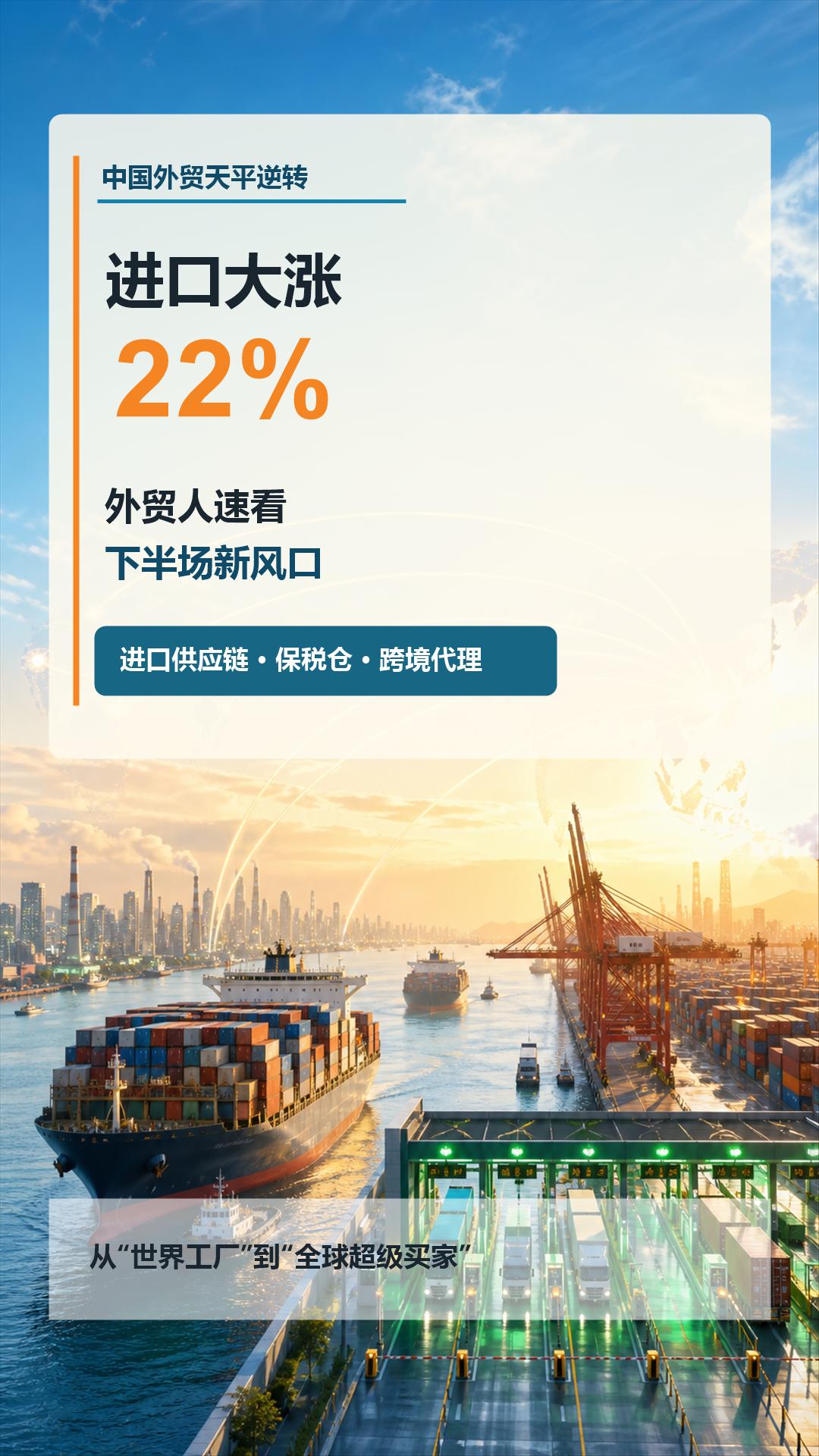
 China's foreign trade sees a turnaround: imports surge by 22%! Foreign trade professionals should quickly take note of the new trends in the second half of the year
 What Does a Global Traffic Ecosystem Service Provider Do? What Are the Differences from a Single Advertising Agency


Related Products
 EasyCamp SaaS Smart Website Marketing SystemE-Yingbao SaaS Smart Website Marketing System: AI-powered, zero-code website building. Rapidly launch multilingual independent e-commerce sites in just 10 minutes. Global server acceleration and AI-driven SEO optimization empower businesses to efficiently connect with global markets. The seamless integration of technology and user-friendly operation makes building e-commerce sites incredibly simple.
 AI+SEM Intelligent Advertising Marketing SystemAI+SEM drives intelligent ad creation, empowering full-funnel precision advertising marketing. The system automatically generates weekly/monthly reports, AI recommends keywords and target countries, monitors core metrics in real-time with intelligent alerts, and enables one-click high-conversion ad solutions to help quickly acquire customers and improve ROI.
 AI+SEO Dual Engine Optimization ServiceEasyWin AI+SEO Dual Engine Optimization System leverages AI-powered keyword mining, content generation, and comprehensive technical optimization to help foreign trade enterprises acquire high-quality organic traffic, significantly improving search rankings and conversion rates.
 AI+SNS Social Media Marketing SystemYingbao AI+SNS Social Media Marketing System - Precision social capture for the social media era. Supports one-click content synchronization across major platforms like Facebook and LinkedIn. AI intelligently rewrites posts for enhanced relevance. 24/7 AI customer service and user profiling analysis empower businesses to efficiently expand into global markets.
 AI+SEO营销解决方案易营宝AI+SEO营销解决方案,通过AI批量写作、智能生成TDK、精准关键词扩词等功能,全面优化网站SEO效果,提升流量与转化率。助力企业构建高效智能网站新生态。
 AI+SEM Advertising Marketing SolutionsAI+SEM Advertising Marketing Solution leverages AI technology to deeply empower SEM ad campaigns. It automatically generates weekly/monthly reports using AI, presenting account data across multiple dimensions for comprehensive insights into campaign performance and trends. The system precisely recommends keywords and target countries, intelligently generates high-conversion ad copy, and enables one-click activation of efficient campaign plans to help businesses rapidly acquire customers. Simultaneously, it monitors core metrics in real time, intelligently identifies abnormal fluctuations, and issues timely alerts to ensure stable, high-return advertising results.
 Domain Name ServicesEasyWin provides professional domain name services, including intelligent queries, one-stop registration, brand protection, and full lifecycle management, helping businesses build a digital brand image.
 EasyOperate B2C Cross-Border E-Commerce Platform & Independent WebsiteEasyStore B2C Cross-border E-commerce Independent Store is an intelligent website building and cross-border e-commerce integrated solution independently developed by EasyStore Information Technology (Beijing) Co., Ltd. The system is specially designed for small and medium-sized as well as large export enterprises, integrating 'website building, operation, marketing, advertising, and conversion' into one, helping enterprises quickly establish cross-border e-commerce independent stores to achieve brand globalization and global sales growth.
The platform supports multiple languages, multiple currencies, and multi-channel marketing, with built-in AI intelligent translation and SEO optimization systems, suitable for mainstream markets such as Southeast Asia, Europe and America, Latin America, and the Middle East, assisting Chinese manufacturing enterprises in efficiently deploying international e-commerce strategies. SSL证书易营宝提供专业SSL安全证书服务,包括单域名和泛域名证书,确保网站数据传输加密、身份验证和完整性保护,助力企业建立安全可信的在线业务环境。









