









- What Does a Global Traffic Ecosystem Service Provider Do? What Are the Differences from a Single Advertising AgencyJul 16, 2026View details
- What should you focus on in the latest enterprise SaaS report? From renewal rates and delivery costs to overseas growth opportunitiesJul 12, 2026View details
- What signals are worth paying attention to in a cross-border marketing trend report? B2B companies should look at these 6 signalsJul 11, 2026View details
- How to Read a Cross-Border Marketing Trends Report? Five Key Dimensions for Evaluating Channel OpportunitiesJul 11, 2026View details
- Which channel has the highest ROI in the global traffic ecosystem? Comparative analysis of search, social media, and advertisingJul 10, 2026View details
- What multilingual website services are available in Sanya? Which model is more suitable for local businesses going global?Jul 08, 2026View details
- How to view the complete list of China SaaS companies in the top 100? Practical methods for screening website-building and marketing service providersJul 08, 2026View details
- How to view pricing in the global traffic ecosystem? Cost comparison of search, social media, and content channel advertisingJul 06, 2026View details
How Long Before SSL Certificate Expiration Is It Safer to Renew
When an SSL certificate is approaching its expiration date, enterprises should plan the SSL certificate application process and SSL certificate purchase timing in advance to avoid the impact of certificate expiration on website security, search engine ranking optimization, and user trust. This article combines practical experience to analyze safer renewal timing and key operation and maintenance considerations.
For a corporate website's SSL certificate, how far in advance is it safer to renew?

For most corporate websites, it is not advisable to wait until the last 1–3 days to handle the SSL certificate. A safer approach is usually to start inspections 30 days before expiration, complete renewal or replacement 15 days before expiration, and finish deployment verification 7 days before expiration. This leaves sufficient buffer for review, issuance, configuration rollback, and multi-node synchronization.
If it is a multi-site setup, multilingual site group, overseas business site, or a marketing website with advertising landing pages, it is recommended to move the renewal window further forward to 30–45 days in advance. The reason is straightforward: buying the certificate is not the end of the process; it also involves domain validation, server compatibility, load balancing synchronization, CDN certificate replacement, and search engine crawling stability.
For technical evaluators and security administrators, the most common issue is not “whether the certificate has been purchased,” but “whether the renewal process has been scheduled in advance.” Especially when internal coordination involves legal, procurement, operations and maintenance, outsourced service providers, and other parties, one certificate renewal often spans more than 3 roles, significantly increasing the risk of delays.
For integrated website + marketing service businesses, SSL certificate validity management is not only related to encrypted communication, but also to lead conversion. Once users see browser warnings, page security alerts, or abnormal redirects, inquiry submission rates, ad conversion performance, and the stability of organic traffic may all be affected in a short period of time.
Different business types require different recommended renewal timing
Not all websites are suited to the same renewal rhythm. Corporate showcase websites, e-commerce sites, SaaS backends, API interfaces, and overseas landing pages have different tolerance levels for certificate continuity. The more the business relies on real-time visits and advertising delivery, the more certificate renewal should be placed at a fixed point in the operations calendar rather than handled temporarily.
- Standard corporate website: recommended renewal 15–30 days before expiration, with emphasis on checking whether HTTPS is effective sitewide.
- E-commerce, form collection, membership systems: recommended renewal 20–30 days before expiration to avoid certificate errors on payment or submission pages.
- Websites with multi-region deployment or CDN: recommended renewal 30–45 days before expiration, allowing time for synchronization and cache refresh.
- Overseas marketing sites, advertising landing pages: recommended to start more than 30 days before expiration to reduce fluctuations in ad review caused by certificate issues.
The table below can help decision-makers quickly determine the SSL certificate renewal window under different scenarios.
From an operations and maintenance perspective, the truly safe renewal timing is not a fixed date, but depends on the certificate type, deployment architecture, and business peak periods. As long as the website carries brand display, inquiry collection, or ad conversion functions, it is not recommended to compress certificate renewal into the final week.
Why do many companies still encounter website issues even after renewing?

Many companies mistakenly believe that completing the SSL certificate purchase means the risk has been eliminated. In fact, failed renewal, deployment errors, or an incomplete certificate chain can all cause the website to continue showing “Not Secure” warnings. The 4 most common errors are: incomplete certificate file replacement, private key mismatch, missing intermediate certificate installation, and failure to synchronize updates between the CDN and the origin server.
For project managers and after-sales maintenance personnel, what truly needs attention is a complete closed-loop process, not just a single procurement action. A standard renewal operation should include at least 6 stages: application, validation, issuance, deployment, testing, and monitoring. If any 1 stage is omitted, problems may be exposed during peak traffic periods.
Another high-frequency issue is mixed content. Although the site has installed a new certificate, images, scripts, and form interfaces on the page still call HTTP resources, so the browser address bar continues to display risk warnings. This type of issue particularly affects marketing page conversion, because users become more sensitive before submitting phone numbers, email addresses, and inquiry forms.
In integrated website building and digital marketing projects, SSL certificate renewal cannot be viewed separately from site operations and maintenance, search rankings, and traffic conversion. E-Marketing Information Technology (Beijing) Co., Ltd. has long served enterprise websites and global marketing scenarios across multiple industries, and usually incorporates certificate renewal into website building, SEO optimization, advertising page maintenance, and ongoing inspection systems to reduce the impact of single points of failure on overall growth.
4 easily overlooked certificate renewal risks
- Domain validation delays: DNS resolution may not take effect in time, which can delay the process by 1–3 days.
- Omissions across multiple environments: the production site, test site, and backup domains are not replaced at the same time.
- Third-party platforms not synchronized: CDN, WAF, load balancers, or cloud hosting control panels are still using the old certificate.
- No regression testing after renewal: mobile, form pages, payment pages, and API pages were not verified item by item.
Treating renewal as a “small-scale launch” is safer
For technical teams, a more reasonable approach is to treat SSL certificate renewal as a small-scale release. It is recommended to perform the operation during off-peak hours on business days, keep backups of the old certificate and configuration, and arrange a 30–60 minute verification window. In this way, even if certificate chain issues occur, rollback can be performed quickly without affecting the availability of the entire site.
If the enterprise is also simultaneously promoting brand website upgrades, overseas site building, or advertising landing page optimization, certificate management can be included in a unified digital asset inventory. Just as engineering audits and project acceptance require process records, digital operations also require clear documentation. During internal training, some enterprises also refer to materials such as Research on Common Problems and Countermeasures in Final Financial Audit of Basic Construction Projects to draw on ideas for milestone control and risk review, and use them to standardize project delivery management.
During procurement and selection, what should be the focus of SSL certificate renewal?
When choosing an SSL certificate, enterprises should not focus only on price. For information researchers, procurement personnel, and enterprise decision-makers, at least 3 core indicators should be reviewed: certificate scope of application, review and issuance cycle, and subsequent operations and maintenance complexity. A certificate may be inexpensive, but if the renewal process is cumbersome, it will instead increase the actual management cost.
Common certificate types include DV, OV, and EV. For a standard showcase website, deployment efficiency is usually the first priority; if it involves brand credibility, business cooperation, tender display, or data submission scenarios, more attention should be paid to entity verification, unified management capability, and compatibility. Recommended renewal timing for different certificates will also vary depending on the review process.
For agents, distributors, and distribution network websites, certificates are also related to channel brand consistency. If the headquarters website is secure and stable, but regional sub-sites frequently display risk warnings, it will directly affect partners’ judgment. Therefore, certificate procurement usually needs to be evaluated together with multi-site website strategy, domain planning, and marketing campaign plans.
The table below is more suitable for quick judgment before procurement, helping enterprises distinguish between “good enough” and “reliable.”
If the enterprise is also involved in official website revamps, SEO optimization, advertising placement, and overseas social media traffic generation, then certificate selection is better coordinated by an integrated service team. This makes it possible to consider security, rankings, user access experience, and conversion paths together, reducing problems caused by fragmentation among different stages.
5 questions recommended for confirmation before procurement
- Is the certificate intended for a single domain, wildcard domain, or multi-domain setup, and will the site expand in the next 6–12 months?
- How many days is the issuance process expected to take, and will it affect launch schedules or campaign timing?
- Is installation support, expiration reminders, and troubleshooting provided, rather than just delivery of certificate files?
- After renewal, will there be assistance in checking HTTPS redirects, mixed content, and search crawling status?
- If the enterprise has multiple project sites, can unified inventory-based management and cycle reminders be provided?
From renewal to stable launch, how should enterprises implement it best?
At the practical level, the biggest fear in SSL certificate renewal is “someone is responsible, but no one closes the loop.” A safer execution method is to divide the work into 4 stages: expiration inventory, renewal application, deployment testing, and continuous monitoring. When each stage has a clearly assigned responsible person, timeline, and acceptance items, management difficulty is significantly reduced.
The first stage is inventory. It is recommended to check the certificate ledger once a month, focusing on domains expiring within the next 30 days, 60 days, and 90 days, and verifying whether they involve the official website, campaign pages, API domains, and mobile entry points. For project owners, this step saves more time than emergency fixes at the deadline and is also more conducive to resource coordination.
The second stage is application and issuance. If a manual process is used, reserve 1–5 working days for domain validation and document confirmation; if the structure is complex or internal processes are lengthy, it is recommended to start at least 2 weeks in advance. The third stage is deployment and testing, and it is recommended to cover desktop, mobile, form pages, payment pages, redirect rules, and search crawling entry points.
The fourth stage is monitoring. After the certificate is renewed, it does not mean the task is finished. At minimum, follow-up checks should be performed 24 hours, 72 hours, and 7 days after renewal to observe whether there are cache remnants, link anomalies, or user feedback. For marketing websites, attention should also be paid to whether ad review, landing page open rates, and inquiry conversions have returned to normal.
Recommended 4-step execution process
- Establish a certificate ledger: record domains, expiration dates, deployment nodes, responsible persons, and business purposes.
- Trigger renewal in advance: send reminders 30 days before expiration, and complete issuance and deployment 15 days in advance.
- Perform regression testing: check the certificate chain, redirects, mixed content, forms, and API access.
- Integrate into continuous inspection: inspect page security status weekly and recheck once after version updates.
Why integrated services are more suitable for marketing websites
For enterprises focused on customer acquisition and conversion, purchasing an SSL certificate alone is only a basic action. The real value lies in coordinating certificate management with website building, SEO, social media advertising, and ad landing page maintenance. Since 2013, E-Marketing Information Technology (Beijing) Co., Ltd. has been deeply engaged in global digital marketing services, using artificial intelligence and big data to drive collaboration in intelligent website building, search optimization, social media marketing, and advertising delivery, enabling both secure operations and maintenance as well as traffic conversion and growth efficiency.
For enterprises with overseas expansion, channel distribution, or multiple parallel business lines, this kind of coordination is especially important. Because once an SSL certificate issue occurs, the impact is not limited to a single page, but may affect brand credibility, inquiry conversion, ad review, and search visibility. Managing these elements separately often creates more hidden costs than centralized governance.
Common misunderstandings and FAQ: when renewing before expiration, how can you avoid errors even after doing the work?
Many enterprises invest budget in SSL certificate renewal but still fail to achieve stable results, and the reason often lies in cognitive misunderstandings. Below, combined with common search questions, we provide judgment methods more suitable for joint reference by procurement, technical, and management teams.
Can an SSL certificate be renewed on the day it expires?
In theory, it can be done, but it is not a safe approach. If validation delays, server configuration errors, or unsynchronized third-party nodes occur on the expiration date, it may cause access abnormalities lasting several hours to more than 1 day. For corporate websites, e-commerce sites, and advertising landing pages, this risk is usually not worth the cost.
Does automatic renewal necessarily mean it is safe?
Not necessarily. Automatic renewal can reduce manual oversight, but it cannot replace deployment checks. If the server environment changes, DNS validation fails, the CDN is not updated, or the page still contains HTTP resources, browser warnings may still appear after automatic renewal. Therefore, automation is suitable for reminders and issuance, but manual review is still necessary.
Will certificate renewal affect search rankings?
A normal renewal generally will not directly cause rankings to drop, but if HTTPS access fails, redirects behave abnormally, crawling is blocked, or a large number of pages become temporarily unavailable, it may affect search engine crawling and user dwell time. Especially when website revamps, URL adjustments, and certificate replacement are carried out simultaneously, continuous monitoring for about 7 days should be arranged.
How can multi-site enterprises manage certificates more efficiently?
It is recommended to establish a unified ledger, with monthly inspections and quarterly reviews. Management content should include at least the domain list, certificate type, expiration time, deployment location, business owner, and renewal status. If the enterprise also has project acceptance, delivery standards, or internal control processes, it can draw on the milestone review ideas emphasized in Research on Common Problems and Countermeasures in Final Financial Audit of Basic Construction Projects and apply them to digital asset governance, while execution should still be combined with actual website operations and maintenance.
Why choose us: not only certificate renewal, but greater emphasis on website security and continuity of growth
If your enterprise is currently facing issues such as an approaching SSL certificate expiration date, a tight official website revamp schedule, inability to tolerate SEO traffic fluctuations, or the need for advertising landing pages to continue receiving traffic, then it is more suitable to choose an integrated service team capable of coordinating website construction, security deployment, and marketing operations. This not only reduces internal communication costs, but also lowers business losses caused by single-point configuration errors.
E-Marketing Information Technology (Beijing) Co., Ltd. is headquartered in Beijing and was established in 2013. It has long provided full-chain services around intelligent website building, SEO optimization, social media marketing, and advertising delivery, serving more than 100,000 enterprises. For nodes such as SSL certificate renewal, which may seem basic but in fact affect user trust and conversion efficiency, the company places greater emphasis on advance planning, process coordination, and continuous post-launch inspection.
If you need to further confirm the SSL certificate application process, certificate purchase timing, deployment cycle, site adaptation scope, or unified management solutions for multiple domains, you can directly communicate the following information: the current certificate expiration date, server and CDN environment, whether there are overseas or multilingual sites, whether a website revamp is being carried out simultaneously, and whether SEO and advertising page stability assurance are required.
In actual consultations, sending the domain list, planned launch time, and business peak cycle to the service team in advance often helps you obtain an executable solution more quickly. Whether your focus is parameter confirmation, certificate selection, delivery cycle, custom deployment, or post-renewal security inspection and quotation communication, it is recommended to schedule as early as possible rather than waiting until the certificate is close to expiration and then handling it in a rush.
Related Articles
 Attention! Builders' must-see: Yibingbao AI components updated, design efficiency directly doubled!
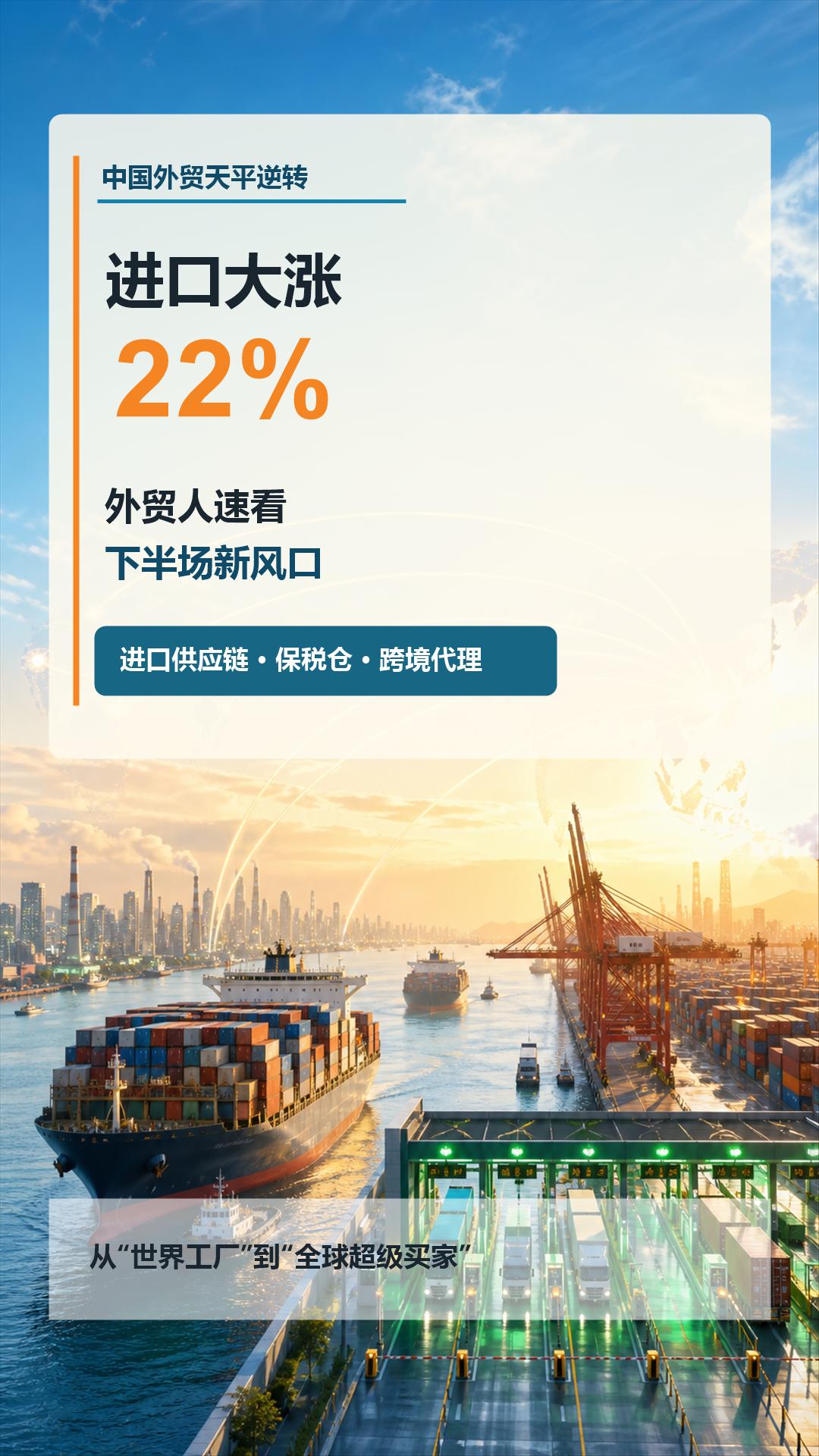
 China's foreign trade sees a turnaround: imports surge by 22%! Foreign trade professionals should quickly take note of the new trends in the second half of the year
 What Does a Global Traffic Ecosystem Service Provider Do? What Are the Differences from a Single Advertising Agency


Related Products
 EasyCamp SaaS Smart Website Marketing SystemE-Yingbao SaaS Smart Website Marketing System: AI-powered, zero-code website building. Rapidly launch multilingual independent e-commerce sites in just 10 minutes. Global server acceleration and AI-driven SEO optimization empower businesses to efficiently connect with global markets. The seamless integration of technology and user-friendly operation makes building e-commerce sites incredibly simple.
 AI+SEM Intelligent Advertising Marketing SystemAI+SEM drives intelligent ad creation, empowering full-funnel precision advertising marketing. The system automatically generates weekly/monthly reports, AI recommends keywords and target countries, monitors core metrics in real-time with intelligent alerts, and enables one-click high-conversion ad solutions to help quickly acquire customers and improve ROI.
 AI+SEO Dual Engine Optimization ServiceEasyWin AI+SEO Dual Engine Optimization System leverages AI-powered keyword mining, content generation, and comprehensive technical optimization to help foreign trade enterprises acquire high-quality organic traffic, significantly improving search rankings and conversion rates.
 AI+SNS Social Media Marketing SystemYingbao AI+SNS Social Media Marketing System - Precision social capture for the social media era. Supports one-click content synchronization across major platforms like Facebook and LinkedIn. AI intelligently rewrites posts for enhanced relevance. 24/7 AI customer service and user profiling analysis empower businesses to efficiently expand into global markets.
 AI+SEO营销解决方案易营宝AI+SEO营销解决方案,通过AI批量写作、智能生成TDK、精准关键词扩词等功能,全面优化网站SEO效果,提升流量与转化率。助力企业构建高效智能网站新生态。
 AI+SEM Advertising Marketing SolutionsAI+SEM Advertising Marketing Solution leverages AI technology to deeply empower SEM ad campaigns. It automatically generates weekly/monthly reports using AI, presenting account data across multiple dimensions for comprehensive insights into campaign performance and trends. The system precisely recommends keywords and target countries, intelligently generates high-conversion ad copy, and enables one-click activation of efficient campaign plans to help businesses rapidly acquire customers. Simultaneously, it monitors core metrics in real time, intelligently identifies abnormal fluctuations, and issues timely alerts to ensure stable, high-return advertising results.
 Domain Name ServicesEasyWin provides professional domain name services, including intelligent queries, one-stop registration, brand protection, and full lifecycle management, helping businesses build a digital brand image.
 EasyOperate B2C Cross-Border E-Commerce Platform & Independent WebsiteEasyStore B2C Cross-border E-commerce Independent Store is an intelligent website building and cross-border e-commerce integrated solution independently developed by EasyStore Information Technology (Beijing) Co., Ltd. The system is specially designed for small and medium-sized as well as large export enterprises, integrating 'website building, operation, marketing, advertising, and conversion' into one, helping enterprises quickly establish cross-border e-commerce independent stores to achieve brand globalization and global sales growth.
The platform supports multiple languages, multiple currencies, and multi-channel marketing, with built-in AI intelligent translation and SEO optimization systems, suitable for mainstream markets such as Southeast Asia, Europe and America, Latin America, and the Middle East, assisting Chinese manufacturing enterprises in efficiently deploying international e-commerce strategies. SSL证书易营宝提供专业SSL安全证书服务,包括单域名和泛域名证书,确保网站数据传输加密、身份验证和完整性保护,助力企业建立安全可信的在线业务环境。









