









- What Does a Global Traffic Ecosystem Service Provider Do? What Are the Differences from a Single Advertising AgencyJul 16, 2026View details
- What should you focus on in the latest enterprise SaaS report? From renewal rates and delivery costs to overseas growth opportunitiesJul 12, 2026View details
- What signals are worth paying attention to in a cross-border marketing trend report? B2B companies should look at these 6 signalsJul 11, 2026View details
- How to Read a Cross-Border Marketing Trends Report? Five Key Dimensions for Evaluating Channel OpportunitiesJul 11, 2026View details
- Which channel has the highest ROI in the global traffic ecosystem? Comparative analysis of search, social media, and advertisingJul 10, 2026View details
- What multilingual website services are available in Sanya? Which model is more suitable for local businesses going global?Jul 08, 2026View details
- How to view the complete list of China SaaS companies in the top 100? Practical methods for screening website-building and marketing service providersJul 08, 2026View details
- How to view pricing in the global traffic ecosystem? Cost comparison of search, social media, and content channel advertisingJul 06, 2026View details
The Often Overlooked Renewal Costs in SSL Certificate Pricing
Many companies focus on SSL certificate prices, but overlook the long-term expenses caused by renewals, operations and maintenance, and certificate replacement. This article will combine SSL certificate purchasing and SSL certificate validity periods to break down hidden costs, and further explain the actual impact of the SSL certificate application process on website security and marketing conversions.
Why do many companies only look at the first-year SSL certificate price, yet underestimate the total follow-up cost?

In the integrated website + marketing service scenario, SSL certificates are not only related to browser-encrypted connections, but also directly affect landing page credibility, form submission rates, ad review approval rates, and the access experience of overseas visitors.
Many companies compare only the first-year quotation during procurement, but ignore the renewal, deployment, and maintenance costs from year 2 to year 3.
For information researchers and technical evaluators, what really needs to be calculated is not the price of a single certificate, but the overall investment for 1 domain name, multiple subdomains, and different business lines within 12 months, 24 months, and even 36 months. If the scale of the site cluster expands, the complexity of certificate management will multiply, and budget deviations will also be rapidly amplified.
For business decision-makers, SSL certificate purchasing is a typical “low unit price, high associated cost” decision. It may seem like saving a few hundred yuan on the first order, but later it may bring higher hidden expenses due to manual replacement, server compatibility troubleshooting, certificate chain anomaly fixes, and business interruptions.
Especially on marketing websites, independent sites, multilingual sites, and advertising landing pages, if a certificate expires and causes the page to show an “Not Secure” warning, it usually directly affects inquiry leads and the conversion funnel within 1 day to 3 days. Such losses are often far higher than the purchase price of the certificate itself.
4 types of renewal-related costs that companies often overlook
- Renewal price fluctuations: Some plans have obvious first-year promotions, but return to regular pricing starting from year 2, causing the annual budget to rise suddenly.
- Manual maintenance costs: including certificate updates, private key custody, service restarts, rollback testing, and anomaly troubleshooting, usually requiring coordination across 1 to 3 operations and maintenance stages.
- Business interruption costs: After a certificate becomes invalid, the corporate website, inquiry pages, payment pages, or dealer backend may display access warnings, affecting customer trust.
- Collaborative communication costs: Procurement, IT, marketing, after-sales, and other roles repeatedly confirm details, often prolonging the SSL certificate application process and increasing management burdens.
If a company is simultaneously doing official website construction, SEO optimization, and overseas advertising, then SSL certificate validity management will also interact with website launch schedules, campaign page release timing, CDN configuration, and search engine crawling stability, and cannot be viewed in isolation.
What exactly is included in SSL certificate renewal costs? A table makes it clearer

To help technical evaluators, project managers, and security managers quickly judge the cost structure, the common expenses after SSL certificate purchasing are broken down below into two parts: explicit costs and hidden costs. The actual amount varies depending on certificate type, number of domain names, server environment, and service scope, but the calculation logic is basically the same.
From a procurement perspective, SSL certificate prices are only the starting point. If a company has 3 primary domains, more than 10 subdomains, or quarterly campaign pages going live, then unified renewal reminders, deployment standards, and emergency plans are often more important than a one-time procurement discount.
What are the differences in renewal and maintenance burdens among different certificate plans?
The SSL certificate application process may look similar, but domain validation, organization validation, and multi-domain plans differ in review depth, applicable scenarios, and follow-up management methods. If the business structure is ignored before procurement, repeated purchases or frequent replacements are very likely later.
If a corporate website undertakes multiple tasks such as brand display, inquiry conversion, channel recruitment, and after-sales entry points, it is recommended to include certificate strategy in the website operations ledger rather than letting it be temporarily driven by a single procurement action.
SSL certificate validity periods and application processes: why do they affect website security and conversions?
Many people understand SSL certificates as a purely technical issue, but in actual marketing, they affect whether users continue staying, whether they are willing to submit forms, and whether they believe brand information is authentic and reliable. Especially for B2B industry websites, visitors often complete their judgment of “security” and “legitimacy” within 3 seconds to 8 seconds.
The shorter the SSL certificate validity period, the more a company needs to establish clear renewal reminders and deployment mechanisms. Before expiration, 15 days to 30 days should usually be reserved for review, issuance, installation, and testing, so as to avoid handling it temporarily during promotional campaigns, trade show promotions, or advertising peak seasons, which would put the pace in a passive position.
The SSL certificate application process should also not stop at “buy it and install it.” For multilingual sites, CDN-accelerated sites, and independent sites, at least 5 key checks should be completed: domain confirmation, server adaptation, redirect inspection, mixed content troubleshooting, and search crawling verification, in order to reduce post-launch risks.
Once HTTPS deployment is incomplete, common issues include images or scripts still loading over HTTP, form submission failures, browser warning prompts, and abnormal triggering of analytics code. This not only affects the access experience, but also weakens SEO optimization and the conversion efficiency of advertising landing pages.
Recommended 4-step implementation process
- Initial inventory: Sort out primary domains, subdomains, business entry points, redirect rules, and expiration dates to form a certificate ledger.
- Plan selection: Based on the number of official websites, campaign pages, backend systems, and distributor pages, determine whether to use a single-domain, wildcard, or multi-domain plan.
- Launch verification: After installation, check 301 redirects, resource loading, form submission, indexed pages, and ad link status.
- Ongoing operations and maintenance: Set quarterly inspections and pre-expiration reminders to avoid omissions caused by personnel changes or project handovers.
For companies that value official website lead conversion, SSL management is best planned together with website building, SEO, and promotional operations. For example, in the industrial manufacturing field, the official website not only showcases corporate strength, but also undertakes product guidance and inquiry reception functions. Marketing pages aimed at heavy industry scenarios such as heavy machinery equipment, heavy industry often require high-contrast inquiry entry points, core data metric displays, and fully responsive presentation. In such cases, certificate stability directly affects visitors’ willingness to submit inquiries.
Which roles need to pay the most attention to this stage?
- Technical evaluators: Pay attention to server compatibility, certificate chain integrity, and deployment complexity.
- Security managers: Pay attention to expiration alerts, private key custody, and access warning risks.
- Project leaders: Pay attention to website switching windows, implementation cycles, and multi-department collaboration costs.
- Marketing and sales teams: Pay attention to landing page credibility, form conversion rates, and the speed of building customer trust.
When purchasing SSL certificates, what should companies focus on instead of only looking at low prices?
If a company is building an official website, an independent site, or an overseas promotion site, the procurement decision should shift from “the lowest first-year quotation” to “the total cost of ownership over 3 years.” Especially for companies with multiple page entry points, channel sites, and form pages, unified management capability is more critical than a one-time discount.
It is recommended to evaluate from 3 core indicators: first, certificate applicability; second, renewal price stability; third, depth of service support. If the supplier can only provide a sales link but does not participate in deployment, troubleshooting, and renewal reminders, then the company still has to bear most of the operations and maintenance risks internally.
In actual projects, website building and marketing usually advance simultaneously. For example, industrial product websites, equipment showcase sites, or招商 sites need not only large-scenario industry banners and real application-scene displays, but also mobile loading performance and inquiry experience. If certificate issues cause user alarm, conversions will still suffer no matter how good the page design is.
Therefore, when making SSL certificate purchasing decisions, companies should view certificate services as part of a larger digital system: whether they match the website architecture, whether they support subsequent SEO optimization, whether they can align with advertising rhythms, and whether they are conducive to secure access for visitors from different regions.
6-item checklist before procurement
- Confirm whether it is a single site, subdomain expansion, or parallel multi-country sites, to avoid repeated purchases later.
- Calculate the budget for 1 year, 2 years, and 3 years, instead of only comparing the first-year price.
- Confirm whether installation support, anomaly troubleshooting, and renewal reminder services are included.
- Check whether the existing server, CDN, and load balancing environment require additional configuration.
- Evaluate whether the certificate expiration window avoids trade shows, peak advertising seasons, and major redesign cycles.
- Clarify internal responsible persons to ensure that procurement, technical, and marketing information is synchronized across at least 3 parties.
If a corporate website also undertakes product display and inquiry conversion responsibilities, page structure, content credibility, and security deployment should be optimized at the same time. For example, showcase sites targeting heavy industry customers often use modular streamlined layouts, customer testimonial modules, and service commitment lists. Once such pages display security warnings, users’ judgment of brand endorsement will decline significantly.
Common misunderstandings and FAQ: what exactly is the relationship among renewals, deployment, and conversions?
Around SSL certificate prices, SSL certificate validity periods, and SSL certificate application processes, the most common question for companies is not “which one is the cheapest,” but “how to avoid repeated trouble later.” Below is a centralized answer based on common search intent to help different roles make quick judgments.
If SSL certificate renewal is delayed by a few days, is the impact significant?
The impact is often greater than imagined. After a certificate expires, browsers may immediately display risk prompts, and the homepage, contact page, and inquiry page of the official website will all be affected. For active landing pages, even an interruption of half a day to 1 day may cause lead loss and a decline in brand trust, so it is not recommended to wait until the last 1 to 2 days to handle it.
After purchasing an SSL certificate, is it finished once it is installed?
No. Installation is only the beginning. Afterwards, HTTPS redirects, page resource calls, form interfaces, analytics scripts, and search engine crawling status still need to be checked. It is generally recommended to conduct the first review within 24 hours after launch and complete the second round of spot checks within 7 days to ensure the marketing chain is complete and usable.
Do multilingual sites and foreign trade sites need to pay more attention to renewal management?
Yes. Multilingual sites usually include multiple subdirectories, subdomains, or country sites. Once SSL certificate validity periods are not managed uniformly, it is easy for some pages to remain secure while others show warnings. This inconsistency damages overseas user trust and also increases troubleshooting costs for technical teams.
Why should website building service providers also participate in SSL strategy planning?
Because certificates are not isolated components. They are closely related to website architecture, SEO foundations, mobile adaptation, CDN configuration, and inquiry paths. Moving SSL strategy forward to the website building stage is often more time-saving than patching it later. Especially when pages undertake brand display, product guidance, and inquiry reception, security and conversion are inherently part of the same chain.
Why choose us: putting SSL cost control, website security, and marketing conversion into one solution
Since its establishment in 2013, Yiyingbao Information Technology (Beijing) Co., Ltd. has continuously focused on intelligent website building, SEO optimization, social media marketing, and advertising placement, providing full-chain digital services for business growth. For areas like SSL certificates that seem basic but actually affect the experience of the entire site, we place greater emphasis on integrated coordination of “website building, operations and maintenance, promotion, and conversion” rather than handling them as isolated points.
If you are evaluating SSL certificate prices, or are worried that deployment and conversion problems may still exist after renewal, you may focus on consulting the following: certificate applicability, 1 to 3-year budget estimation, SSL certificate application process mapping, expiration reminder mechanisms, HTTPS deployment checks, SEO and advertising landing page compatibility confirmation, and unified management solutions for multiple sites.
For industry websites that need to balance brand presentation and customer acquisition efficiency, we can also combine page structure, inquiry entry points, responsive experience, and content trust modules to jointly optimize website security and conversion performance. Whether it is an upgrade of a corporate official website or the construction of segmented category pages,招商 pages, or product pages, a more reliable implementation rhythm can be formulated around actual business goals.
If you are currently preparing to launch a new website, migrate an old website, expand multilingual pages, or need to match a more suitable security and marketing architecture for industrial product showcase sites such as heavy machinery equipment, heavy industry, it is recommended to communicate early about parameter confirmation, site selection, delivery schedule, and customized solutions, so as to avoid certificate issues disrupting the overall plan on the eve of launch.
Related Articles
 Attention! Builders' must-see: Yibingbao AI components updated, design efficiency directly doubled!
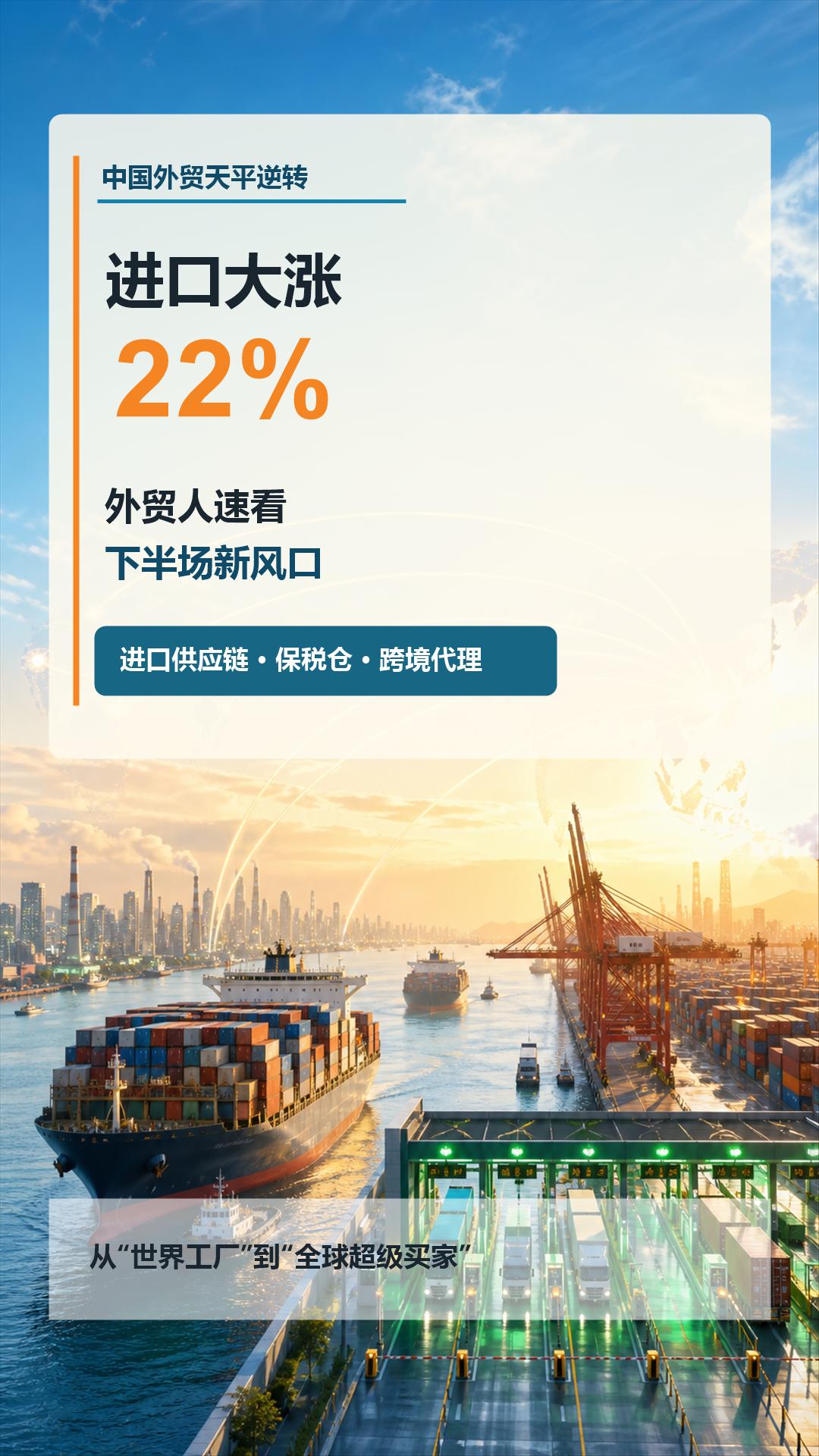
 China's foreign trade sees a turnaround: imports surge by 22%! Foreign trade professionals should quickly take note of the new trends in the second half of the year
 What Does a Global Traffic Ecosystem Service Provider Do? What Are the Differences from a Single Advertising Agency

Related Products
 EasyCamp SaaS Smart Website Marketing SystemE-Yingbao SaaS Smart Website Marketing System: AI-powered, zero-code website building. Rapidly launch multilingual independent e-commerce sites in just 10 minutes. Global server acceleration and AI-driven SEO optimization empower businesses to efficiently connect with global markets. The seamless integration of technology and user-friendly operation makes building e-commerce sites incredibly simple.
 AI+SEM Intelligent Advertising Marketing SystemAI+SEM drives intelligent ad creation, empowering full-funnel precision advertising marketing. The system automatically generates weekly/monthly reports, AI recommends keywords and target countries, monitors core metrics in real-time with intelligent alerts, and enables one-click high-conversion ad solutions to help quickly acquire customers and improve ROI.
 AI+SEO Dual Engine Optimization ServiceEasyWin AI+SEO Dual Engine Optimization System leverages AI-powered keyword mining, content generation, and comprehensive technical optimization to help foreign trade enterprises acquire high-quality organic traffic, significantly improving search rankings and conversion rates.
 AI+SNS Social Media Marketing SystemYingbao AI+SNS Social Media Marketing System - Precision social capture for the social media era. Supports one-click content synchronization across major platforms like Facebook and LinkedIn. AI intelligently rewrites posts for enhanced relevance. 24/7 AI customer service and user profiling analysis empower businesses to efficiently expand into global markets.
 AI+SEO营销解决方案易营宝AI+SEO营销解决方案,通过AI批量写作、智能生成TDK、精准关键词扩词等功能,全面优化网站SEO效果,提升流量与转化率。助力企业构建高效智能网站新生态。
 AI+SEM Advertising Marketing SolutionsAI+SEM Advertising Marketing Solution leverages AI technology to deeply empower SEM ad campaigns. It automatically generates weekly/monthly reports using AI, presenting account data across multiple dimensions for comprehensive insights into campaign performance and trends. The system precisely recommends keywords and target countries, intelligently generates high-conversion ad copy, and enables one-click activation of efficient campaign plans to help businesses rapidly acquire customers. Simultaneously, it monitors core metrics in real time, intelligently identifies abnormal fluctuations, and issues timely alerts to ensure stable, high-return advertising results.
 Domain Name ServicesEasyWin provides professional domain name services, including intelligent queries, one-stop registration, brand protection, and full lifecycle management, helping businesses build a digital brand image.
 EasyOperate B2C Cross-Border E-Commerce Platform & Independent WebsiteEasyStore B2C Cross-border E-commerce Independent Store is an intelligent website building and cross-border e-commerce integrated solution independently developed by EasyStore Information Technology (Beijing) Co., Ltd. The system is specially designed for small and medium-sized as well as large export enterprises, integrating 'website building, operation, marketing, advertising, and conversion' into one, helping enterprises quickly establish cross-border e-commerce independent stores to achieve brand globalization and global sales growth.
The platform supports multiple languages, multiple currencies, and multi-channel marketing, with built-in AI intelligent translation and SEO optimization systems, suitable for mainstream markets such as Southeast Asia, Europe and America, Latin America, and the Middle East, assisting Chinese manufacturing enterprises in efficiently deploying international e-commerce strategies. SSL证书易营宝提供专业SSL安全证书服务,包括单域名和泛域名证书,确保网站数据传输加密、身份验证和完整性保护,助力企业建立安全可信的在线业务环境。









