









- What Does a Global Traffic Ecosystem Service Provider Do? What Are the Differences from a Single Advertising AgencyJul 16, 2026View details
- What should you focus on in the latest enterprise SaaS report? From renewal rates and delivery costs to overseas growth opportunitiesJul 12, 2026View details
- What signals are worth paying attention to in a cross-border marketing trend report? B2B companies should look at these 6 signalsJul 11, 2026View details
- How to Read a Cross-Border Marketing Trends Report? Five Key Dimensions for Evaluating Channel OpportunitiesJul 11, 2026View details
- Which channel has the highest ROI in the global traffic ecosystem? Comparative analysis of search, social media, and advertisingJul 10, 2026View details
- What multilingual website services are available in Sanya? Which model is more suitable for local businesses going global?Jul 08, 2026View details
AI building agent support policy in the end is it worth it? Three major subsidies analysis and entry threshold
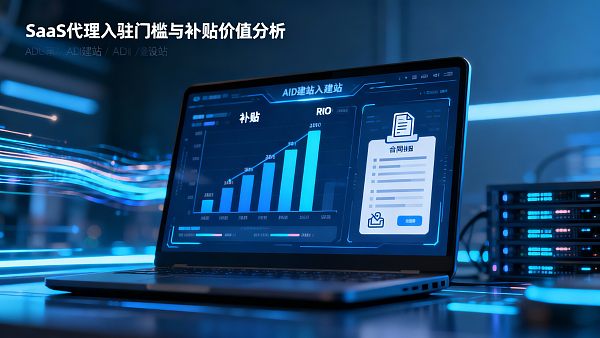
Are AI website agency support policies really worth it? This article analyzes three major subsidies, SaaS partnerships, and city partner onboarding thresholds to help market researchers and operators quickly assess ROI and risks.
This article targets enterprise decision-makers, channel operators, and operational personnel evaluating AI website agency support policies, focusing on three common subsidy mechanisms (funding subsidies, marketing promotion subsidies, and technical service subsidies), SaaS partnerships, and city partner onboarding thresholds, as well as real cost investments and ROI calculations. Combining industry practices, data examples, compliance considerations, and operational insights, we help you determine whether "subsidies are worth the investment" and provide actionable evaluation checklists and implementation recommendations.

1. Detailed Analysis of Three Subsidy Types: How Funding, Marketing, and Technical Subsidies Impact ROI
In the AI website and digital marketing SaaS ecosystem, vendors often attract agents and partners through three types of subsidies: direct funding subsidies, marketing promotion subsidies, and technical/service support. Each subsidy type differently impacts an agent's cash flow, customer acquisition costs, and long-term retention. Direct funding subsidies typically appear as startup capital or first-year rebates, with the advantage of quickly reducing initial pressure. However, such subsidies often come with sales targets or regional exclusivity clauses. Overly ambitious targets may force agents into high-leverage operations and repayment risks if performance reviews fail.
Marketing promotion subsidies manifest as co-invested budgets, material support, or advertising cost reimbursements. For example, a vendor may commit to covering 50% of marketing expenses, supplemented by branding materials and channel resources. These subsidies directly impact lead conversion efficiency and SaaS agent sales cycles. When combined with smart website platforms like EasyYunbao and AI marketing engines, ad placements and landing page optimizations can significantly boost conversion rates, amplifying subsidy effectiveness. Technical subsidies include free training, API integrations, and dedicated technical support, reducing initial implementation costs and accelerating time-to-market. Their value depends on the vendor's technical maturity and service-level agreements (SLAs).
Key metrics for evaluating subsidy value include: coverage duration, impact on CAC (customer acquisition cost), long-term effects on agent gross margins, and improvements to customer lifetime value (LTV). For instance, if marketing subsidies help reduce average CAC from $800 to $320 within six months while increasing client renewal rates by 10% annually, they represent genuine long-term benefits. However, subsidies that only cover one-time onboarding fees without improving product delivery capabilities offer limited value. For teams focused on cross-border website construction and multilingual platforms, prioritize subsidies that tangibly enhance cross-border lead acquisition and conversion efficiency.
2. SaaS Agency and City Partner Onboarding Thresholds & Cost Calculations

Becoming a SaaS agent or city partner typically involves three thresholds: qualification, capability, and capital requirements. Qualification thresholds include company registration, industry credentials, client case studies, and team structure. Capability thresholds emphasize pre-sales technical abilities (e.g., template website building, responsive enterprise CMS), post-sales service, and localized operations. Capital requirements involve security deposits, initial purchase commitments, or minimum monthly order volumes. For market researchers and operators, simplified cost breakdowns are critical: list initial investments (deposits, first-batch materials, Q1 ad budgets), fixed operational costs (technical support, servers, customer service), and variable costs (on-demand TWG/translation, paid traffic).
For example, a city partner testing template website and multilingual platform operations in tier-3 cities might require initial investments including local sales team salaries ($30K-$50K/year), first-year marketing (ads, exhibitions) at $20K-$40K, and training/technical costs of $10K-$15K—totaling $60K-$100K RMB. Vendor-provided marketing and technical subsidies can reduce actual costs, but KPIs and payback periods must be monitored. Industry data shows mature agents achieve 30%-45% gross margins, while AI-driven all-in-one marketing platforms with external paid channels can further amplify ROI. For calculations, use conservative, neutral, and optimistic models to evaluate cash flow and payback periods.
Additionally, SaaS agents should assess vendor product differentiation (e.g., SEO expert tools, global website SaaS support) and technical barriers to avoid homogeneous competition. Operational teams must verify platform capabilities like AI keyword expansion, auto-generated TDK, multilingual translation, and real-time SEO scoring—features that directly impact post-launch efficiency and client retention.
3. Risk, Compliance & Operational Checklist: From Data Security to SLA Implementation
All support policies face implementation risks: vague subsidy redemption terms, regional exclusivity limiting growth, cross-border data compliance issues, and operational shortcomings causing client churn. For teams handling cross-border websites and responsive CMS, compliance is paramount—especially multilingual platforms involving data sovereignty and GDPR requirements. Agents should request vendor-provided security whitepapers, SLA templates, and compliance proofs (e.g., global CDN nodes, auto-SSL certificates, DDoS protection) before signing.
Operationally, standardized workflows are crucial: from requirement alignment and template selection to SEO optimization (template SEO, on-page TDK/URL structuring) and post-launch ad tracking. Here, integrated ad products can dramatically boost initial inquiry volume and conversions. For export scenarios, specialized ad services like Google Ads—with multilingual support, smart bidding, and visualized performance—enable rapid overseas market testing and shorter lead validation cycles.
Finally, establish risk mitigation: clear subsidy redemption clauses, phased KPIs, exit mechanisms, and contractual technical/training commitments. Operational teams should create monthly dashboards (traffic, conversions, channel ROI, SEO health scores) and hold periodic vendor strategy reviews.
4. Implementation Guide, Case Studies & Decision Checklist

Based on the above, here's a four-step decision framework: 1) Quantify subsidy value by converting it into reduced CAC and incremental LTV; 2) Conduct scenario testing via small pilots in target cities/industries to validate template websites, SEO, and paid ad synergies; 3) Evaluate vendor capabilities in multilingual platforms, AI marketing engines, and global traffic ecosystems; 4) Set conservative financial buffers and exit plans.
Case study: A B2B export-focused agent using an AI-powered SaaS platform (with keyword expansion and auto-TDK generation) achieved 2.5x more inquiries and 60% lower per-conversion costs within 10 months. Key success factors: vendor tools shortening website launch cycles, tightly integrated ad-landing page optimization, and clear marketing subsidies offsetting early acquisition costs.
Onboarding checklist (abridged): Credentials/case studies, subsidy terms/KPIs, technical/security capabilities, training frequency, co-marketing plans, and exit clauses. Operators should prioritize demo environments and automation tools (e.g., multilingual translation engines, SEO diagnostics) while aligning with client success managers for post-launch conversion optimization.
5. Conclusion & Actionable Insights
In summary, AI website agency support policies often deliver value—but their true impact depends on subsidy depth/duration, vendor technical/service capabilities, and agent execution. For low-cost market entry, prioritize vendors offering end-to-end tech support, global CDN compliance, and mature AI marketing toolchains. EasyYunbao, with its global deployment and AI engine, provides integrated website-ad support to shorten lead cycles and boost conversions.
For subsidy valuation, pilot designs, or SaaS/city partnership details, contact us for customized assessments. Explore solutions and get ad support by booking a demo to start efficient city operations.
- Website Development
- Website Builder Platform
- Foreign Trade Website Development
- SSL Certificate
- SEO diagnosis
- Multilingual website development
- Digital Marketing SaaS
- Template website
- SEO Optimization Expert
- Yiyingbao
- SEO
- SEO Optimization
- Smart Website Building
- City Partners
- AI Marketing Engine
- Global CDN Acceleration
- Multilingual website
- Global Traffic Ecosystem
- Responsive Enterprise Website Building System
- Multilingual Website Construction Platform
- Global Website Building SaaS System
- China Foreign Trade Website
- Smart Website Platform
Related Articles

Related Products
 EasyCamp SaaS Smart Website Marketing SystemE-Yingbao SaaS Smart Website Marketing System: AI-powered, zero-code website building. Rapidly launch multilingual independent e-commerce sites in just 10 minutes. Global server acceleration and AI-driven SEO optimization empower businesses to efficiently connect with global markets. The seamless integration of technology and user-friendly operation makes building e-commerce sites incredibly simple.
 AI+SEM Intelligent Advertising Marketing SystemAI+SEM drives intelligent ad creation, empowering full-funnel precision advertising marketing. The system automatically generates weekly/monthly reports, AI recommends keywords and target countries, monitors core metrics in real-time with intelligent alerts, and enables one-click high-conversion ad solutions to help quickly acquire customers and improve ROI.
 AI+SEO Dual Engine Optimization ServiceEasyWin AI+SEO Dual Engine Optimization System leverages AI-powered keyword mining, content generation, and comprehensive technical optimization to help foreign trade enterprises acquire high-quality organic traffic, significantly improving search rankings and conversion rates.
 AI+SNS Social Media Marketing SystemYingbao AI+SNS Social Media Marketing System - Precision social capture for the social media era. Supports one-click content synchronization across major platforms like Facebook and LinkedIn. AI intelligently rewrites posts for enhanced relevance. 24/7 AI customer service and user profiling analysis empower businesses to efficiently expand into global markets.
 AI+SEO营销解决方案易营宝AI+SEO营销解决方案,通过AI批量写作、智能生成TDK、精准关键词扩词等功能,全面优化网站SEO效果,提升流量与转化率。助力企业构建高效智能网站新生态。
 AI+SEM Advertising Marketing SolutionsAI+SEM Advertising Marketing Solution leverages AI technology to deeply empower SEM ad campaigns. It automatically generates weekly/monthly reports using AI, presenting account data across multiple dimensions for comprehensive insights into campaign performance and trends. The system precisely recommends keywords and target countries, intelligently generates high-conversion ad copy, and enables one-click activation of efficient campaign plans to help businesses rapidly acquire customers. Simultaneously, it monitors core metrics in real time, intelligently identifies abnormal fluctuations, and issues timely alerts to ensure stable, high-return advertising results.
 Domain Name ServicesEasyWin provides professional domain name services, including intelligent queries, one-stop registration, brand protection, and full lifecycle management, helping businesses build a digital brand image.
 EasyOperate B2C Cross-Border E-Commerce Platform & Independent WebsiteEasyStore B2C Cross-border E-commerce Independent Store is an intelligent website building and cross-border e-commerce integrated solution independently developed by EasyStore Information Technology (Beijing) Co., Ltd. The system is specially designed for small and medium-sized as well as large export enterprises, integrating 'website building, operation, marketing, advertising, and conversion' into one, helping enterprises quickly establish cross-border e-commerce independent stores to achieve brand globalization and global sales growth.
The platform supports multiple languages, multiple currencies, and multi-channel marketing, with built-in AI intelligent translation and SEO optimization systems, suitable for mainstream markets such as Southeast Asia, Europe and America, Latin America, and the Middle East, assisting Chinese manufacturing enterprises in efficiently deploying international e-commerce strategies. SSL证书易营宝提供专业SSL安全证书服务,包括单域名和泛域名证书,确保网站数据传输加密、身份验证和完整性保护,助力企业建立安全可信的在线业务环境。









