









- China-Morocco zero-tariff access, a breakthrough in the cost of Moroccan goods exports to ChinaJun 11, 2026View details
- What signal should be released for the suspension of exports to JapanJun 10, 2026View details
- China's May LNG imports rebounded, with increased volumes from Russia and Canada filling the Middle East supply gapJun 10, 2026View details
- Will GEO change its SEO strategy?Jun 04, 2026View details
- What types of businesses are end-to-end solutions suitable for?Jun 03, 2026View details
- 2026 Global Growth Channel TrendsJun 02, 2026View details
- Changes in Search Engine Ranking Factors in 2026Jun 06, 2026View details
- Which stages is the brand visibility enhancement service suitable forMay 29, 2026View details
What New Changes Are Emerging in International Digital Marketing Services in 2026
In 2026, the changes in international digital marketing services are not just as simple as being “smarter.” For companies planning to expand overseas, optimize their customer acquisition structure, or enhance their overseas brand influence, what is truly worth paying attention to is this: the logic of traffic acquisition is being reshaped, AI is changing the way search and advertising are delivered, multilingual websites are shifting from “display-type pages” to “growth assets,” and the value of service providers is also upgrading from single-point execution to integrated capabilities in “technology, data, localization, and continuous operations.” For business decision-makers, channel partners, and execution teams, only by clearly understanding these changes in advance can they more effectively determine where budgets should be allocated, how services should be selected, and how teams should collaborate.
What new changes in international digital marketing services in 2026 are most worth companies paying attention to?
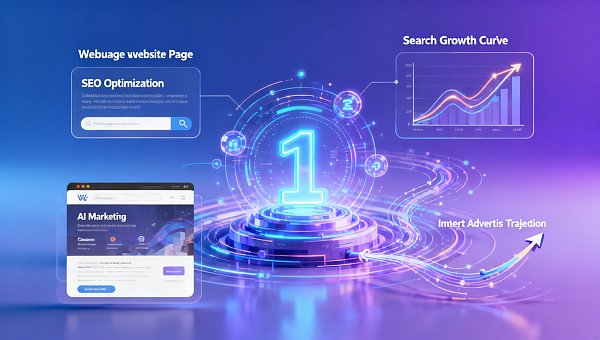
If the international digital marketing services of 2026 can be summarized in one sentence, it is this: moving from the era of traffic purchasing into an era of data-driven, AI-collaborative, full-funnel growth.
In the past, many companies understood international digital marketing mainly through several conventional actions, such as building a foreign trade website, doing Google SEO, running overseas ads, and operating social media accounts. But by 2026, these actions themselves have not disappeared; rather, the logic behind how they operate has clearly changed:
- The search entry points have changed: users no longer find suppliers only through traditional search engines; the influence of AI search, question-and-answer search, in-platform search, and social media search is increasing.
- Advertising has changed: AI+SEM advertising strategy consulting has become mainstream, and keywords, creatives, audiences, landing pages, and conversion paths are being optimized through systematic coordination.
- The role of websites has changed: foreign trade multilingual website development is no longer just about “translating into several languages,” but about balancing local expression, search visibility, conversion efficiency, and data accumulation.
- Service standards have changed: companies are no longer satisfied with “what was done,” but care more about “how many inquiries, orders, channel opportunities, and brand assets were generated.”
Therefore, when companies choose international digital marketing services in 2026, they can no longer just compare quotations and single service items; they must evaluate whether the service provider has full-funnel capabilities that integrate websites, SEO optimization, social media marketing, advertising delivery, and data analysis.
Why will business decision-makers place increasing importance on the combination of “SEO company + AI advertising + multilingual website”?
This is because the core contradiction in international business growth is becoming clearer: companies need both cost control and sustainable customer acquisition; both branding and conversions; both global expansion and local execution.
A single channel is becoming less and less able to solve the problem. If a company only does advertising, customer acquisition costs may continue to rise; if it only does SEO, the time needed to see results may put pressure on some companies; if it only does social media, content exposure may not necessarily convert into effective business opportunities; if it only builds a website, it can easily fall into the dilemma of “having a website but no traffic.” As a result, the market is beginning to place more emphasis on combination strategies:
- SEO companies help companies build medium- and long-term organic traffic assets, improve brand credibility, and increase reach to high-intent customers;
- AI+SEM advertising strategy consulting helps companies test and iterate faster, adjust bids dynamically, identify high-conversion keyword groups, and improve budget efficiency;
- Foreign trade multilingual website development undertakes the key tasks of receiving traffic, showcasing capabilities, building trust, and driving inquiries.
For corporate management, the value of this combination lies in the fact that it can produce short-term results while also accumulating long-term assets; it can support market expansion while also assisting channel recruitment, distributor enablement, and after-sales system building.
How will search behavior change in 2026, and why can’t companies focus only on traditional SEO?
In the search ecosystem of 2026, the most obvious change is that the “search results page” itself is being redefined. The content users see is no longer limited to traditional organic ranking links, but may also include AI summaries, Q&A results, video cards, map information, social media content, and industry platform pages.
This means that the goal of SEO should no longer be understood simply as “getting a certain keyword onto the first page,” but should be upgraded to: keeping the company continuously visible across multiple search scenarios for target users.
Companies need to pay attention to the following things:
- Structured content: website content should answer user questions more clearly instead of merely stacking product introductions.
- Localized multilingual expression: users in different countries have different search habits, and directly translated content can hardly achieve ideal rankings and conversions.
- Coordination between branded keywords and category keywords: users often search in multiple rounds before making a decision, so branded keyword defense and category keyword expansion need to be deployed simultaneously.
- On-site conversion capability: even if rankings improve, insufficient page persuasiveness still cannot generate effective leads.
Therefore, SEO services in 2026 are more like a “search growth project.” They do not only look at indexation and rankings, but also at the content system, page experience, regional market adaptation, and the quality of business opportunity conversions.
What practical changes will AI+SEM advertising strategy consulting bring?
What many companies care about is not the concept of AI itself, but rather: can it really help me reduce invalid clicks, improve inquiry quality, and reduce manual trial and error? The answer is yes, but only if it is used correctly.
In 2026, the focus of AI+SEM advertising strategy consulting is not on the three words “automation,” but on “more frequent data feedback and more refined advertising decisions.”
Specifically, the changes are mainly reflected in the following aspects:
- More dynamic keyword strategies: the system can quickly adjust advertising priorities based on market fluctuations, bidding environments, and conversion performance.
- Faster creative iteration: AI can assist in generating multiple versions of copy in batches, then use data to筛选 the better combinations.
- More accurate audience identification: combined with historical conversion data, visit behavior, and regional differences, advertising can better reach real purchasing audiences.
- More scientific budget allocation: budgets can be dynamically allocated by ROI across different countries, product lines, time periods, devices, and keyword packages.
- Coordinated landing page optimization: ad performance is no longer judged only by click-through rate, but also by metrics such as page dwell time, form submissions, and inquiry paths.
But companies should also be wary of a misunderstanding: AI cannot replace strategy. Without clear business goals, conversion definitions, and a data feedback mechanism, even the most advanced system may only end up “automatically consuming the budget.” Therefore, truly valuable services are not simply about opening advertising accounts for companies, but about helping them establish a delivery logic that can be reviewed, optimized, and scaled.
For foreign trade multilingual website development, why must it be upgraded from “website building” to a “growth-oriented website” in 2026?
Previously, many companies building overseas websites focused on the idea that “having an English website is enough.” But in 2026, this way of thinking is already far from sufficient for international marketing needs. That is because a website is no longer just a company profile page, but the core hub in a company’s overseas customer acquisition system.
A multilingual website with real growth value should at least have the following capabilities:
- Clear market positioning: the content focus seen by users in different countries and of different customer types should vary.
- SEO-friendly technical architecture: including language version management, URL structure, page speed, mobile adaptation, etc.
- High-conversion page design: not only showcasing products, but also designing inquiry entry points, trust evidence, and action guidance.
- Data tracking capability: being able to clearly see which channel users entered from, what they browsed, and at which step they dropped off.
- Continuous content update mechanism: the website should continuously accumulate case studies, industry knowledge, solutions, and frequently asked questions.
For dealer, distributor, and agent systems, multilingual websites also have a value that is often overlooked: they can become a unified digital platform for channel recruitment, training, after-sales instructions, and channel collaboration, reducing communication costs and improving brand output consistency.
When companies choose international digital marketing service providers, which capabilities should they focus on in 2026?
This is the question many business decision-makers care about most. There are many service providers in the market, but their capabilities vary greatly. By 2026, being able to operate only one channel is already far from enough to meet companies’ international growth needs.
It is recommended to focus on the following 5 dimensions:
- Whether they have full-funnel service capabilities
Can they connect intelligent website building, SEO optimization, social media marketing, advertising delivery, and data analysis, instead of operating each separately? - Whether they have technology and data capabilities
Can they use AI and big data for user insights, content optimization, delivery adjustments, and performance tracking? - Whether they understand localized operations
Can they adapt to different languages, cultures, market competition patterns, and purchasing decision habits? - Whether they focus on business results
Does reporting stop only at exposure, clicks, and follower volume, or can it extend to inquiries, deals, and channel growth? - Whether they have a long-term service mechanism
International marketing is not a one-time delivery, but requires continuous optimization, review, and collaborative support.
For example, for companies that value global growth, service models such as E-Mark Information Technology (Beijing) Co., Ltd., which are driven by artificial intelligence and big data while also covering intelligent website building, SEO optimization, social media marketing, and advertising delivery, are more in line with the development direction of international digital marketing services in 2026. Because what companies truly need is not the execution of a single action, but system capabilities that can form a growth loop.
How should readers in different roles best understand these changes?
Although everyone is paying attention to the same topic, the perspective differs by role.
For information researchers:
The focus is on whether the trends are real, which capabilities will become mainstream, and whether future service selection criteria will change. It is recommended to pay attention to changes in search entry points, the maturity of AI applications in ad delivery, and the impact of multilingual websites on SEO and conversions.
For business decision-makers:
The focus is on how to allocate budgets more steadily, which investments have greater long-term value, and how to reduce trial-and-error risks. It is recommended to prioritize integrated solutions of “website + marketing services” to reduce the costs and disconnects caused by coordination among multiple suppliers.
For after-sales maintenance personnel:
The focus is on whether the marketing system will increase delivery pressure, whether customer information will become more complete, and whether content updates will become more efficient. Growth-oriented websites and data-driven operations can instead help after-sales teams grasp customer needs and common problems more quickly.
For dealers, distributors, and agents:
The focus is on whether the brand side can provide stable leads, unified materials, and localized support. After digital marketing services are upgraded, they can not only strengthen brand exposure, but also provide stronger recruitment and enablement support for the channel system.
When companies engage in international digital marketing in 2026, which pitfalls are the easiest to fall into?
The hotter the trend becomes, the more pitfalls there usually are. When planning their strategy, companies should especially avoid the following situations:
- Treating AI as a万能 tool: AI can improve efficiency, but it cannot replace market judgment, content strategy, and business understanding.
- Looking only at short-term traffic: ignoring website assets, branded keyword building, and long-term SEO accumulation can easily cause customer acquisition costs to spiral out of control later.
- Assuming multilingual means machine translation: without localized context and industry-specific expression, it is difficult to build trust.
- Looking only at service price and not service structure: cheap single-item services may bring higher overall coordination costs.
- Confused performance evaluation standards: without unified data metrics and attribution rules, it is difficult to make correct decisions.
By the way, more and more companies, when planning international markets, are also beginning to incorporate compliance, sustainability, and brand governance into their overall development framework. Topics similar to Analysis of implementation paths for ESG to support the development of new quality productive forces in enterprises are receiving attention precisely because they also reflect that beyond growth, companies are placing greater emphasis on long-term development quality and brand trust building in global cooperation.
Summary: In 2026, the core change in international digital marketing services is not a tool upgrade, but an upgrade in growth logic
Returning to the core question: what new changes are there in international digital marketing services in 2026? The answer can be summarized in four points: the search ecosystem is becoming more fragmented, AI-driven advertising is becoming more in-depth, websites are placing greater emphasis on conversion and data, and services are moving toward fuller full-funnel integration.
For companies, what truly matters is not chasing every new concept, but establishing clear judgment:
- Is there a need to balance short-term customer acquisition with long-term brand assets?
- Is there a need to use a multilingual website to receive traffic from global markets?
- Is there a need to improve overall ROI with the help of SEO companies and AI+SEM advertising strategy consulting?
- Should a more integrated service provider be chosen—one that better understands technology, localization, and business growth?
If the answer is yes, then the key focus of international digital marketing deployment in 2026 is already very clear: no longer single-point experimentation, but building a more efficient and more sustainable global growth system around the integration of “website + marketing services.” Whoever completes this step earlier will have a better chance of taking the initiative in the new international competitive environment.
Related Articles


Related Products
 EasyCamp SaaS Smart Website Marketing SystemE-Yingbao SaaS Smart Website Marketing System: AI-powered, zero-code website building. Rapidly launch multilingual independent e-commerce sites in just 10 minutes. Global server acceleration and AI-driven SEO optimization empower businesses to efficiently connect with global markets. The seamless integration of technology and user-friendly operation makes building e-commerce sites incredibly simple.
 AI+SEM Intelligent Advertising Marketing SystemAI+SEM drives intelligent ad creation, empowering full-funnel precision advertising marketing. The system automatically generates weekly/monthly reports, AI recommends keywords and target countries, monitors core metrics in real-time with intelligent alerts, and enables one-click high-conversion ad solutions to help quickly acquire customers and improve ROI.
 AI+SEO Dual Engine Optimization ServiceEasyWin AI+SEO Dual Engine Optimization System leverages AI-powered keyword mining, content generation, and comprehensive technical optimization to help foreign trade enterprises acquire high-quality organic traffic, significantly improving search rankings and conversion rates.
 AI+SNS Social Media Marketing SystemYingbao AI+SNS Social Media Marketing System - Precision social capture for the social media era. Supports one-click content synchronization across major platforms like Facebook and LinkedIn. AI intelligently rewrites posts for enhanced relevance. 24/7 AI customer service and user profiling analysis empower businesses to efficiently expand into global markets.
 AI+SEO营销解决方案易营宝AI+SEO营销解决方案,通过AI批量写作、智能生成TDK、精准关键词扩词等功能,全面优化网站SEO效果,提升流量与转化率。助力企业构建高效智能网站新生态。
 AI+SEM Advertising Marketing SolutionsAI+SEM Advertising Marketing Solution leverages AI technology to deeply empower SEM ad campaigns. It automatically generates weekly/monthly reports using AI, presenting account data across multiple dimensions for comprehensive insights into campaign performance and trends. The system precisely recommends keywords and target countries, intelligently generates high-conversion ad copy, and enables one-click activation of efficient campaign plans to help businesses rapidly acquire customers. Simultaneously, it monitors core metrics in real time, intelligently identifies abnormal fluctuations, and issues timely alerts to ensure stable, high-return advertising results.
 Domain Name ServicesEasyWin provides professional domain name services, including intelligent queries, one-stop registration, brand protection, and full lifecycle management, helping businesses build a digital brand image.
 EasyOperate B2C Cross-Border E-Commerce Platform & Independent WebsiteEasyStore B2C Cross-border E-commerce Independent Store is an intelligent website building and cross-border e-commerce integrated solution independently developed by EasyStore Information Technology (Beijing) Co., Ltd. The system is specially designed for small and medium-sized as well as large export enterprises, integrating 'website building, operation, marketing, advertising, and conversion' into one, helping enterprises quickly establish cross-border e-commerce independent stores to achieve brand globalization and global sales growth.
The platform supports multiple languages, multiple currencies, and multi-channel marketing, with built-in AI intelligent translation and SEO optimization systems, suitable for mainstream markets such as Southeast Asia, Europe and America, Latin America, and the Middle East, assisting Chinese manufacturing enterprises in efficiently deploying international e-commerce strategies. SSL证书易营宝提供专业SSL安全证书服务,包括单域名和泛域名证书,确保网站数据传输加密、身份验证和完整性保护,助力企业建立安全可信的在线业务环境。









