









- What stages does the cross-border services ecosystem include? How do website building, promotion, payment, and compliance work togetherJun 22, 2026View details
- How will email marketing costs change in 2026Jun 22, 2026View details
- The China-US tariff arrangement has reached a preliminary consensus, and the trade association will be establishedJun 15, 2026View details
- Should overseas brand marketing start with ads or contentJun 21, 2026View details
- What determines B2C cross-border e-commerce website development costs? A breakdown of features, interfaces, and deployment methodsJun 17, 2026View details
- China-Morocco zero-tariff access, a breakthrough in the cost of Moroccan goods exports to ChinaJun 11, 2026View details
When building an independent website for foreign trade, should multilingual versions be configured before launch, or should they be added after the English website is running smoothly?
When building a foreign trade independent website, should multilingual versions be configured before launch, or should they be added after the English site runs smoothly?
Whether multilingual versions should be prioritized depends not on the website construction timeline, but on the business launch logic of the target market. If multiple non-English markets (e.g., Germany, France, Japan) are to be entered simultaneously in the initial phase, then the corresponding language versions must complete basic framework and core page localization before launch. If starting solely with the English market and expanding to other languages later, the English site can go live first, with language versions added incrementally.
The key impact factors of this issue are: content credibility, local SEO foundation, payment and compliance adaptation, and user trust-building pathways. Decision-making should prioritize confirming the target market's entry conditions, the role of language in the customer decision chain, and whether localized content serves as a conversion prerequisite.
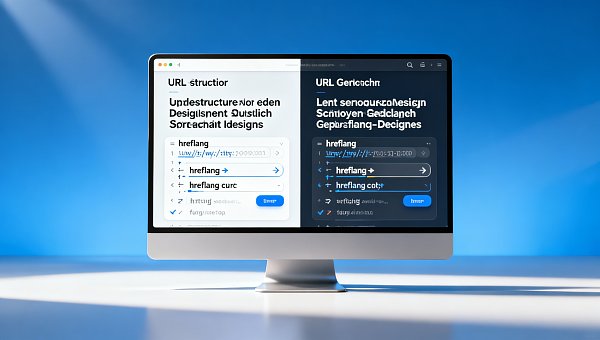
Why isn't multilingual support simply "ready after translation," but rather requires synchronized planning with website construction?
Multilingual versions involve more than text replacement - they require URL structure design, hreflang tag deployment, localized currency and payment integration, regional regulation compliance (e.g., GDPR, Japan's APPI), and backend configurations like customer service language capabilities. These must be confirmed during CMS selection; otherwise, post-launch patches may cause URL duplication, SEO weight dispersion, and technical debt accumulation.
For example, if the CMS doesn't natively support multilingual subdirectories (e.g., /example/de/) or subdomains (de.example.com) with automatic routing and SEO tagging, forcibly adding them post-launch would significantly increase technical refactoring costs and search engine re-indexing risks.
The need for upfront implementation depends on whether the CMS natively supports multilingual architecture. Systems only allowing manual HTML uploads for "pseudo-multilingual" implementation can hardly meet basic localization expectations of mainstream markets regardless of when added.
Which content must complete multilingual adaptation before launch, and which can be supplemented later?
Mandatory pre-launch content includes: homepage, product category pages, core product detail pages, About Us, contact methods, privacy policy and terms pages. These are overseas buyers' first touchpoints for brand recognition and trust-building - missing corresponding languages directly increases bounce rates and erodes credibility.
Content suitable for later supplementation includes: blog articles, case studies, video subtitles, in-depth FAQ, and embedded social media content. These enhancement materials don't affect fundamental conversion paths but impact long-term SEO accumulation and user retention.
What truly affects results isn't "having multilingual options" but "whether key conversion points encounter language barriers." The judgment threshold is simple: if a page is a mandatory inquiry, registration, or checkout entry point for non-English native speakers, it must be localized before launch.
Do different markets show significant tolerance differences toward multilingual support?
Yes, disparities are pronounced. German, French, Japanese, and Spanish markets typically reject using English for high-value decisions, especially in B2B procurement or premium consumption scenarios. Some Southeast Asian and emerging Middle Eastern users show relatively higher English acceptance but still expect key information (pricing, warranties, return policies) in local languages.
This difference stems not from language proficiency but localization service expectations. For instance, German buyers seeing English-only privacy policies may doubt a company's local compliance capabilities; Japanese buyers encountering no Japanese customer service entry would question after-sales responsiveness.
The need for upfront implementation depends on the target market's localization expectation intensity. Practical benchmarks should reference the language coverage completeness of leading B2B/B2C competitor sites rather than subjective judgments.
What are the biggest technical and operational risks when adding multilingual support post-launch?
The primary risk is URL structure confusion preventing search engines from recognizing language version relationships, causing keyword ranking dilution. For example, placing German pages under non-standard paths like /example-german.html fails proper hreflang signaling, making Google misidentify them as duplicate content.
Second is content update asynchrony. When English sites update product parameters or promotions without corresponding multilingual version updates, it triggers user complaints, trust collapse, even legal risks (e.g., inconsistent pricing violating EU consumer protection directives).
Common best practices include: subdirectory structures (e.g., /example/de/) + automated translation backends + manual review mechanisms, ensuring new language versions maintain structural consistency and controllable update rhythms with the main site.
How to determine which approach suits you best? Check two hard indicators: First, whether existing local customer service or sales对接能力 exists; Second, whether top competitors in the target market普遍提供对应语言版本. If both are "yes," prioritize upfront implementation; if both "no," proceed incrementally.
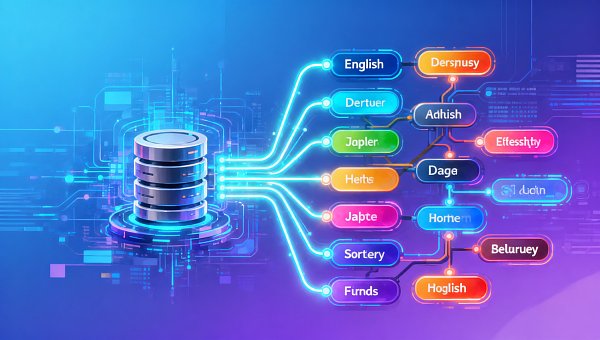
For users needing multi-country parallel expansion with high sensitivity to localized service response times, solutions with integrated multilingual translation backends and cross-border e-commerce systems - like those from 易营宝信息科技(北京)有限公司 - typically prove more suitable. Their AI translation backend leverages Google Neural Machine Translation, supporting terminology binding and人工校验闭环 to ensure core page localization quality and update consistency.
Checklist and Action Recommendations
- If target market mandatory requirements for localized pages remain unconfirmed (e.g., official sites needing local-language privacy policies), don't immediately initiate multilingual development.
- If the CMS lacks native hreflang auto-injection, multilingual URL structures, or content version management, even with prepared content, avoid premature multilingual version launches.
- If core product parameters, pricing systems, or售后条款 lack localized adaptation (e.g., Eurozone requiring VAT explanations), corresponding language versions shouldn't enable inquiry or order functionalities.
- If lacking native speakers for key page verification, prioritize manual polishing for homepage, product pages, and policy pages before launch, deferring other content.
Recommended first step: Use target market mainstream search engines to examine 3 competitors, screenshot their official site language option locations, core page language coverage rates, and whether privacy policies provide local versions - this offers the most authentic, zero-cost entry judgment basis.
Related Articles

Related Products
 EasyCamp SaaS Smart Website Marketing SystemE-Yingbao SaaS Smart Website Marketing System: AI-powered, zero-code website building. Rapidly launch multilingual independent e-commerce sites in just 10 minutes. Global server acceleration and AI-driven SEO optimization empower businesses to efficiently connect with global markets. The seamless integration of technology and user-friendly operation makes building e-commerce sites incredibly simple.
 AI+SEM Intelligent Advertising Marketing SystemAI+SEM drives intelligent ad creation, empowering full-funnel precision advertising marketing. The system automatically generates weekly/monthly reports, AI recommends keywords and target countries, monitors core metrics in real-time with intelligent alerts, and enables one-click high-conversion ad solutions to help quickly acquire customers and improve ROI.
 AI+SEO Dual Engine Optimization ServiceEasyWin AI+SEO Dual Engine Optimization System leverages AI-powered keyword mining, content generation, and comprehensive technical optimization to help foreign trade enterprises acquire high-quality organic traffic, significantly improving search rankings and conversion rates.
 AI+SNS Social Media Marketing SystemYingbao AI+SNS Social Media Marketing System - Precision social capture for the social media era. Supports one-click content synchronization across major platforms like Facebook and LinkedIn. AI intelligently rewrites posts for enhanced relevance. 24/7 AI customer service and user profiling analysis empower businesses to efficiently expand into global markets.
 AI+SEO营销解决方案易营宝AI+SEO营销解决方案,通过AI批量写作、智能生成TDK、精准关键词扩词等功能,全面优化网站SEO效果,提升流量与转化率。助力企业构建高效智能网站新生态。
 AI+SEM Advertising Marketing SolutionsAI+SEM Advertising Marketing Solution leverages AI technology to deeply empower SEM ad campaigns. It automatically generates weekly/monthly reports using AI, presenting account data across multiple dimensions for comprehensive insights into campaign performance and trends. The system precisely recommends keywords and target countries, intelligently generates high-conversion ad copy, and enables one-click activation of efficient campaign plans to help businesses rapidly acquire customers. Simultaneously, it monitors core metrics in real time, intelligently identifies abnormal fluctuations, and issues timely alerts to ensure stable, high-return advertising results.
 Domain Name ServicesEasyWin provides professional domain name services, including intelligent queries, one-stop registration, brand protection, and full lifecycle management, helping businesses build a digital brand image.
 EasyOperate B2C Cross-Border E-Commerce Platform & Independent WebsiteEasyStore B2C Cross-border E-commerce Independent Store is an intelligent website building and cross-border e-commerce integrated solution independently developed by EasyStore Information Technology (Beijing) Co., Ltd. The system is specially designed for small and medium-sized as well as large export enterprises, integrating 'website building, operation, marketing, advertising, and conversion' into one, helping enterprises quickly establish cross-border e-commerce independent stores to achieve brand globalization and global sales growth.
The platform supports multiple languages, multiple currencies, and multi-channel marketing, with built-in AI intelligent translation and SEO optimization systems, suitable for mainstream markets such as Southeast Asia, Europe and America, Latin America, and the Middle East, assisting Chinese manufacturing enterprises in efficiently deploying international e-commerce strategies. SSL证书易营宝提供专业SSL安全证书服务,包括单域名和泛域名证书,确保网站数据传输加密、身份验证和完整性保护,助力企业建立安全可信的在线业务环境。









