









- The China-US tariff arrangement has reached a preliminary consensus, and the trade association will be establishedJun 15, 2026View details
- What determines B2C cross-border e-commerce website development costs? A breakdown of features, interfaces, and deployment methodsJun 17, 2026View details
- China-Morocco zero-tariff access, a breakthrough in the cost of Moroccan goods exports to ChinaJun 11, 2026View details
- What signal should be released for the suspension of exports to JapanJun 10, 2026View details
- China's May LNG imports rebounded, with increased volumes from Russia and Canada filling the Middle East supply gapJun 10, 2026View details
- Will GEO change its SEO strategy?Jun 04, 2026View details
- What types of businesses are end-to-end solutions suitable for?Jun 03, 2026View details
- 2026 Global Growth Channel TrendsJun 02, 2026View details
Why are there such significant price differences in Middle East website systems? From basic template versions to custom development versions, a detailed explanation of the actual delivery scope for 5 configuration tiers
Why do website building systems in the Middle East vary in price by several times? From basic templates to customized AI Multilingual Website Systems, the actual delivery scope differs significantly across the five configuration options. E-Creation, a foreign trade marketing system provider specializing in cross-border website building services and B2B foreign trade solutions, provides an in-depth analysis of the logic behind Middle Eastern website building system pricing.
Why do website building prices in the Middle East range from tens of thousands to hundreds of thousands of yuan?
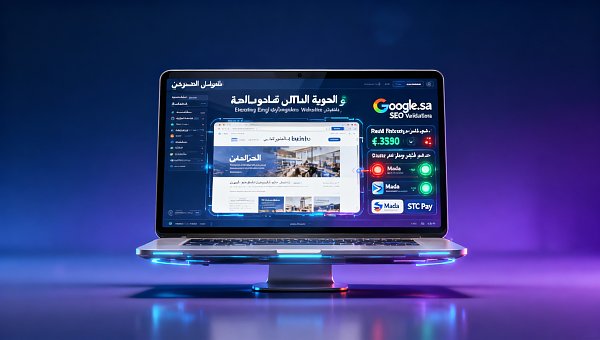
The core of the price difference lies not in the "website building" itself, but in whether the system is truly adapted to the real operating scenarios of the Middle Eastern market—including Arabic right-hand layout, local payment gateways (such as STC Pay, Mada), embedding of GCC country compliance terms, real-time exchange rate linkage for multiple currencies, and pre-configured SEO structured data for countries such as Saudi Arabia, the UAE, and Qatar.
E-Creative has served over 3,200 Middle Eastern B2B companies and found that approximately 67% of clients confused the fundamental difference between "being able to go live" and "being able to acquire customers" when making their initial selection. The average delivery cycle for the basic template version is 3-5 business days, while complete localized customized development requires four stages: requirements alignment (7 days), bilingual content architecture design (5 days), compliance testing (3 days), and 30 days of post-launch performance optimization.
The key differences lie in: whether it has built-in crawling and adaptation rules for major Middle Eastern search engines (such as Google.sa and Yandex.ae); whether it supports localized integration with WhatsApp Business API and Instagram Shopping; and whether it provides Arabic native-language content review and SEO meta tag optimization services—these three capabilities directly determine the efficiency of a website in acquiring organic traffic in the target market.
Comparison of actual delivery range for the 5 configuration levels
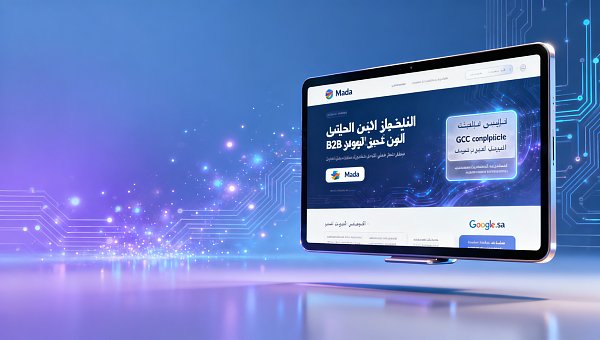
The following table is compiled based on YiYingBao's delivery data to Middle Eastern customers in Q2 2024, covering typical demand scenarios from initial launch to full-chain overseas expansion:
The two higher-tier options not listed in the table (AI Intelligent Operations Edition and Full-Link Overseas Customized Edition) include features such as dynamic multilingual content generation, automatic WhatsApp inquiry distribution, and integration with local KOL collaboration resource pools. The AI Multilingual Website System customized version integrates an average of six types of third-party systems (ERP, CRM, logistics tracking, customs declaration, e-invoices, and tax compliance platforms), with an implementation cycle of 6–8 weeks, requiring full-time on-site support from a GCC-certified technical consultant.
Three types of hard indicators that must be verified when making procurement decisions
When procuring website building systems for the Middle Eastern market, one should not only look at the quotation, but also focus on verifiable delivery capabilities:
- Arabic localization quality: A glossary (including technical terms, industry idioms, and instructions for handling religiously sensitive words) completed by native-speaker translators is required, not a machine translation or literal translation;
- Payment success rate benchmark: Mada card payment failure rate ≤ 2.3%, STC Pay average response time < 1.2 seconds (based on the 2024 Saudi Central Bank Payment Gateway White Paper standard).
- SEO structured data pass rate: The Product Schema markup compliance rate is ≥98% when verified using the Google Rich Results Test tool, and it supports dynamic updates of inventory status and price.
All of Yiyingbao's Middle East projects implement a "three-verification mechanism": localization verification (on-site testing by the Dubai team), compliance verification (admission of a suitability opinion letter from a Saudi law firm), and performance verification (first-month organic traffic growth ≥35% or ROI meeting the target).
Common Misconceptions and Risk Warnings
Myth 1: "Buying a template = quick deployment," ignoring the lack of local trust infrastructure.
More than 58% of basic template customers encountered complaints from Arabic users about "page glitches" and "unclickable buttons" within 3 months of going live. The root cause was that the CSS RTL rewrite engine was not enabled, which led to abnormal font rendering and failure of interactive logic.
Myth 2: "Outsourced translation is enough," but this lacks cultural context adaptation.
The literal translation of "Free Shipping" as "شحن مجاني" in Saudi Arabia would be understood as "no shipping fee". It should actually be expressed as "توصيل مجاني داخل المملكة العربية السعودية" (free shipping within Saudi Arabia only), otherwise it will lead to a customer complaint rate increase of more than 40%.
Myth 3: Ignoring data sovereignty requirements creates compliance risks.
Under Saudi Arabia's Personal Data Protection Law (PDPL), websites targeting Saudi users must explicitly state the location of their data storage. E-Business's Middle East clients all utilize AWS Bahrain region nodes for deployment and are provided with SAMA-certified data processing protocol templates.
Why choose EasyCare? — A verifiable delivery commitment
We are not a website building tool provider, but a joint implementation partner for digital transformation in the Middle East market. Since our establishment in 2013, we have provided global growth services to over 100,000 enterprises, with a 73% repurchase rate among our Middle Eastern clients and an average annual order conversion rate increase of 28.6%.
You can get it immediately:
① Free Middle East market access assessment (including diagnosis in three dimensions: language, payment, and compliance);
② Standard localized 72-hour prototype demo (including Arabic RTL real device preview);
③ Customized solutions include one-on-one support from GCC-certified engineers;
④ All projects sign a performance-based agreement—if the organic traffic in the first month does not reach the agreed threshold, the service fee will be refunded proportionally.
To confirm the collaborative implementation path of enterprise financial shared service model exploration and Middle East website building system under the new situation , or to obtain a customized quotation list for your industry (including a detailed list of deliverables and acceptance standards for each level), please contact YiYingBao Middle East business hotline immediately. We will arrange a solution architect with Saudi SAMA certification to conduct in-depth requirements alignment for you.
Related Articles



Related Products
 EasyCamp SaaS Smart Website Marketing SystemE-Yingbao SaaS Smart Website Marketing System: AI-powered, zero-code website building. Rapidly launch multilingual independent e-commerce sites in just 10 minutes. Global server acceleration and AI-driven SEO optimization empower businesses to efficiently connect with global markets. The seamless integration of technology and user-friendly operation makes building e-commerce sites incredibly simple.
 AI+SEM Intelligent Advertising Marketing SystemAI+SEM drives intelligent ad creation, empowering full-funnel precision advertising marketing. The system automatically generates weekly/monthly reports, AI recommends keywords and target countries, monitors core metrics in real-time with intelligent alerts, and enables one-click high-conversion ad solutions to help quickly acquire customers and improve ROI.
 AI+SEO Dual Engine Optimization ServiceEasyWin AI+SEO Dual Engine Optimization System leverages AI-powered keyword mining, content generation, and comprehensive technical optimization to help foreign trade enterprises acquire high-quality organic traffic, significantly improving search rankings and conversion rates.
 AI+SNS Social Media Marketing SystemYingbao AI+SNS Social Media Marketing System - Precision social capture for the social media era. Supports one-click content synchronization across major platforms like Facebook and LinkedIn. AI intelligently rewrites posts for enhanced relevance. 24/7 AI customer service and user profiling analysis empower businesses to efficiently expand into global markets.
 AI+SEO营销解决方案易营宝AI+SEO营销解决方案,通过AI批量写作、智能生成TDK、精准关键词扩词等功能,全面优化网站SEO效果,提升流量与转化率。助力企业构建高效智能网站新生态。
 AI+SEM Advertising Marketing SolutionsAI+SEM Advertising Marketing Solution leverages AI technology to deeply empower SEM ad campaigns. It automatically generates weekly/monthly reports using AI, presenting account data across multiple dimensions for comprehensive insights into campaign performance and trends. The system precisely recommends keywords and target countries, intelligently generates high-conversion ad copy, and enables one-click activation of efficient campaign plans to help businesses rapidly acquire customers. Simultaneously, it monitors core metrics in real time, intelligently identifies abnormal fluctuations, and issues timely alerts to ensure stable, high-return advertising results.
 Domain Name ServicesEasyWin provides professional domain name services, including intelligent queries, one-stop registration, brand protection, and full lifecycle management, helping businesses build a digital brand image.
 EasyOperate B2C Cross-Border E-Commerce Platform & Independent WebsiteEasyStore B2C Cross-border E-commerce Independent Store is an intelligent website building and cross-border e-commerce integrated solution independently developed by EasyStore Information Technology (Beijing) Co., Ltd. The system is specially designed for small and medium-sized as well as large export enterprises, integrating 'website building, operation, marketing, advertising, and conversion' into one, helping enterprises quickly establish cross-border e-commerce independent stores to achieve brand globalization and global sales growth.
The platform supports multiple languages, multiple currencies, and multi-channel marketing, with built-in AI intelligent translation and SEO optimization systems, suitable for mainstream markets such as Southeast Asia, Europe and America, Latin America, and the Middle East, assisting Chinese manufacturing enterprises in efficiently deploying international e-commerce strategies. SSL证书易营宝提供专业SSL安全证书服务,包括单域名和泛域名证书,确保网站数据传输加密、身份验证和完整性保护,助力企业建立安全可信的在线业务环境。









