









- The China-US tariff arrangement has reached a preliminary consensus, and the trade association will be establishedJun 15, 2026View details
- What determines B2C cross-border e-commerce website development costs? A breakdown of features, interfaces, and deployment methodsJun 17, 2026View details
- China-Morocco zero-tariff access, a breakthrough in the cost of Moroccan goods exports to ChinaJun 11, 2026View details
- What signal should be released for the suspension of exports to JapanJun 10, 2026View details
- China's May LNG imports rebounded, with increased volumes from Russia and Canada filling the Middle East supply gapJun 10, 2026View details
- Will GEO change its SEO strategy?Jun 04, 2026View details
- What types of businesses are end-to-end solutions suitable for?Jun 03, 2026View details
- 2026 Global Growth Channel TrendsJun 02, 2026View details
Why Is It So Hard to Improve the Conversion Rate of Shenzhen Foreign Trade Websites Right from the Homepage
When the conversion rate of a Shenzhen foreign trade website remains stuck at the homepage for a long time, the problem is usually not “too few visitors,” but that the homepage fails to accomplish three things within the first few seconds: help target customers understand who you are, what problems you can solve, and why it is worth continuing the conversation. This is especially true for Shenzhen foreign trade companies, where traffic sources are more fragmented, customer decision-making cycles are longer, and overseas visitors place greater importance on professionalism and trust. If the homepage underperforms in information structure, loading speed, multilingual communication, and action guidance, even a large promotion budget will struggle to generate effective inquiries. This article will combine common practices among Shenzhen suppliers to break down the key reasons why homepage conversion rates fail to improve, as well as the areas that are more worthwhile to optimize first.
Why the conversion rate of Shenzhen foreign trade websites most easily gets stuck at the homepage
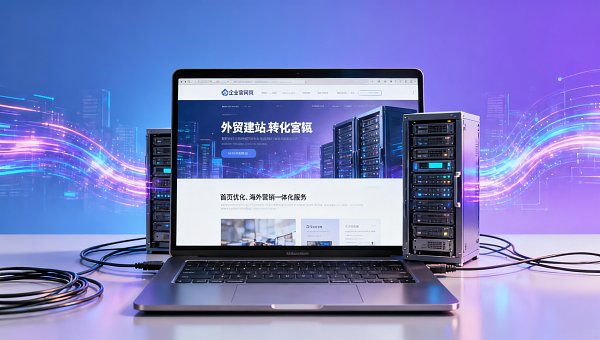
Many companies first suspect that their ads are not precise enough, their SEO traffic is insufficient, or their sales staff are not following up in time. But judging from actual data, the homepage is often the stage in the conversion funnel where the most serious loss occurs. The reason is simple: after overseas buyers, distributors, and project managers enter the website, they usually conduct an initial screening within a very short time. If the homepage cannot quickly establish the perception of being “trustworthy, professional, and suitable for cooperation,” users will not continue to click into product pages, case study pages, or contact pages.
Several common problems on Shenzhen foreign trade website homepages include:
- Visually looking “like a template site,” failing to reflect the company’s capabilities and industry differentiation;
- The hero section only emphasizes the company slogan, without clearly explaining products, application scenarios, and service capabilities;
- Slow loading speed, poor mobile experience, and sluggish access for overseas visitors;
- English or multilingual copy that is not natural, but merely direct translation, lacking a sense of business communication;
- Homepage content is arranged according to the company’s own thinking rather than the customer’s decision-making logic;
- Lack of clear CTA, such as “Request Quote”“Talk to Expert”“Download Catalog”.
For business decision-makers, this means investment in website building, promotion, SEO, and even advertising budgets is being heavily wasted at the homepage stage; for execution teams, this means the issue may not lie in “not knowing how to buy traffic,” but in the website’s insufficient ability to convert that traffic.
After target customers enter the homepage, what are they evaluating first
The homepage of a foreign trade website is not a corporate publicity wall, but a page where visitors assess risk. When an overseas buyer, distributor, or project manager first enters the website, they are usually making quick judgments about the following questions:
- What exactly does this company do, and does it match my procurement needs?
- Is it a manufacturer, a brand owner, a solution provider, or a trading intermediary?
- Which markets, customers, or projects has it served, and does it have delivery capability?
- If I contact it, can I get a quotation, catalog, solution, or technical support?
- Is this website professional, stable, and trustworthy enough to be worth continuing communication?
Therefore, the homepage should not only display “how many years we have been established” or “we are very professional,” but should instead put the information customers care about most upfront. For example, whether you are engaged in industrial equipment, building materials, electronics, photovoltaics, or new energy supporting solutions, the first screen of the homepage should clearly tell the other party: whom you serve, what problems you solve, where your advantages lie, and how they can contact you next.
Especially in new energy and project-based industries, customers are more sensitive to technical support, delivery capability, supply chain stability, and global service capability. Website solutions for B-end customers in areas such as photovoltaics, new energy often place greater emphasis on the closed-loop conversion from brand presentation to project lead acquisition, rather than simply creating a “good-looking” homepage.
When homepage conversion fails to improve, it is usually stuck at these 5 key points
1. The hero section does not explain the value in one sentence
Many homepage hero sections only use large images and slogans, but provide no core information. The right approach is to use one clear statement to tell customers your business positioning, core products, and target service audience. For example: providing customized supply and full lifecycle services for global new energy enterprises. This kind of expression improves dwell time and clicks far better than abstract slogans.
2. Slow loading speed directly causes the loss of high-intent traffic
Why is website loading speed so important? Because overseas visitors do not have the patience to wait for a slow-loading homepage. Especially when large images, videos, and animations are heavily stacked, the first screen cannot finish rendering for a long time, and the bounce rate rises significantly. Many Shenzhen companies target markets in Europe, the United States, the Middle East, and Southeast Asia. If server deployment, caching mechanisms, image compression, and code optimization are not properly handled, the homepage experience will directly drag down conversion.
3. A multilingual site is only translated, not localized
The difference between a multilingual foreign trade website and a regular website is not just the number of languages, but that the communication targets, decision-making methods, and trust mechanisms are completely different. A regular corporate website can focus mainly on brand presentation, but a foreign trade website must consider the reading habits, terminology usage, page structure, and conversion actions of users in the target market. Mechanical direct translation makes the page feel stiff and unprofessional, and may even cause customers to misunderstand your business capabilities.
4. Lack of trust evidence makes customers unwilling to leave their information
If the homepage lacks certifications, customer distribution, project cases, partner brands, real factory/team photos, delivery processes, and similar content, customers will find it difficult to judge whether you truly have the capability to execute. B-end customers in particular will not submit an inquiry just because of a phrase like “high-quality service.” They care more about whether you can deliver steadily, execute according to standards, and understand project requirements.
5. Weak CTA design leaves users unsure what to do next
Many homepages place only one “Contact Us” button at the bottom, which is very unfriendly to conversion. The homepage should provide multi-level entry points based on customer intent, for example:
- Get a Quote Now
- Download Product Catalog
- Submit Project Requirements
- Contact a Technical Consultant
- View Success Stories
Different roles focus on different things when entering the website. Buyers care more about price and delivery, project managers care more about solutions and technical support, and agents care more about cooperation models and brand strength. The homepage needs to provide reasonable paths for different audiences.
How to improve the conversion rate of foreign trade websites: what Shenzhen companies should prioritize optimizing
If budget and time are limited, it is not recommended to start by redesigning all pages on a large scale. A more efficient approach is to prioritize the parts of the homepage that have the greatest impact on closing deals.
Step 1: Rewrite the information architecture of the hero section
It is recommended that the hero section include at least four items:
- Clear business positioning
- Core product/service categories
- Target market or customer type
- Clear action button
The hero section is not meant to look “flashy,” but to help customers make quick judgments.
Step 2: Turn company strengths into evidence customers can understand
Do not just write “rich experience, reliable quality,” but convert it into specific expressions, such as:
- Number of countries and regions served
- Key industry customer types
- Certifications and testing standards
- Delivery cycle and production capacity description
- Typical project results
The more specific it is, the more it can reduce customers’ decision-making concerns.
Step 3: Make the homepage structure align more closely with the customer decision-making process
A more recommended homepage logic is usually: hero value statement → core products/solutions → application scenarios → advantages and capabilities → cases/customers → certifications and guarantees → CTA. This structure is more in line with foreign trade conversion patterns than putting “company profile first, leadership message first.”
Step 4: Prioritize mobile optimization and overseas access speed
Shenzhen companies have broad customer sources, and the proportion of mobile access is not low. The homepage must ensure that mobile fonts, buttons, forms, and images are clearly adapted, avoiding issues such as being hard to tap, hard to read, or slow to load. Speed optimization is not just a technical item, but a real conversion item.
Step 5: Use data to diagnose homepage issues instead of redesigning by intuition
It is recommended to focus on tracking these indicators:
- Homepage bounce rate
- Hero section dwell time
- Button click-through rate
- Proportion of users entering product pages/contact pages from the homepage
- Conversion differences among visitors from different countries
If traffic is not low, but clicks from the homepage to inner pages are very low, the problem is likely in the homepage information architecture; if clicks are normal but inquiries are few, the problem may lie in the form, trust content, or quotation process.
The homepage is not a “storefront project,” but the most critical filter before closing a deal
Many companies treat the homepage as a brand display area, but for foreign trade business, it is more like a high-intensity filter: within a few seconds, it determines whether customers will continue browsing, whether they will trust you, and whether they are willing to send an inquiry. Especially in the highly competitive Shenzhen market, where there are many similar suppliers, customers will not give each website much time.
This is also why some industry-specific websites place greater emphasis on “grand visual storytelling and rigorous logical module layout,” and through the logical flow of expert-level solutions, connect brand, product, supply chain, service, and project acquisition into one integrated whole. For new energy companies, if the homepage can also reflect responsive design, partner display, customized services, and core value in the global energy transition, conversion performance is usually better than simply stacking product parameters. Directions such as photovoltaics, new energy are essentially solving the trust and capability proof issues that B-end customers care about most.
Summary: if the conversion rate of a Shenzhen foreign trade website is not improving, do not rush to increase traffic first
If the conversion rate of a Shenzhen foreign trade website has been stuck at the homepage, the first priority is not to check “whether there is traffic,” but whether the homepage has accomplished these three things: communicating value, building trust, and guiding action. What truly affects results is often unclear hero messaging, slow loading speed, unprofessional multilingual communication, insufficient trust evidence, and unreasonable CTA design.
For business managers, homepage optimization is one of the fastest ways to improve promotion ROI; for execution teams, it is better to first strengthen the homepage’s conversion capability, and then scale SEO, advertising, and social media traffic for more stable results. To judge whether a homepage is effective, do not look at whether it is “good-looking,” but whether it helps target customers understand faster, stay longer, and feel more confident about reaching out. That is the real starting point for improving foreign trade website conversion.
Related Articles



Related Products
 EasyCamp SaaS Smart Website Marketing SystemE-Yingbao SaaS Smart Website Marketing System: AI-powered, zero-code website building. Rapidly launch multilingual independent e-commerce sites in just 10 minutes. Global server acceleration and AI-driven SEO optimization empower businesses to efficiently connect with global markets. The seamless integration of technology and user-friendly operation makes building e-commerce sites incredibly simple.
 AI+SEM Intelligent Advertising Marketing SystemAI+SEM drives intelligent ad creation, empowering full-funnel precision advertising marketing. The system automatically generates weekly/monthly reports, AI recommends keywords and target countries, monitors core metrics in real-time with intelligent alerts, and enables one-click high-conversion ad solutions to help quickly acquire customers and improve ROI.
 AI+SEO Dual Engine Optimization ServiceEasyWin AI+SEO Dual Engine Optimization System leverages AI-powered keyword mining, content generation, and comprehensive technical optimization to help foreign trade enterprises acquire high-quality organic traffic, significantly improving search rankings and conversion rates.
 AI+SNS Social Media Marketing SystemYingbao AI+SNS Social Media Marketing System - Precision social capture for the social media era. Supports one-click content synchronization across major platforms like Facebook and LinkedIn. AI intelligently rewrites posts for enhanced relevance. 24/7 AI customer service and user profiling analysis empower businesses to efficiently expand into global markets.
 AI+SEO营销解决方案易营宝AI+SEO营销解决方案,通过AI批量写作、智能生成TDK、精准关键词扩词等功能,全面优化网站SEO效果,提升流量与转化率。助力企业构建高效智能网站新生态。
 AI+SEM Advertising Marketing SolutionsAI+SEM Advertising Marketing Solution leverages AI technology to deeply empower SEM ad campaigns. It automatically generates weekly/monthly reports using AI, presenting account data across multiple dimensions for comprehensive insights into campaign performance and trends. The system precisely recommends keywords and target countries, intelligently generates high-conversion ad copy, and enables one-click activation of efficient campaign plans to help businesses rapidly acquire customers. Simultaneously, it monitors core metrics in real time, intelligently identifies abnormal fluctuations, and issues timely alerts to ensure stable, high-return advertising results.
 Domain Name ServicesEasyWin provides professional domain name services, including intelligent queries, one-stop registration, brand protection, and full lifecycle management, helping businesses build a digital brand image.
 EasyOperate B2C Cross-Border E-Commerce Platform & Independent WebsiteEasyStore B2C Cross-border E-commerce Independent Store is an intelligent website building and cross-border e-commerce integrated solution independently developed by EasyStore Information Technology (Beijing) Co., Ltd. The system is specially designed for small and medium-sized as well as large export enterprises, integrating 'website building, operation, marketing, advertising, and conversion' into one, helping enterprises quickly establish cross-border e-commerce independent stores to achieve brand globalization and global sales growth.
The platform supports multiple languages, multiple currencies, and multi-channel marketing, with built-in AI intelligent translation and SEO optimization systems, suitable for mainstream markets such as Southeast Asia, Europe and America, Latin America, and the Middle East, assisting Chinese manufacturing enterprises in efficiently deploying international e-commerce strategies. SSL证书易营宝提供专业SSL安全证书服务,包括单域名和泛域名证书,确保网站数据传输加密、身份验证和完整性保护,助力企业建立安全可信的在线业务环境。









