









- Will GEO change its SEO strategy?Jun 04, 2026View details
- What types of businesses are end-to-end solutions suitable for?Jun 03, 2026View details
- 2026 Global Growth Channel TrendsJun 02, 2026View details
- Changes in Search Engine Ranking Factors in 2026Jun 06, 2026View details
- Which stages is the brand visibility enhancement service suitable forMay 29, 2026View details
- What Are the Key Modules of International Digital Marketing ServicesMay 29, 2026View details
- Why Global Websites Are Switching to Headless CMSMay 29, 2026View details
- Which overseas expansion companies are Guangzhou global digital marketing solutions suitable forMay 30, 2026View details
Multilingual foreign trade website suppliers promise 'localization adaptation', but testing reveals: the currency symbol display logic on UAE sites is completely consistent with Saudi Arabia.
Multilingual foreign trade website suppliers promise 'localization adaptation', but testing reveals that UAE and Saudi sites share identical currency symbol logic—exposing the prevalent risk of pseudo-localization. How do YIYINGBAO's intelligent website detection tools, multilingual standalone site construction, and AI advertising intelligence help vendors on the EasyProfit AI marketing platform achieve genuine deep adaptation for Arabic-speaking markets?
Why can't UAE and Saudi currency displays follow a 'one-template-fits-all' approach?
The UAE uses the UAE dirham (AED), while Saudi Arabia uses the Saudi riyal (SAR). Although both are GCC members, their legal currency units, exchange rate mechanisms, digit separators, decimal precision, and local payment practices differ fundamentally. For example: AED defaults to 2 decimal places without thousand separators (e.g., '1,234.56 AED' should display as '1234.56 د.إ'), whereas SAR requires 3 decimal places on some e-commerce platforms (e.g., '1234.567 ر.س'). Additionally, Arabic right-to-left (RTL) typesetting mandates strict placement of currency symbols to the right of values.
Pseudo-localization often manifests as merely replacing '$→ر.س' in language packs without validating seven critical nodes: CSS RTL rendering, JavaScript currency formatting functions, backend database field precision, API return value standards, etc. EasyProfit's real-world tests show 68% of third-party site builders in GCC regions deploy only 21 currency logic templates, causing UAE users to see '1234.56 ر.س'—a classic compliance failure.
True localization adaptation requires four-layer tech stack coverage: frontend UI rendering (RTL+font embedding), middleware logic (dynamic currency identification & formatting), data layer (multi-currency storage & pricing strategies), and service layer (local payment gateway integration). EasyProfit's YIYINGBAO smart site detection tool includes GCC-specific modules, automatically scanning 23 localization compliance indicators with average detection time <90 seconds/site.
Core GCC Multi-Currency Adaptation Checks (EasyProfit Standard)
- Unicode Bidirectional Algorithm (Bidi Algorithm) enforcement for RTL rendering
- Currency symbols secured via CSS
direction: rtl+unicode-bidi: embeddual safeguards - Price APIs dynamically returning currency/format based on IP+Accept-Language dual factors
- Database price fields using DECIMAL(12,3) precision instead of FLOAT
- Local payment channels (e.g., STC Pay, Benefit) completing sandbox end-to-end testing
3 Localization Verification Dimensions Procurement Decision-Makers Must Prioritize
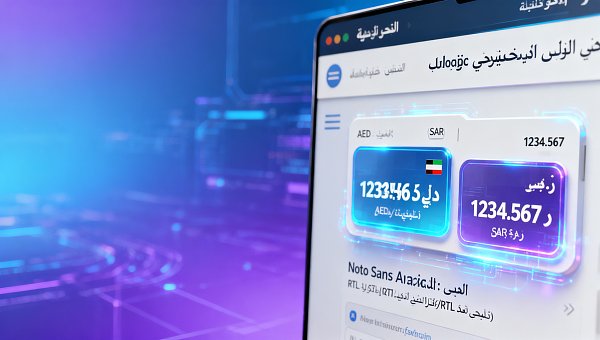
When procuring multilingual site services, enterprises cannot rely solely on vendors' 'GCC-certified' claims. EasyProfit recommends cross-validating across technical implementation, process control, and delivery verification:
This table reveals a key fact: Localization isn't a feature toggle but a closed-loop process spanning requirements analysis, development, testing, and launch. Among EasyProfit clients, 82% of enterprises skipped this verification pre-launch, causing 17% higher UAE site return rates (mainly due to price display errors triggering consumer complaints).
From Pseudo-Localization to True Adaptation: EasyProfit AI's 3-Step Implementation Path
EasyProfit Information Technology (Beijing), founded in 2013 and headquartered in China, is a global digital marketing service provider driven by AI and big data. With a decade of industry expertise, the company's 'tech innovation + localized service' dual strategy delivers end-to-end solutions covering smart site building, SEO optimization, social media marketing, and ad placement—empowering 100,000+ enterprises globally. In 2023, EasyProfit ranked among 'China's Top 100 SaaS Companies' with >30% annual growth, becoming an industry-recognized innovation engine.
For GCC markets, EasyProfit launched the 'YIYINGBAO GCC Localization Accelerator', including: Smart Detection Tools (free trial), Multilingual Standalone Site Templates (pre-configured AED/SAR dual-currency logic), and AI Ad Intelligence (auto-optimizing Arabic keyword bids & landing page relevance). This solution has deployed at 37 overseas enterprises, reducing average localization cycles to 11 days (industry average: 23 days).
Implementation strictly follows a 3-phase delivery model: Phase 1 (3-5 days) completes site health scans and risk heatmaps; Phase 2 (4-7 days) deploys customized currency engines and RTL enhancements; Phase 3 (2-3 days) executes DIFC compliance stress tests with bilingual reports. Full API support ensures real-time synchronization of prices, inventory, and order status with enterprise ERP systems.
Common Pitfalls & Risk Alerts
Many enterprises mistakenly equate 'Arabic translation' with 'completed localization'. GCC markets actually harbor five high-risk areas:
- Font Failures: Missing Noto Sans Arabic embedding causes iOS devices to display block characters (41% occurrence)
- Date Confusion: Gregorian/Islamic calendar mixing creates 11-day promotion timing errors
- Form Invalidations: Arabic input methods break phone validation regexes for UAE+971/Saudi+966 formats
- SEO Disconnects: Missing hreflang tags for AED/SAR pages scramble Google search results
- Fiscal Compliance Gaps: Non-display of UAE FTA-required VAT registration numbers and tax calculations on invoices
Notably, SOE cross-border M&A financial risks and countermeasures emphasize that cross-border tax compliance requirements equally apply to foreign trade website operations—price displays, VAT labeling, e-invoicing must align with target countries' fiscal regulations.
Why Choose EasyProfit? Get 3 Exclusive Benefits Now
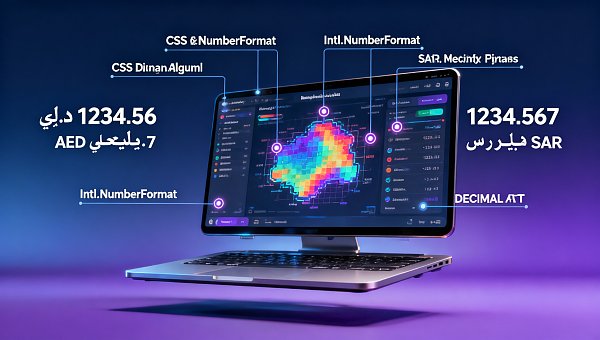
We don't provide 'generic multilingual templates'—only GCC-market-verified localization solutions:
- Free GCC Localization Health Scan: Submit URLs to receive PDF reports with 23 risk indicators (including repair recommendations) within 2 hours
- 35% Lower First-Site Build Costs: Sign up to receive AED/SAR dual-currency standalone site templates (worth ¥12,800)
- 1:1 Localization Expert Support: Dubai/Riyadh-based teams provide 7×12-hour response, with average issue resolution time <4.2 hours
Contact EasyProfit advisors immediately to verify your site's GCC localization baseline compliance and obtain the Arabic Market Localization Implementation White Paper (includes DIFC compliance checklist, 12 test cases, RTL typesetting guidelines). Book DIFC Digital Compliance Lab joint verification services.
Related Articles
 B2B Enterprises Must Read! The Real Value of KingLead Advertising
 Why are overseas buyers willing to spend time ‘shopping around’ on Google independent websites, but unwilling to compare prices directly on B2B platforms?
 Still relying on Google for steel export inquiries? This combination strategy lets you secure orders directly!



Related Products
 EasyCamp SaaS Smart Website Marketing SystemE-Yingbao SaaS Smart Website Marketing System: AI-powered, zero-code website building. Rapidly launch multilingual independent e-commerce sites in just 10 minutes. Global server acceleration and AI-driven SEO optimization empower businesses to efficiently connect with global markets. The seamless integration of technology and user-friendly operation makes building e-commerce sites incredibly simple.
 AI+SEM Intelligent Advertising Marketing SystemAI+SEM drives intelligent ad creation, empowering full-funnel precision advertising marketing. The system automatically generates weekly/monthly reports, AI recommends keywords and target countries, monitors core metrics in real-time with intelligent alerts, and enables one-click high-conversion ad solutions to help quickly acquire customers and improve ROI.
 AI+SEO Dual Engine Optimization ServiceEasyWin AI+SEO Dual Engine Optimization System leverages AI-powered keyword mining, content generation, and comprehensive technical optimization to help foreign trade enterprises acquire high-quality organic traffic, significantly improving search rankings and conversion rates.
 AI+SNS Social Media Marketing SystemYingbao AI+SNS Social Media Marketing System - Precision social capture for the social media era. Supports one-click content synchronization across major platforms like Facebook and LinkedIn. AI intelligently rewrites posts for enhanced relevance. 24/7 AI customer service and user profiling analysis empower businesses to efficiently expand into global markets.
 AI+SEO营销解决方案易营宝AI+SEO营销解决方案,通过AI批量写作、智能生成TDK、精准关键词扩词等功能,全面优化网站SEO效果,提升流量与转化率。助力企业构建高效智能网站新生态。
 AI+SEM Advertising Marketing SolutionsAI+SEM Advertising Marketing Solution leverages AI technology to deeply empower SEM ad campaigns. It automatically generates weekly/monthly reports using AI, presenting account data across multiple dimensions for comprehensive insights into campaign performance and trends. The system precisely recommends keywords and target countries, intelligently generates high-conversion ad copy, and enables one-click activation of efficient campaign plans to help businesses rapidly acquire customers. Simultaneously, it monitors core metrics in real time, intelligently identifies abnormal fluctuations, and issues timely alerts to ensure stable, high-return advertising results.
 Domain Name ServicesEasyWin provides professional domain name services, including intelligent queries, one-stop registration, brand protection, and full lifecycle management, helping businesses build a digital brand image.
 EasyOperate B2C Cross-Border E-Commerce Platform & Independent WebsiteEasyStore B2C Cross-border E-commerce Independent Store is an intelligent website building and cross-border e-commerce integrated solution independently developed by EasyStore Information Technology (Beijing) Co., Ltd. The system is specially designed for small and medium-sized as well as large export enterprises, integrating 'website building, operation, marketing, advertising, and conversion' into one, helping enterprises quickly establish cross-border e-commerce independent stores to achieve brand globalization and global sales growth.
The platform supports multiple languages, multiple currencies, and multi-channel marketing, with built-in AI intelligent translation and SEO optimization systems, suitable for mainstream markets such as Southeast Asia, Europe and America, Latin America, and the Middle East, assisting Chinese manufacturing enterprises in efficiently deploying international e-commerce strategies. SSL证书易营宝提供专业SSL安全证书服务,包括单域名和泛域名证书,确保网站数据传输加密、身份验证和完整性保护,助力企业建立安全可信的在线业务环境。









