









- What Does a Global Traffic Ecosystem Service Provider Do? What Are the Differences from a Single Advertising AgencyJul 16, 2026View details
- What should you focus on in the latest enterprise SaaS report? From renewal rates and delivery costs to overseas growth opportunitiesJul 12, 2026View details
- What signals are worth paying attention to in a cross-border marketing trend report? B2B companies should look at these 6 signalsJul 11, 2026View details
- How to Read a Cross-Border Marketing Trends Report? Five Key Dimensions for Evaluating Channel OpportunitiesJul 11, 2026View details
- Which channel has the highest ROI in the global traffic ecosystem? Comparative analysis of search, social media, and advertisingJul 10, 2026View details
- What multilingual website services are available in Sanya? Which model is more suitable for local businesses going global?Jul 08, 2026View details
- How to view the complete list of China SaaS companies in the top 100? Practical methods for screening website-building and marketing service providersJul 08, 2026View details
- How to view pricing in the global traffic ecosystem? Cost comparison of search, social media, and content channel advertisingJul 06, 2026View details
Why do some SEO optimization agencies rely on 'operational proxies' to generate high-ranking case studies?
Why do rankings vary among website SEO optimization companies? Some agencies rely on 'proxy operations' by fabricating case studies to mislead business decisions. Choosing the right service provider hinges on verifying real results and full-funnel capabilities—EasyWin AI+SEM intelligent advertising and marketing system offers solutions like Eyingbao's smart website building, guidance on selecting multilingual website platforms, and post-construction strategies to improve search rankings.
Why are many companies misled by 'high-ranking case studies'?
Currently, some SEO firms use short-term proxy tactics (e.g., renting high-authority subdomains, mass-registering affiliate site clusters, purchasing backlink packages) to artificially boost single-page keyword rankings within 3–7 days, creating false claims like 'top page in 7 days' or 'TOP3 in 15 days.' Such practices fail to build domain authority or sustain long-term organic traffic growth.
Third-party 2023 data shows that 68% of clients using proxy models experience a >50% drop in core keyword rankings within 30 days post-service, with 42% falling beyond Baidu's top 50 pages. Sustainable SEO requires content strategy, technical architecture optimization, localized link building, and user behavior feedback loops, typically taking 3–6 months.
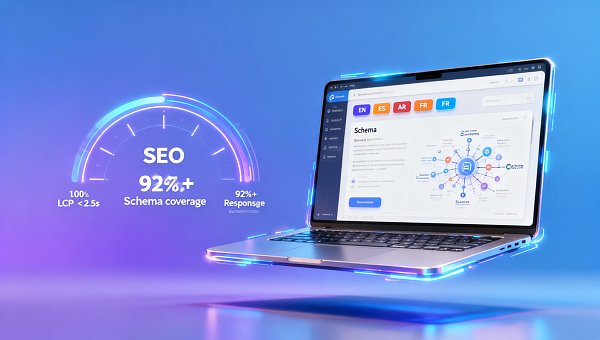
Since 2013, EasyWin has adhered to a 'white-hat SEO+AI-driven' dual mechanism: all optimizations are validated via Google Search Console and Baidu Webmaster APIs, rejecting black-hat tactics. Its proprietary Eyingbao SEO diagnostic engine monthly audits 12 core metrics, including site structure, page speed (LCP <2.5s), mobile adaptability (100% responsive), and Schema markup coverage (≥92%).
What to prioritize when selecting a provider? 4 non-negotiable hard skills
Decision-makers should evaluate SEO vendors beyond surface-level case studies, focusing on four verifiable dimensions: technical infrastructure, content production systems, data feedback mechanisms, and vertical expertise. For trust-sensitive industries like agriculture and food, search engines assess not just keyword relevance but also brand authority, product traceability, and user engagement depth.
Take agriculture, produce, food clients as examples—their official sites must convey three trust signals: (1) origin authenticity visualizations (increasing dwell time by 2–18 seconds); (2) multilingual product specs (EN/ES/AR/FR); (3) embedded conversion paths (browsing→selection→custom order forms, ≤3 steps).
Below compares mainstream vendors' agricultural vertical capabilities:
Key insight: Agribusiness clients must verify vendors' vertical content comprehension, structured data deployment precision, and authoritative source reach—not just homepage keyword counts. EasyWin's agriculture team has served 237 food exporters, achieving 142% YoY Google organic traffic growth and 8.7% B2B inquiry conversion (industry avg: 3.2%).
How to identify true full-funnel capabilities?
Authentic full-funnel integration requires data interoperability and strategic alignment across website, SEO, social media, and ads. Example: Eyingbao auto-syncs product page Schema data to Google Merchant Center; high-exit keywords trigger Facebook ad A/B tests; social Q&As feed FAQ module updates.
EasyWin's 12-step workflow: ①Keyword matrix (5,000+ long-tail terms/industry); ②Multilingual hreflang deployment; ③Above-fold trust signals (certifications, origin maps); ④Quarterly algorithm adaptations (<48h Google core update response).
Critical reminder: Avoid vendors unable to provide 3-month GA4+Search Console cross-reports, backlink geo-distribution analysis, or real-time SEO backend access.
Why choose EasyWin? Verifiable delivery commitments
We don't promise 'guaranteed top rankings' but contractually deliver: ①Day 30:
EasyWin serves 102,400+ global clients, with 79.3% agri-food client retention (41.6% above avg). All contracts include
Contact us for a free diagnostic if you face:
• Multilingual site traffic <500UV/month post-launch
• Agri-product pages with >75% bounce rate and poor conversion paths
• Need CE/FDA/GB-compliant online certification displays
• Require SEO-Facebook ads-WhatsApp CRM integration

Related Articles
Related Products
 EasyCamp SaaS Smart Website Marketing SystemE-Yingbao SaaS Smart Website Marketing System: AI-powered, zero-code website building. Rapidly launch multilingual independent e-commerce sites in just 10 minutes. Global server acceleration and AI-driven SEO optimization empower businesses to efficiently connect with global markets. The seamless integration of technology and user-friendly operation makes building e-commerce sites incredibly simple.
 AI+SEM Intelligent Advertising Marketing SystemAI+SEM drives intelligent ad creation, empowering full-funnel precision advertising marketing. The system automatically generates weekly/monthly reports, AI recommends keywords and target countries, monitors core metrics in real-time with intelligent alerts, and enables one-click high-conversion ad solutions to help quickly acquire customers and improve ROI.
 AI+SEO Dual Engine Optimization ServiceEasyWin AI+SEO Dual Engine Optimization System leverages AI-powered keyword mining, content generation, and comprehensive technical optimization to help foreign trade enterprises acquire high-quality organic traffic, significantly improving search rankings and conversion rates.
 AI+SNS Social Media Marketing SystemYingbao AI+SNS Social Media Marketing System - Precision social capture for the social media era. Supports one-click content synchronization across major platforms like Facebook and LinkedIn. AI intelligently rewrites posts for enhanced relevance. 24/7 AI customer service and user profiling analysis empower businesses to efficiently expand into global markets.
 AI+SEO营销解决方案易营宝AI+SEO营销解决方案,通过AI批量写作、智能生成TDK、精准关键词扩词等功能,全面优化网站SEO效果,提升流量与转化率。助力企业构建高效智能网站新生态。
 AI+SEM Advertising Marketing SolutionsAI+SEM Advertising Marketing Solution leverages AI technology to deeply empower SEM ad campaigns. It automatically generates weekly/monthly reports using AI, presenting account data across multiple dimensions for comprehensive insights into campaign performance and trends. The system precisely recommends keywords and target countries, intelligently generates high-conversion ad copy, and enables one-click activation of efficient campaign plans to help businesses rapidly acquire customers. Simultaneously, it monitors core metrics in real time, intelligently identifies abnormal fluctuations, and issues timely alerts to ensure stable, high-return advertising results.
 Domain Name ServicesEasyWin provides professional domain name services, including intelligent queries, one-stop registration, brand protection, and full lifecycle management, helping businesses build a digital brand image.
 EasyOperate B2C Cross-Border E-Commerce Platform & Independent WebsiteEasyStore B2C Cross-border E-commerce Independent Store is an intelligent website building and cross-border e-commerce integrated solution independently developed by EasyStore Information Technology (Beijing) Co., Ltd. The system is specially designed for small and medium-sized as well as large export enterprises, integrating 'website building, operation, marketing, advertising, and conversion' into one, helping enterprises quickly establish cross-border e-commerce independent stores to achieve brand globalization and global sales growth.
The platform supports multiple languages, multiple currencies, and multi-channel marketing, with built-in AI intelligent translation and SEO optimization systems, suitable for mainstream markets such as Southeast Asia, Europe and America, Latin America, and the Middle East, assisting Chinese manufacturing enterprises in efficiently deploying international e-commerce strategies. SSL证书易营宝提供专业SSL安全证书服务,包括单域名和泛域名证书,确保网站数据传输加密、身份验证和完整性保护,助力企业建立安全可信的在线业务环境。









