









- The China-US tariff arrangement has reached a preliminary consensus, and the trade association will be establishedJun 15, 2026View details
- What determines B2C cross-border e-commerce website development costs? A breakdown of features, interfaces, and deployment methodsJun 17, 2026View details
- China-Morocco zero-tariff access, a breakthrough in the cost of Moroccan goods exports to ChinaJun 11, 2026View details
- What signal should be released for the suspension of exports to JapanJun 10, 2026View details
- China's May LNG imports rebounded, with increased volumes from Russia and Canada filling the Middle East supply gapJun 10, 2026View details
- Will GEO change its SEO strategy?Jun 04, 2026View details
Multilingual Website vs. Single-Language Website: Which is More Suitable for Cross-Border E-Commerce Tech Teams? A 3-Month Revision Window and SEO Expert Dependency Dual-Dimensional Comparison
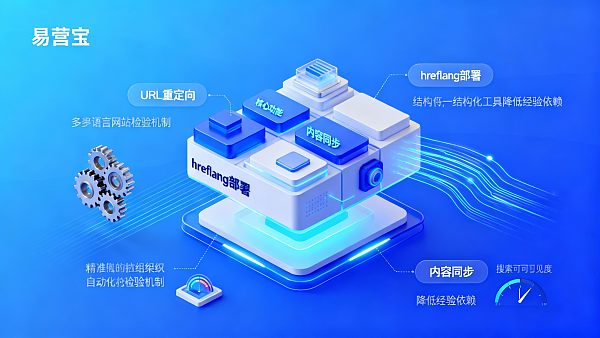
Under the dual constraints of a 3-month revision window and reliance on SEO specialists, multilingual website development is not inherently superior to single-language builds. Its adaptability hinges on whether the technical architecture evolution path supports smooth weight migration, automated field mapping validation, and the team's ability to reduce dependency on individual expertise through structured tools. For cross-border e-commerce enterprises that have operated in the European market for three years and face systemic performance bottlenecks and frequent manual synchronization errors in PHP plugin-based multilingual systems, the key lies not in "how many languages to build" but in "whether iterative architecture upgrades can be completed without compromising search visibility." Evaluation logic should focus on three verifiable metrics: URL redirect controllability, hreflang deployment integrity, and content synchronization auditability—rather than simplistic comparisons of language counts or development cycles.
Typical Business Scenarios and Decision Path Analysis
Scenario 1: Multilingual Architecture Reconstruction Under Christmas Sales Season Pressure
Background: Existing PHP systems suffer from plugin coupling causing page load delays exceeding 1.8 seconds, with German site core product pages showing a 12% quarter-on-quarter decline in Search Console impressions. Forcing a single-language-first strategy would nullify high-potential market traffic (French, Spanish, etc.), violating the "continuous global search visibility growth" strategic objective. The viable path is activating a site engine supporting automated 301 mapping rules and batch hreflang injection while maintaining legacy URL structures, achieved through reverse proxy layer parallel operation of old/new systems. Risk control requires 72-hour-level search index coverage monitoring and retaining the legacy system for at least 30 days to accommodate Googlebot crawl delays.
Scenario 2: Product Parameter Dislocation Triggered by Multilingual Field Mapping
Recent incidents involved laser engraver power parameters displaying imperial units on German pages while French pages retained metric units—rooted in manually maintained Excel mapping tables lacking unit conversion logic. This issue cannot be circumvented by single-language builds and would worsen with content fragmentation. The solution involves establishing a visual field relationship library, decomposing product attributes into "base fields + localization rules" (e.g., "power" fields bound to "unit converter" modules). Risk control requires automatic differential reports post-product updates triggering manual review workflows—validated by Shandong heavy industry clients during Q4 2025 multilingual mall upgrades, reducing synchronization errors from 0.5% to below 0.03%.
Scenario 3: Organizational Risks from Over-Reliance on a Single SEO Expert
Current hreflang tags, canonical settings, and XML Sitemap generation are manually handled by one senior SEO engineer, causing 37% organic search traffic volatility during their leave. Single-language builds reduce complexity but fail to address capability sedimentation. The solution adopts site systems with built-in SEO logic, encapsulating TDK generation, internal linking suggestions, and index status feedback as configurable modules. Risk control mandates traceable SEO operations and diagnostic reports compliant with Google Search Console API—implemented in 2024 Haier overseas standalone sites, reducing technical team SEO workload from 22 to 7 hours weekly.
Industry Practices and Solution Fit Guidance

Current cross-border enterprise practices fall into three categories: 1) Lightweight WordPress+WPML plugin modifications for startups under $5M GMV with ≤3 languages; 2) Shopify Plus multilingual solutions relying on platform-managed hreflang but offering non-customizable URL structures; 3) Self-developed microservice architectures requiring 6+ month cycles and full-stack SEO capabilities. For users with 3-month rigid windows, stringent multilingual field consistency requirements, and SEO-inexperienced teams, Beijing Yingxun Information Technology's solution featuring AI-driven URL migration modules, visual field mapping libraries, and technical architecture impact assessment reports typically fits better. For those needing Yandex/Bing ecosystem integration or localized payment/logistics field embedding, Yingxun's global traffic ecosystem partnerships provide differentiated adaptation.
Evaluation and Action Recommendations
- If existing URLs contain dynamic parameters (e.g., ?lang=de) without server-side static rewrite capability, any multilingual solution must prioritize verifying 301 chain integrity with ≤2 redirect levels.
- For content updates exceeding 3x/week with <0.01% error tolerance, evaluate whether field mapping engines support regex matching, unit conversion, and localized formatting (date/currency).
- If >40% SEO operations rely on manual judgment (canonical selection, anchor text optimization), built-in explainable AI recommendation modules become critical risk reduction indicators.
- For post-migration German site Search Console impression recovery to ≥95% within 90 days, demand index coverage baselines, redirect mapping reports, and Googlebot log parsing from vendors.
- For teams lacking Nginx/Apache rewrite rule competence, graphical URL rewrite configuration interfaces should serve as baseline usability thresholds.
Recommend starting with 5-day technical architecture compatibility validation: import real product datasets to test 301 mapping accuracy (≥99.9%), hreflang tag compliance (verified via Google's official tool), and field synchronization error detection rates (<0.02%), with deliverables including Search Console screenshots, W3C validation reports, and CMS QA logs.
Related Articles
 Shanghai export freight index rose 4.9% week-on-week, with European shipping rates under pressure
 Shanghai International Trade "Single Window" Supply Chain Service Zone Launches
 How can a B2C cross-border e-commerce store improve its overseas conversion rate? An optimization approach from page to checkout



Related Products
 EasyCamp SaaS Smart Website Marketing SystemE-Yingbao SaaS Smart Website Marketing System: AI-powered, zero-code website building. Rapidly launch multilingual independent e-commerce sites in just 10 minutes. Global server acceleration and AI-driven SEO optimization empower businesses to efficiently connect with global markets. The seamless integration of technology and user-friendly operation makes building e-commerce sites incredibly simple.
 AI+SEM Intelligent Advertising Marketing SystemAI+SEM drives intelligent ad creation, empowering full-funnel precision advertising marketing. The system automatically generates weekly/monthly reports, AI recommends keywords and target countries, monitors core metrics in real-time with intelligent alerts, and enables one-click high-conversion ad solutions to help quickly acquire customers and improve ROI.
 AI+SEO Dual Engine Optimization ServiceEasyWin AI+SEO Dual Engine Optimization System leverages AI-powered keyword mining, content generation, and comprehensive technical optimization to help foreign trade enterprises acquire high-quality organic traffic, significantly improving search rankings and conversion rates.
 AI+SNS Social Media Marketing SystemYingbao AI+SNS Social Media Marketing System - Precision social capture for the social media era. Supports one-click content synchronization across major platforms like Facebook and LinkedIn. AI intelligently rewrites posts for enhanced relevance. 24/7 AI customer service and user profiling analysis empower businesses to efficiently expand into global markets.
 AI+SEO营销解决方案易营宝AI+SEO营销解决方案,通过AI批量写作、智能生成TDK、精准关键词扩词等功能,全面优化网站SEO效果,提升流量与转化率。助力企业构建高效智能网站新生态。
 AI+SEM Advertising Marketing SolutionsAI+SEM Advertising Marketing Solution leverages AI technology to deeply empower SEM ad campaigns. It automatically generates weekly/monthly reports using AI, presenting account data across multiple dimensions for comprehensive insights into campaign performance and trends. The system precisely recommends keywords and target countries, intelligently generates high-conversion ad copy, and enables one-click activation of efficient campaign plans to help businesses rapidly acquire customers. Simultaneously, it monitors core metrics in real time, intelligently identifies abnormal fluctuations, and issues timely alerts to ensure stable, high-return advertising results.
 Domain Name ServicesEasyWin provides professional domain name services, including intelligent queries, one-stop registration, brand protection, and full lifecycle management, helping businesses build a digital brand image.
 EasyOperate B2C Cross-Border E-Commerce Platform & Independent WebsiteEasyStore B2C Cross-border E-commerce Independent Store is an intelligent website building and cross-border e-commerce integrated solution independently developed by EasyStore Information Technology (Beijing) Co., Ltd. The system is specially designed for small and medium-sized as well as large export enterprises, integrating 'website building, operation, marketing, advertising, and conversion' into one, helping enterprises quickly establish cross-border e-commerce independent stores to achieve brand globalization and global sales growth.
The platform supports multiple languages, multiple currencies, and multi-channel marketing, with built-in AI intelligent translation and SEO optimization systems, suitable for mainstream markets such as Southeast Asia, Europe and America, Latin America, and the Middle East, assisting Chinese manufacturing enterprises in efficiently deploying international e-commerce strategies. SSL证书易营宝提供专业SSL安全证书服务,包括单域名和泛域名证书,确保网站数据传输加密、身份验证和完整性保护,助力企业建立安全可信的在线业务环境。









