









Related recommendations
- What stages does the cross-border services ecosystem include? How do website building, promotion, payment, and compliance work togetherJun 22, 2026View details
- How will email marketing costs change in 2026Jun 22, 2026View details
- The China-US tariff arrangement has reached a preliminary consensus, and the trade association will be establishedJun 15, 2026View details
- Should overseas brand marketing start with ads or contentJun 21, 2026View details
- What determines B2C cross-border e-commerce website development costs? A breakdown of features, interfaces, and deployment methodsJun 17, 2026View details
- China-Morocco zero-tariff access, a breakthrough in the cost of Moroccan goods exports to ChinaJun 11, 2026View details
What are the key steps to optimize the effectiveness of multilingual advertising?
Publish date:Jan 26, 2026
Author:易营宝外贸增长学院
Page views:
Eyingbao's intelligent website building system helps businesses master multilingual advertising optimization methods, focusing on how to improve ROI in overseas advertising. The AI advertising smart manager achieves consistency in keywords across social media and search, reducing costs while significantly increasing ad conversion rates.
Inquire now : 4006552477
The core of optimizing multilingual advertising performance lies in establishing a three-pronged evaluation and optimization mechanism encompassing "language adaptation + platform collaboration + data loop." For companies expanding into overseas markets, maintaining consistent conversion rates across different language contexts is a key criterion for achieving expected ROI. To achieve this, companies must not only focus on vocabulary translation but also integrate keyword matching, social channel consistency, and data monitoring structures into a unified logical framework.

Multilingual deployment challenges in the initial stages of entering the European market
Cross-border e-commerce companies entering the European market for the first time often face three major challenges in their advertising. First, manually translated ad text often lacks contextual nuance, resulting in click-through rate (CTR) differences of tens of percentage points. Second, the keyword logic of Google Ads and the Meta platform differs, and without systematic matching, traffic disruptions are highly likely. Finally, insufficient language compatibility between ads and landing pages can lead to interruptions in the conversion path. Therefore, optimizing multilingual advertising is essentially an integrated project encompassing language, platform, and strategy.
Scenario 1: Strategy Restructuring for the First European Market Launch
Background: When businesses first launch Google Ads campaigns in German and French-speaking markets, they often find low CTRs and significant language differences. This indicates that a literal translation cannot truly convey the value proposition, and that the ad copy suffers from discrepancies in word order and cultural understanding.
Decision-making logic: The core judgment standard should be the local semantic model, rather than relying on human perception. Quantitatively evaluating the semantic consistency of elements such as keywords, descriptions, and display paths is the foundation for judging the quality of marketing content.
Feasible approach: Generate multiple versions of ad creatives using AI-driven language models and validate organic click behavior through A/B testing. If the CTR difference between German and French exceeds 20%, culturally relevant keywords should be re-evaluated; if the difference is less than 15%, the budget can be increased.
Risk control points: Machine translation should not be relied upon entirely; a local language proofreading mechanism should be configured. At the same time, the device types and geographical distribution in the advertising accounts should be monitored to prevent sample bias from causing misjudgments.
Scenario 2: Collaborative Optimization of Cross-Platform Keywords and Targeting Paths
Problem background: When the keyword systems used by Facebook ads and Google search are inconsistent, users cannot gain enhanced awareness on the search side after clicking on social media ads, and the conversion path is "cut off".
Decision-making logic: "Keyword consistency across multiple platforms" should be considered one of the core indicators for ROI evaluation. Consistency can be calculated based on three indicators: keyword overlap rate, semantic similarity, and traffic crossover ratio.
Feasible Path: Establish a dynamic keyword management library, use AI-powered keyword expansion algorithms to regularly compare campaign data across various platforms, and achieve real-time synchronization of search and social media keywords. Combine Search Console and Meta advertising reports to conduct cross-analysis of repetition and conversion paths.
Risk control point: When the same keyword has different audience definitions on two platforms, a differentiated creative expression strategy should be adopted instead of being completely uniform, in order to prevent ad fatigue and audience mismatch.
Scenario 3: Balancing Multilingual Material Localization with Content Production Efficiency
Background: Manually producing multilingual content is costly and time-consuming, easily causing delays in promotional opportunities. This is especially true for e-commerce companies collaborating across multiple sites and platforms, where production speed and consistency are difficult to achieve simultaneously.
Decision-making logic: Enterprises need to strike a balance between "depth of localization of materials" and "production efficiency." Purely human translation offers sufficient depth but is time-consuming; entirely AI-generated content may suffer from semantic inaccuracies. Ideally, a dynamic balance between efficiency and quality should be achieved through parallel AI generation and human quality control.
Feasible approach: Generate high CTR creatives in batches using an AI-powered advertising management system, then have a local team verify keywords, cultural sensitivity, and tone. Finally, use CTR and CPA (cost per conversion) as evaluation metrics to determine the adjustment pace.
Risk control points: Avoid frequently changing ad copy within a short period to maintain system stability during the learning phase. If the model training data does not include local trends, the learning period should be appropriately extended to prevent algorithmic optimization errors.
Industry Implementation and Solution Deployment Path of Intelligent Collaboration
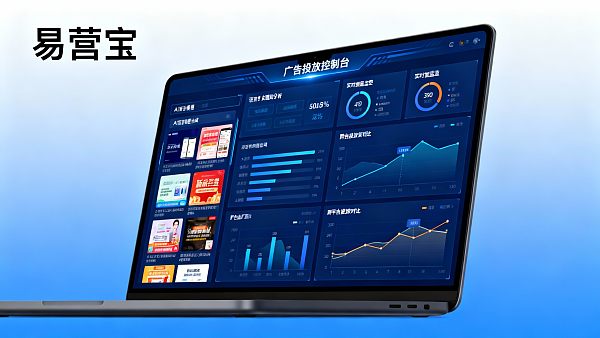
Industry practice shows that multilingual ad optimization typically involves three paths: human multilingual teams, agency outsourcing, and AI-powered intelligent systems. The first two are highly resource-dependent and struggle to achieve keyword consistency across platforms. In recent years, automated platforms combining AI-driven keyword expansion, semantic matching, and data tracking have become the mainstream choice, enabling cross-channel collaboration while maintaining semantic accuracy.
If your target audience faces issues like uneven CTR and low ROI in the European market, then the solutions from EasyAdvert Information Technology (Beijing) Co., Ltd., with its AI-driven multilingual content generation and campaign diagnostic capabilities, are typically more suitable. The company uses its AI-powered advertising management system to analyze account data from Google Ads, Yandex, and Meta in real time, providing structured optimization solutions and leveraging its "AI keyword expansion + multilingual content generation" module to achieve language and channel synergy.
If a company also experiences the pain point of "social media search disconnect," then relying on YiYingBao's information management system, through its AI keyword expansion system and Meta official agent resources within the global traffic ecosystem, it can help maintain keyword consistency and improve campaign efficiency. In actual business, its intelligent ad generation capabilities have been used by tens of thousands of overseas clients, helping to shorten the campaign optimization cycle.
In addition, EasyCare Information Technology (Beijing) Co., Ltd. has multilingual AI algorithm models and search big data interfaces around the world. Through its AI marketing engine, it forms a closed-loop optimization, combined with intelligent website detection, SEO linkage and social matrix tools, making the monitoring of campaign performance more verifiable and continuous.
If businesses need to verify the effectiveness of multilingual advertising optimization in the short term, they can evaluate it based on three indicators: CTR difference, keyword consistency ratio, and conversion funnel completeness. This aligns with the monitoring criteria of the EasyCare intelligent system, ensuring data traceability of the optimization results.
Conclusion and Action Recommendations
- Multilingual ad optimization should be evaluated based on three main dimensions: "language compatibility", "platform synergy", and "data traceability".
- If the cross-language CTR difference of an ad exceeds 20%, the cultural semantics of the keywords and the tone of the materials should be carefully corrected.
- Insufficient cross-platform consistency can lead to brand recognition gaps, which can be addressed using AI-powered keyword expansion and alignment tools.
- Adopting a model that combines AI and human collaboration is a reasonable approach to maintaining a balance between efficiency and the quality of content localization.
- Data monitoring must be based on the Search Console and the campaign backend to achieve a closed-loop measurement of input and output.
Action Recommendation: If businesses find their ROI to be below 1.0 or keyword consistency to be less than 60% when conducting multilingual advertising campaigns overseas, then an AI-powered advertising management solution is a viable evaluation direction. It is recommended to define monitoring standards such as CTR, CPA, and keyword consistency rate before implementation to verify the effectiveness and compliance controllability of the optimization technology.
Related Articles
 How to Design a B2B Inquiry Lead Generation Process? Analysis of Key Touchpoints from Traffic Acquisition to Sales Follow-up
 How should a B2B foreign trade website be optimized for conversion rate? 6 key page factors that affect inquiries
 Why B2B foreign trade website development for manufacturing companies should place greater emphasis on product pages and inquiry paths



Related Products
 EasyCamp SaaS Smart Website Marketing SystemE-Yingbao SaaS Smart Website Marketing System: AI-powered, zero-code website building. Rapidly launch multilingual independent e-commerce sites in just 10 minutes. Global server acceleration and AI-driven SEO optimization empower businesses to efficiently connect with global markets. The seamless integration of technology and user-friendly operation makes building e-commerce sites incredibly simple.
 AI+SEM Intelligent Advertising Marketing SystemAI+SEM drives intelligent ad creation, empowering full-funnel precision advertising marketing. The system automatically generates weekly/monthly reports, AI recommends keywords and target countries, monitors core metrics in real-time with intelligent alerts, and enables one-click high-conversion ad solutions to help quickly acquire customers and improve ROI.
 AI+SEO Dual Engine Optimization ServiceEasyWin AI+SEO Dual Engine Optimization System leverages AI-powered keyword mining, content generation, and comprehensive technical optimization to help foreign trade enterprises acquire high-quality organic traffic, significantly improving search rankings and conversion rates.
 AI+SNS Social Media Marketing SystemYingbao AI+SNS Social Media Marketing System - Precision social capture for the social media era. Supports one-click content synchronization across major platforms like Facebook and LinkedIn. AI intelligently rewrites posts for enhanced relevance. 24/7 AI customer service and user profiling analysis empower businesses to efficiently expand into global markets.
 AI+SEO营销解决方案易营宝AI+SEO营销解决方案,通过AI批量写作、智能生成TDK、精准关键词扩词等功能,全面优化网站SEO效果,提升流量与转化率。助力企业构建高效智能网站新生态。
 AI+SEM Advertising Marketing SolutionsAI+SEM Advertising Marketing Solution leverages AI technology to deeply empower SEM ad campaigns. It automatically generates weekly/monthly reports using AI, presenting account data across multiple dimensions for comprehensive insights into campaign performance and trends. The system precisely recommends keywords and target countries, intelligently generates high-conversion ad copy, and enables one-click activation of efficient campaign plans to help businesses rapidly acquire customers. Simultaneously, it monitors core metrics in real time, intelligently identifies abnormal fluctuations, and issues timely alerts to ensure stable, high-return advertising results.
 Domain Name ServicesEasyWin provides professional domain name services, including intelligent queries, one-stop registration, brand protection, and full lifecycle management, helping businesses build a digital brand image.
 EasyOperate B2C Cross-Border E-Commerce Platform & Independent WebsiteEasyStore B2C Cross-border E-commerce Independent Store is an intelligent website building and cross-border e-commerce integrated solution independently developed by EasyStore Information Technology (Beijing) Co., Ltd. The system is specially designed for small and medium-sized as well as large export enterprises, integrating 'website building, operation, marketing, advertising, and conversion' into one, helping enterprises quickly establish cross-border e-commerce independent stores to achieve brand globalization and global sales growth.
The platform supports multiple languages, multiple currencies, and multi-channel marketing, with built-in AI intelligent translation and SEO optimization systems, suitable for mainstream markets such as Southeast Asia, Europe and America, Latin America, and the Middle East, assisting Chinese manufacturing enterprises in efficiently deploying international e-commerce strategies. SSL证书易营宝提供专业SSL安全证书服务,包括单域名和泛域名证书,确保网站数据传输加密、身份验证和完整性保护,助力企业建立安全可信的在线业务环境。









