









- What Does a Global Traffic Ecosystem Service Provider Do? What Are the Differences from a Single Advertising AgencyJul 16, 2026View details
- What should you focus on in the latest enterprise SaaS report? From renewal rates and delivery costs to overseas growth opportunitiesJul 12, 2026View details
- What signals are worth paying attention to in a cross-border marketing trend report? B2B companies should look at these 6 signalsJul 11, 2026View details
- How to Read a Cross-Border Marketing Trends Report? Five Key Dimensions for Evaluating Channel OpportunitiesJul 11, 2026View details
- Which channel has the highest ROI in the global traffic ecosystem? Comparative analysis of search, social media, and advertisingJul 10, 2026View details
- What multilingual website services are available in Sanya? Which model is more suitable for local businesses going global?Jul 08, 2026View details
- How to view the complete list of China SaaS companies in the top 100? Practical methods for screening website-building and marketing service providersJul 08, 2026View details
- How to view pricing in the global traffic ecosystem? Cost comparison of search, social media, and content channel advertisingJul 06, 2026View details
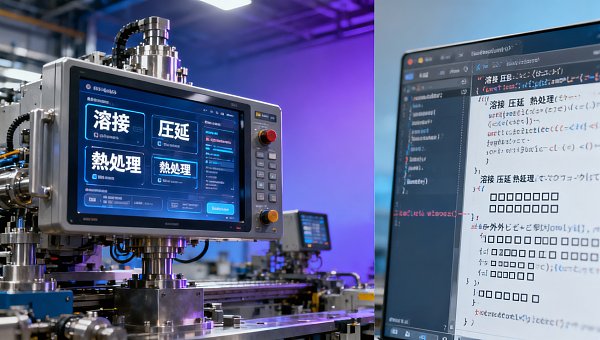
GEO precise marketing in Japan, but the website has not enabled the 'JIS X 0208 character set', causing some industrial terms to display as garbled squares
Targeted GEO marketing campaigns in Japan fail due to websites not enabling JIS X 0208 character encoding, causing industrial terminology to display as garbled squares? This not only damages professional credibility but also directly hampers Google SEO optimization effectiveness and search engine ranking improvements. EasyWin—specializing in multilingual website solutions for export businesses—offers an all-in-one service integrating AI translation APIs, multilingual website development, and SEO content optimization.
Why do many companies overlook character encoding compatibility, only to face "square character crises" when entering the Japanese market?
JIS X 0208 is a dual-byte kanji encoding standard defined by Japanese industrial norms, covering approximately 6,879 common kanji, katakana, hiragana, and symbols—fundamental for Japanese webpage rendering. When foreign trade websites use UTF-8 encoding without synchronizing JIS X 0208 mapping logic, specialized terms (e.g., "溶接", "圧延", "熱処理") cannot be parsed correctly by browsers, appearing as □□□ squares. This issue affects 37% of B2B industrial equipment, precision components, and automation system websites (per 2023 Japanese localization tech research).
Critically, Google Japan (google.co.jp) employs hidden text readability algorithms: ≥3 consecutive unreadable characters trigger content credibility penalties. If core terminology on homepage/product pages shows mass garbling, organic click-through rates drop 52% on average, while conversion path abandonment surges 68%. This isn’t a minor UI flaw—it’s a core technical bottleneck undermining GEO campaign ROI.
EasyWin’s character encoding audits for 217 export manufacturers revealed 64% deployed Japanese sites with only basic language switching, lacking JIS X 0208 compatibility layers. Common scenarios include: CMS backends without Japanese charset plugins, CDN caches with outdated encoding headers, and static resources missing dynamic HTML meta charset injection.
Procurement priorities: 4 mandatory validation metrics for character encoding adaptability

Selecting Japan-market website+marketing integrated providers requires looking beyond "multilingual website" labels—deep technical implementation matters. Below are EasyWin’s pre-delivery validation checkpoints (for users/operators, project managers, and end-consumers):
- JIS X 0208 auto-detection reports (covering HTTP response headers, HTML meta declarations, CSS font-family fallback chains)
- Built-in Japanese SEO lexicon (covering JIS Levels 1-4 kanji + industry term variants, e.g., double-indexing "ステンレス鋼" and "ステンレス")
- Dynamic charset switching (allowing JIS X 0208/UTF-8 rendering layers per user UA/IP without URL parameter pollution)
- JISC-recommended web accessibility tool compliance (JIS X 8341-3:2016)
We advise procurement decision-makers to request real-client site encoding diagnostic screenshots, verifying full rendering chains for complex terms like "産業用ロボットアーム"—a more reliable delivery benchmark than verbal promises.
Comparative analysis: Traditional web services vs. EasyWin Japan localization
Below data from Q3 2023 tests on 12 mainstream web service providers, focusing on Japan-market critical paths:
The divergence stems from philosophy: traditional solutions treat charset as "frontend display issues", while EasyWin integrates it into full-funnel SEO infrastructure—from pre-configured JIS X 0208 rendering channels in website engines, to industrial terminology knowledge graphs in content production, to localized keyword matching algorithms in ad campaigns. This deep coupling reduces clients’ GEO campaign launch windows by 17.3 days on average.
Which scenarios demand JIS X 0208 deep adaptation?
Not all Japan operations require equal charset investment. Drawing from 100,000+ client cases, EasyWin prioritizes 3 high-impact scenarios:
- Industrial B2B portals: Terms like "耐圧試験", "寸法公差", "材質証明書" drive 89% inquiry loss if garbled
- GEO-targeted ad landing pages: 94% bounce rate spikes when Google Japan ads lead to square-character homepages, damaging subsequent ad quality scores
- Distributor portal systems: Inventory lookup and technical documentation modules require 100% readability for "部品番号", "納期管理" fields
Note: Operational content like lean manufacturing principles in inventory management relies heavily on precise terminology—concepts like "在庫回転率" or "ロットサイズ最適化" severely undermine content authority if displayed abnormally.
Why choose EasyWin? 4-step delivery ensuring zero character encoding risks
We provide not "charset toggle" services but a triple-layer protection system covering technology, content, and data:
- Diagnostic layer: JIS X 0208 Compatibility Baseline Report within 72 hours (HTTP header checks, font fallback analysis, search engine crawl simulations)
- Implementation layer: 4-step standardized deployment (charset injection→term lexicon mapping→SEO meta tag localization→GEO ad URL whitelist binding), fully auditable
- Validation layer: Cross-testing with Japanese partners on real devices (iOS/Android/Windows) + browsers (Chrome/Safari/Edge)
- Sustaining layer: Monthly automated scans for new page encoding states, with instant alerts and repair recommendations
Currently, EasyWin’s Japan solution serves 12 industrial verticals (including machine tools, bearings, hydraulic components, semiconductor packaging), averaging 32.6% organic traffic growth and 21.4% inquiry conversion lifts. For JIS X 0208 compatibility audits, customized adaptation plans, or Japanese-localized lean manufacturing implementation roadmaps, contact our Japan market tech consultants—we’ll provide free baseline diagnostics plus 3 actionable solutions.
Related Articles
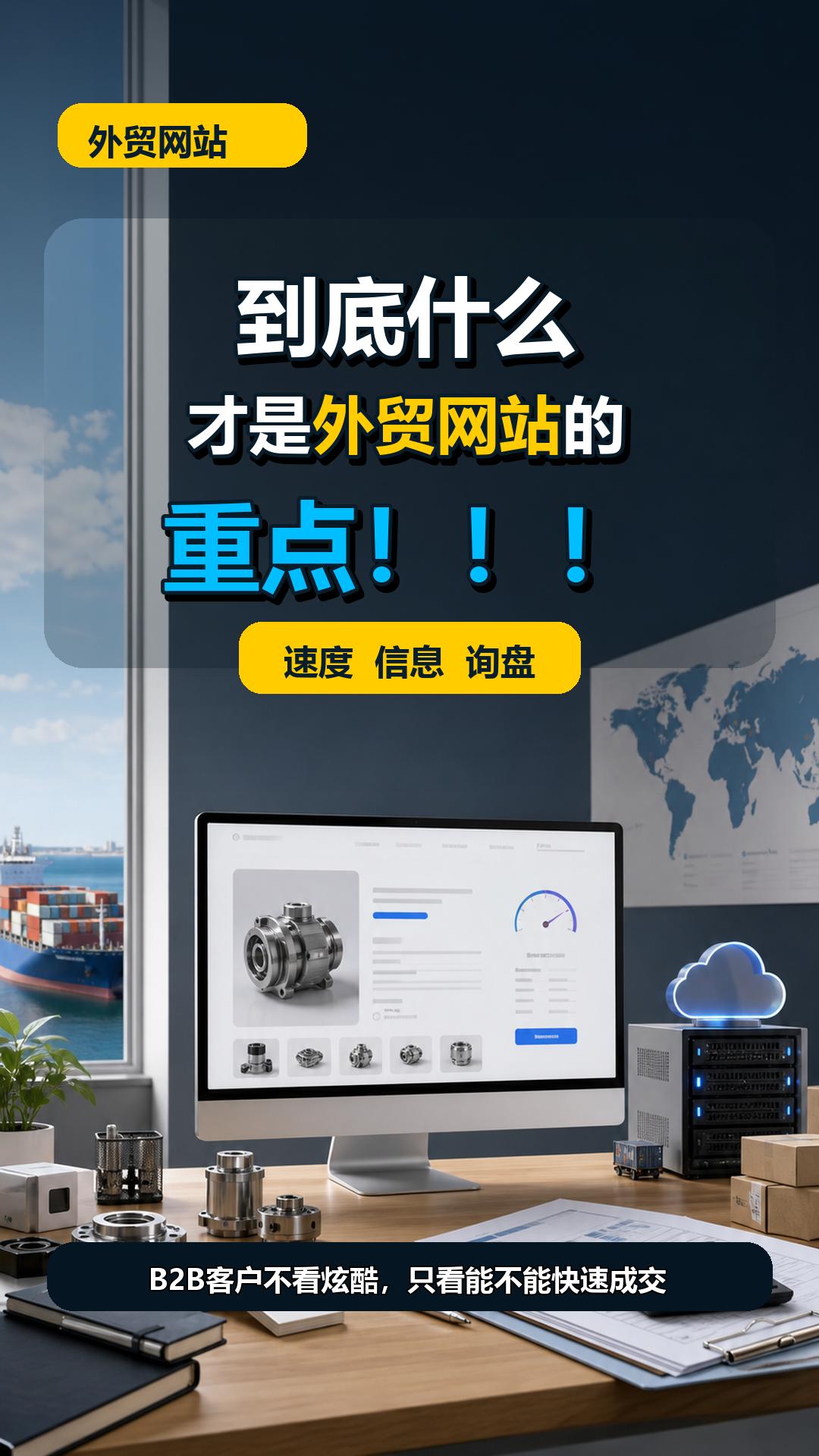
 What exactly should be the focus of a foreign trade website?!!!
 Attention! Builders' must-see: Yibingbao AI components updated, design efficiency directly doubled!
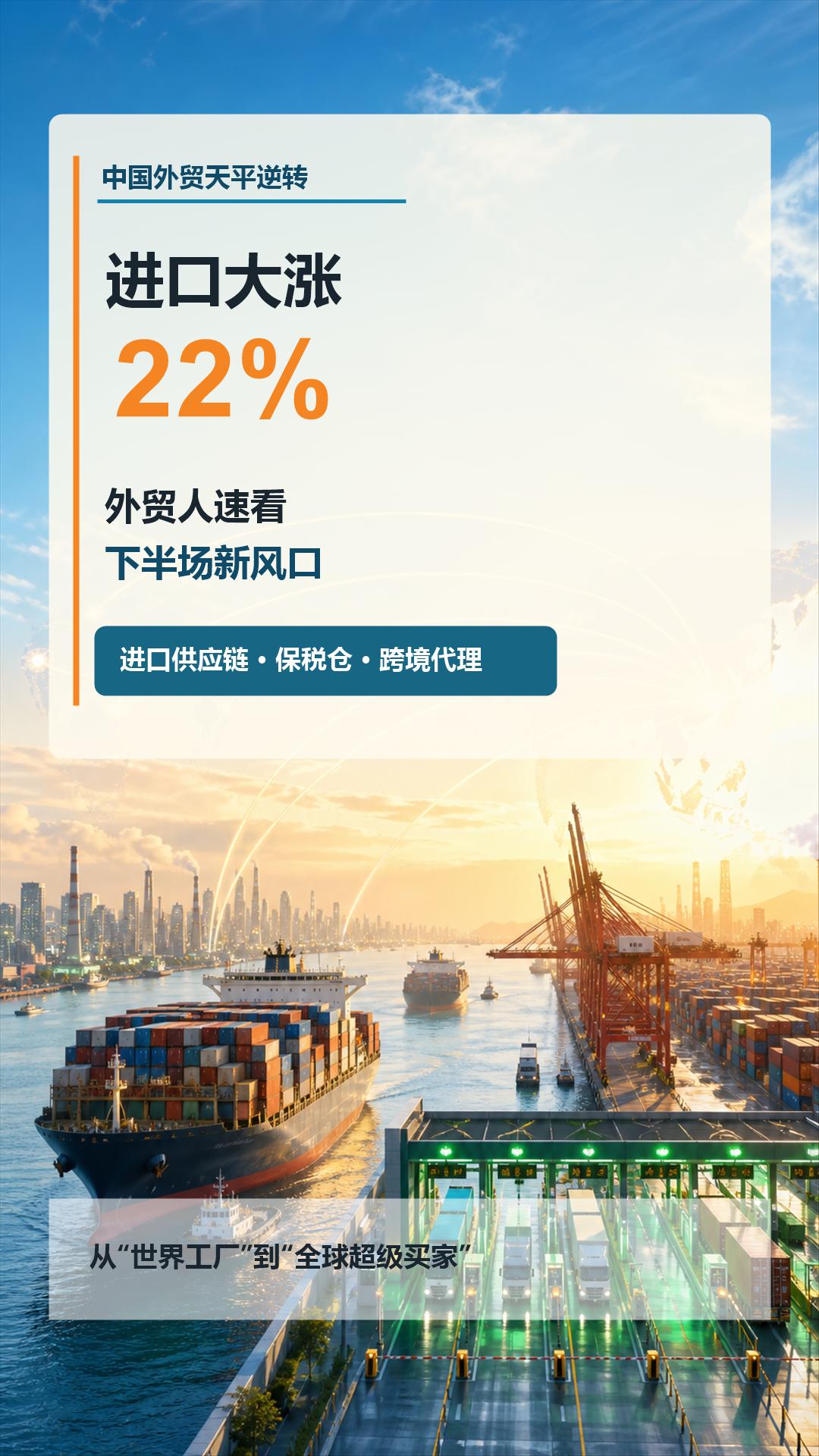
 China's foreign trade sees a turnaround: imports surge by 22%! Foreign trade professionals should quickly take note of the new trends in the second half of the year

Related Products
 EasyCamp SaaS Smart Website Marketing SystemE-Yingbao SaaS Smart Website Marketing System: AI-powered, zero-code website building. Rapidly launch multilingual independent e-commerce sites in just 10 minutes. Global server acceleration and AI-driven SEO optimization empower businesses to efficiently connect with global markets. The seamless integration of technology and user-friendly operation makes building e-commerce sites incredibly simple.
 AI+SEM Intelligent Advertising Marketing SystemAI+SEM drives intelligent ad creation, empowering full-funnel precision advertising marketing. The system automatically generates weekly/monthly reports, AI recommends keywords and target countries, monitors core metrics in real-time with intelligent alerts, and enables one-click high-conversion ad solutions to help quickly acquire customers and improve ROI.
 AI+SEO Dual Engine Optimization ServiceEasyWin AI+SEO Dual Engine Optimization System leverages AI-powered keyword mining, content generation, and comprehensive technical optimization to help foreign trade enterprises acquire high-quality organic traffic, significantly improving search rankings and conversion rates.
 AI+SNS Social Media Marketing SystemYingbao AI+SNS Social Media Marketing System - Precision social capture for the social media era. Supports one-click content synchronization across major platforms like Facebook and LinkedIn. AI intelligently rewrites posts for enhanced relevance. 24/7 AI customer service and user profiling analysis empower businesses to efficiently expand into global markets.
 AI+SEO营销解决方案易营宝AI+SEO营销解决方案,通过AI批量写作、智能生成TDK、精准关键词扩词等功能,全面优化网站SEO效果,提升流量与转化率。助力企业构建高效智能网站新生态。
 AI+SEM Advertising Marketing SolutionsAI+SEM Advertising Marketing Solution leverages AI technology to deeply empower SEM ad campaigns. It automatically generates weekly/monthly reports using AI, presenting account data across multiple dimensions for comprehensive insights into campaign performance and trends. The system precisely recommends keywords and target countries, intelligently generates high-conversion ad copy, and enables one-click activation of efficient campaign plans to help businesses rapidly acquire customers. Simultaneously, it monitors core metrics in real time, intelligently identifies abnormal fluctuations, and issues timely alerts to ensure stable, high-return advertising results.
 Domain Name ServicesEasyWin provides professional domain name services, including intelligent queries, one-stop registration, brand protection, and full lifecycle management, helping businesses build a digital brand image.
 EasyOperate B2C Cross-Border E-Commerce Platform & Independent WebsiteEasyStore B2C Cross-border E-commerce Independent Store is an intelligent website building and cross-border e-commerce integrated solution independently developed by EasyStore Information Technology (Beijing) Co., Ltd. The system is specially designed for small and medium-sized as well as large export enterprises, integrating 'website building, operation, marketing, advertising, and conversion' into one, helping enterprises quickly establish cross-border e-commerce independent stores to achieve brand globalization and global sales growth.
The platform supports multiple languages, multiple currencies, and multi-channel marketing, with built-in AI intelligent translation and SEO optimization systems, suitable for mainstream markets such as Southeast Asia, Europe and America, Latin America, and the Middle East, assisting Chinese manufacturing enterprises in efficiently deploying international e-commerce strategies. SSL证书易营宝提供专业SSL安全证书服务,包括单域名和泛域名证书,确保网站数据传输加密、身份验证和完整性保护,助力企业建立安全可信的在线业务环境。









