









- The China-US tariff arrangement has reached a preliminary consensus, and the trade association will be establishedJun 15, 2026View details
- What determines B2C cross-border e-commerce website development costs? A breakdown of features, interfaces, and deployment methodsJun 17, 2026View details
- China-Morocco zero-tariff access, a breakthrough in the cost of Moroccan goods exports to ChinaJun 11, 2026View details
- What signal should be released for the suspension of exports to JapanJun 10, 2026View details
- China's May LNG imports rebounded, with increased volumes from Russia and Canada filling the Middle East supply gapJun 10, 2026View details
- Will GEO change its SEO strategy?Jun 04, 2026View details
- What types of businesses are end-to-end solutions suitable for?Jun 03, 2026View details
- 2026 Global Growth Channel TrendsJun 02, 2026View details
Which placement scenarios are best suited for GEO precision marketing
GEO precision marketing is not suitable for every advertising scenario. For businesses, what truly matters is not “whether or not to do GEO,” but first determining: does your business rely heavily enough on regional reach, lead conversion, and multi-channel coordination. If the answer is yes, then by combining social media marketing strategies, Facebook ad optimization, and SEO content optimization, GEO precision marketing can often amplify campaign performance faster and reduce budget waste.
For business decision-makers, campaign operators, distributors, and after-sales service teams, what everyone usually cares about most is not the concept itself, but three practical questions: under what circumstances is GEO precision marketing suitable, which industries and business models are more likely to generate results, and how to avoid “spending money without getting high-quality conversions.” This article will focus on these practical issues to help you determine whether GEO precision marketing is suitable for your current business.
What Kinds of Businesses Are Better Suited to GEO Precision Marketing
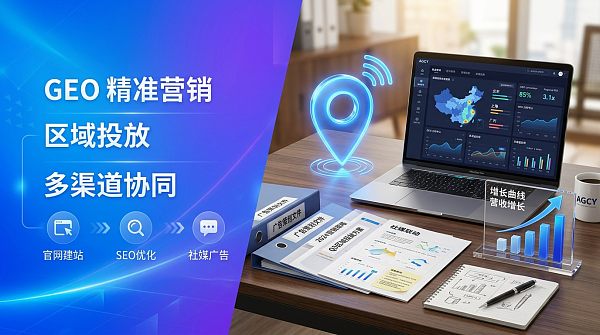
The core value of GEO precision marketing does not lie in the slogan “more precise” itself, but in its ability to prioritize ad budgets toward geographic areas, audience segments, and consumption radiuses that are more likely to convert. For the following types of businesses, it usually has more practical significance:
1. Businesses Naturally and Significantly Influenced by Region
If a company’s transactions are strongly tied to location, such as local services, offline store traffic generation, city-based distributor recruitment, regional dealer network expansion, or localized after-sales support, then GEO precision marketing can significantly improve reach efficiency. This is because such businesses do not need “broad nationwide traffic,” but rather “high-intent traffic in key regions.”
2. Limited Advertising Budget and the Need to Control Ineffective Exposure
Many SMEs and growing brands face the same issue when advertising: the budget is not necessarily small, but the share of traffic that actually generates inquiries, store visits, lead submissions, or transactions is not high. GEO precision marketing is suitable for businesses that want to narrow the scope of waste and improve cost per conversion performance. Especially in Facebook ad optimization, splitting audiences and creative tests by region first is often more effective than broad campaigns when it comes to finding high-ROI markets.
3. Large Differences in Market Maturity Across Regions
Some companies engaged in overseas marketing or cross-regional business find that users in different countries, cities, and channels follow completely different decision-making paths. In such cases, a unified advertising strategy often performs only moderately. GEO precision marketing is better suited to regions where market maturity, purchasing power, competitive intensity, and language and cultural factors differ significantly, using localized content, region-targeted ads, and SEO content optimization to achieve a higher level of relevance.
4. The Need to Balance Customer Acquisition, Conversion, and Service Coordination
For businesses with longer chains such as after-sales maintenance, quality control management, and distributor networks, marketing does not end with simply “getting traffic.” If a region lacks sufficient delivery capacity, has an overly large after-sales service radius, or has an unstable distributor system, then even if front-end advertising generates leads, it may not translate into stable growth. GEO precision marketing is suitable for companies that already have regional service fulfillment capabilities or are building localized channel systems.
Which Specific Campaign Scenarios Deserve Priority Consideration for GEO Precision Marketing
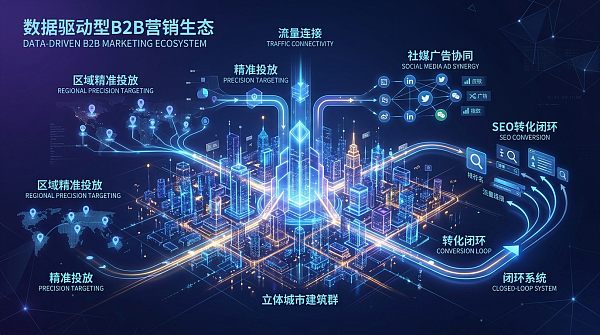
If we only talk about theory, it is difficult to guide actual advertising. The following scenarios are often where GEO precision marketing performs more prominently.
Store Traffic Generation and Local In-Store Conversion
For industries such as education and training, healthcare, home improvement and building materials, automotive services, restaurant chains, beauty services, and lifestyle services, local users are the core target audience. These businesses are best suited to focusing ads around store surroundings, target communities, business districts, or commuting radiuses, then combining holiday campaigns, limited-time offers, reputation content, and map information optimization to improve store visit rates and inquiry rates.
Regional Channel Recruitment and Distributor Expansion
For manufacturers, brand owners, equipment suppliers, and channel-based companies, many advertising goals are not direct product sales, but finding agents, distributors, or partners in a specific region. In this case, GEO precision marketing can help companies deliver targeted communication around key provinces and cities, industrial clusters, active foreign trade zones, or high-growth consumer areas, reducing interference from irrelevant regional traffic.
In this type of management-oriented business scenario, companies care not only about marketing efficiency, but also operational coordination and budget control. For example, when some managers plan regional operations, they may also refer to content such as Analysis of improved comprehensive budget management for manufacturing enterprises driven by strategy to understand the relationship between advertising and operations from the perspectives of budget allocation and growth strategy.
Overseas Market Testing and Expansion Across Multiple Regions
For companies expanding overseas, GEO precision marketing is highly suitable for early-stage market validation. Instead of deploying budgets broadly from the start, it is better to first test a few key countries, major cities, or specific language regions. By evaluating click-through rates, cost per form, add-to-cart rates, lead quality, and subsequent conversion performance, companies can quickly identify markets worth scaling further.
At this stage, social media marketing strategies and SEO content optimization become especially important. Ads can quickly generate data, while SEO can build up regional keyword traffic and brand trust. The combination of the two makes it easier to achieve sustainable growth rather than relying solely on paid traffic.
Promotion of High-Ticket Products with Long Decision Cycles
Products such as industrial equipment, B2B services, software systems, customized solutions, and high-end home furnishings usually do not close after a single exposure. They rely more on “finding the right people in the right regions,” then achieving conversion through content education, trust-building through case studies, lead nurturing, and sales follow-up. The role of GEO precision marketing here is to first narrow the audience scope to those most likely to convert and improve the utilization of sales resources.
To Judge Whether GEO Precision Marketing Is Worth Investing In, Focus on These Key Indicators
Many businesses easily fall into a misunderstanding: as long as a platform supports location-based advertising, they assume GEO precision marketing is right for them. In reality, whether it is worth doing should be judged based on the following factors.
Whether Regional Differences Are Significant Enough
If your product has almost no differences across regions in terms of demand, price acceptance, conversion rate, or competitive environment, then excessive geographic targeting may not bring much value. On the other hand, if certain regions are clearly more likely to convert, GEO precision marketing becomes highly valuable.
Whether You Have the Capability to Support Regionalized Content and Landing Pages
Precision advertising is not as simple as changing one targeting parameter. The content users see after clicking should also match the regional scenario, language habits, service capabilities, and user concerns as much as possible. Otherwise, the front end may appear precise, but weak backend support will still reduce conversion performance. The truly effective approach is to connect ad creatives, localized pages, SEO content, and the inquiry conversion process into one integrated system.
Whether Lead Quality Can Be Verified by Sales or Service Teams
For business decision-makers, what matters most is not surface-level cheap clicks, but whether leads are real, relevant, and likely to convert. Especially for roles related to after-sales maintenance, quality control, and channel business, regional advertising must also consider the ability to fulfill commitments afterward. Good GEO precision marketing does not just bring in more leads, but more leads that are worth following up on.
Is the Campaign Goal Exposure, or Conversion
If the current stage is mainly focused on brand exposure, then GEO precision marketing may not always be the top priority, because an audience that is too narrow may limit brand visibility. But if the goal is lead capture, inquiries, appointments, store visits, channel recruitment, or sales, then it is usually more effective than casting a wide net.
When GEO Precision Marketing Is Not Very Suitable
To avoid misjudgment, it is also necessary to clarify some scenarios where it is less suitable.
Products Weakly Affected by Geography, with Highly Uniform Nationwide Demand
If your product itself is a standardized online service, the target users are evenly distributed nationwide, and the purchase process is highly consistent, then the added benefit of regional targeting may be limited.
The Business Has Not Yet Established a Clear Regional Operations Strategy
If a company is still unclear about where its key markets are, who will handle different regions, and how service radius will be controlled, then implementing GEO precision marketing alone will often only magnify internal coordination problems.
Lack of Ongoing Content and Data Optimization Capabilities
GEO precision marketing is not something you set up once and finish. It requires continuous analysis of audience feedback, creative performance, landing page conversion, and downstream transaction data across different regions. If a company has no data review mechanism, and also lacks SEO content optimization and ad iteration capabilities, then results are likely to remain superficial.
How to Coordinate GEO Precision Marketing with SEO and Social Media Advertising
A truly mature growth model is often not about winning through a single channel, but about connecting multiple touchpoints together.
Use Ads to Validate Regions First, Then Use SEO to Build Traffic
You can first use Facebook ad optimization to test market responses in different regions and identify areas with high click-through rates, high inquiry volume, and strong conversion potential. Then build SEO content around these regions, such as localized solutions, regional case studies, FAQs, and service introductions, to increase organic traffic and brand credibility.
Social Platforms Handle Reach, While the Website Handles Conversion
Social platforms are ideal for quickly reaching target audiences, but what truly determines conversion is often the official website pages, case study content, inquiry forms, and follow-up processes. For companies that integrate website and marketing services, this capability to connect front-end traffic acquisition with back-end conversion support directly affects the final results of GEO precision marketing.
Regional Advertising Should Be Considered in Sync with Operational Budgeting
If a company is preparing for long-term regional expansion, it cannot treat GEO precision marketing merely as a short-term traffic-buying tactic. Instead, it should be included in the company’s overall budgeting and growth planning. As emphasized by content such as Analysis of improved comprehensive budget management for manufacturing enterprises driven by strategy, marketing investment and business objectives need to form a systematic synergy, rather than just localized optimization.
Conclusion: Whether GEO Precision Marketing Is Right for You Depends on “Regional Value,” Not “Technology Hype”
Overall, GEO precision marketing is more suitable for businesses with obvious regional differences, clear conversion goals, strong service fulfillment capabilities, and a desire to improve budget efficiency. Especially in scenarios such as local traffic generation, regional channel recruitment, overseas market testing, and high-ticket product promotion, it is often more effective than broad traffic acquisition campaigns.
However, if a company has a weak regional operations foundation, insufficient content support, and unclear data review, then even if GEO precision marketing is adopted, it may still fail to achieve ideal results. Truly high-quality advertising is not about chasing concepts, but about selecting the right channel mix based on business characteristics, and integrating social media marketing strategies, Facebook ad optimization, and SEO content optimization into a sustainable growth loop.
For businesses, the best standard for judging whether GEO precision marketing is worth investing in is not “everyone else is doing it,” but whether it can bring your business higher-quality leads, a clearer path to regional growth, and a more verifiable return on investment.
Related Articles



Related Products
 EasyCamp SaaS Smart Website Marketing SystemE-Yingbao SaaS Smart Website Marketing System: AI-powered, zero-code website building. Rapidly launch multilingual independent e-commerce sites in just 10 minutes. Global server acceleration and AI-driven SEO optimization empower businesses to efficiently connect with global markets. The seamless integration of technology and user-friendly operation makes building e-commerce sites incredibly simple.
 AI+SEM Intelligent Advertising Marketing SystemAI+SEM drives intelligent ad creation, empowering full-funnel precision advertising marketing. The system automatically generates weekly/monthly reports, AI recommends keywords and target countries, monitors core metrics in real-time with intelligent alerts, and enables one-click high-conversion ad solutions to help quickly acquire customers and improve ROI.
 AI+SEO Dual Engine Optimization ServiceEasyWin AI+SEO Dual Engine Optimization System leverages AI-powered keyword mining, content generation, and comprehensive technical optimization to help foreign trade enterprises acquire high-quality organic traffic, significantly improving search rankings and conversion rates.
 AI+SNS Social Media Marketing SystemYingbao AI+SNS Social Media Marketing System - Precision social capture for the social media era. Supports one-click content synchronization across major platforms like Facebook and LinkedIn. AI intelligently rewrites posts for enhanced relevance. 24/7 AI customer service and user profiling analysis empower businesses to efficiently expand into global markets.
 AI+SEO营销解决方案易营宝AI+SEO营销解决方案,通过AI批量写作、智能生成TDK、精准关键词扩词等功能,全面优化网站SEO效果,提升流量与转化率。助力企业构建高效智能网站新生态。
 AI+SEM Advertising Marketing SolutionsAI+SEM Advertising Marketing Solution leverages AI technology to deeply empower SEM ad campaigns. It automatically generates weekly/monthly reports using AI, presenting account data across multiple dimensions for comprehensive insights into campaign performance and trends. The system precisely recommends keywords and target countries, intelligently generates high-conversion ad copy, and enables one-click activation of efficient campaign plans to help businesses rapidly acquire customers. Simultaneously, it monitors core metrics in real time, intelligently identifies abnormal fluctuations, and issues timely alerts to ensure stable, high-return advertising results.
 Domain Name ServicesEasyWin provides professional domain name services, including intelligent queries, one-stop registration, brand protection, and full lifecycle management, helping businesses build a digital brand image.
 EasyOperate B2C Cross-Border E-Commerce Platform & Independent WebsiteEasyStore B2C Cross-border E-commerce Independent Store is an intelligent website building and cross-border e-commerce integrated solution independently developed by EasyStore Information Technology (Beijing) Co., Ltd. The system is specially designed for small and medium-sized as well as large export enterprises, integrating 'website building, operation, marketing, advertising, and conversion' into one, helping enterprises quickly establish cross-border e-commerce independent stores to achieve brand globalization and global sales growth.
The platform supports multiple languages, multiple currencies, and multi-channel marketing, with built-in AI intelligent translation and SEO optimization systems, suitable for mainstream markets such as Southeast Asia, Europe and America, Latin America, and the Middle East, assisting Chinese manufacturing enterprises in efficiently deploying international e-commerce strategies. SSL证书易营宝提供专业SSL安全证书服务,包括单域名和泛域名证书,确保网站数据传输加密、身份验证和完整性保护,助力企业建立安全可信的在线业务环境。









