









- The China-US tariff arrangement has reached a preliminary consensus, and the trade association will be establishedJun 15, 2026View details
- China-Morocco zero-tariff access, a breakthrough in the cost of Moroccan goods exports to ChinaJun 11, 2026View details
- What signal should be released for the suspension of exports to JapanJun 10, 2026View details
- China's May LNG imports rebounded, with increased volumes from Russia and Canada filling the Middle East supply gapJun 10, 2026View details
- Will GEO change its SEO strategy?Jun 04, 2026View details
- What types of businesses are end-to-end solutions suitable for?Jun 03, 2026View details
- 2026 Global Growth Channel TrendsJun 02, 2026View details
- Changes in Search Engine Ranking Factors in 2026Jun 06, 2026View details
How to Build a Facebook Marketing Strategy to Increase Inquiries
How to build a Facebook marketing strategy? The key lies in integrating content operations, Facebook ad optimization, and data review to form a sustainable inquiry growth funnel.
For the website + marketing integrated services industry, Facebook is not just a posting channel, but a complete touchpoint covering brand awareness, lead generation, remarketing conversion, and customer nurturing. Whether for business decision-makers, operators, distributors, or end consumers, the main concern is not “whether to run ads,” but “after investing, can inquiries grow steadily and can costs remain controllable?”
Yiyingbao Information Technology (Beijing) Co., Ltd. has long served global growth scenarios. Leveraging AI and big data capabilities, it connects smart website building, SEO optimization, social media marketing, and advertising, helping companies truly convert Facebook traffic into official websites and opportunity management systems. For B2B companies, only by planning pages, content, ads, and sales follow-up in a unified way can inquiry growth become more stable.
First build the foundation for inquiry growth: official website, pixel, and conversion path are all indispensable
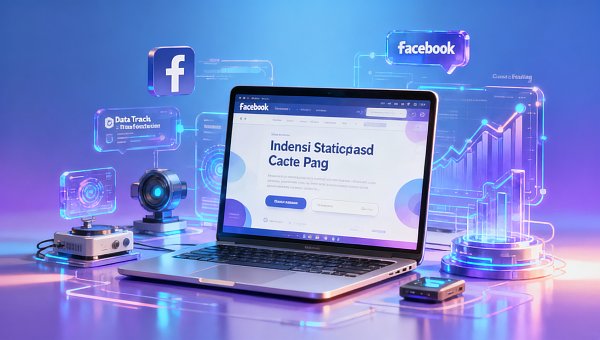
For many companies, ineffective Facebook marketing is not primarily caused by ad creatives, but by an incomplete conversion path. After users click an ad, if they land on a website page that loads slowly, has scattered content, and contains a lengthy form, then even if the click-through rate reaches 2%–4%, the final number of inquiries may still remain low. Website and marketing services must be planned in sync to avoid wasting traffic.
For B2B companies, it is recommended to direct Facebook ad traffic first to a dedicated landing page rather than to a cluttered homepage. A single landing page should be designed around 1 core product line, 2 typical use cases, and 3 differentiated selling points, with form fields controlled between 4–6 items, which is usually more effective for improving conversions than forms with more than 10 fields.
At the same time, deployment of the Facebook Pixel and Conversion API should be completed as early as possible. Without basic data feedback, it is difficult for the ad system to establish effective learning within 7–14 days. Especially in cross-border promotion, industrial product marketing, and solution-based service marketing, companies need to track 4 key events: page views, button clicks, form submissions, and WhatsApp inquiries.
In actual projects, Yiyingbao usually first maps out the four-stage chain of “ads—pages—customer service—CRM” before deciding on the budget rhythm. The value of this approach lies not only in gaining exposure, but in directing every click as much as possible into a trackable, reviewable, and optimizable lead path, laying the foundation for subsequent inquiry growth.
Basic setup for the Facebook inquiry funnel
The table below is suitable for companies to conduct a self-check before officially launching campaigns, especially for teams working on overseas promotion, independent website lead generation, and social media marketing integration.
If these 3 basic items do not meet the standard, even a highly sophisticated Facebook marketing strategy will be difficult to scale effectively. Fix the conversion foundation first, then talk about content and ad optimization, which is usually more aligned with budget efficiency for companies.
Content operations are not about posting updates, but about building trust around buyer decision-making
The core of Facebook content operations is not mechanical daily updates, but building trust around the user decision-making process. From the first brand contact to sending an inquiry, B2B customers usually go through 3 stages: awareness, comparison, and communication. Each stage requires different content formats and messaging priorities, and one single set of copy cannot cover the entire audience.
For users and operators, content should place more emphasis on product use scenarios, process efficiency, and actual results; for business decision-makers, it should highlight ROI logic, delivery capability, service responsiveness, and long-term operational value; for distributors and agents, it should also include channel support, market coordination, and promotional materials. The closer the content is to each role, the stronger the inquiry intent becomes.
It is recommended that companies create at least 3 types of content combinations each week: 1 type of brand credibility content, 1 type of product solution content, and 1 type of customer question-and-answer content. After continuous execution for 8–12 weeks, the quality of homepage engagement and the size of the remarketing audience will become more stable, which is also more beneficial for improving ad conversions.
It is worth noting that many companies only showcase “what we can do,” while ignoring “why customers should inquire right now.” Content should appropriately include information such as cycle, cost, delivery, maintenance, and after-sales service. For example, when introducing a website + marketing integrated solution, it can be compared to a company’s internal management logic. Just like topics such as Problems and Countermeasures in Fixed Asset Management of Public Institutions, truly valuable content often comes from problem breakdown and process improvement rather than slogan-style promotion.
Content types suitable for increasing inquiries
- Case-based content: explain the customer’s original problem, optimization actions, and expected improvement direction, suitable for building professional trust.
- Q&A content: centered on real questions such as “How long is the delivery cycle,” “How should the ad budget be allocated,” and “How should an independent website handle traffic.”
- Comparison content: compare the differences between organic traffic and paid traffic, official website lead capture and instant inquiry, and brand pages and landing pages.
- Process-based content: show the 5-step implementation path from website building, content planning, and campaign testing to data review.
Recommended content publishing frequency
If team resources are limited, you can adopt a rhythm of “3 updates per week, 1 thematic review per month.” Compared with posting low-quality content every day, stable output is more effective in improving the quality of the Facebook homepage and also helps ad accounts accumulate more accurate engagement audiences.
Ad optimization should focus on inquiry cost, not just clicks and impressions
The most common misunderstanding in Facebook ad optimization is treating CTR, impressions, and follower growth as the core results. For website + marketing integrated service companies, what truly matters are cost per lead, effective inquiry ratio, page engagement quality, and subsequent follow-up conversion rate. Only by looking at these metrics together can the budget stay on track.
In the early stage of campaign launch, it is recommended to first run A/B tests with 2–3 audience groups and 3–5 creative sets, with the testing cycle controlled within 5–7 days being more reasonable. If the budget is limited, do not launch too many countries or too many interest tags at the same time, otherwise the learning data will become too fragmented. For B2B customer acquisition, focusing first on core markets, core roles, and core needs is more effective than blindly scaling volume.
At the ad creative level, images and copy are not better just because they are flashy, but because they can quickly explain the value proposition. The first 3 seconds need to answer “who you are, what problem you can solve, and who should inquire.” If it is a solution-based service, it is recommended that the creative clearly present delivery scope, service modules, or typical scenarios, such as independent website building, SEO optimization, social media management, overseas advertising, etc., to reduce invalid clicks.
Remarketing is also an important part of increasing inquiries. Users who have browsed the page but have not submitted a form are usually more likely to convert than cold traffic. It is recommended to segment visitors over 7 days, 14 days, and 30 days, and deliver different creatives based on visit depth, which is more targeted than using only one type of remarketing ad.
Common campaign objectives and applicable scenarios
Companies at different stages should differentiate their ad objective settings. The table below can serve as a reference for budget allocation and campaign direction.
From a practical perspective, what companies fear most is not early-stage testing, but looking only at surface-level data over the long term. Only by aligning ad objectives with business results can a Facebook marketing strategy truly drive inquiry growth.
Data review should form a closed loop: shifting from lead quantity to lead quality
Many teams review ad reports every week, but what truly affects performance is often “whether inquiries enter the sales process, whether customers are a good match, and whether follow-up is timely.” If review stays only at the platform data level, Facebook marketing can easily result in many clicks but few deals.
It is recommended to divide data into 3 layers: the first layer looks at impressions, clicks, and engagement; the second layer looks at page views, dwell time, and form submission rate; the third layer looks at effective inquiry rate, response timeliness, and sales opportunity conversion progress. Only after completing the mapping of these 3 layers can a company know whether the issue lies in ads, pages, or sales follow-up.
For example, if the click-through rate is higher than 2.5% but the form submission rate is lower than 1%, the page and form design usually need to be checked first; if the submission rate is normal but effective inquiries are less than 30%, then the issue is more likely inaccurate targeting or unclear content promises; if there are effective inquiries but no one responds within 24 hours, then even the best campaign will still lose opportunities.
This is also why website building, ad placement, and operational review cannot be separated. The advantage of an integrated service model like Yiyingbao lies in optimizing website structure, content layout, campaign strategy, and lead management together, so that companies are not simply “buying traffic,” but building a sustainable customer acquisition system.
5 core metrics recommended for weekly review
- Whether cost per lead has entered the target range; if fluctuations exceed 20% for 2 consecutive weeks, creatives and audiences need to be checked.
- Whether the landing page conversion rate is stable; if it is below the common industry range, page structure and CTA should be adjusted first.
- Whether the effective inquiry rate is improving, with a focus on whether country, industry, and role are matched.
- Whether the sales first-response time is controlled within 2 hours; delays usually affect the probability of subsequent communication.
- Whether the remarketing audience continues to grow; if the 7-day visitor audience is too small, it indicates insufficient top-of-funnel traffic volume.
Avoid the hidden losses of “only running ads without operations”
When it comes to how to promote international digital marketing, what truly creates a gap is not a single traffic spike, but whether optimization can continue steadily for more than 3 months. Only by creating linkage among content, ads, website, and sales can inquiries avoid fluctuating sharply.
Common misunderstandings and practical recommendations: make Facebook marketing more suitable for long-term B2B growth
When implementing a Facebook marketing strategy, companies commonly make 4 types of mistakes: treating homepage operations as everything, treating ad leads as the final result, neglecting official website conversion, and neglecting long-term data accumulation. These issues may not seem obvious in the short term, but after 2–3 months, they often directly affect the stability of customer acquisition and budget efficiency.
If a company truly wants to increase inquiries, it is recommended to start with “small steps and fast iteration.” First define 1 key market, 1 main product line, and 1 core landing page, then gradually expand to multiple audiences, multiple creatives, and multiple countries. Expanding too early can easily disperse the budget and is also not conducive to the team identifying patterns through review.
In addition, after-sales maintenance staff and operations staff should also participate in content organization. The questions customers most often ask before and after inquiries are often the most suitable to turn into FAQs, short video scripts, and ad copy. Content such as Problems and Countermeasures in Fixed Asset Management of Public Institutions has lasting reading value precisely because it addresses problems directly and provides a path forward, which is also the logic B2B marketing content should learn from.
For companies hoping to improve global growth efficiency, it is even more advisable to choose a service model in which website building, SEO, social media, and advertising are executed collaboratively. Single-point advertising can bring phased results, but only an integrated funnel can make brand accumulation, search visibility, and inquiry conversion grow in sync.
FAQ: the 3 questions companies care about most
1. How long does it take to see inquiry results from Facebook marketing?
If the website, pixel, and creative preparation are relatively complete, preliminary lead data can usually be seen in the first 2–4 weeks; if you want to enter a relatively stable optimization stage, it usually requires 6–8 weeks of continuous testing and review.
2. Should content operations be done first or ad placement first?
It is more recommended to push both forward simultaneously, but prioritize ensuring that the conversion page and tracking system are completed. Content is responsible for building trust, while ads are responsible for amplifying reach. When the two are disconnected, inquiry quality is often unstable.
3. What types of companies are more suitable for an integrated Facebook marketing solution?
Companies that need long-term overseas customer acquisition, have an independent website, hope to integrate SEO and ad traffic, and value lead management and review mechanisms are more suitable for adopting a website + marketing integrated solution.
How to build a Facebook marketing strategy? The truly effective answer is not a single tactic, but establishing a complete system from content seeding, ad reach, and website conversion to data review. For B2B companies, the key to inquiry growth lies in whether the funnel is clear, whether actions are continuous, and whether data is trackable.
If you are planning overseas promotion, independent website customer acquisition, or integrated social media advertising, choosing a service team with collaborative capabilities in website building, SEO, social media, and advertising will be more helpful for controlling trial-and-error costs and improving conversion efficiency. Feel free to contact us now to get a customized solution better suited to your business scenario and further learn about the global digital marketing solution that fits your company.
Related Articles


Related Products
 EasyCamp SaaS Smart Website Marketing SystemE-Yingbao SaaS Smart Website Marketing System: AI-powered, zero-code website building. Rapidly launch multilingual independent e-commerce sites in just 10 minutes. Global server acceleration and AI-driven SEO optimization empower businesses to efficiently connect with global markets. The seamless integration of technology and user-friendly operation makes building e-commerce sites incredibly simple.
 AI+SEM Intelligent Advertising Marketing SystemAI+SEM drives intelligent ad creation, empowering full-funnel precision advertising marketing. The system automatically generates weekly/monthly reports, AI recommends keywords and target countries, monitors core metrics in real-time with intelligent alerts, and enables one-click high-conversion ad solutions to help quickly acquire customers and improve ROI.
 AI+SEO Dual Engine Optimization ServiceEasyWin AI+SEO Dual Engine Optimization System leverages AI-powered keyword mining, content generation, and comprehensive technical optimization to help foreign trade enterprises acquire high-quality organic traffic, significantly improving search rankings and conversion rates.
 AI+SNS Social Media Marketing SystemYingbao AI+SNS Social Media Marketing System - Precision social capture for the social media era. Supports one-click content synchronization across major platforms like Facebook and LinkedIn. AI intelligently rewrites posts for enhanced relevance. 24/7 AI customer service and user profiling analysis empower businesses to efficiently expand into global markets.
 AI+SEO营销解决方案易营宝AI+SEO营销解决方案,通过AI批量写作、智能生成TDK、精准关键词扩词等功能,全面优化网站SEO效果,提升流量与转化率。助力企业构建高效智能网站新生态。
 AI+SEM Advertising Marketing SolutionsAI+SEM Advertising Marketing Solution leverages AI technology to deeply empower SEM ad campaigns. It automatically generates weekly/monthly reports using AI, presenting account data across multiple dimensions for comprehensive insights into campaign performance and trends. The system precisely recommends keywords and target countries, intelligently generates high-conversion ad copy, and enables one-click activation of efficient campaign plans to help businesses rapidly acquire customers. Simultaneously, it monitors core metrics in real time, intelligently identifies abnormal fluctuations, and issues timely alerts to ensure stable, high-return advertising results.
 Domain Name ServicesEasyWin provides professional domain name services, including intelligent queries, one-stop registration, brand protection, and full lifecycle management, helping businesses build a digital brand image.
 EasyOperate B2C Cross-Border E-Commerce Platform & Independent WebsiteEasyStore B2C Cross-border E-commerce Independent Store is an intelligent website building and cross-border e-commerce integrated solution independently developed by EasyStore Information Technology (Beijing) Co., Ltd. The system is specially designed for small and medium-sized as well as large export enterprises, integrating 'website building, operation, marketing, advertising, and conversion' into one, helping enterprises quickly establish cross-border e-commerce independent stores to achieve brand globalization and global sales growth.
The platform supports multiple languages, multiple currencies, and multi-channel marketing, with built-in AI intelligent translation and SEO optimization systems, suitable for mainstream markets such as Southeast Asia, Europe and America, Latin America, and the Middle East, assisting Chinese manufacturing enterprises in efficiently deploying international e-commerce strategies. SSL证书易营宝提供专业SSL安全证书服务,包括单域名和泛域名证书,确保网站数据传输加密、身份验证和完整性保护,助力企业建立安全可信的在线业务环境。









