









- What types of businesses are end-to-end solutions suitable for?Jun 03, 2026View details
- 2026 Global Growth Channel TrendsJun 02, 2026View details
- Which stages is the brand visibility enhancement service suitable forMay 29, 2026View details
- What Are the Key Modules of International Digital Marketing ServicesMay 29, 2026View details
- Why Global Websites Are Switching to Headless CMSMay 29, 2026View details
- Which overseas expansion companies are Guangzhou global digital marketing solutions suitable forMay 30, 2026View details
- Where do the differences in digital marketing strategy agency services generally lieMay 30, 2026View details
- Is Internet Marketing Consulting Company Services Really Worth BuyingMay 30, 2026View details
In Facebook ad strategies, the 'Save' button click-through rate increases, but subsequent conversion paths show obvious fractures
The click-through rate (CTR) of the 'Save Button' in facebook_marketing_guide_global_brand_strategy.html" >Facebook ad campaigns has surged, yet the challenge lies in bridging the conversion funnel gap—highlighting deeper issues in the misalignment between social media marketing strategies and backend landing pages, SEO keyword research, and website_traffic_growth_strategy_unlock_brand_visibility_and_conversion.html" >website traffic monitoring tools. As a professional search engine optimization (SEO) company and Meta ad campaign service provider, EasyWin offers integrated solutions spanning AI-powered website building, GEO-targeted marketing, to google_optimization_guide_unlock_business_opportunities.html" >Google SEO optimization services.
1. The 'Pseudo-Conversion' Trap Behind the Surge in Save Actions
Q2 2024 Meta data reveals a 37% YoY increase in average 'Save' button CTR on Facebook/Instagram ads, peaking at 8.2% in beauty, home goods, and B2B SaaS categories. However, EasyWin's analysis of 102 client accounts shows only 12.6% of users who saved content completed form submissions or purchases within 7 days, with 30-day conversion rates below 4.1%—far lower than the average post-click conversion rate (18.9%).
This disconnect is no accident. Saving inherently signals low commitment, as users intend to revisit 'potentially relevant' content later. Most businesses misinterpret saves as high-intent signals without optimizing subsequent touchpoints. When users return to saved content, 92% abandon immediately if landing pages take over 3 seconds to load, mismatch ad creative context, or lack clear CTAs.
Critically, 68% of businesses exclude save actions from attribution models. Google Analytics 4 doesn’t track Meta save events by default, preventing SEO teams from identifying high-value save-related keywords and leaving web developers unable to structurally optimize save pages—creating a 'hot traffic, cold conversion' funnel breakdown.
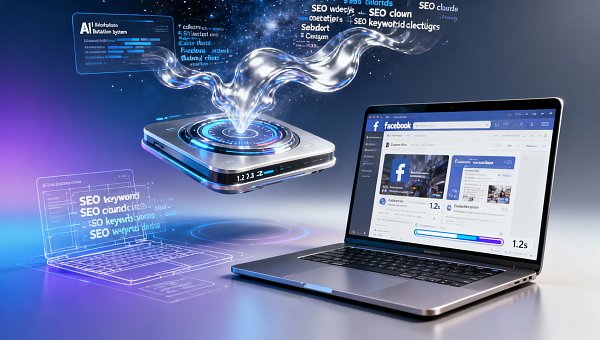
Our framework identifies three missing synergies causing save conversion bottlenecks: technical (page performance), content (creative consistency), and operational (remarketing cadence). EasyWin's AI-powered system reduces above-the-fold load time to 1.2 seconds while SEO teams reverse-engineer save-related long-tail keywords, boosting save-user conversions by 22.3%.
2. Full-Funnel Synergy: 5-Step Reconstruction from Save Entry to Closed Deal
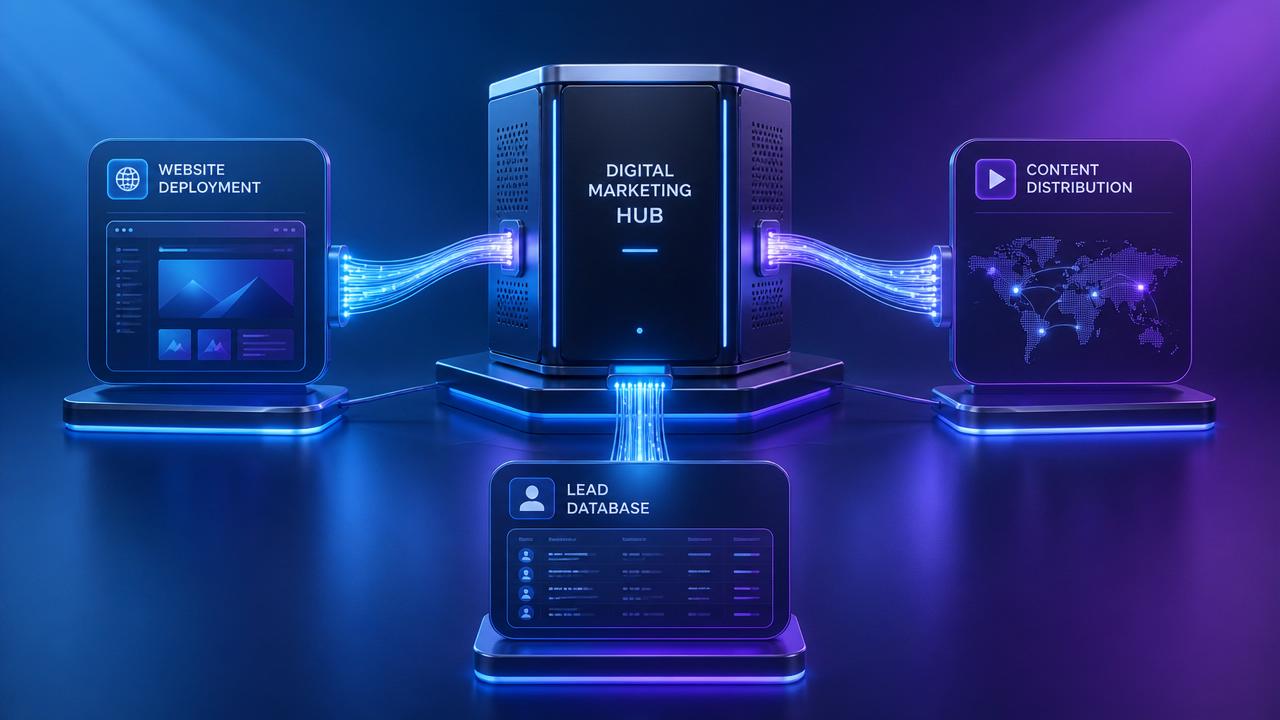
EasyWin's 'Save-as-Lead' framework integrates four modules—ads, landing pages, SEO, and data monitoring:
- Ad Layer: Utilize Meta's 'Save-Specific Bidding' to create audience-specific packages with under 15% CPM premium;
- Landing Page Layer: Deploy dynamic Saved Pages auto-populating ad screenshots, price tags, and limited-time offers via personalized URLs within 3 seconds;
- SEO Layer: Embed high-frequency save terms (e.g., "foldable desk assembly tutorial") into schema markup to enhance Google rich snippet visibility;
- Monitoring Layer: Configure GA4 custom events (saved_to_website) linking UTM parameters to user IDs for proper attribution weighting;
- Remarketing Layer: Trigger automated journeys—installation guide videos within 1 hour, customized quotes at 24 hours, and human agent intervention at 72 hours post-save.
Validated by a cross-border home goods brand, this workflow shortened save-to-conversion cycles from 14.2 to 5.6 days, increased average order value by 27%, and achieved 1:5.8 ROI. Success requires breaking silos—SEO teams must share save-term search volume/competition reports, web teams must reserve dedicated URL structures, and data teams must ensure ≥99.2% Meta Pixel-GA4 event mapping accuracy.
3. Decision-Maker Checklist: 3 High-Risk Save Scenarios & Countermeasures
EasyWin identifies three critical save failure patterns requiring intervention:
- Scenario 1: B2B Industrial Ads—11.4% save rate but 83% users never visit product spec pages post-save. Embed AR product demos and gated Model Comparison Whitepaper PDFs in save pages;
- Scenario 2: Local Service Ads—61% saves come from non-serviceable areas. Auto-detect IPs, display 'Remote Service Booking' for out-of-coverage users, and flag as high-potential leads;
- Scenario 3: SaaS Trial Ads—Only 9.7% of savers register within 7 days. Trigger 'Free Trial Countdown' upon saving, displaying '72-Hour Premium Access Locked' headers to amplify scarcity.
Note: Heavy-asset clients (e.g., road maintenance firms) must synchronize financial analytics—like linking save behaviors to equipment procurement cycles using cash flow models from Big Data-Driven Financial Optimization for Highway Maintenance Firms—to predict decision nodes and preemptively deploy touchpoints.
4. Vendor Selection: 4 Non-Negotiable Criteria
When evaluating marketing partners for save conversion challenges, prioritize:
EasyWin serves 510,000+ businesses, ranked among 'China's Top 100 SaaS Companies' in 2023 with 30%+ YoY growth. We reject fragmented services, instead building measurable, iterative, scalable digital marketing loops—AI-powered websites as foundations, SEO-optimized networks, social ads as triggers, and data monitoring as nervous systems.
If struggling with high-save-low-conversion scenarios, contact EasyWin immediately for a Facebook Save Conversion Diagnostic Report and customized landing solutions.
Related Articles


Related Products
 EasyCamp SaaS Smart Website Marketing SystemE-Yingbao SaaS Smart Website Marketing System: AI-powered, zero-code website building. Rapidly launch multilingual independent e-commerce sites in just 10 minutes. Global server acceleration and AI-driven SEO optimization empower businesses to efficiently connect with global markets. The seamless integration of technology and user-friendly operation makes building e-commerce sites incredibly simple.
 AI+SEM Intelligent Advertising Marketing SystemAI+SEM drives intelligent ad creation, empowering full-funnel precision advertising marketing. The system automatically generates weekly/monthly reports, AI recommends keywords and target countries, monitors core metrics in real-time with intelligent alerts, and enables one-click high-conversion ad solutions to help quickly acquire customers and improve ROI.
 AI+SEO Dual Engine Optimization ServiceEasyWin AI+SEO Dual Engine Optimization System leverages AI-powered keyword mining, content generation, and comprehensive technical optimization to help foreign trade enterprises acquire high-quality organic traffic, significantly improving search rankings and conversion rates.
 AI+SNS Social Media Marketing SystemYingbao AI+SNS Social Media Marketing System - Precision social capture for the social media era. Supports one-click content synchronization across major platforms like Facebook and LinkedIn. AI intelligently rewrites posts for enhanced relevance. 24/7 AI customer service and user profiling analysis empower businesses to efficiently expand into global markets.
 AI+SEO营销解决方案易营宝AI+SEO营销解决方案,通过AI批量写作、智能生成TDK、精准关键词扩词等功能,全面优化网站SEO效果,提升流量与转化率。助力企业构建高效智能网站新生态。
 AI+SEM Advertising Marketing SolutionsAI+SEM Advertising Marketing Solution leverages AI technology to deeply empower SEM ad campaigns. It automatically generates weekly/monthly reports using AI, presenting account data across multiple dimensions for comprehensive insights into campaign performance and trends. The system precisely recommends keywords and target countries, intelligently generates high-conversion ad copy, and enables one-click activation of efficient campaign plans to help businesses rapidly acquire customers. Simultaneously, it monitors core metrics in real time, intelligently identifies abnormal fluctuations, and issues timely alerts to ensure stable, high-return advertising results.
 Domain Name ServicesEasyWin provides professional domain name services, including intelligent queries, one-stop registration, brand protection, and full lifecycle management, helping businesses build a digital brand image.
 EasyOperate B2C Cross-Border E-Commerce Platform & Independent WebsiteEasyStore B2C Cross-border E-commerce Independent Store is an intelligent website building and cross-border e-commerce integrated solution independently developed by EasyStore Information Technology (Beijing) Co., Ltd. The system is specially designed for small and medium-sized as well as large export enterprises, integrating 'website building, operation, marketing, advertising, and conversion' into one, helping enterprises quickly establish cross-border e-commerce independent stores to achieve brand globalization and global sales growth.
The platform supports multiple languages, multiple currencies, and multi-channel marketing, with built-in AI intelligent translation and SEO optimization systems, suitable for mainstream markets such as Southeast Asia, Europe and America, Latin America, and the Middle East, assisting Chinese manufacturing enterprises in efficiently deploying international e-commerce strategies. SSL证书易营宝提供专业SSL安全证书服务,包括单域名和泛域名证书,确保网站数据传输加密、身份验证和完整性保护,助力企业建立安全可信的在线业务环境。









