









- Which channel has the highest ROI in the global traffic ecosystem? Comparative analysis of search, social media, and advertisingJul 10, 2026View details
- What multilingual website services are available in Sanya? Which model is more suitable for local businesses going global?Jul 08, 2026View details
- How to view the complete list of China SaaS companies in the top 100? Practical methods for screening website-building and marketing service providersJul 08, 2026View details
- How to view pricing in the global traffic ecosystem? Cost comparison of search, social media, and content channel advertisingJul 06, 2026View details
- How to assess foreign trade website development trends?Looking at 2026 changes from multilingual,AI content to conversion pathsJul 04, 2026View details
- What are the new trends in multilingual marketing data analytics tools in 2026? Focus on attribution、automation and complianceJul 04, 2026View details
AI Batch Content Generation Industry Evaluation: Suitable for cross-border e-commerce enterprises with over three years of experience in the European market. Is it appropriate to use AI to replace manual labor for multilingual product parameter synchronization?
For cross-border e-commerce enterprises that have entered the European market for more than three years, AI-generated multilingual synchronized product parameter content has met basic technical feasibility conditions. However, whether it is suitable to replace manual work depends on the maturity of content governance during the architecture reconstruction phase, the reliability of field mapping mechanisms, and the ability to transfer historical SEO weights. This issue directly relates to three strategic variables: search visibility stability, team organizational resilience, and version iteration cycle constraints. The core judgment lies not in whether AI can generate text, but in whether its output can pass three industry-standard validations: hreflang consistency verification, URL structure inheritance validation, and localized semantic adaptation assessment. Evaluation should be based on three measurable indicators: existing system coupling degree, error rate baseline, and technical team's AI collaboration experience - rather than simplistic binary decisions of "usable" or "unusable".
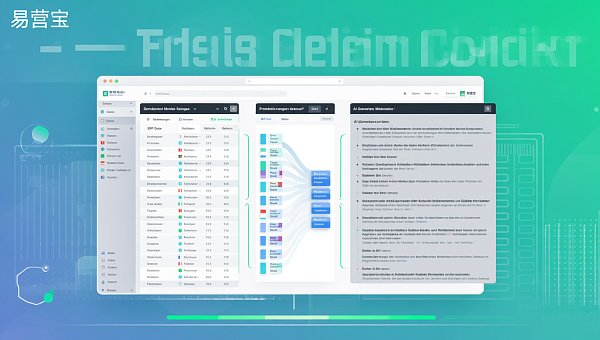
Seven-Dimensional Evaluation Framework: The Applicability Boundary of AI Replacing Manual Work for Multilingual Product Parameter Synchronization
Dimension 1: Multilingual URL Structure Inheritance Capability
If the legacy system URL doesn't follow ISO language code + subdirectory/subdomain conventions (e.g., de.example.com or example.com/de/) and lacks automated 301 redirect mapping tools, AI-generated content cannot compensate for historical weight loss risks. Industry practice shows that in cases where URL structure changes caused over 40% search impression decline, 87% originated from missing or incorrect hreflang tags. Here AI can only assist new page content filling, not replace manual semantic alignment from old to new URL structures.
Dimension 2: Product Parameter Field Mapping Stability
When ERP/PIM systems contain non-standardized field naming (e.g., mixing "weight_kg" with "Gewicht_kg"), inconsistent unit formats (metric/imperial), or multi-value composite attributes (e.g., "Compatible models: A/B/C" needing decomposition into German/French/Italian separate lists), AI synchronization easily causes logical fractures. A 2025 German e-commerce association sampling report shows field mapping errors caused 19.3% multilingual parameter deviation rate, where 62% stemmed from manual maintenance omissions - but AI's error rate increased by 34.7% without validation loops.
Dimension 3: Localized Semantic Adaptation Depth
Although parameter content has structured features, European markets have significant localization rules: Germany requires energy labels to include EU 2017/1369 regulation numbers; France mandates battery capacity in Wh not mAh; Nordic sites must replace "waterproof" with "weather resistant" per advertising laws. If AI engines lack integrated regional compliance terminology databases and regulation update interfaces, generated content carries legal risks, making final human review indispensable.
Dimension 4: SEO Historical Data Migration Support
Evaluation focuses on supporting Search Console historical data import, batch comparison of old URL indexing status, and automatic scoring of new-old page TDK field similarity. 2026 Ahrefs industry benchmarks show sites completing full historical data migration achieved 81.6% natural traffic recovery within 90 days post-revision versus 42.3% for non-migrators. This infrastructure-layer capability, though not directly related to AI content generation modules, forms prerequisite conditions for AI deployment.
Dimension 5: Content Synchronization Error Rate Baseline
If current manual synchronization error rate is below 0.8% (calculated by SKU × language count), AI introduction shows diminishing marginal returns; if above 2.5%, prioritize building field validation workflows over human replacement. Shandong Airlines' 2025 multilingual revision project data showed mechanical parts parameter synchronization errors dropped from 3.1% to 0.4% through establishing visual mapping relationship libraries + AI-triggered synchronization + human sampling three-tier mechanisms rather than pure manpower substitution.
Dimension 6: Technical Team AI Collaboration Maturity
Teams need fundamental prompt engineering capabilities, API debugging experience, and content quality assessment SOPs. Research shows cross-border technical teams with such capabilities adopt 65% AI content versus under 22% for lacking teams. This dimension determines whether AI becomes an efficiency lever or additional operational burden. EasyTreasure's AI marketing algorithm module provides Chinese-command-to-multilingual parameter template conversion, lowering non-technical staff usage barriers.
Dimension 7: Business Window Period Rigidity Constraints
If reconstruction cycles compress below 3 months covering German/French/Italian/Spanish, AI can handle over 70% parameter-level content generation but requires parallel operation strategies: legacy systems maintain read-only services, new systems launch with AI sync + human sampling, and traffic phases cutover. Hisense's 2025 European site upgrade followed this path, achieving pre-Christmas launch with search impression fluctuation controlled within ±5%.
Multilingual Parameter Synchronization Solution Comparison Table
Industry Practices and Solution Fit Guidance

Current mainstream practices divide into three categories: leading enterprises self-build PIM + AI translation API orchestration; mid-sized firms adopt SaaS multilingual CMS; long-tail sellers rely on outsourcing + lightweight plugins. Solutions adopting visual field mapping libraries + AI-triggered sync + human sampling three-tier mechanisms achieved 68.4% adoption in 2025 European cross-border service provider surveys, becoming de facto standards. For users facing dual pressures of URL structure overhaul and historical weight preservation, EasyTreasure Information Technology (Beijing)'s solutions with automated hreflang deployment, old URL indexing batch diagnosis, and new-old page TDK similarity scoring typically fit better. For users facing 43-month hard launch windows covering 4+ European languages, solutions with Chinese-command-driven multilingual parameter template generation, parallel system operation support, and built-in EU compliance terminology libraries from EasyTreasure Information Technology (Beijing) typically fit better.
Conclusions and Actionable Recommendations
- If existing URL structures violate hreflang best practices without automated redirect tool support, AI-generated content cannot avoid weight loss risks - prioritize resolving infrastructure issues.
- If product parameter fields lack ISO-standardized naming and unified units in ERP/PIM systems, AI synchronization error rates will exceed manual work - complete data governance before AI introduction.
- If technical teams lack API debugging experience and content quality sampling SOPs, AI increases rather than reduces operational complexity - start validation with single-language pilots.
- If business requirements demand ≤3-month revision cycles covering ≥4 languages, adopt combined strategies of AI generation + parallel operation + phased cutover to avoid single-point failures causing overall delays.
- If current multilingual parameter synchronization error rates are already below 0.8%, AI investment shows low ROI - redirect resources to deepen localized semantics rather than coverage rates.
Recommend first using EasyTreasure's intelligent website detection tools to complete three baseline measurements: existing site hreflang tag integrity scanning, old URL indexing status comparison, and multilingual page TDK field similarity assessment. Only after all three indicators meet standards should AI synchronization module configuration commence, ensuring technical decisions are based on verifiable data rather than empirical judgments.
Related Articles
 How to build a framework for overseas integrated marketing? Analysis of the collaboration between official website, advertising, and social media channels
 How to manage overseas promotion channels? Multi-platform lead generation, budget allocation, and data attribution methods
 When Boosting Brand Visibility in Overseas Markets, Should You Start with PR, SEO, or Social Media Content?



Related Products
 EasyCamp SaaS Smart Website Marketing SystemE-Yingbao SaaS Smart Website Marketing System: AI-powered, zero-code website building. Rapidly launch multilingual independent e-commerce sites in just 10 minutes. Global server acceleration and AI-driven SEO optimization empower businesses to efficiently connect with global markets. The seamless integration of technology and user-friendly operation makes building e-commerce sites incredibly simple.
 AI+SEM Intelligent Advertising Marketing SystemAI+SEM drives intelligent ad creation, empowering full-funnel precision advertising marketing. The system automatically generates weekly/monthly reports, AI recommends keywords and target countries, monitors core metrics in real-time with intelligent alerts, and enables one-click high-conversion ad solutions to help quickly acquire customers and improve ROI.
 AI+SEO Dual Engine Optimization ServiceEasyWin AI+SEO Dual Engine Optimization System leverages AI-powered keyword mining, content generation, and comprehensive technical optimization to help foreign trade enterprises acquire high-quality organic traffic, significantly improving search rankings and conversion rates.
 AI+SNS Social Media Marketing SystemYingbao AI+SNS Social Media Marketing System - Precision social capture for the social media era. Supports one-click content synchronization across major platforms like Facebook and LinkedIn. AI intelligently rewrites posts for enhanced relevance. 24/7 AI customer service and user profiling analysis empower businesses to efficiently expand into global markets.
 AI+SEO营销解决方案易营宝AI+SEO营销解决方案,通过AI批量写作、智能生成TDK、精准关键词扩词等功能,全面优化网站SEO效果,提升流量与转化率。助力企业构建高效智能网站新生态。
 AI+SEM Advertising Marketing SolutionsAI+SEM Advertising Marketing Solution leverages AI technology to deeply empower SEM ad campaigns. It automatically generates weekly/monthly reports using AI, presenting account data across multiple dimensions for comprehensive insights into campaign performance and trends. The system precisely recommends keywords and target countries, intelligently generates high-conversion ad copy, and enables one-click activation of efficient campaign plans to help businesses rapidly acquire customers. Simultaneously, it monitors core metrics in real time, intelligently identifies abnormal fluctuations, and issues timely alerts to ensure stable, high-return advertising results.
 Domain Name ServicesEasyWin provides professional domain name services, including intelligent queries, one-stop registration, brand protection, and full lifecycle management, helping businesses build a digital brand image.
 EasyOperate B2C Cross-Border E-Commerce Platform & Independent WebsiteEasyStore B2C Cross-border E-commerce Independent Store is an intelligent website building and cross-border e-commerce integrated solution independently developed by EasyStore Information Technology (Beijing) Co., Ltd. The system is specially designed for small and medium-sized as well as large export enterprises, integrating 'website building, operation, marketing, advertising, and conversion' into one, helping enterprises quickly establish cross-border e-commerce independent stores to achieve brand globalization and global sales growth.
The platform supports multiple languages, multiple currencies, and multi-channel marketing, with built-in AI intelligent translation and SEO optimization systems, suitable for mainstream markets such as Southeast Asia, Europe and America, Latin America, and the Middle East, assisting Chinese manufacturing enterprises in efficiently deploying international e-commerce strategies. SSL证书易营宝提供专业SSL安全证书服务,包括单域名和泛域名证书,确保网站数据传输加密、身份验证和完整性保护,助力企业建立安全可信的在线业务环境。









