









- What Does a Global Traffic Ecosystem Service Provider Do? What Are the Differences from a Single Advertising AgencyJul 16, 2026View details
- What should you focus on in the latest enterprise SaaS report? From renewal rates and delivery costs to overseas growth opportunitiesJul 12, 2026View details
- What signals are worth paying attention to in a cross-border marketing trend report? B2B companies should look at these 6 signalsJul 11, 2026View details
- How to Read a Cross-Border Marketing Trends Report? Five Key Dimensions for Evaluating Channel OpportunitiesJul 11, 2026View details
- Which channel has the highest ROI in the global traffic ecosystem? Comparative analysis of search, social media, and advertisingJul 10, 2026View details
- What multilingual website services are available in Sanya? Which model is more suitable for local businesses going global?Jul 08, 2026View details
Arabic Website Design Considerations: Right-to-Left Layout
Right-to-left is not just a matter of direction
The Middle East market is experiencing a structural growth inflection point. In 2023, Saudi Arabia’s “Vision 2030” digital infrastructure investment increased by 47% year-on-year, enterprise-level SaaS procurement in the UAE doubled, and time spent on localized websites in Qatar increased by 3.2 times year-on-year—behind these figures, an underlying variable that has long been underestimated is coming to the surface: key considerations for Arabic website development have been upgraded from an “optional adaptation” to a “compliance threshold.”
Especially in layout logic, “right-to-left (RTL)” is no longer a UI designer’s visual preference, but a critical technical anchor that affects search engine crawling depth, form submission success rates, and even landing page conversion rates. In Yiyingbao’s practice of serving more than 100,000 companies going global, we found that about 63% of SEO indexing abnormalities on websites in the Middle East are rooted not in keyword density or backlink quality, but in missing HTML document direction attributes (dir="rtl"), incomplete CSS RTL resets, or font rendering engines that are not adapted to Arabic ligature rules.
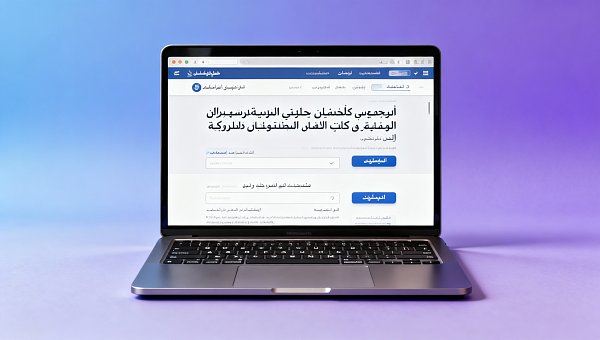
Why layout errors trigger chain reactions
Based on recent customer feedback, the problem often starts with a seemingly minor decision: to save costs, companies simply mirror and flip a Chinese website template before applying Arabic content. This approach overlooks three deeper mechanisms:
- Arabic characters are context-dependent—the same letter takes different forms at the beginning, middle, and end of a word, requiring coordinated support from OpenType fonts and CSS font-feature-settings;
- Under RTL layouts, the DOM order of components such as navigation bars, breadcrumbs, and paginators must be physically reversed, rather than relying only on CSS transform for visual flipping;
- Googlebot applies strict validation logic to the dir attribute. If the HTML root node does not declare dir="rtl", or if lang="ar" conflicts with the dir attribute, the page’s credibility score will be directly downgraded.
What deserves even more attention is that this type of issue is significantly amplified on mobile devices. iOS Safari’s support rate for RTL CSS is 11 percentage points lower than Chrome’s, while iPhone penetration in the Middle East reaches 68%—which means websites without true RTL adaptation may default to fallback rendering modes on core user devices, causing button misalignment, text truncation, and forms that cannot be focused.
The impact has long gone beyond the frontend and deep into the business loop
The consequences of inaccurate layouts are rapidly being transmitted from the user experience layer to the business results layer:
This also means that when companies allocate budgets to Middle East social media campaigns or Google Ads, if the underlying website has not passed W3C RTL standards validation, it is equivalent to placing an invisible funnel leak at the entrance of high-value traffic—money is spent, but users cannot complete the conversion path at all.
True compliance is system-level adaptation
In 2023, Yiyingbao’s cloud intelligent website building system completed an RTL core architecture overhaul. Its logic was not simply to add a dir attribute, but to build a four-layer validation mechanism:
- Semantic layer: automatically identifies Arabic content blocks and dynamically injects lang="ar" and dir="rtl";
- Style layer: preset RTL-specific CSS Reset covering Flexbox reverse ordering, pseudo-element position redefinition, and icon direction flipping;
- Interaction layer: rewrites the event flow of input controls to ensure cursor positioning, text selection, and paste behavior align with Arabic operating intuition;
- Validation layer: integrates the W3C Markup Validator API to forcibly check RTL compatibility scores before release.
This capability has been consolidated into a standardized delivery module. The average time for foreign trade companies to launch Arabic websites has been reduced from 23 days to 5.2 days, and the first-month SEO indexing compliance rate has increased to 98.7%. It is worth noting that the system is also compatible with languages in the same RTL family, such as Persian and Uyghur, providing underlying support for integrated operations across the Middle East + South Asia markets.
In actual business operations, the digital transformation of financial processes likewise requires system-level thinking. For example, On the Path of Enterprise Financial Management Informatization Construction in the Context of the Digital Economy emphasizes the importance of infrastructure adaptation and decoupling from business logic—this is highly consistent with the technical logic of RTL website building: it is not about localized patching, but about redefining the operating rules of the system.
For follow-up assessment, you can first look at these signals
For teams planning to enter the Middle East market, there is no need to wait for a full website launch. You can immediately verify your current level of readiness through three low-cost actions:
- Use Chrome DevTools to simulate an RTL environment and check whether all interactive controls respond correctly;
- Check the “Coverage Report” in Google Search Console, filter by the “Arabic” language dimension, and confirm whether a large number of URLs show a “Skipped” status;
- Invite 3 native Arabic-speaking testers to complete a real inquiry process, and record where they pause during form filling, navigation switching, and price comprehension.
These signals reveal real risks earlier than any third-party report. When multiple signals turn red at the same time, it indicates that the problem has gone beyond frontend optimization and that a full-stack RTL adaptation assessment needs to be initiated.
The essence of key considerations for Arabic website development is respect for the cognitive logic behind the language. It reminds us that globalization is not about translating Chinese content into Arabic, but about letting the technical architecture, interaction patterns, and data flows all relearn another way of thinking. The value Yiyingbao has accumulated over ten years lies in packaging this complexity into reusable, verifiable, and scalable service capabilities—allowing companies to focus on the business itself rather than wrestling with browser engines.
Related Articles

Related Products
 EasyCamp SaaS Smart Website Marketing SystemE-Yingbao SaaS Smart Website Marketing System: AI-powered, zero-code website building. Rapidly launch multilingual independent e-commerce sites in just 10 minutes. Global server acceleration and AI-driven SEO optimization empower businesses to efficiently connect with global markets. The seamless integration of technology and user-friendly operation makes building e-commerce sites incredibly simple.
 AI+SEM Intelligent Advertising Marketing SystemAI+SEM drives intelligent ad creation, empowering full-funnel precision advertising marketing. The system automatically generates weekly/monthly reports, AI recommends keywords and target countries, monitors core metrics in real-time with intelligent alerts, and enables one-click high-conversion ad solutions to help quickly acquire customers and improve ROI.
 AI+SEO Dual Engine Optimization ServiceEasyWin AI+SEO Dual Engine Optimization System leverages AI-powered keyword mining, content generation, and comprehensive technical optimization to help foreign trade enterprises acquire high-quality organic traffic, significantly improving search rankings and conversion rates.
 AI+SNS Social Media Marketing SystemYingbao AI+SNS Social Media Marketing System - Precision social capture for the social media era. Supports one-click content synchronization across major platforms like Facebook and LinkedIn. AI intelligently rewrites posts for enhanced relevance. 24/7 AI customer service and user profiling analysis empower businesses to efficiently expand into global markets.
 AI+SEO营销解决方案易营宝AI+SEO营销解决方案,通过AI批量写作、智能生成TDK、精准关键词扩词等功能,全面优化网站SEO效果,提升流量与转化率。助力企业构建高效智能网站新生态。
 AI+SEM Advertising Marketing SolutionsAI+SEM Advertising Marketing Solution leverages AI technology to deeply empower SEM ad campaigns. It automatically generates weekly/monthly reports using AI, presenting account data across multiple dimensions for comprehensive insights into campaign performance and trends. The system precisely recommends keywords and target countries, intelligently generates high-conversion ad copy, and enables one-click activation of efficient campaign plans to help businesses rapidly acquire customers. Simultaneously, it monitors core metrics in real time, intelligently identifies abnormal fluctuations, and issues timely alerts to ensure stable, high-return advertising results.
 Domain Name ServicesEasyWin provides professional domain name services, including intelligent queries, one-stop registration, brand protection, and full lifecycle management, helping businesses build a digital brand image.
 EasyOperate B2C Cross-Border E-Commerce Platform & Independent WebsiteEasyStore B2C Cross-border E-commerce Independent Store is an intelligent website building and cross-border e-commerce integrated solution independently developed by EasyStore Information Technology (Beijing) Co., Ltd. The system is specially designed for small and medium-sized as well as large export enterprises, integrating 'website building, operation, marketing, advertising, and conversion' into one, helping enterprises quickly establish cross-border e-commerce independent stores to achieve brand globalization and global sales growth.
The platform supports multiple languages, multiple currencies, and multi-channel marketing, with built-in AI intelligent translation and SEO optimization systems, suitable for mainstream markets such as Southeast Asia, Europe and America, Latin America, and the Middle East, assisting Chinese manufacturing enterprises in efficiently deploying international e-commerce strategies. SSL证书易营宝提供专业SSL安全证书服务,包括单域名和泛域名证书,确保网站数据传输加密、身份验证和完整性保护,助力企业建立安全可信的在线业务环境。









