









- Which channel has the highest ROI in the global traffic ecosystem? Comparative analysis of search, social media, and advertisingJul 10, 2026View details
- What multilingual website services are available in Sanya? Which model is more suitable for local businesses going global?Jul 08, 2026View details
- How to view the complete list of China SaaS companies in the top 100? Practical methods for screening website-building and marketing service providersJul 08, 2026View details
- How to view pricing in the global traffic ecosystem? Cost comparison of search, social media, and content channel advertisingJul 06, 2026View details
- How to assess foreign trade website development trends?Looking at 2026 changes from multilingual,AI content to conversion pathsJul 04, 2026View details
- What are the new trends in multilingual marketing data analytics tools in 2026? Focus on attribution、automation and complianceJul 04, 2026View details
How to implement a multilingual website solution for foreign trade in the Middle East market? Integrated planning of language, payment, and server solutions.
When building a website for the Middle East market, the first issue to address is not translation, but rather establishing a trust pathway.
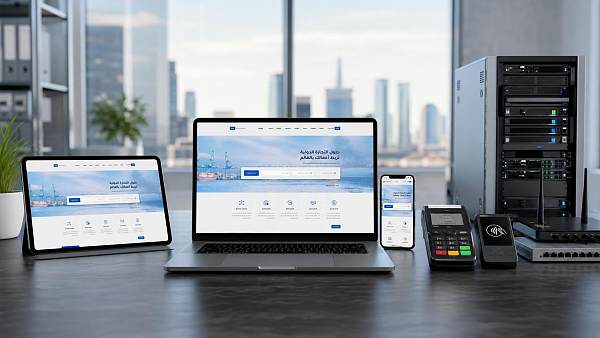
When setting up a presence in the Middle East market, many websites attract traffic after launch but fail to generate effective inquiries or orders. The problem often lies not in the traffic itself, but in the flawed planning sequence for the Middle East market within a multilingual website solution for foreign trade.
Arabic content, local payment, server nodes, and mobile experience all follow the same conversion path. Simply changing the language makes the page look like a local site, but the actual user experience is different. Local users are likely to churn due to payment, loading speed, or form issues.
Multilingual website solutions for foreign trade in the Middle East market require integrated planning because the decision-making logic here places great emphasis on consistency in details. Whether a website can be indexed by search engines, whether the landing page can handle clicks, and whether the brand appears reliable are all related to the underlying technical architecture.
In practical applications, website construction and marketing services cannot be viewed separately. When E-Creation provides overseas independent websites, SEO optimization, advertising, and social media operations, it typically considers website structure, content indexability, and local access experience within the same evaluation framework, rather than treating them as separate processes.
Why are the demands so different even when both are operating on Middle Eastern websites?
The Middle Eastern market is not a single environment. The Gulf region, the Arabic-speaking areas of North Africa, and business cities where English is widely spoken all have different browsing habits, payment acceptance rates, and page content priorities.
For B2B inquiry-based websites, the key factors for evaluation are usually the credibility of the language, the clarity of the product structure, and the efficiency of form response. For B2C cross-border e-commerce platforms, payment success rate, logistics information, and the smoothness of mobile ordering are often more critical.
More commonly, a website simultaneously serves as a brand showcase, handles advertising, and acquires customers through search. In this case, a multilingual website solution for the Middle East market cannot be configured for a single purpose; otherwise, a particular环节 (link/step) will become a bottleneck in conversion rates.
First, distinguish between three common implementation goals.
- Primarily focused on inquiries: Greater emphasis is placed on the trustworthiness of Arabic-language pages, product categorization logic, and contact pathways.
- Primarily focused on retail transactions: greater emphasis is placed on local payments, simplified settlement processes, and faster mobile loading speeds.
- Focusing on brand exposure: Emphasizing content indexing, regional access stability, and seamless integration of multi-channel campaigns.
When creating an inquiry-based website, the language experience determines the first layer of filtering.
Many companies, when developing multilingual website solutions for the Middle Eastern market, first copy their English website and then translate it into Arabic. The problem is that Arabic involves more than just textual changes; it also involves right-to-left reading, field order, navigation placement, and layout rhythm.
If a page contains Arabic text but retains the layout logic of an English website, local users will typically interpret it as a "site geared towards the Middle East," rather than a "site suitable for use in the Middle East." This directly impacts dwell time and willingness to submit forms.
In these scenarios, it's recommended to first determine whether core sections need independent restructuring, including the homepage's main screen, product categories, company introduction, certifications and qualifications, FAQs, and contact page. Compared to general translation, these locations have a greater impact on inquiry quality.
If you also want to leverage Google SEO for long-term customer acquisition, you need to handle Arabic URLs, language tags, sitemaps, and page meta information simultaneously. Otherwise, while the website may appear to be multilingual, search engines will struggle to accurately understand the relationships between different regions of content.
When cross-border e-commerce platforms enter the Middle East, the payment and settlement process is more prone to order loss.
In the Middle Eastern e-commerce landscape, a visually appealing website doesn't guarantee smooth transactions. For multilingual websites targeting the Middle Eastern market, neglecting local payment compatibility means that even the most comprehensive front-end will be diluted by a high bounce rate, ultimately harming advertising costs.
A common misjudgment is simply integrating internationally accepted payment methods without assessing the target country's common payment preferences, currency display methods, and the difficulty of filling out billing information. Every extra step a user takes at checkout significantly reduces order conversion rates.
A more prudent approach is to streamline the payment interface, tax and fee explanations, shipping rules, and return/exchange policies all at once. Payment is not an isolated module; it affects trust, customer service workload, and repeat purchase decisions.
When Yiyingbao integrates its cross-border e-commerce system with its advertising landing pages, it typically optimizes payment success rate along with page loading, form length, and button placement, as these factors are amplified on mobile devices.
The server and access path determine whether a website can be viewed stably.
Many multilingual website solutions for foreign trade in the Middle East market, while seemingly lacking in content, actually suffer from unstable loading speeds. Especially after running ads or using social media for traffic, slow page loading and incomplete resource loading directly damage first-screen conversion rates.
Regional server deployment should be considered in conjunction with the target country, content type, and promotion method. If the primary focus is on search engine customer acquisition, stable crawling is essential. If the primary focus is on advertising, the response capacity during peak access times and the efficiency of static resource distribution are even more important.
Before deployment, it's necessary to confirm not only the server's location region, but also CDN strategy, image compression, number of scripts, form API stability, and whether multi-language pages share excessively redundant templates. In the Middle East market, where mobile devices are prevalent, technical details directly impact the results.
The focus of configuration differs depending on the scenario.
Separating website development and marketing often amplifies costs in the Middle East market.
The real challenge in building a website for the Middle East market lies in coordination. Website structure, SEO indexing, advertising, social media traffic generation, and AI search visibility are inherently interconnected. Working on them separately can easily lead to data gaps and redundant rework.
For example, the advertising team wants a faster first-screen display, the SEO team requires more complete content hierarchy, and the tech team is worried that multi-language templates are too bulky. Without a unified solution, the final product often leaves both sides dissatisfied, while the budget continues to be consumed.
This is why an integrated website and marketing service is more suitable for providing multilingual website solutions for foreign trade in the Middle East market. Platforms like EasyCare, which have long covered intelligent website building, SEO optimization, advertising, and social media operations, have the advantage not only in having a variety of tools, but also in planning the structure and customer acquisition methods together from the beginning.
Several issues most prone to misjudgment before landing
First, treat the Arabic website as a supplementary version of the English website. This approach allows for quick launch, but results in a weak local experience, and subsequent modifications are usually more expensive than the initial plan.
Second, focusing solely on website development costs while ignoring maintenance costs. Multilingual content updates, payment interface maintenance, node optimization, and ad page iterations are all long-term processes, not a one-time delivery.
Third, the Gulf market is not treated as identical to other Arabic-speaking regions. Similar languages do not equate to identical consumer habits, payment preferences, or page layouts.
Fourth, prioritizing speed of deployment while neglecting future scalability. If SEO, advertising, social media, and AI search optimization are to be integrated later, the lack of a pre-defined infrastructure will significantly increase the cost of modification.
A truly feasible planning approach is to first define the scenario and then determine the technology combination.
When developing multilingual website solutions for foreign trade in the Middle East market, a more prudent approach is to first clarify the website's intended function, and then work backward to determine how the language, payment, and server layers should be combined, rather than selecting a template first and then adding features later.
- First, list the target countries and main customer acquisition channels, and then determine whether to prioritize search or advertising.
- Reconfirm the website's core objectives: is it to generate inquiries and sales, or to simultaneously showcase the brand and get content indexed?
- The following analysis outlined the Arabic page scope, payment interface combinations, and server and CDN deployment strategies.
- Finally, we will configure the content production, SEO structure, placement pages, and data tracking in a unified manner.
The advantage of this approach is that every step corresponds to a real-world business scenario. The website will not just be a showcase page, but a robust overseas growth infrastructure capable of continuously supporting search, advertising, social media, and subsequent conversions.
If you are evaluating a multilingual website solution for foreign trade in the Middle East market, the next step is not to rush to launch, but to first align the language experience, local payment, server nodes, content inclusion, and operation and maintenance conditions one by one before deciding on the implementation pace.
Related Articles
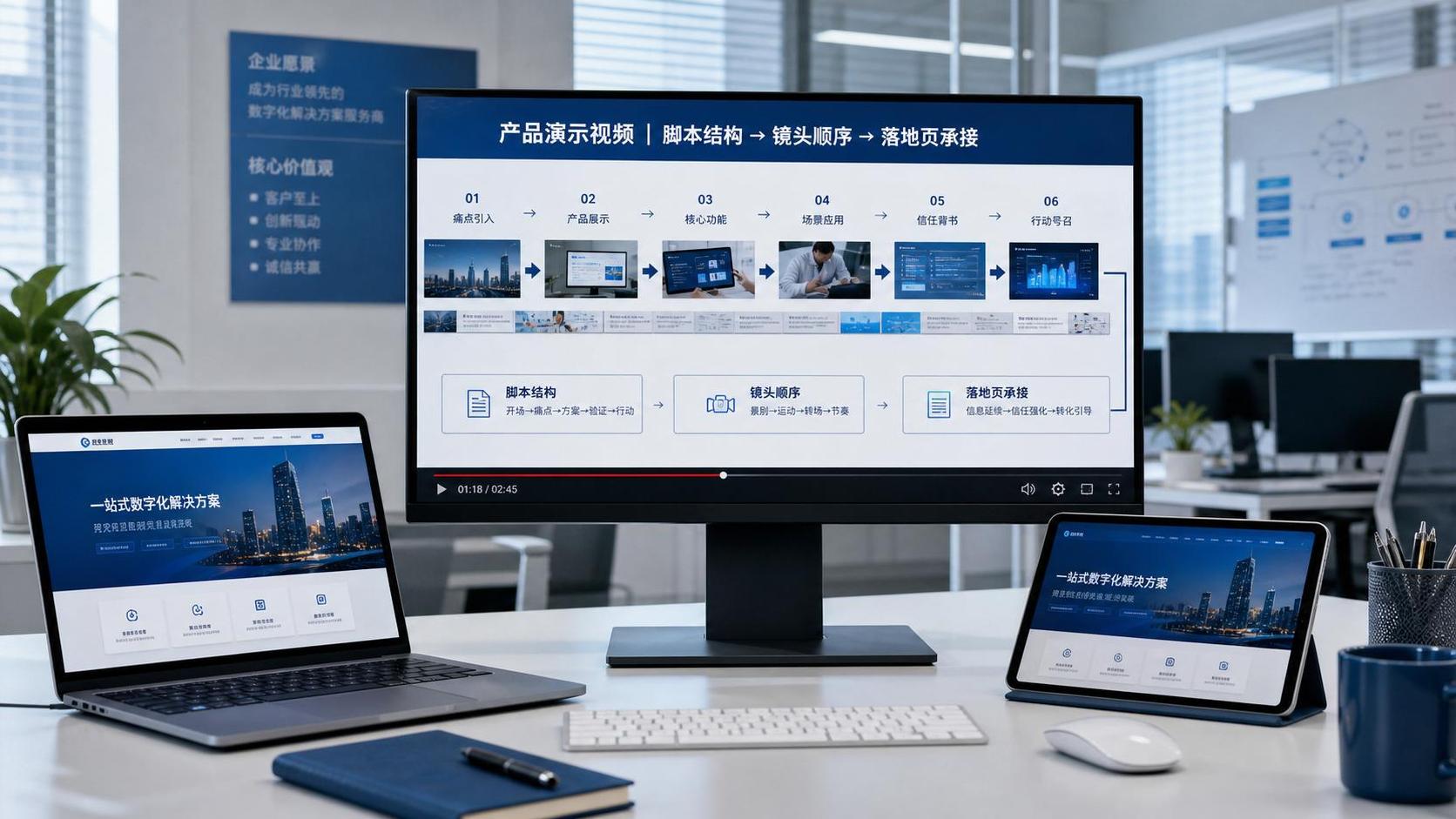
 How to make product demo production more conversion-friendly? Script structure, camera shot sequence, and page alignment
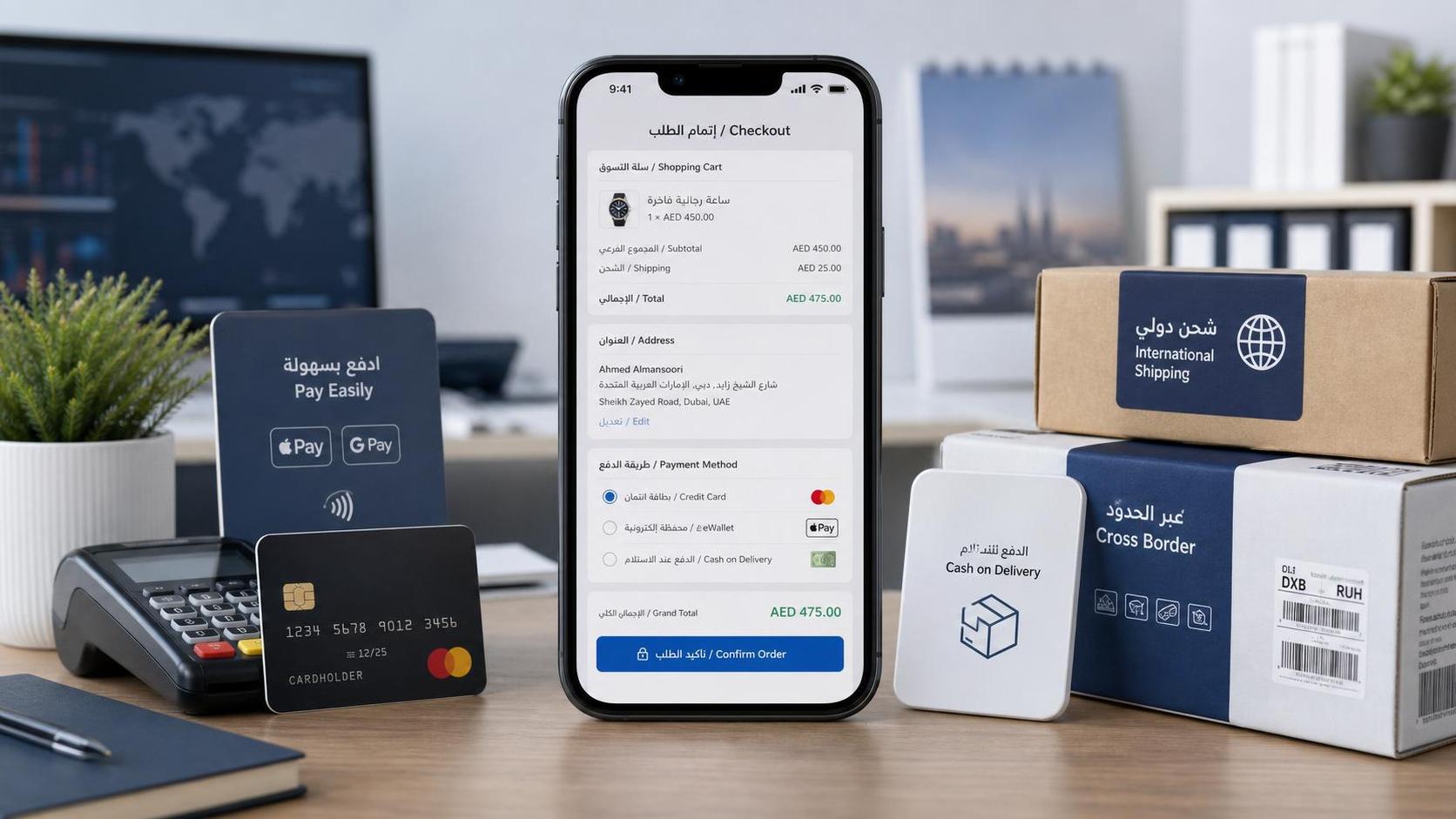
 What payment and website combination yields high conversion rates in the Middle East market? Configuration recommendations for independent websites.
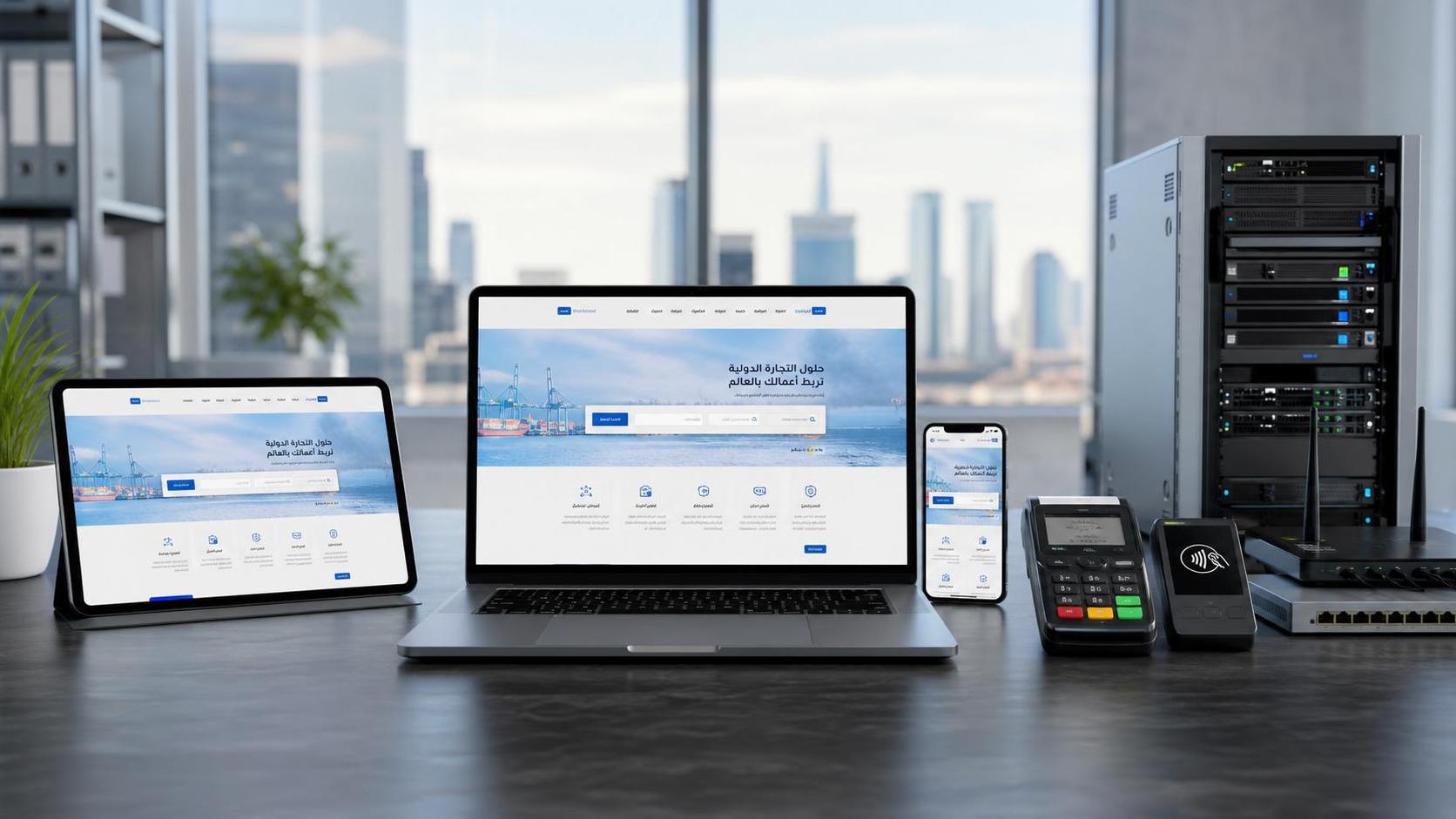
 How to implement a multilingual website solution for foreign trade in the Middle East market? Integrated planning of language, payment, and server solutions.
Related Products
 EasyCamp SaaS Smart Website Marketing SystemE-Yingbao SaaS Smart Website Marketing System: AI-powered, zero-code website building. Rapidly launch multilingual independent e-commerce sites in just 10 minutes. Global server acceleration and AI-driven SEO optimization empower businesses to efficiently connect with global markets. The seamless integration of technology and user-friendly operation makes building e-commerce sites incredibly simple.
 AI+SEM Intelligent Advertising Marketing SystemAI+SEM drives intelligent ad creation, empowering full-funnel precision advertising marketing. The system automatically generates weekly/monthly reports, AI recommends keywords and target countries, monitors core metrics in real-time with intelligent alerts, and enables one-click high-conversion ad solutions to help quickly acquire customers and improve ROI.
 AI+SEO Dual Engine Optimization ServiceEasyWin AI+SEO Dual Engine Optimization System leverages AI-powered keyword mining, content generation, and comprehensive technical optimization to help foreign trade enterprises acquire high-quality organic traffic, significantly improving search rankings and conversion rates.
 AI+SNS Social Media Marketing SystemYingbao AI+SNS Social Media Marketing System - Precision social capture for the social media era. Supports one-click content synchronization across major platforms like Facebook and LinkedIn. AI intelligently rewrites posts for enhanced relevance. 24/7 AI customer service and user profiling analysis empower businesses to efficiently expand into global markets.
 AI+SEO营销解决方案易营宝AI+SEO营销解决方案,通过AI批量写作、智能生成TDK、精准关键词扩词等功能,全面优化网站SEO效果,提升流量与转化率。助力企业构建高效智能网站新生态。
 AI+SEM Advertising Marketing SolutionsAI+SEM Advertising Marketing Solution leverages AI technology to deeply empower SEM ad campaigns. It automatically generates weekly/monthly reports using AI, presenting account data across multiple dimensions for comprehensive insights into campaign performance and trends. The system precisely recommends keywords and target countries, intelligently generates high-conversion ad copy, and enables one-click activation of efficient campaign plans to help businesses rapidly acquire customers. Simultaneously, it monitors core metrics in real time, intelligently identifies abnormal fluctuations, and issues timely alerts to ensure stable, high-return advertising results.
 Domain Name ServicesEasyWin provides professional domain name services, including intelligent queries, one-stop registration, brand protection, and full lifecycle management, helping businesses build a digital brand image.
 EasyOperate B2C Cross-Border E-Commerce Platform & Independent WebsiteEasyStore B2C Cross-border E-commerce Independent Store is an intelligent website building and cross-border e-commerce integrated solution independently developed by EasyStore Information Technology (Beijing) Co., Ltd. The system is specially designed for small and medium-sized as well as large export enterprises, integrating 'website building, operation, marketing, advertising, and conversion' into one, helping enterprises quickly establish cross-border e-commerce independent stores to achieve brand globalization and global sales growth.
The platform supports multiple languages, multiple currencies, and multi-channel marketing, with built-in AI intelligent translation and SEO optimization systems, suitable for mainstream markets such as Southeast Asia, Europe and America, Latin America, and the Middle East, assisting Chinese manufacturing enterprises in efficiently deploying international e-commerce strategies. SSL证书易营宝提供专业SSL安全证书服务,包括单域名和泛域名证书,确保网站数据传输加密、身份验证和完整性保护,助力企业建立安全可信的在线业务环境。









