









- Which channel has the highest ROI in the global traffic ecosystem? Comparative analysis of search, social media, and advertisingJul 10, 2026View details
- What multilingual website services are available in Sanya? Which model is more suitable for local businesses going global?Jul 08, 2026View details
- How to view the complete list of China SaaS companies in the top 100? Practical methods for screening website-building and marketing service providersJul 08, 2026View details
- How to view pricing in the global traffic ecosystem? Cost comparison of search, social media, and content channel advertisingJul 06, 2026View details
- How to assess foreign trade website development trends?Looking at 2026 changes from multilingual,AI content to conversion pathsJul 04, 2026View details
- What are the new trends in multilingual marketing data analytics tools in 2026? Focus on attribution、automation and complianceJul 04, 2026View details
What payment and website combination yields high conversion rates in the Middle East market? Configuration recommendations for independent websites.
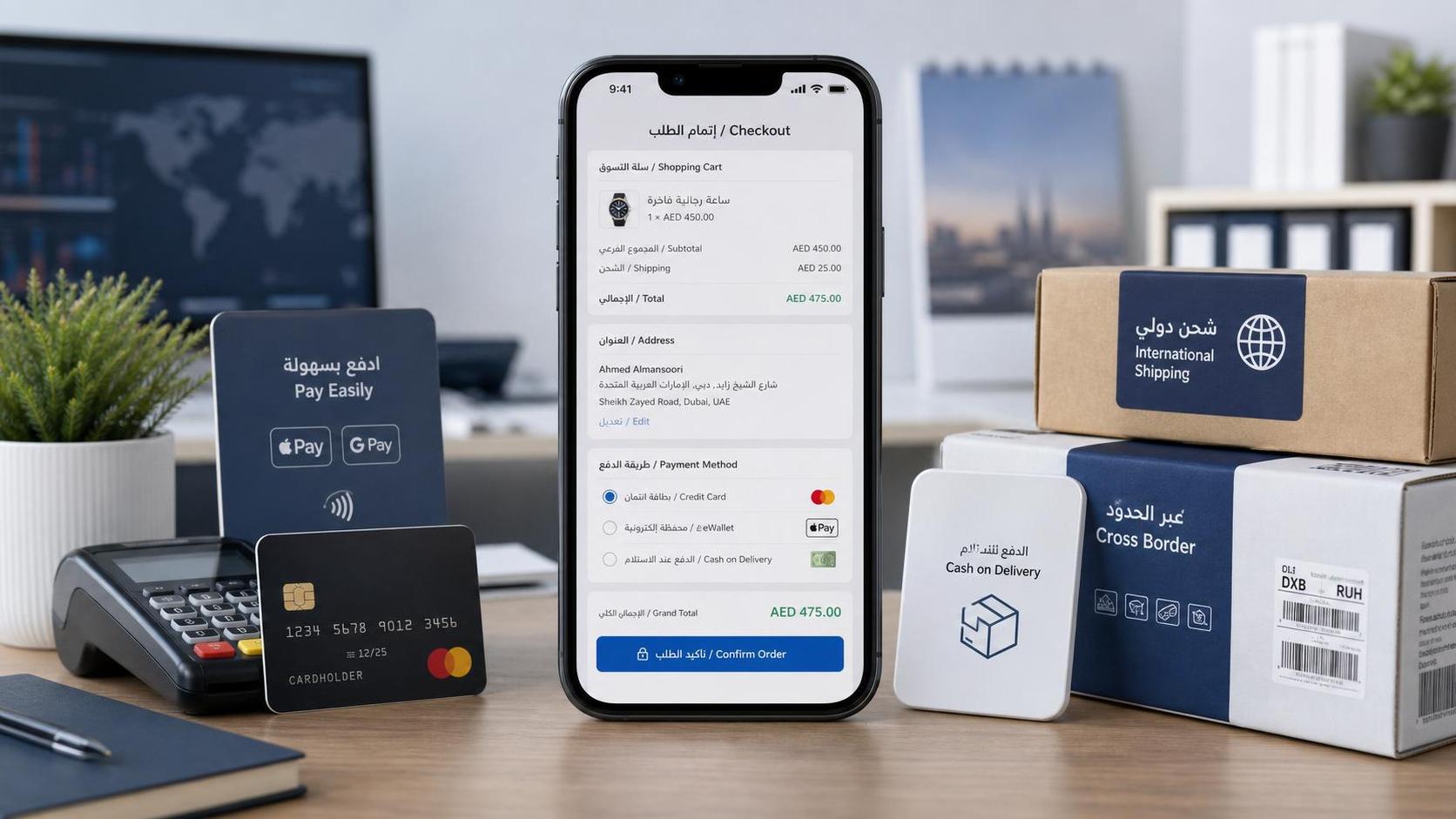
What payment method and website building combination yields high conversion rates in the Middle East market? First, let's look at how users place orders.
What payment and website combination yields high conversion rates in the Middle East market? Many companies initially focus solely on payment channels, resulting in website access but not necessarily conversions. The real difference often lies in whether payment methods, website design, localization, and trust mechanisms are all implemented effectively.
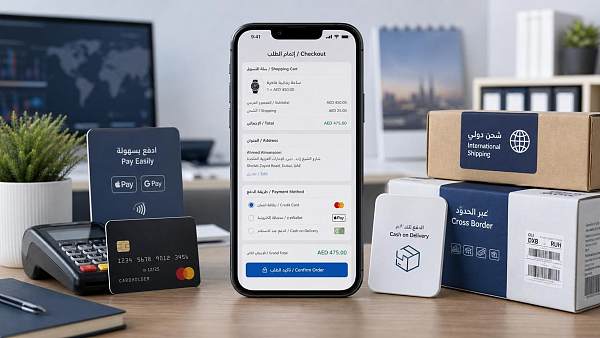
Recent changes indicate that Middle Eastern consumers are more sensitive to mobile experiences and pay greater attention to delivery speed, payment security, and brand credibility. This means that determining which payment and website combination yields high conversion rates in the Middle Eastern market requires considering the entire value chain, rather than focusing on a single plugin or payment service provider.
In practice, the recommended configuration for independent websites is not "the more features the better," but rather "the closer to local purchasing habits the better." Especially in the Gulf region, mobile ordering, Arabic language browsing, installment payments, cash on delivery, and local wallets all directly impact bounce rate and payment completion rate.
Why are independent websites in the Middle East so highly convertible? It's not just about payment integration.
The key to high conversion rates in the Middle Eastern market lies in understanding which payment method and website strategy work best for users. Essentially, it boils down to three questions: are users willing to stay, are they willing to buy, and can they make a payment smoothly? If only the last step is addressed, and the first two fail, the conversion rate will still be low.
Many companies expanding overseas encounter the same situation. Ad clicks are high, but add-to-cart rates are low; even when add-to-cart is achieved, the checkout abandonment rate is high; orders are placed, but repeat purchases are generally low. A more obvious signal is that the problem often lies not in traffic, but in website configuration and insufficient local trust.
Therefore, when discussing which payment method and website combination will yield high conversion rates in the Middle East market, at least five capabilities must be considered: multilingual display, mobile loading, payment compatibility, logistics information, and trust endorsement. Missing any one of these will negatively impact the final transaction.
Here's a suggested payment combination for the Middle East market.
To answer the question of which payment and website combination yields the highest conversion rate in the Middle Eastern market, the payment options should ideally be configured as "credit card + local wallet + cash on delivery + installment payment". This combination offers broader coverage and better aligns with the payment preferences of different consumer segments.
- Credit card payment gateway: A basic configuration suitable for cross-border independent websites, covering mainstream online payment needs.
- Local wallets: can enhance familiarity for local users and shorten payment decision time.
- Cash on delivery: This is especially important for new brands, as it can alleviate the distrust of first-time buyers.
- Buy now, pay later or installment plan: suitable for categories with higher average order value, such as home furnishings, electronics and beauty sets.
It's important to note that cash on delivery (COD) is not suitable for all industries. If the average order value is low, the risk of returns is high, and the delivery radius is long, blindly offering it will increase fulfillment costs. A more prudent approach is to set conditions based on country, product category, and order amount.
For businesses looking to improve efficiency, payment pages should ideally support local currency display, tax explanations, and shipping cost estimates. The clearer the information is before payment, the less likely users are to exit at the last step. This is also a frequently overlooked aspect when discussing which payment method and website combination yields high conversion rates in the Middle Eastern market.
How should the website be configured to accommodate Middle Eastern payment habits?
Once the payment combination is determined, the website building system must be able to smoothly integrate these capabilities. Otherwise, even if the API is integrated, if the page logic is flawed, conversion rates will still be lost. The key to high conversion rates for payment and website building combinations in the Middle East market lies in whether the website can maximize the value of the payment options.
Configuration recommendations for independent websites typically include these basic items:
- It supports bilingual switching between Arabic and English, and key pages can be optimized with localized copy.
- Mobile-first design, with buttons, forms, and checkout pages requiring the shortest possible steps.
- The settlement page has been streamlined to avoid requesting too much information at once.
- The product page prominently displays delivery commitments, after-sales policies, and payment security labels.
- The page loads at a stable speed, preventing slow loading during peak hours from causing user churn.
If a website also serves the purpose of customer acquisition, then the website building system must also take into account SEO, ad placement, and data tracking. The value of integrated website + marketing service solutions like YiYingBao lies in unifying website building, payment processing, search engine optimization, and ad conversion within a single system, reducing the losses caused by fragmented multi-system architecture.
A more practical high-conversion combination reference
If a company is evaluating which payment and website combination will have a high conversion rate in the Middle East market, it can start with a relatively safe standard configuration and then continuously optimize it based on the campaign data.
The key to this combination isn't piling on features, but rather minimizing user hesitation, backtracking, and interruptions from entering the website to completing payment. For independent websites, this is more direct than simply increasing traffic.
Three common pitfalls for businesses when setting up operations in the local market
First, focus solely on the English website, neglecting localization. Even if users understand English, it doesn't guarantee they'll place an order. Localization isn't simply about translation; it's about building familiarity and trust for purchase.
Secondly, they only accept international payments, ignoring local preferences. This issue is even more pronounced for new brands. The answer to which payment method and website combination yields the highest conversion rate in the Middle Eastern market invariably hinges on respecting local payment habits.
Third, website building and marketing are done separately. The page structure is not designed for ad conversion, and the SEO content is not laid out around real needs, which will eventually result in a situation where "there is a website, people visit it, but no one buys."
How to determine if your independent website configuration is appropriate?
Determining which payment method and website combination will yield high conversion rates in the Middle East market doesn't require experience alone; several key metrics can be considered. These include mobile bounce rate, add-to-cart rate, exit rate from the payment page, percentage of cash-on-delivery orders, and differences in inquiries across different language versions.
If mobile traffic is high but conversion rates are significantly low, it usually indicates a problem with the page experience. If adding items to the cart is normal but payments drop significantly, it's likely due to a mismatch in payment methods or a lack of trust in the checkout page. These signals are more reliable than subjective judgments.
For companies aiming for a long-term presence in the Middle East market, an integrated solution that combines AI-powered website building with multilingual SEO, advertising, and data optimization is highly recommended. This eliminates the need for repeated system rebuilds when expanding into new countries, product categories, and distribution channels.
Conclusion: The key to high-conversion combinations lies in synergy rather than single-point optimization.
Returning to the initial question, what payment and website combination yields high conversion rates in the Middle Eastern market? A more practical answer is: base it on local payment preferences, focus on the mobile website experience, and then complete the conversion chain with multilingual content, trust design, and marketing support.
The configuration recommendations for independent websites are not a fixed template, but a systematic solution that can be continuously iterated upon based on market conditions, product categories, and user behavior. Whoever can integrate payment, website building, and marketing earlier will find it easier to achieve stable growth in the Middle Eastern market.
If your site is already investing in traffic but is stuck at the conversion stage, prioritize checking whether the payment structure, language version, payment path, and trust information are truly adapted to local users. If this step is done correctly, inquiries and sales will usually see results much faster.
Related Articles
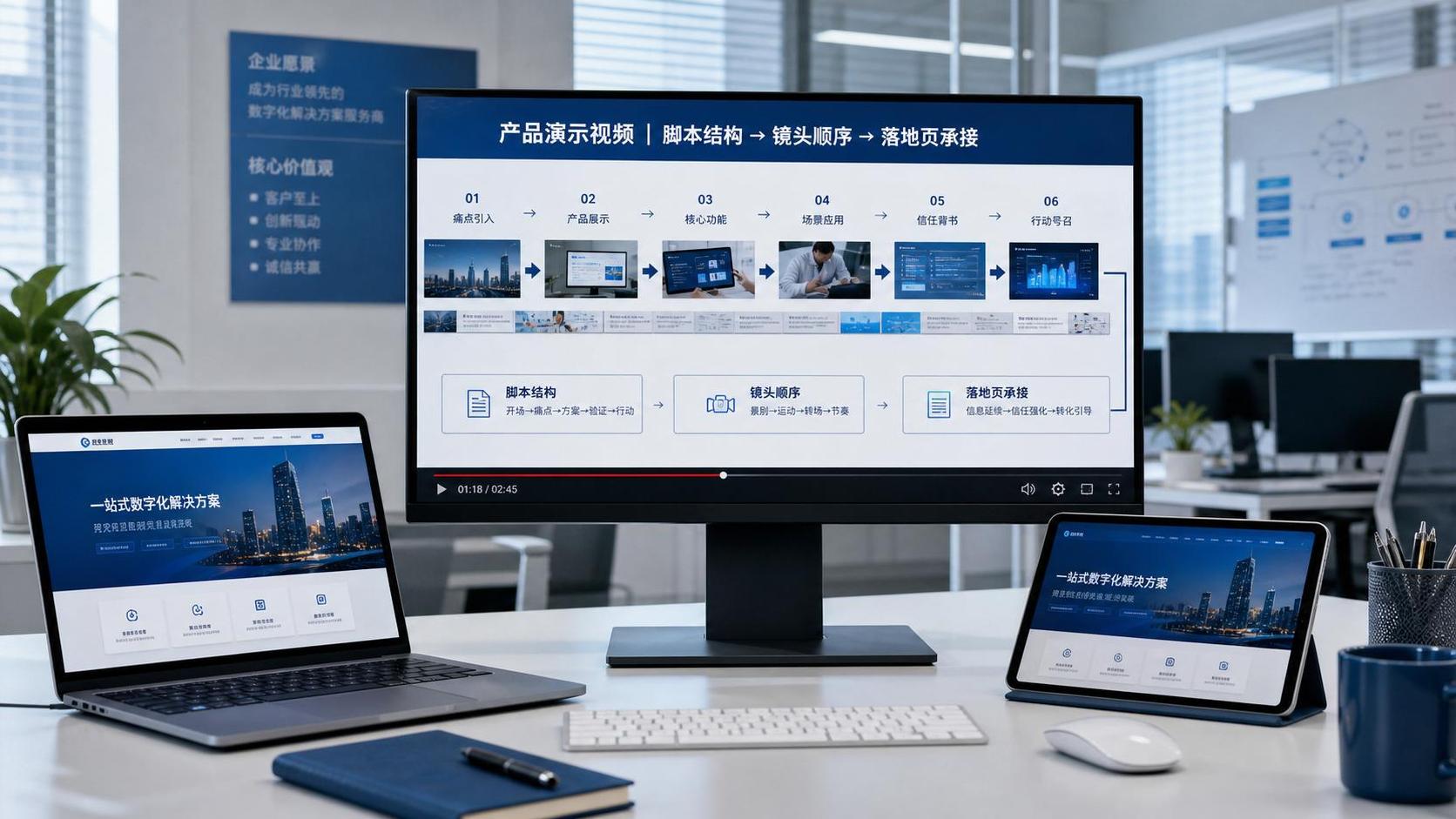
 How to make product demo production more conversion-friendly? Script structure, camera shot sequence, and page alignment
 What payment and website combination yields high conversion rates in the Middle East market? Configuration recommendations for independent websites.
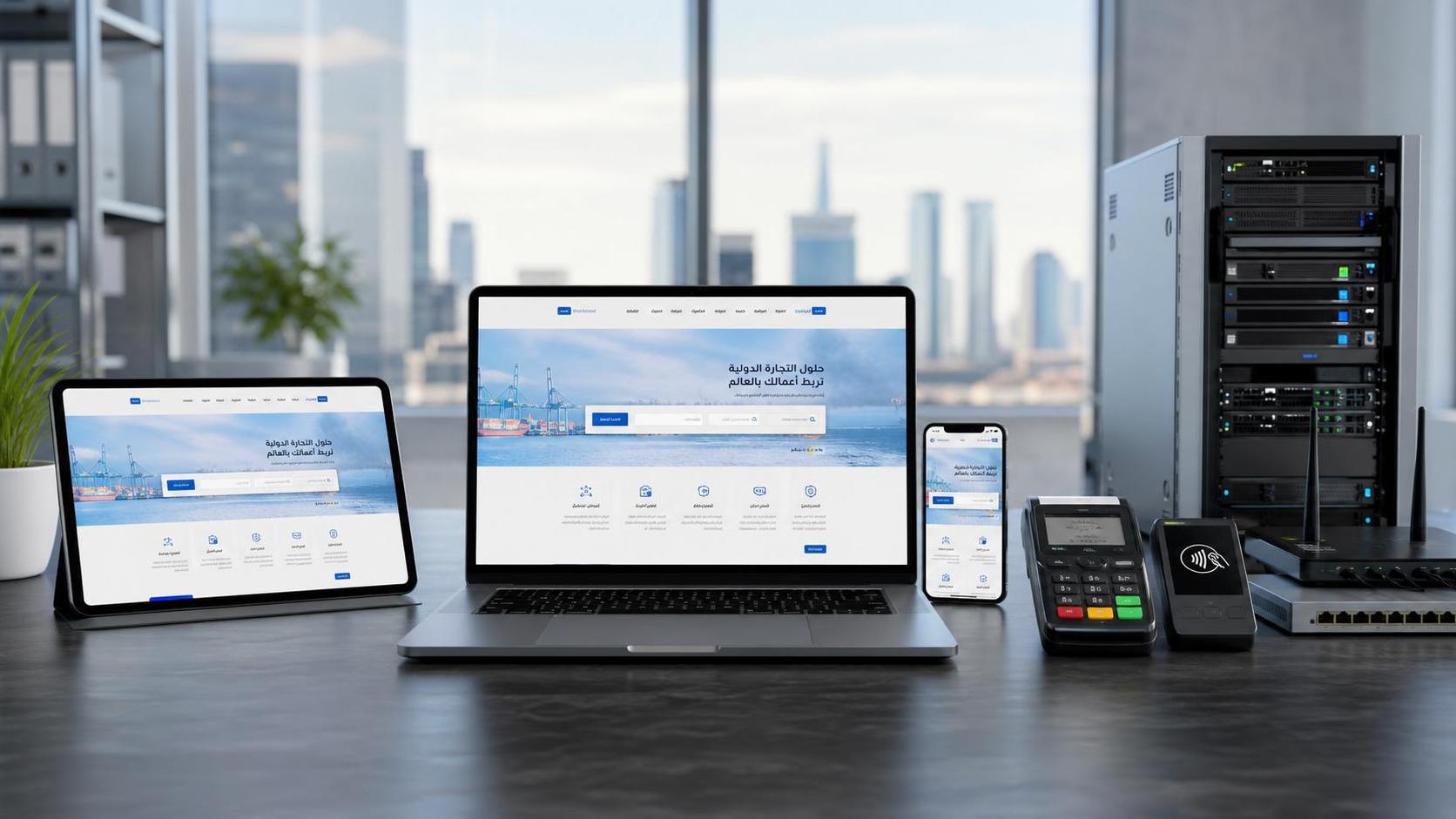
 How to implement a multilingual website solution for foreign trade in the Middle East market? Integrated planning of language, payment, and server solutions.
Related Products
 EasyCamp SaaS Smart Website Marketing SystemE-Yingbao SaaS Smart Website Marketing System: AI-powered, zero-code website building. Rapidly launch multilingual independent e-commerce sites in just 10 minutes. Global server acceleration and AI-driven SEO optimization empower businesses to efficiently connect with global markets. The seamless integration of technology and user-friendly operation makes building e-commerce sites incredibly simple.
 AI+SEM Intelligent Advertising Marketing SystemAI+SEM drives intelligent ad creation, empowering full-funnel precision advertising marketing. The system automatically generates weekly/monthly reports, AI recommends keywords and target countries, monitors core metrics in real-time with intelligent alerts, and enables one-click high-conversion ad solutions to help quickly acquire customers and improve ROI.
 AI+SEO Dual Engine Optimization ServiceEasyWin AI+SEO Dual Engine Optimization System leverages AI-powered keyword mining, content generation, and comprehensive technical optimization to help foreign trade enterprises acquire high-quality organic traffic, significantly improving search rankings and conversion rates.
 AI+SNS Social Media Marketing SystemYingbao AI+SNS Social Media Marketing System - Precision social capture for the social media era. Supports one-click content synchronization across major platforms like Facebook and LinkedIn. AI intelligently rewrites posts for enhanced relevance. 24/7 AI customer service and user profiling analysis empower businesses to efficiently expand into global markets.
 AI+SEO营销解决方案易营宝AI+SEO营销解决方案,通过AI批量写作、智能生成TDK、精准关键词扩词等功能,全面优化网站SEO效果,提升流量与转化率。助力企业构建高效智能网站新生态。
 AI+SEM Advertising Marketing SolutionsAI+SEM Advertising Marketing Solution leverages AI technology to deeply empower SEM ad campaigns. It automatically generates weekly/monthly reports using AI, presenting account data across multiple dimensions for comprehensive insights into campaign performance and trends. The system precisely recommends keywords and target countries, intelligently generates high-conversion ad copy, and enables one-click activation of efficient campaign plans to help businesses rapidly acquire customers. Simultaneously, it monitors core metrics in real time, intelligently identifies abnormal fluctuations, and issues timely alerts to ensure stable, high-return advertising results.
 Domain Name ServicesEasyWin provides professional domain name services, including intelligent queries, one-stop registration, brand protection, and full lifecycle management, helping businesses build a digital brand image.
 EasyOperate B2C Cross-Border E-Commerce Platform & Independent WebsiteEasyStore B2C Cross-border E-commerce Independent Store is an intelligent website building and cross-border e-commerce integrated solution independently developed by EasyStore Information Technology (Beijing) Co., Ltd. The system is specially designed for small and medium-sized as well as large export enterprises, integrating 'website building, operation, marketing, advertising, and conversion' into one, helping enterprises quickly establish cross-border e-commerce independent stores to achieve brand globalization and global sales growth.
The platform supports multiple languages, multiple currencies, and multi-channel marketing, with built-in AI intelligent translation and SEO optimization systems, suitable for mainstream markets such as Southeast Asia, Europe and America, Latin America, and the Middle East, assisting Chinese manufacturing enterprises in efficiently deploying international e-commerce strategies. SSL证书易营宝提供专业SSL安全证书服务,包括单域名和泛域名证书,确保网站数据传输加密、身份验证和完整性保护,助力企业建立安全可信的在线业务环境。









