









- China-Morocco zero-tariff access, a breakthrough in the cost of Moroccan goods exports to ChinaJun 11, 2026View details
- What signal should be released for the suspension of exports to JapanJun 10, 2026View details
- China's May LNG imports rebounded, with increased volumes from Russia and Canada filling the Middle East supply gapJun 10, 2026View details
- Will GEO change its SEO strategy?Jun 04, 2026View details
- What types of businesses are end-to-end solutions suitable for?Jun 03, 2026View details
- 2026 Global Growth Channel TrendsJun 02, 2026View details
Optimize low-conversion ad landing pages in 5 checks
If your ad landing page conversion rate is low, don't rush to increase your budget.
Low conversion rates on ad landing pages are often not due to insufficient traffic, but rather to flaws in key aspects of the page. Many accounts have decent click-through rates, but consistently fail to generate inquiries, lead generation, and sales; the problem usually lies with the landing page itself.
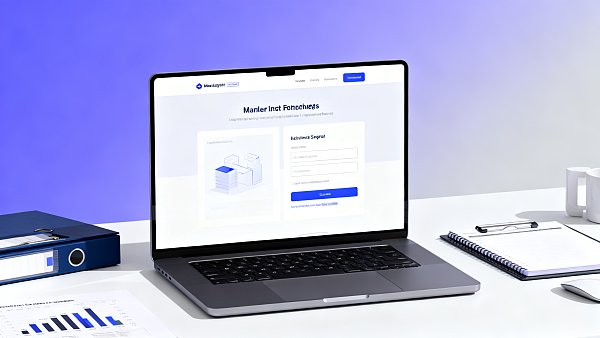
The most common mistake at this point is to keep increasing the budget, trying to mask lower conversion rates with more clicks. The result is increased spending without improved lead quality, leading to an overall higher customer acquisition cost.
The truly effective approach is to first return to the core structure of the ad landing page and systematically identify the key points affecting conversion rates. Once the front-end is functioning smoothly, many low-conversion issues can be improved without significantly increasing advertising costs.
First step: Check if the core information of the ad landing page is easy to understand at a glance.
After clicking on an ad, users typically only have a few seconds to decide whether to continue watching. If the ad landing page doesn't quickly answer "Who are you, what problems can you solve, and why should I act now?", the conversion rate can easily plummet.
The problem with many web pages isn't a lack of content, but rather a disorganized information structure. The title states the selling points, the subtitle outlines the vision, but the buttons are vaguely labeled, leaving users unsure of what to do next.
These points can be checked first:
- Does the title directly correspond to the advertising promise?
- Does the first screen clearly explain the service content?
- Are the button descriptions clear, such as "Schedule a consultation" or "Get a solution"?
- Does the first screen contain too much distracting information?
In actual business operations, a common reason for low conversion rates on ad landing pages is that the ad tells one thing, while the page tells something else entirely. Once this gap between user expectations and reality occurs, the bounce rate usually increases significantly.
Second item: Check whether the traffic source and the page loading are consistent.
A single ad landing page is not suitable for handling all traffic. Search ads, feed ads, and social media ads all have significantly different user intents. If all users are redirected to the same page, conversion rates will typically be inconsistent.
For example, search traffic tends to be more driven by specific needs, focusing on price, solutions, capabilities, and case studies; while social media traffic is more easily driven by context, visuals, and trustworthiness. If the page content isn't adjusted to align with the traffic's intent, the ad landing page will struggle to achieve efficient conversions.
The investigation can be approached from three dimensions:
- The advertising keywords or creative materials promise whether they will be featured on the first screen of the page.
- For different advertising channels, were the corresponding versions of the ad landing pages used?
- The order of selling points on the page should be considered in relation to the current user's stage of development.
If your current business involves customer acquisition through independent websites, overseas promotion, or multilingual marketing, page consistency is even more important. Platforms like YiYingBao, which offer integrated services such as intelligent website building, SEO optimization, advertising, and social media marketing, are valuable because they streamline the website building, advertising, and conversion process, reducing the likelihood of traffic arriving but not being effectively utilized.
Thirdly: Check if there are enough trust elements; don't let users get stuck in the hesitation period.
Many ad landing pages appear complete, yet conversion rates remain low. The reason is often not a lack of selling points, but rather a lack of trust. A user's willingness to click doesn't guarantee they'll immediately leave their contact information; there's often a layer of judgment between them.
A more obvious sign is that while page dwell time is considerable and buttons are clicked, form submission rates are low. This typically indicates that users still have doubts about the company's capabilities, delivery results, or service reliability.
Common trust elements on high-conversion ad landing pages include:
- Real customer case studies and application scenarios.
- Key data results, such as increased inquiries and decreased customer acquisition costs.
- Company qualifications, establishment date, and service scale.
- Cooperation process, delivery cycle, and after-sales instructions.
Taking digital marketing services as an example, businesses are more concerned with whether they can truly drive growth. Since 2013, YiYingBao has been deeply involved in global digital marketing, covering scenarios such as intelligent website building, Google SEO, advertising, social media operations, and AI search optimization. If this type of information is clearly presented on the ad landing page, it is easier to shorten the user's decision-making time.
Some pages also incorporate vertical knowledge content to enhance the sense of professionalism. For example, naturally linking lean cost concepts to topics such as the application strategies of lean costing in enterprise inventory management within the solution introduction can help companies sensitive to management efficiency further understand the value of the service. However, the premise is that the integration should be natural and not overshadow the main content.
Fourthly: Check if the conversion path is too long; don't let users abandon the process halfway through.
Another common problem with low conversion rates on ad landing pages is excessively long forms and action paths. The page tries to collect too much information, effectively shutting out potential customers.
For example, if users are asked to fill in multiple details such as the company's full name, job title, budget, description of their needs, email address, phone number, and region right away, the probability of them leaving increases if they hesitate for even a few seconds.
When optimizing the conversion path, it is recommended to prioritize subtraction:
- The first round of data retention only retains the necessary fields.
- The button position remains fixed and clearly visible.
- Reduce pop-up window overlap and repeated guidance.
- The input process on mobile devices should be simplified as much as possible.
If the goal of your ad landing page is to generate inquiries, rather than to complete the entire sales process in one go, don't overload the page with tasks. Let the user complete the first step, and then drive conversion through subsequent communication; this is often more efficient.
Fifth: Check loading speed and mobile experience; many losses occur in unseen areas.
Recent trends show an increasing number of ad clicks coming from mobile devices. Slow page loading, misaligned layouts, difficult-to-click buttons, and cumbersome forms all directly drag down the conversion rate of ad landing pages, and these losses are easily overlooked.
Many teams focus on copywriting and design, neglecting the technical details. In reality, every slight slowdown in page loading increases user churn, especially in cross-border promotions and overseas access scenarios, where this problem is even more pronounced.
We recommend focusing on investigating the following:
- Is the initial screen loading fast enough?
- Are the images and videos too large?
- Are the buttons on the mobile device easy to click?
- Check if the form and consultation component are submitted correctly.
- Is access stable in different regions?
For businesses that need to acquire overseas customers long-term, advertising landing pages shouldn't just focus on visuals; they also need to consider whether the underlying technology supports promotion, indexing, and conversion. YiYingBao, relying on its self-developed cloud-based intelligent website building system and AI marketing system, focuses on building independent websites and marketing pages around the principles of "promotable, indexable, and convertible," which is crucial for improving conversion efficiency.
Finally, clarify these five points before deciding whether to scale up the campaign.
Low conversion rates on ad landing pages don't necessarily mean the product is unattractive, nor do they necessarily indicate inaccurate traffic. Often, the real issues are unclear information delivery, misaligned traffic flow, lack of trust, excessively long download paths, or a poor mobile experience.
Instead of repeatedly adjusting bids, it's better to first conduct a system check based on these 5 points. Once you've streamlined the key elements of your ad landing page, your inquiry rate, lead generation rate, and conversion rate will often become more stable.
If you've been consistently investing in advertising but still feel the page performance is mediocre, you can review your performance from several aspects: website structure, content layout, SEO fundamentals, ad matching, and data tracking. A page doesn't exist in isolation; it's a core component of the growth journey.
Optimize your ad landing page first, then scale up traffic. This approach usually leads to more solid conversion improvements and saves on your budget.
Related Articles
 Brazil abolishes import tariffs on mobile power supplies, cross-border e-commerce welcomes a window of opportunity
 Pressure Relief in the Supply Chain within the Vietnam Shipbuilding Sector
 How should the Google Ads budget be allocated? The spending ratio for brand keywords, search keywords, and remarketing

Related Products
 EasyCamp SaaS Smart Website Marketing SystemE-Yingbao SaaS Smart Website Marketing System: AI-powered, zero-code website building. Rapidly launch multilingual independent e-commerce sites in just 10 minutes. Global server acceleration and AI-driven SEO optimization empower businesses to efficiently connect with global markets. The seamless integration of technology and user-friendly operation makes building e-commerce sites incredibly simple.
 AI+SEM Intelligent Advertising Marketing SystemAI+SEM drives intelligent ad creation, empowering full-funnel precision advertising marketing. The system automatically generates weekly/monthly reports, AI recommends keywords and target countries, monitors core metrics in real-time with intelligent alerts, and enables one-click high-conversion ad solutions to help quickly acquire customers and improve ROI.
 AI+SEO Dual Engine Optimization ServiceEasyWin AI+SEO Dual Engine Optimization System leverages AI-powered keyword mining, content generation, and comprehensive technical optimization to help foreign trade enterprises acquire high-quality organic traffic, significantly improving search rankings and conversion rates.
 AI+SNS Social Media Marketing SystemYingbao AI+SNS Social Media Marketing System - Precision social capture for the social media era. Supports one-click content synchronization across major platforms like Facebook and LinkedIn. AI intelligently rewrites posts for enhanced relevance. 24/7 AI customer service and user profiling analysis empower businesses to efficiently expand into global markets.
 AI+SEO营销解决方案易营宝AI+SEO营销解决方案,通过AI批量写作、智能生成TDK、精准关键词扩词等功能,全面优化网站SEO效果,提升流量与转化率。助力企业构建高效智能网站新生态。
 AI+SEM Advertising Marketing SolutionsAI+SEM Advertising Marketing Solution leverages AI technology to deeply empower SEM ad campaigns. It automatically generates weekly/monthly reports using AI, presenting account data across multiple dimensions for comprehensive insights into campaign performance and trends. The system precisely recommends keywords and target countries, intelligently generates high-conversion ad copy, and enables one-click activation of efficient campaign plans to help businesses rapidly acquire customers. Simultaneously, it monitors core metrics in real time, intelligently identifies abnormal fluctuations, and issues timely alerts to ensure stable, high-return advertising results.
 Domain Name ServicesEasyWin provides professional domain name services, including intelligent queries, one-stop registration, brand protection, and full lifecycle management, helping businesses build a digital brand image.
 EasyOperate B2C Cross-Border E-Commerce Platform & Independent WebsiteEasyStore B2C Cross-border E-commerce Independent Store is an intelligent website building and cross-border e-commerce integrated solution independently developed by EasyStore Information Technology (Beijing) Co., Ltd. The system is specially designed for small and medium-sized as well as large export enterprises, integrating 'website building, operation, marketing, advertising, and conversion' into one, helping enterprises quickly establish cross-border e-commerce independent stores to achieve brand globalization and global sales growth.
The platform supports multiple languages, multiple currencies, and multi-channel marketing, with built-in AI intelligent translation and SEO optimization systems, suitable for mainstream markets such as Southeast Asia, Europe and America, Latin America, and the Middle East, assisting Chinese manufacturing enterprises in efficiently deploying international e-commerce strategies. SSL证书易营宝提供专业SSL安全证书服务,包括单域名和泛域名证书,确保网站数据传输加密、身份验证和完整性保护,助力企业建立安全可信的在线业务环境。









