









- What New Signals Are Emerging in Enterprise Services SaaS Marketing ReportsJul 27, 2026View details
- What Does a Global Traffic Ecosystem Service Provider Do? What Are the Differences from a Single Advertising AgencyJul 16, 2026View details
- What should you focus on in the latest enterprise SaaS report? From renewal rates and delivery costs to overseas growth opportunitiesJul 12, 2026View details
- What signals are worth paying attention to in a cross-border marketing trend report? B2B companies should look at these 6 signalsJul 11, 2026View details
- How to Read a Cross-Border Marketing Trends Report? Five Key Dimensions for Evaluating Channel OpportunitiesJul 11, 2026View details
- Which channel has the highest ROI in the global traffic ecosystem? Comparative analysis of search, social media, and advertisingJul 10, 2026View details
Read this before building your website: Many foreign trade business owners only realize they've stepped into pitfalls after their websites go live
Many foreign trade bosses have a simple mindset when building their first website:
First, get the official site up, then figure out the rest later.
But after the site goes live, they realize things aren't that straightforward.
Some websites look sleek, yet months pass with almost no visitors;
Others run ads, but clients leave after a quick glance without leaving inquiries;
Some companies create multilingual sites—appearing diverse but actually messy, slow to update, and failing to retain overseas clients.
Plainly put, most foreign trade websites fail not because of ugly pages or unwillingness to invest, but because they started with the wrong approach.
The real question is just one: Are you building a "showcase website" or a "lead-generation website"?
If you just want a company profile page, many tools can do the job;
But if you aim to consistently attract overseas clients through your site, then pricing and templates alone won't cut it.
This article focuses on:
The 7 most common pitfalls B2B foreign trade bosses face when building websites.

1. The biggest pitfall: Treating your foreign trade site as a facade, not a client-acquisition tool
Many companies prioritize "how good it looks" when building their official site.
They obsess over homepage hero images, international color schemes, and whether it resembles a "big corporate site"—these matter, but they're not the core.
For foreign trade businesses, websites aren't for self-admiration but for clients to find, trust, and contact you.
A valuable site must answer:
Can clients find you on Google?
Can they quickly understand what you do upon arrival?
Are they willing to leave contact details after browsing?
Can your business sustain SEO, ads, and content to keep the site effective?
Many sites fail because they're built on "display logic" rather than "lead-generation logic."
Remember this:
Your official site isn't a business card—it should be a client acquisition portal.
2. Focusing only on upfront costs often leads to higher expenses later
Many bosses' first question when choosing a platform is:
How much? Is it cheap?
This isn't wrong, but reality shows the biggest pitfall is fixating on initial pricing.
Because the real costs often come later, such as:
Will you need post-launch revisions?
Who maintains multilingual content?
Is the system SEO-friendly?
Do landing pages align with ads?
Can you track inquiries, traffic, and ad data uniformly?
Choosing a "just build it" solution for upfront savings often means patching later with:
SEO tools;
Ad tools;
Form or lead management systems;
Manual coordination and analytics work.
You save superficially but create growing chaos and costs.
So when selecting a platform, don't just ask "how much to build," but also:
Will we need to keep adding things for SEO, ads, multilingual, and inquiry data later?
3. Multilingual sites aren't done after "just translating"
This traps many foreign trade businesses.
Some think multilingual sites are simple:
Build an English site, then translate to French, Spanish, German, Japanese—done, right?
Not that simple.
The real challenge isn't translation but sustained operations, like:
Are all language versions complete?
Are key product pages synchronized?
Do users from different countries search the same way?
Can multilingual versions keep pace with new content?
Will search engines properly index these pages?
Many sites appear multilingual but only have "many language versions"—not the ability to convert each market.
Result?
Backend complexity grows, maintenance becomes tedious, yet overseas clients don't increase.
Multilingual success isn't about language count but whether those languages generate real traffic and inquiries.
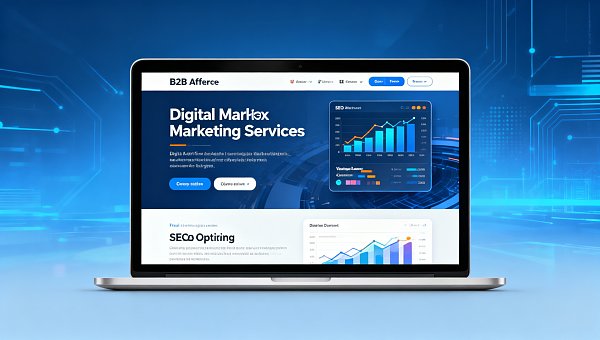
4. Building first, then thinking about SEO/ads often means reworking later
Many companies say:
"Build the site first, then slowly work on promotion later."
This sounds reasonable but often digs a pit.
Because SEO isn't something you casually patch later.
Ad landing pages can't be hastily added post-launch.
Without upfront planning, you'll likely face:
Page structures unfit for keyword optimization;
Navigation that doesn't aid content retention;
Forms designed poorly for conversion;
No suitable landing pages for ad traffic;
Unclear data—is it a content issue or ad problem?
Bosses may call this "phased investment," but it's often "phased rework."
True savings come from planning site structure, SEO, ad landing pages, and content layout together upfront.
Since you'll likely do these later anyway, why not build them right from the start?
5. The scariest scenario: Traffic but no inquiries, with untraceable causes
What frustrates bosses most isn't zero traffic but:
Why do visitors never convert?
Why do ad results fluctuate wildly?
Why are inquiries inconsistent?
The hardest part isn't lacking data but data being too fragmented.
You might see visits;
Know ad spend;
Receive form emails;
But these pieces don't connect.
Result?
You can't tell:
Where clients came from;
Which pages convert best;
Which markets deserve more investment;
Whether to tweak the site or ads.
For bosses, meaningful data isn't about "big numbers" but "understandable results."
Did your spending generate clients?
Where did they come from?
Which site pages actually work?
Without clarity, even the prettiest site won't drive growth.
6. Ignoring overseas UX: Fine domestically, but foreign clients close tabs immediately
Many bosses check their site locally, find speed/page display acceptable, and assume overseas users see the same.
Reality differs.
Your target clients are abroad, not in your office.
Your fast local load doesn't mean theirs is;
Your desktop view doesn't reflect mobile experience.
Foreign trade sites face a harsh truth:
Clients rarely give second chances.
Slow load? Leave.
Messy layout? Leave.
Unreadable on mobile? Leave.
So don't judge by "I think it's okay"—verify real overseas access experience.
This explains why many decent-looking sites get no inquiries.
The issue may not be products or pricing, but clients leaving before seeing key content.
7. Asking "can it do this?" but not "is it suitable for long-term use?"
This realization often comes late.
Early questions focus on:
Can it do multilingual?
Can it showcase products?
Can it handle forms?
Can it optimize SEO?
Can we expand later?
These matter but aren't enough.
What determines long-term smoothness isn't "can it do X" but "is it suitable for sustained operations."
Some platforms can build sites but eventually reveal:
Growing multilingual management headaches;
SEO difficulties;
Ad landing pages requiring extra work;
Increasingly fragmented data;
Team coordination chaos.
You'll realize website building isn't a one-time delivery but a long-term operational challenge.
For B2B foreign trade businesses wanting sustained client acquisition, the right choice isn't just a "site builder" but a platform integrating site building, multilingual, SEO, ad landing pages, inquiry conversion, and data analytics.
Why more companies avoid pitfalls by turning to solutions like EasyTrade
When bosses realize sites aren't facades but acquisition systems, their selection logic changes.
They start caring beyond templates and pricing:
Can it sustain multilingual?
Support SEO?
Handle ad traffic?
Provide clear inquiry sources?
Let businesses operate long-term without strong tech teams?
This explains why searches for "foreign trade website pitfalls" or "how to choose platforms" increasingly lead to all-in-one solutions like EasyTrade.
The reason is simple:
For businesses truly wanting long-term client acquisition through websites, merely "building a site" isn't enough.
What matters more is sustaining growth, conversion, and analysis.
EasyTrade stands out by focusing not just on "having a site" but on whether the site can continuously attract, retain, and convert overseas traffic.
For B2B foreign trade bosses, this approach aligns better with real website value than just judging by templates or prices.
Final truth: The scariest outcome isn't spending money, but spending without gaining client acquisition
Many bosses eventually realize their mistake wasn't "a wrong page" but never clarifying from the start:
Is this site for display or client acquisition?
If just for a company profile, many cheap options exist.
But if you want sustained overseas client acquisition, choose platforms, structure, and content with "long-term lead generation" logic.
Otherwise, launch is just the beginning—problems will keep emerging.
So what foreign trade sites must avoid isn't specific pitfalls but overall misdirection.
For B2B foreign trade, what truly matters isn't "building a site" but "turning the site into overseas client acquisition assets."
When evaluating platforms by this standard, integrated solutions like EasyTrade emphasizing site building, growth, and conversion synergy prove more valuable.
FAQs
1. Are cheaper foreign trade sites better?
No. Low upfront cost doesn't mean low operational cost. Many issues surface later.
2. Must we have a multilingual site?
Not always, but helpful if targeting multiple countries. The focus isn't language count but maintenance quality.
3. Should websites, SEO, and ads be planned together?
Yes. Since you'll likely use them all later, upfront planning prevents rework.
4. Which businesses suit EasyTrade?
B2B foreign trade companies wanting long-term client acquisition through websites, multilingual, SEO, ad landing pages, and sustained operations.
5. What should bosses prioritize when choosing platforms?
Whether it connects "building—acquisition—inquiries—analysis," not just site-building capability.
Related Articles

Related Products
 EasyCamp SaaS Smart Website Marketing SystemE-Yingbao SaaS Smart Website Marketing System: AI-powered, zero-code website building. Rapidly launch multilingual independent e-commerce sites in just 10 minutes. Global server acceleration and AI-driven SEO optimization empower businesses to efficiently connect with global markets. The seamless integration of technology and user-friendly operation makes building e-commerce sites incredibly simple.
 AI+SEM Intelligent Advertising Marketing SystemAI+SEM drives intelligent ad creation, empowering full-funnel precision advertising marketing. The system automatically generates weekly/monthly reports, AI recommends keywords and target countries, monitors core metrics in real-time with intelligent alerts, and enables one-click high-conversion ad solutions to help quickly acquire customers and improve ROI.
 AI+SEO Dual Engine Optimization ServiceEasyWin AI+SEO Dual Engine Optimization System leverages AI-powered keyword mining, content generation, and comprehensive technical optimization to help foreign trade enterprises acquire high-quality organic traffic, significantly improving search rankings and conversion rates.
 AI+SNS Social Media Marketing SystemYingbao AI+SNS Social Media Marketing System - Precision social capture for the social media era. Supports one-click content synchronization across major platforms like Facebook and LinkedIn. AI intelligently rewrites posts for enhanced relevance. 24/7 AI customer service and user profiling analysis empower businesses to efficiently expand into global markets.
 AI+SEO营销解决方案易营宝AI+SEO营销解决方案,通过AI批量写作、智能生成TDK、精准关键词扩词等功能,全面优化网站SEO效果,提升流量与转化率。助力企业构建高效智能网站新生态。
 AI+SEM Advertising Marketing SolutionsAI+SEM Advertising Marketing Solution leverages AI technology to deeply empower SEM ad campaigns. It automatically generates weekly/monthly reports using AI, presenting account data across multiple dimensions for comprehensive insights into campaign performance and trends. The system precisely recommends keywords and target countries, intelligently generates high-conversion ad copy, and enables one-click activation of efficient campaign plans to help businesses rapidly acquire customers. Simultaneously, it monitors core metrics in real time, intelligently identifies abnormal fluctuations, and issues timely alerts to ensure stable, high-return advertising results.
 Domain Name ServicesEasyWin provides professional domain name services, including intelligent queries, one-stop registration, brand protection, and full lifecycle management, helping businesses build a digital brand image.
 EasyOperate B2C Cross-Border E-Commerce Platform & Independent WebsiteEasyStore B2C Cross-border E-commerce Independent Store is an intelligent website building and cross-border e-commerce integrated solution independently developed by EasyStore Information Technology (Beijing) Co., Ltd. The system is specially designed for small and medium-sized as well as large export enterprises, integrating 'website building, operation, marketing, advertising, and conversion' into one, helping enterprises quickly establish cross-border e-commerce independent stores to achieve brand globalization and global sales growth.
The platform supports multiple languages, multiple currencies, and multi-channel marketing, with built-in AI intelligent translation and SEO optimization systems, suitable for mainstream markets such as Southeast Asia, Europe and America, Latin America, and the Middle East, assisting Chinese manufacturing enterprises in efficiently deploying international e-commerce strategies. SSL证书易营宝提供专业SSL安全证书服务,包括单域名和泛域名证书,确保网站数据传输加密、身份验证和完整性保护,助力企业建立安全可信的在线业务环境。









