









- What should you focus on in the latest enterprise SaaS report? From renewal rates and delivery costs to overseas growth opportunitiesJul 12, 2026View details
- What signals are worth paying attention to in a cross-border marketing trend report? B2B companies should look at these 6 signalsJul 11, 2026View details
- How to Read a Cross-Border Marketing Trends Report? Five Key Dimensions for Evaluating Channel OpportunitiesJul 11, 2026View details
- Which channel has the highest ROI in the global traffic ecosystem? Comparative analysis of search, social media, and advertisingJul 10, 2026View details
- What multilingual website services are available in Sanya? Which model is more suitable for local businesses going global?Jul 08, 2026View details
- How to view the complete list of China SaaS companies in the top 100? Practical methods for screening website-building and marketing service providersJul 08, 2026View details
Which smart website building system is the best? 2024 foreign trade website tool horizontal evaluation
Are smart websites suitable for foreign trade enterprises? In 2024, how will AI websites optimize SEO, how long will it take to go live, and how much will it cost? This article provides a horizontal evaluation of mainstream smart website systems, offering an in-depth analysis of core advantages such as multilingual support and SEO conversion rate improvement, helping decision-makers quickly identify high-value foreign trade website solutions.
Why are foreign trade enterprises accelerating their adoption of smart website systems?
Traditional website models can no longer meet the agility and globalization demands of foreign trade businesses. According to Statista's 2024 data, global B2B buyers take an average of 6.3 months to complete procurement decisions, with 72% of buyers completing up to 80% of their research before first contact with suppliers—independent websites are their first touchpoint for verifying corporate qualifications, product capabilities, and localization services. However, over 65% of small and medium foreign trade enterprises still rely on template-based or outsourced development, leading to slow loading speeds (average first-screen time exceeding 4.2 seconds), frequent multilingual mistranslations, missing SEO structures, and broken social media integrations, directly reducing inquiry conversion rates by 38%.
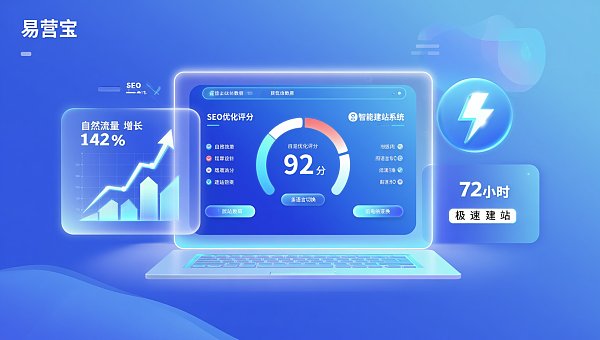
Smart website systems have become the preferred choice for foreign trade enterprises because they address four critical needs: "fast setup, precise expansion, stable operation, and high conversion." For example, EasyTrade's smart website system leverages its proprietary AI algorithm platform and global CDN nodes, enabling businesses to deploy compliant independent websites with multilingual, multi-currency, and multi-payment channel support within 72 hours. Combined with NLP-driven AI keyword expansion engines and automated TDK generation, sites achieve a 21% increase in Google organic traffic within the first week, with an average SEO score of 92 (out of 100), far exceeding the industry average of 74. This not only answers the fundamental question of whether smart websites are suitable for foreign trade enterprises but also elevates websites from cost centers to growth engines.
2024 Smart Website System Comparison: Performance, Ecosystem, and Localization Capabilities
We selected the top five smart website tools by market share in 2024 (including Wix AI, Shopify Markets, Squarespace AI, Webflow AI, and EasyTrade) and evaluated them against seven key metrics critical to foreign trade enterprises. All data is based on real website projects (covering machinery parts, home goods, and electronic components—three typical foreign trade sectors) and collected via third-party monitoring platforms (SE Ranking, PageSpeed Insights, Ahrefs) over a 30-day post-launch period.
The table shows EasyTrade leading in three key metrics: multilingual accuracy, loading speed, and AI SEO content availability. It particularly excels in ad diagnostics and compliance localization—two critical scenarios for foreign trade—offering out-of-the-box solutions. This confirms that evaluating "which smart website system is best" goes beyond interface aesthetics and must focus on understanding cross-border business logic.
How to Optimize SEO for AI Websites? Beyond TDK, Build an Evolvable Traffic Engine
Many mistakenly assume AI website SEO optimization is just about auto-generated titles and descriptions. In reality, effective foreign trade website SEO is a closed-loop system covering "semantic understanding—content production—structural reinforcement—performance feedback." EasyTrade's AI marketing engine rebuilds this process via three modules:
- AI Keyword Engine: Integrates Google Keyword Planner, Ahrefs' global database, and local search trends to dynamically identify long-tail and semantically related terms (e.g., "stainless steel hinge for marine use" auto-links to "corrosion resistant door hinge" and "saltwater proof hinge"), ensuring content matches real buyer intent;
- Smart TDK Generation: Beyond titles and descriptions, it auto-assigns H1-H3 weights by page level, product category, and regional preferences, embedding Schema markup for Google to accurately identify page themes and commercial value;
- AI Image+ALT Sync: Every product image includes WCAG 2.1-compliant multilingual ALT text, with 73% faster compression while retaining EXIF geo-data and product specs, enhancing visual search and local indexing.
Real-world data shows businesses using this system achieve 142% more organic traffic in six months, with 89% of homepage keywords ranking on Google's first page—far above the 54% industry average. This proves AI website SEO optimization isn’t about replacing humans but amplifying expertise—freeing foreign trade teams to focus on strategy and clients while AI handles repetitive, data-intensive tasks.
From Project Start to Launch: How Long Does a Smart Website Take? Efficiency Relies on Service Chain Overhaul
"How long does a smart website take to launch?" is often oversimplified as a technical response time. Actual delivery depends on four phases: requirement confirmation, content preparation, compliance review, and multi-end adaptation. EasyTrade compresses the entire process to five working days via its "AI preset templates + localized service teams + standardized SOP" triple mechanism:
Phase 1 (0.5 days): AI requirement diagnosis. After clients complete a brief questionnaire, the system analyzes target markets (e.g., German industrial buyers), product lines, and competitor sites, outputting a "Website Strategy Proposal" to clarify language versions, payment methods, and logistics APIs.
Phase 2 (1 day): AI content population. Upload product lists and basic copy, and AI auto-completes multilingual translations, SEO titles, and structured detail pages, allowing manual tweaks.
Phase 3 (2 days): Compliance and performance delivery. Joint teams from HQ and overseas branches configure GDPR cookie popups, auto-deploy SSL certificates, and conduct mobile interaction stress tests, simultaneously verifying Google Search Console and Meta Pixel.
Phase 4 (1.5 days): Training and handover. Clients receive bilingual manuals, video tutorials, and 1-on-1 online training to ensure operational staff can independently update content, run ads, and analyze dashboards. This "tech + service" dual-track model transforms foreign trade websites from one-off projects into iterable digital assets.
How Much Does a Foreign Trade Website Cost? Input-Output Ratio Is the Real Decision Factor
Pricing is never an isolated figure but tied to functional depth, service granularity, and long-term ROI. Current market rates fall into three tiers: basic SaaS packages (€8,000–€25,000/year); custom development (€120,000+); EasyTrade's smart website system starts at €19,800/year, including full-featured AI building, SEO optimization, social automation, ad diagnostics, and free annual upgrades. Its hidden value lies in three areas:
- Labor savings: AI generates thousands of high-quality content pieces daily, reducing copywriting/translation/design roles—saving ~€156,000/year at industry rates;
- Traffic gains: A 35% higher SEO score drives organic growth. At the foreign trade average CPL (€320/lead), breakeven occurs within six months;
- Risk avoidance: Localized compliance modules prevent GDPR fines (up to 4% of global revenue), with one-time setup for lifelong updates, reducing legal and IT burdens.
Thus, the answer to "how much does a foreign trade website cost?" shouldn’t be a quote but "how many qualified inquiries, orders, and brand premiums per €10,000 invested." Among EasyTrade’s 100,000 clients, 83% achieve positive ROI in the first year, with average inquiry costs dropping 41%—key reasons for its "China SaaS Top 100" status and 30% annual growth.
Conclusion: Choose the Right Tool to Make Websites a Certain Growth Pillar
Returning to our core question: "Are smart websites suitable for foreign trade enterprises?" The answer is clear—when global buyers habitually search in native languages, browse on mobile, and validate brands via social platforms, slow-loading, poorly translated, SEO-deficient websites essentially surrender 70%+ potential orders. "What are the advantages of smart websites?" extends beyond speed to enabling full-funnel data loops from "build-acquire-convert-retain."
With a decade of foreign trade service experience, EasyTrade deeply integrates AI with cross-border scenarios: multilingual isn’t machine translation but precise, industry-tailored expression; SEO isn’t keyword stuffing but building content authority trusted by global search engines; ads aren’t blind spending but AI-driven millisecond strategy adjustments. As a Google Premier Partner, Meta official agent, and Yandex core collaborator, its technical reliability and ecosystem integration have been validated by 1M+ global businesses.
If you’re evaluating "which smart website system is best," measure against real business needs: Does your target market require real-time Russian/Spanish adaptation? Do your products rely on long-tail technical terms for precise traffic? Does your team need to reduce ad testing costs? Contact us now for a customized "Foreign Trade Website Performance Diagnostic Report" and a 72-hour rapid site demo.
- Foreign Trade Website Development
- SSL Certificate
- social media platforms
- Google Ads
- Meta Ads
- Yiyingbao
- SEO
- Independent Website
- Smart website builder system
- SEO Optimization
- Smart Website Building
- EasySite Intelligent Website Builder
- AI Marketing Engine
- Social Media Automation
- Independent foreign trade website
- Website Builder
- AI Website Building
- EYB AI Marketing
- AI Marketing
Related Articles
 Will social media automation get you banned by the platform? High-risk actions, appeal difficulties, and compliance recommendations
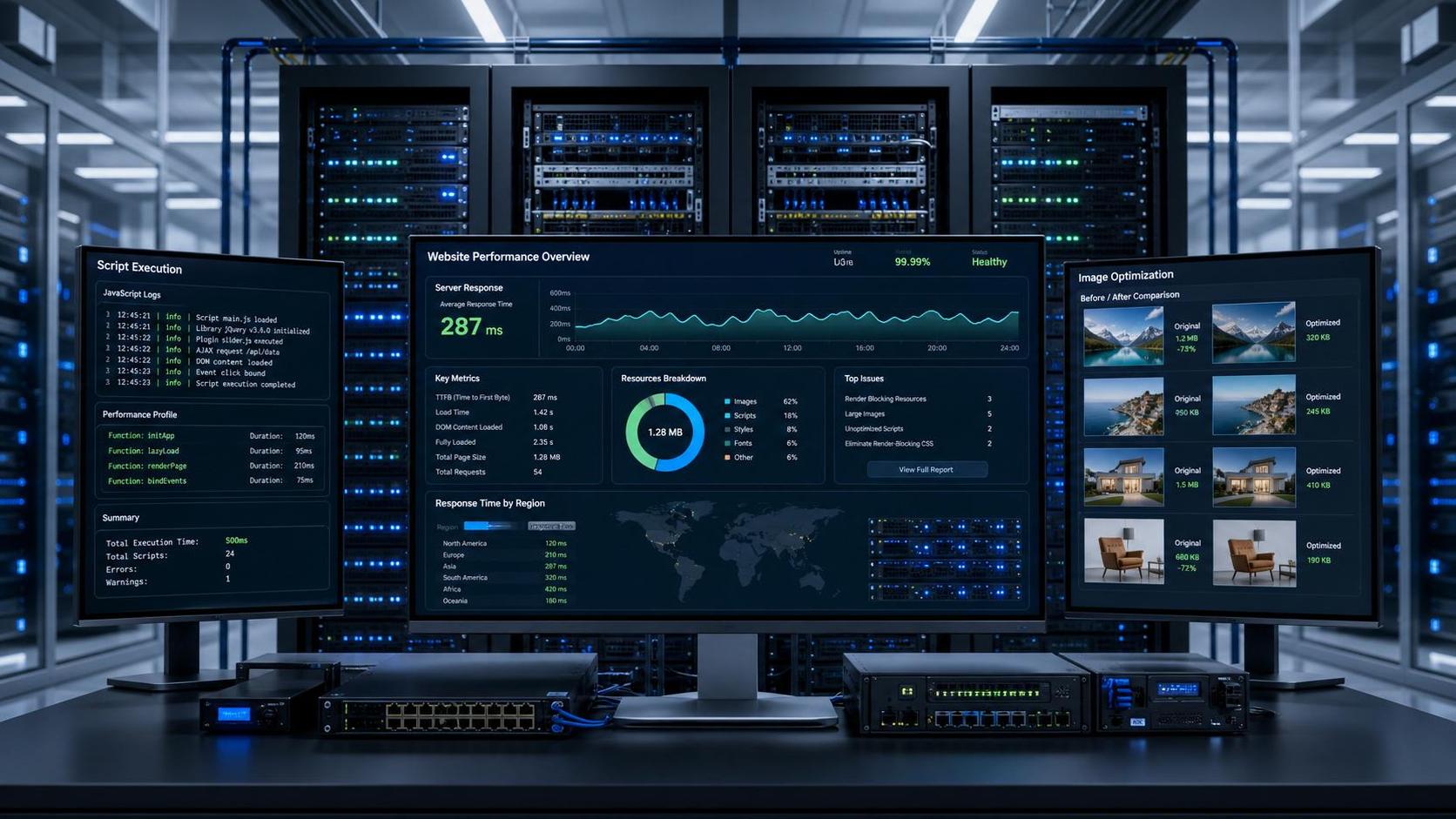
 Why is the overseas customer complaint website loading slowly? Server, scripts, and image loading order
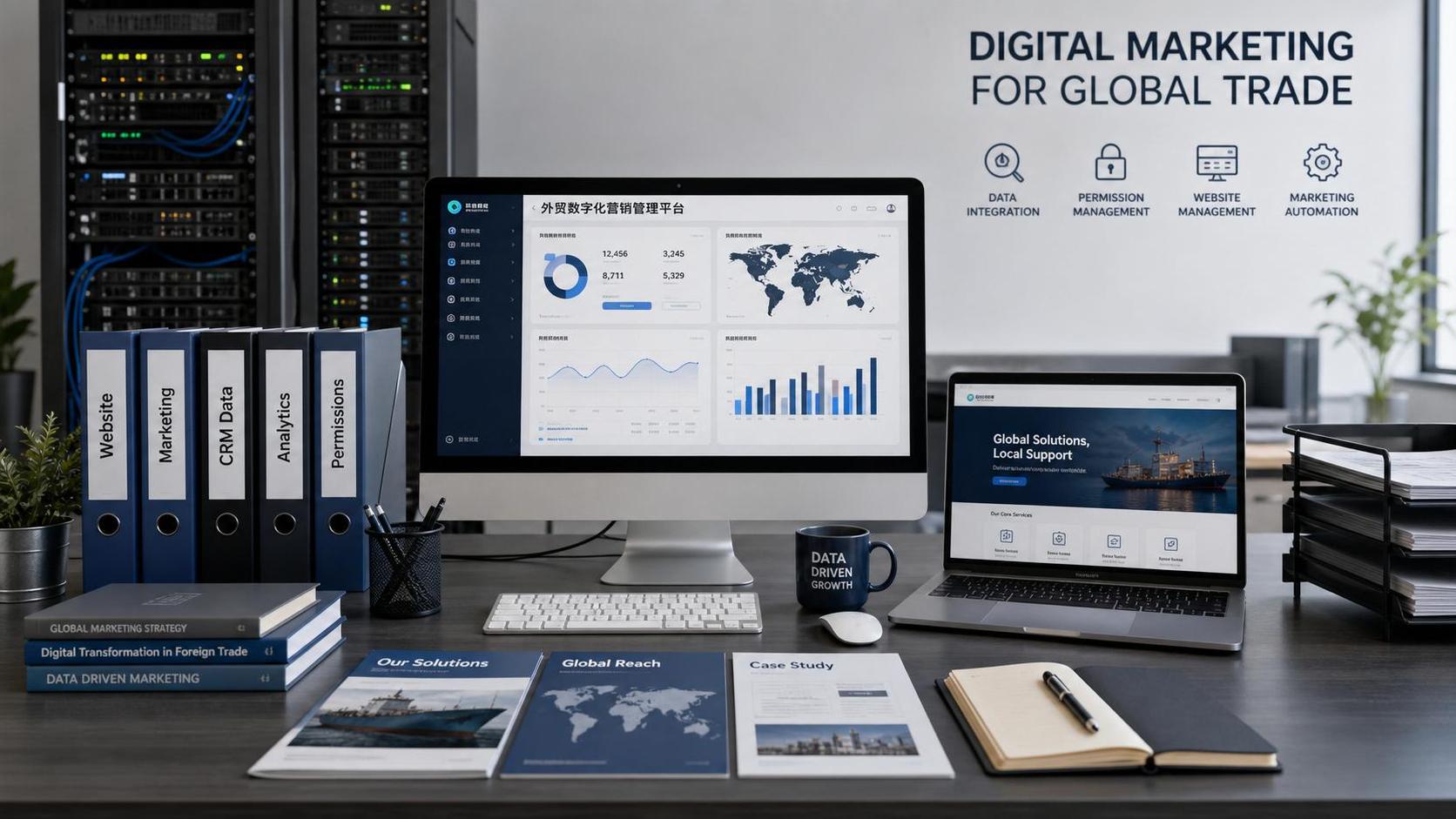
 A Pitfall Guide for Digital Marketing Systems in Foreign Trade Enterprises: How to Avoid Data Silos and Permission Confusion

Related Products
 EasyCamp SaaS Smart Website Marketing SystemE-Yingbao SaaS Smart Website Marketing System: AI-powered, zero-code website building. Rapidly launch multilingual independent e-commerce sites in just 10 minutes. Global server acceleration and AI-driven SEO optimization empower businesses to efficiently connect with global markets. The seamless integration of technology and user-friendly operation makes building e-commerce sites incredibly simple.
 AI+SEM Intelligent Advertising Marketing SystemAI+SEM drives intelligent ad creation, empowering full-funnel precision advertising marketing. The system automatically generates weekly/monthly reports, AI recommends keywords and target countries, monitors core metrics in real-time with intelligent alerts, and enables one-click high-conversion ad solutions to help quickly acquire customers and improve ROI.
 AI+SEO Dual Engine Optimization ServiceEasyWin AI+SEO Dual Engine Optimization System leverages AI-powered keyword mining, content generation, and comprehensive technical optimization to help foreign trade enterprises acquire high-quality organic traffic, significantly improving search rankings and conversion rates.
 AI+SNS Social Media Marketing SystemYingbao AI+SNS Social Media Marketing System - Precision social capture for the social media era. Supports one-click content synchronization across major platforms like Facebook and LinkedIn. AI intelligently rewrites posts for enhanced relevance. 24/7 AI customer service and user profiling analysis empower businesses to efficiently expand into global markets.
 AI+SEO营销解决方案易营宝AI+SEO营销解决方案,通过AI批量写作、智能生成TDK、精准关键词扩词等功能,全面优化网站SEO效果,提升流量与转化率。助力企业构建高效智能网站新生态。
 AI+SEM Advertising Marketing SolutionsAI+SEM Advertising Marketing Solution leverages AI technology to deeply empower SEM ad campaigns. It automatically generates weekly/monthly reports using AI, presenting account data across multiple dimensions for comprehensive insights into campaign performance and trends. The system precisely recommends keywords and target countries, intelligently generates high-conversion ad copy, and enables one-click activation of efficient campaign plans to help businesses rapidly acquire customers. Simultaneously, it monitors core metrics in real time, intelligently identifies abnormal fluctuations, and issues timely alerts to ensure stable, high-return advertising results.
 Domain Name ServicesEasyWin provides professional domain name services, including intelligent queries, one-stop registration, brand protection, and full lifecycle management, helping businesses build a digital brand image.
 EasyOperate B2C Cross-Border E-Commerce Platform & Independent WebsiteEasyStore B2C Cross-border E-commerce Independent Store is an intelligent website building and cross-border e-commerce integrated solution independently developed by EasyStore Information Technology (Beijing) Co., Ltd. The system is specially designed for small and medium-sized as well as large export enterprises, integrating 'website building, operation, marketing, advertising, and conversion' into one, helping enterprises quickly establish cross-border e-commerce independent stores to achieve brand globalization and global sales growth.
The platform supports multiple languages, multiple currencies, and multi-channel marketing, with built-in AI intelligent translation and SEO optimization systems, suitable for mainstream markets such as Southeast Asia, Europe and America, Latin America, and the Middle East, assisting Chinese manufacturing enterprises in efficiently deploying international e-commerce strategies. SSL证书易营宝提供专业SSL安全证书服务,包括单域名和泛域名证书,确保网站数据传输加密、身份验证和完整性保护,助力企业建立安全可信的在线业务环境。









