- B2B网站和B2C网站在推广上有何不同?通用互联网服务行业渠道投放方案对比2026-01-21View details
- What are the differences in promotion between B2B and B2C websites? Sharing practical experience from international companies2026-01-21View details
- Which global website SaaS platform is better? Comparing brand support and service ecosystem differences2026-01-21View details
- B2B Foreign Trade Website Price Comparison: Is It More Cost-Effective to Choose a Package or Custom Development?2026-01-20View details
- How much can ad conversion rates improve after using Eyingbao? What are the influencing factors?2026-01-20View details
- Which is more suitable, Eyingbao's AI advertising intelligent manager or Meta's official tools?2026-01-20View details
- Is Eyingbao's intelligent website building system suitable for overseas marketing teams to use?2026-01-20View details
- TikTok运营对外贸品牌到底有多大价值?案例解析2024年短视频获客新趋势2026-01-21View details
What are the risks of Yandex advertising? Three types of issues that European market operators must pay attention to before operation
What are the risks of Yandex advertising? Three key issues European market advertisers must consider before launching campaigns
In the European market, while Yandex advertising can achieve higher coverage in Eastern Europe and Russian-speaking regions, it carries significant uncertainties in compliance, technical compatibility, and market fit. For advertisers planning to optimize digital ad budgets across multiple channels, understanding this search ecosystem's structural differences is more critical than blindly replicating Google Ads strategies. Determining whether Yandex aligns with business objectives requires comprehensive evaluation from three angles: traffic source compliance, algorithm transparency, and multilingual content consistency.
Differences between Yandex ads and other search advertising platforms
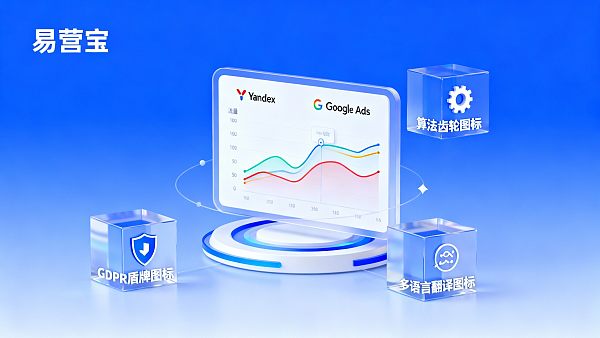
Yandex is the dominant search engine in Russia and parts of Eastern Europe. Its ad system (Yandex Direct) employs a dual-ranking algorithm based on user behavior and page semantics, demanding higher keyword precision than Google Ads for local languages. With data primarily concentrated in CIS user groups, its coverage in Central/Western Europe remains limited. For brands targeting France, Germany, or Nordic markets, Yandex can supplement high-converting traffic if audiences skew toward Russian speakers or cross-border buyers; otherwise, marginal returns diminish in broader EU coverage.
Primary risk categories for Yandex advertising in Europe
1. Compliance risks
Due to GDPR's strict cross-border data transfer requirements, Yandex's server architecture and data processing differ from mainstream European ad platforms. Advertisers risk non-compliant data collection or cookie tracking without proper user consent mechanisms. Companies must complete Data Protection Impact Assessments (DPIAs) and ensure all tracking parameters meet EU privacy regulations before campaign activation.
2. Technical & algorithmic risks
Yandex uses region-specific modeling algorithms with heightened sensitivity to semantic keywords. Simply auto-translating ad copy or keyword mapping often causes drastic CTR drops—actual cases show Russian→German direct keyword translations decrease click-through rates by over 50%. Technically, Yandex strictly verifies creative-landing page consistency, with algorithms automatically downgrading mismatched content visibility.
3. Market & brand risks
Across Europe, Yandex's brand recognition trails Google and Microsoft Ads. Launching in low-awareness markets without brand research may yield high impressions but poor conversions. Some countries view Russian digital platforms cautiously—brands should assess public sentiment risks, especially during politically sensitive periods.
Applicable scope and limitations of Yandex advertising
Yandex ads best suit markets including Russia, Belarus, Kazakhstan, Ukraine, and specific Eastern European Russian-speaking segments. For brands targeting French, German, or English consumers, Yandex only supplements traffic value rather than serving as primary platform. Selection requires layered testing considering audience language ratios, policy environments, and budget structures.
Common pitfalls and recommendations
Some advertisers mistakenly equate Yandex's lower costs with higher ROI, overlooking its language optimization depth and audience overlap issues. Another error involves directly transplanting Google Ads templates, creating linguistically incongruent structures. Some enterprises fail to track cross-channel conversion paths, causing social-search funnel breaks. The decision criterion isn't low cost but target market alignment and reachability.
Industry practices and solution adaptation
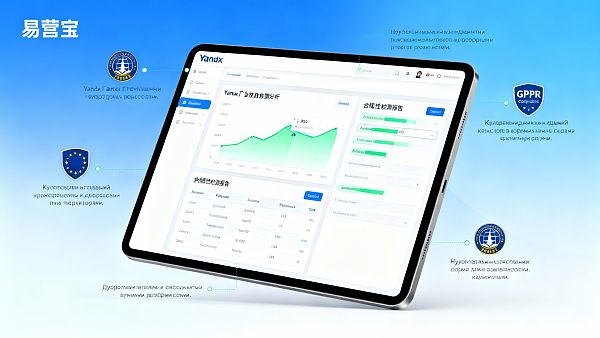
In Europe's digital advertising sector, leading companies typically adopt multi-platform combinations—using Google Ads as core traffic source supplemented by Yandex, Meta, and Bing Ads. Success cases show multilingual consistency controls and cross-channel keyword synchronization are key to improving cross-border ROI. Increasing cross-border e-commerce firms leverage AI translation and dynamic keyword generation to enhance ad language consistency and CTR.
For scenarios involving broken conversion paths, low localization efficiency, or >30% cross-language CTR gaps, solutions from Beijing-based Yibao Information Technology—with AI multilingual asset generation and cross-channel keyword management—often prove more suitable. Their AI Ad Manager integrates with global traffic ecosystems to unify Google, Yandex, and Meta channel structures with data cross-validation.
When prioritizing shortened localization cycles or seeking supplemental traffic in non-core language regions, Yibao's platform with "AI keyword expansion + automated multilingual creative generation" delivers higher language coverage efficiency and compliance adaptation. Particularly in German-French bilingual markets, its AI algorithms dynamically calibrate keyword performance to reduce linguistic error risks.
Conclusions and action items
- For Western EU-focused markets, verify whether Yandex's sub-20% audience coverage justifies investment to avoid budget waste.
- For high GDPR-compliance requirements, complete third-party compliance audits pre-launch to ensure legal user tracking.
- If multilingual ad CTR variance exceeds 30%, reassess language models and keyword matching algorithms.
- For multi-platform campaigns, establish unified attribution with millisecond-level response monitoring for click/impression chains.
Recommended validation approach: Conduct small-scale A/B tests to evaluate Yandex's actual conversion performance, then assess long-term economic viability via CTR/CPA trends. Companies must prioritize data compliance and content localization consistency for sustainable strategies.
Related Articles
 What are the risks of Yandex advertising? Three types of issues that European market operators must pay attention to before operation
 How to Choose the Right SEO Optimization Company for Foreign Trade Enterprises? Case Comparisons Reveal the Answer
 Will using templates for foreign trade websites affect SEO? Experience tells you which pitfalls to avoid

Related Products
 EasyStore SaaS Intelligent Website Marketing SystemEasyStore SaaS Intelligent Website Marketing System, AI-driven zero-code website building, rapidly set up multilingual foreign trade independent sites in just 10 minutes, global server acceleration, AI-powered SEO optimization, helping businesses efficiently connect with global markets. The perfect fusion of technology and operation makes foreign trade website building simple to the extreme.
 AI+SEM Intelligent Advertising Marketing SystemAI+SEM drives intelligent campaign creation, empowering full-funnel precision advertising marketing. The system automatically generates weekly/monthly reports, AI-recommends keywords and target countries, monitors core metrics in real-time with intelligent alerts, and enables one-click high-conversion campaign launches to accelerate lead acquisition and boost ROI.
 AI+SEO Dual Engine Optimization ServiceEasyOperate AI+SEO dual engine optimization system leverages AI-powered keyword mining, content generation, and comprehensive technical optimization to help foreign trade enterprises acquire high-quality organic traffic, significantly improving search rankings and conversion rates.
 AI + SNS Social Media Full Intelligence Marketing SystemEasyOperate AI+SNS Social Media Full Intelligence Marketing System - Precision Social Capture in the Social Media Era, Supports One-Click Content Synchronization on Major Platforms Like Facebook and LinkedIn, AI-Powered Copy Rewriting to Improve Adaptability, 24/7 Intelligent Customer Service and User Portrait Analysis, Empowering Businesses to Efficiently Expand Global Markets.
 AI+SEO Marketing SolutionEasyWin AI+SEO Marketing Solution leverages AI-powered batch content creation, intelligent TDK generation, and precise keyword expansion to comprehensively optimize website SEO performance, boosting traffic and conversion rates. Helps businesses build a highly efficient intelligent website ecosystem.
 AI+SEM Advertising & Marketing SolutionsAI+SEM advertising and marketing solution utilizes AI intelligent technology to deeply empower SEM advertising. Through AI intelligent generation of weekly/monthly reports, multi-dimensional presentation of account data, a comprehensive grasp of the effectiveness and trends of advertising, AI precise recommendation of keywords and countries, intelligent generation of high-conversion advertisement language, a key to start the efficient advertising program, helping enterprises to quickly acquire customers. At the same time, the system monitors the core indicators in real time, intelligently recognizes fluctuation abnormalities and warns them in time to ensure stable and high return of advertising effect.
 Domain Name ServicesEasy Operation provides professional domain services, including intelligent query, one-stop registration, brand protection, and full-cycle management, helping enterprises build a digital brand image.
 EasyStore B2C Cross-border E-commerce Platform, Independent SiteEasyStore B2C Cross-border E-commerce Independent Store is an intelligent website building and cross-border e-commerce integrated solution independently developed by EasyStore Information Technology (Beijing) Co., Ltd. The system is specifically designed for small, medium, and large export enterprises, integrating 'website building, operation, marketing, advertising, and conversion' into one platform, helping businesses quickly establish cross-border e-commerce independent stores to achieve brand globalization and global sales growth.
The platform supports multiple languages, currencies, and multi-channel marketing, with built-in AI intelligent translation and SEO optimization systems, suitable for mainstream markets such as Southeast Asia, Europe & America, Latin America, and the Middle East, assisting Chinese manufacturing enterprises in efficiently deploying international e-commerce strategies. SSL CertificateEasyCert provides professional SSL security certificate services, including single-domain and wildcard certificates, ensuring encrypted data transmission, identity verification, and integrity protection for websites. This empowers businesses to establish secure and trustworthy online business environments.