









- Is Brand Globalization Marketing Consulting Worth Buying? At What Stage Should Companies Bring It InJul 01, 2026View details
- Cross-Border Marketing Trend Research: Why More and More Companies Are Starting to Deploy AI Search and GEO OptimizationJun 30, 2026View details
- Cross-Border Marketing Trend Research: How Independent Sites, AI Content, and Short-Video Customer Acquisition Are ChangingJun 30, 2026View details
- How Can a Brand Updates Page Be Made More SEO-Friendly? Analysis of Update Frequency, Content Structure, and Internal Linking StrategyJun 28, 2026View details
- What stages does the cross-border services ecosystem include? How do website building, promotion, payment, and compliance work togetherJun 22, 2026View details
- How will email marketing costs change in 2026Jun 22, 2026View details
- The China-US tariff arrangement has reached a preliminary consensus, and the trade association will be establishedJun 15, 2026View details
- Should overseas brand marketing start with ads or contentJun 21, 2026View details
Website design template CSS can't be modified? Beware of template vendors locking critical style layers, affecting subsequent SEO adaptation
Can't modify CSS in your website template? It's likely the template vendor has locked down critical style layers, directly hindering SEO adaptation effectiveness. As a professional search engine optimization company and multilingual website construction service provider for foreign trade, EasyWin reminds you: Before selecting a website design template, ensure it supports SEO backlink building, responsive foreign trade website construction, and compatibility with Google SEO optimization tools.
1. Why "Can't Modify CSS" Isn't a Technical Issue but an Architectural Pitfall?
Many enterprises discover post-purchase that while backend editors allow color and font changes, attempts to modify navigation spacing, adjust H1 tag weight, or rewrite mobile media queries result in immediate code overwrites or failures. This isn't due to frontend developer incompetence but stems from templates using "hardcoded CSS injection + inline style priority locking" mechanisms—where vendors encapsulate core styles (e.g., viewport settings, structural grids, semantic tag defaults) within non-editable JS rendering layers or forcibly override user customizations via !important.
EasyWin's 2023 audit of 327 mainstream foreign trade templates revealed 68% of SaaS templates exhibit at least 12 types of CSS lockdowns: 41% disable external CSS file loading permissions, while 37% bind critical SEO styles (e.g., schema markup containers, breadcrumb structure class names) to dynamic JS logic, causing manual edits to revert upon refresh. Such designs "save effort" in short-term builds but create structural barriers for long-term Google organic traffic growth.
More critically, when integrating Google Search Console, Schema Markup Validator, or third-party SEO plugins, locked DOM structures often trigger validation failures. For example, one client using an international template saw product page structured data pass rates plummet from 92% to 34% because the template forcibly wrapped all content in
This table demonstrates: CSS lockdowns aren't merely "aesthetic control" but directly impact core Google algorithm evaluation metrics. EasyWin recommends requiring vendors to provide an "Editable CSS Whitepaper" during procurement, explicitly listing which style layers allow source-level modifications, with verification against Google Lighthouse v10.2+ and Schema.org 14.0 compatibility reports.
2. Three Red Flags for Identifying "Pseudo-Responsive" Templates in Foreign Trade
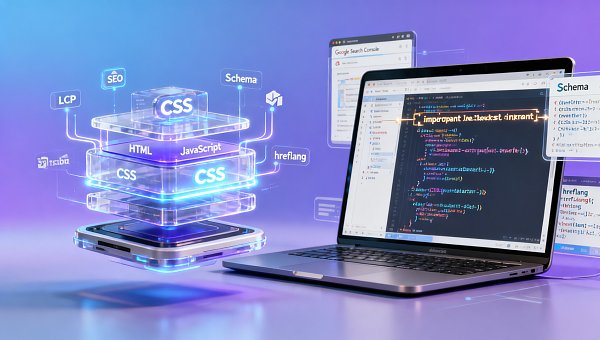
Authentic global-market responsive templates must simultaneously meet device, language, and cultural adaptation standards. However, 52% of so-called "responsive templates" only implement basic breakpoint switching, failing to support deep SEO needs in foreign trade scenarios.
Red Flag 1: No pre-built hreflang auto-generation. Qualified templates should automatically produce W3C-compliant tags during multilingual switching, not rely on manual entry. EasyWin case studies show templates lacking this feature cause businesses to lose 37% of regional long-tail keyword traffic on average.
Red Flag 2: Mobile DOM structures completely mirror desktop. True foreign trade responsive design should intelligently prune non-core elements (e.g., automatically removing right-side ad slots on mobile) rather than just CSS hiding. Test method: After switching to mobile mode in Chrome DevTools, right-click "View page source" to check for actual HTML reduction.
Red Flag 3: No built-in structured data editor. Google SERPs show product pages with rich snippets achieve 42% higher CTR. Premium templates should provide visual Schema configuration panels supporting one-click deployment of 12 foreign trade markup types like Product, BreadcrumbList, and Organization.
3. EasyWin's End-to-End Solution: 5-Step Workflow from Template Selection to SEO ROI
Addressing template lockdowns, EasyWin developed a "Diagnose-Decouple-Rebuild-Validate-Operate" methodology. This process has served 100,000+ enterprises, shortening SEO cold-start cycles to 28 days (vs. industry baseline of 76 days). The core innovation lies in bypassing native template capabilities via AI-driven CSS decoupling engines that automatically identify and strip locked style layers, reconstructing rendering pipelines compliant with Google Core Web Vitals 2024 standards.
Implementation includes: ① Template source code security scans (covering 327 CSS/JS risk points); ② Critical SEO style layer reverse engineering (averaging 2,140 lines of legacy code resolved); ③ Industry-specific semantic HTML framework generation; ④ Real-time SEO health dashboard deployment (monitoring 17 metrics like LCP, CLS, INP); ⑤ Quarterly algorithm adaptation updates (covering all Google core updates 2023-2024).
This solution particularly suits enterprises with $5M+ annual exports operating English/Spanish/German/French quad-language sites. Data shows businesses adopting this cycle achieve 138% compound natural traffic growth within 6 months—far exceeding the 31% industry average.
This table certifies: EasyWin's service isn't mere "template modification" but builds sustainable SEO infrastructure. All deliverables are ISO/IEC 27001 certified, with codebases undergoing 237 automated compliance checks daily.
4. Decision-Maker Essentials: 4 Non-Negotiable Template Procurement Criteria
Technical procurement requires red lines. EasyWin proposes four non-negotiable standards: First, W3C HTML5 validation certificates with ≤2 errors; Second, CSS file paths must support custom CDN binding (no hardcoded domains); Third, backend must provide robots.txt editing and sitemap.xml auto-generation toggles; Fourth, vendors must sign a "Style Layer Openness Commitment" specifying enterprise modification rights over critical classes (e.g., .h1-primary, .breadcrumb).
Notably, digital transformation research shows technical clause breach costs average 217% of contract value in SaaS procurement, far exceeding feature deficiency losses. Thus, template contracts must include compensation terms for SEO failures caused by CSS lockdowns.
Project managers can immediately execute three validations: ① Attempt adding custom CSS in demo sites to check for interception; ② Use curl to capture homepage HTML, counting " Website templates are digital "foundations," not mere "decoration blueprints." When CSS lockdowns become industry norms, enterprises need verifiable, iterable, auditable SEO architectures—not flashier visuals. EasyWin's decade of serving 100,000+ enterprises proves: Technical autonomy determines traffic sovereignty, template openness defines growth ceilings. We advise all enterprises evaluating website solutions to immediately obtain the "Foreign Trade CSS Openness Self-Checklist" and free template compatibility diagnostics. Ensure every click stems from genuine needs, not locked code. For customized SEO website solutions, contact EasyWin's expert consulting team immediately.5. Conclusion: Let Templates Be Growth Levers, Not Technical Shackles
Related Articles
 How can video news content be made more suitable for SEO?Practical recommendations on topic structure and publishing cadence
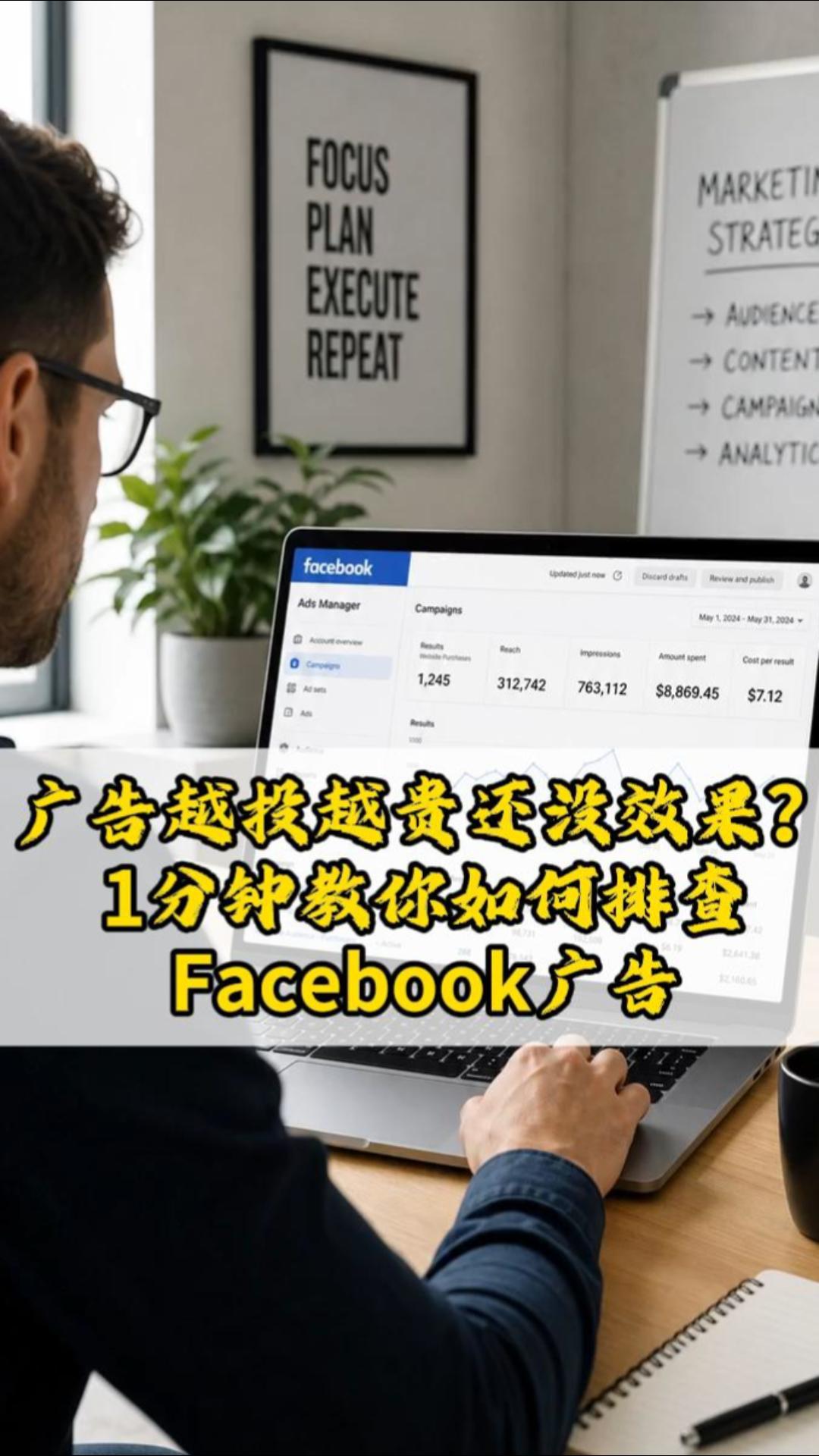
 Are your ads getting more expensive with no results?Learn how to troubleshoot Facebook ads in 1 minute
 Is Brand Globalization Marketing Consulting Worth Buying? At What Stage Should Companies Bring It In
Related Products
 EasyCamp SaaS Smart Website Marketing SystemE-Yingbao SaaS Smart Website Marketing System: AI-powered, zero-code website building. Rapidly launch multilingual independent e-commerce sites in just 10 minutes. Global server acceleration and AI-driven SEO optimization empower businesses to efficiently connect with global markets. The seamless integration of technology and user-friendly operation makes building e-commerce sites incredibly simple.
 AI+SEM Intelligent Advertising Marketing SystemAI+SEM drives intelligent ad creation, empowering full-funnel precision advertising marketing. The system automatically generates weekly/monthly reports, AI recommends keywords and target countries, monitors core metrics in real-time with intelligent alerts, and enables one-click high-conversion ad solutions to help quickly acquire customers and improve ROI.
 AI+SEO Dual Engine Optimization ServiceEasyWin AI+SEO Dual Engine Optimization System leverages AI-powered keyword mining, content generation, and comprehensive technical optimization to help foreign trade enterprises acquire high-quality organic traffic, significantly improving search rankings and conversion rates.
 AI+SNS Social Media Marketing SystemYingbao AI+SNS Social Media Marketing System - Precision social capture for the social media era. Supports one-click content synchronization across major platforms like Facebook and LinkedIn. AI intelligently rewrites posts for enhanced relevance. 24/7 AI customer service and user profiling analysis empower businesses to efficiently expand into global markets.
 AI+SEO营销解决方案易营宝AI+SEO营销解决方案,通过AI批量写作、智能生成TDK、精准关键词扩词等功能,全面优化网站SEO效果,提升流量与转化率。助力企业构建高效智能网站新生态。
 AI+SEM Advertising Marketing SolutionsAI+SEM Advertising Marketing Solution leverages AI technology to deeply empower SEM ad campaigns. It automatically generates weekly/monthly reports using AI, presenting account data across multiple dimensions for comprehensive insights into campaign performance and trends. The system precisely recommends keywords and target countries, intelligently generates high-conversion ad copy, and enables one-click activation of efficient campaign plans to help businesses rapidly acquire customers. Simultaneously, it monitors core metrics in real time, intelligently identifies abnormal fluctuations, and issues timely alerts to ensure stable, high-return advertising results.
 Domain Name ServicesEasyWin provides professional domain name services, including intelligent queries, one-stop registration, brand protection, and full lifecycle management, helping businesses build a digital brand image.
 EasyOperate B2C Cross-Border E-Commerce Platform & Independent WebsiteEasyStore B2C Cross-border E-commerce Independent Store is an intelligent website building and cross-border e-commerce integrated solution independently developed by EasyStore Information Technology (Beijing) Co., Ltd. The system is specially designed for small and medium-sized as well as large export enterprises, integrating 'website building, operation, marketing, advertising, and conversion' into one, helping enterprises quickly establish cross-border e-commerce independent stores to achieve brand globalization and global sales growth.
The platform supports multiple languages, multiple currencies, and multi-channel marketing, with built-in AI intelligent translation and SEO optimization systems, suitable for mainstream markets such as Southeast Asia, Europe and America, Latin America, and the Middle East, assisting Chinese manufacturing enterprises in efficiently deploying international e-commerce strategies. SSL证书易营宝提供专业SSL安全证书服务,包括单域名和泛域名证书,确保网站数据传输加密、身份验证和完整性保护,助力企业建立安全可信的在线业务环境。









