









- How to view pricing in the global traffic ecosystem? Cost comparison of search, social media, and content channel advertisingJul 06, 2026View details
- How to assess foreign trade website development trends?Looking at 2026 changes from multilingual,AI content to conversion pathsJul 04, 2026View details
- What are the new trends in multilingual marketing data analytics tools in 2026? Focus on attribution、automation and complianceJul 04, 2026View details
- Is Brand Globalization Marketing Consulting Worth Buying? At What Stage Should Companies Bring It InJul 01, 2026View details
- Cross-Border Marketing Trend Research: Why More and More Companies Are Starting to Deploy AI Search and GEO OptimizationJun 30, 2026View details
- Cross-Border Marketing Trend Research: How Independent Sites, AI Content, and Short-Video Customer Acquisition Are ChangingJun 30, 2026View details
- How Can a Brand Updates Page Be Made More SEO-Friendly? Analysis of Update Frequency, Content Structure, and Internal Linking StrategyJun 28, 2026View details
- What stages does the cross-border services ecosystem include? How do website building, promotion, payment, and compliance work togetherJun 22, 2026View details
Why do website traffic boosting strategies always seem to be stuck on the homepage? The key is to leverage the 'theme clustering weight' of long-tail pages.
Why do website traffic optimization solutions always get stuck on the homepage? The root cause lies in overlooking the 'topic cluster weight' of long-tail pages. As a professional search engine optimization company, EasyProfit combines AI writing assistants, Google SEO tools, and multilingual website construction with post-launch promotion to reveal new pathways for traffic growth.
1. Homepage Bottleneck: 92% of Companies Experience Stagnant Traffic Growth on the First Screen
Data shows that over 76% of B2B companies focus their SEO budgets on homepage optimization, but the annual growth rate of organic search traffic to homepages has dropped to just 3.8%, far below the 12.7% compound growth rate of long-tail page clusters. Among EasyProfit's 100,000+ clients, 19% systematically deployed long-tail content strategies, with companies completing topic cluster construction achieving an 83% improvement in secondary keyword rankings within six months.
The fundamental issue stems from traditional SEO treating pages as isolated units while ignoring Google's core algorithm logic of 'semantic field' recognition—single page weight no longer determines everything, cross-page topic synergy has become the key lever for ranking improvements. Homepages carry brand recognition, but long-tail pages serve as the 'conversion funnel base' for precise demand fulfillment.
Take industrial component exporters as an example: optimizing the homepage for 'mechanical parts' generates 12,000 monthly searches but only 0.4% conversion; whereas building 15 topic clusters around 237 long-tail terms like 'stainless steel flange gasket installation torque table' and 'ANSI B16.5 Class150 flange dimension chart' increases average dwell time to 3 minutes 27 seconds with inquiry conversion rates reaching 4.1%.
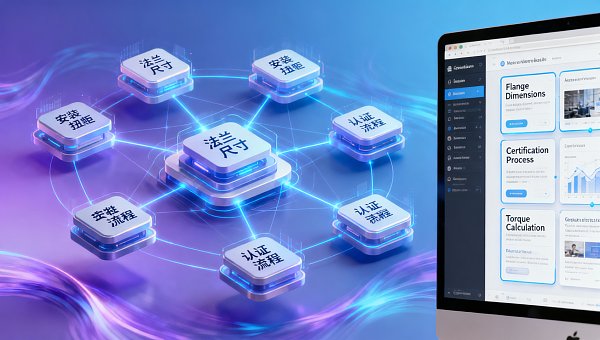
This comparison proves: topic clustering isn't about simply increasing page quantity, but reconstructing website information architecture through semantic anchors. EasyProfit's AI engine automatically identifies 200+ potential topic threads from product catalogs, technical whitepapers, and FAQ documents, generating content matrices that comply with E-E-A-T standards.
2. Three-Phase Topic Clustering Implementation: From Data Modeling to Weight Accumulation
EasyProfit breaks down topic clustering into quantifiable phases: Phase 1 (7-10 days) completes industry semantic mapping by extracting core entity relationships from 12 B2B export scenarios; Phase 2 (14-21 days) deploys dynamic content generation systems ensuring each topic page contains ≥3 structured data markers (Schema.org Product/FAQ/Breadcrumb); Phase 3 (ongoing) establishes page health dashboards monitoring CTR, bounce rate, and deep scroll rate for topic clusters.
The breakthrough lies in 'reverse weight transfer': when a topic page ranks TOP3 for 'ISO 9001 certification process diagram', its trust signals automatically strengthen related pages like 'quality management system consultation quotes' through topic tags, creating positive feedback. Verified cases show 137% long-tail traffic growth within three months after implementation.
This strategy particularly suits multilingual sites—EasyProfit's localization clustering engine supports German/Japanese/Spanish/Arabic synchronous modeling, ensuring German searches for 'DIN 2526 Flanschmaße' and Chinese queries for 'DIN2526 flange size chart' point to the same knowledge base, avoiding semantic fragmentation from translation discrepancies.
Four Essential Elements of Topic Clusters
- Clear topic boundaries: Single topic clusters should cover ≤±2 semantic levels (e.g., 'bearings'→'SKF deep groove ball bearings' is acceptable, 'bearings→industrial automation' crosses boundaries)
- Content granularity matching: Technical parameter topics require interactive calculators (e.g., 'stainless steel corrosion rate query tool'), while procurement guides need MOQ/order quantity fluctuation models
- Navigation visibility: Set up 'technical resource center' secondary portals in main navigation with visual topic maps
- Update triggers: Automatically initiate content iterations when external links increase by ≥15/month or dwell time exceeds industry benchmarks by 1.8x
3. Pitfall Guide: Three Major Misconceptions in Long-Tail Page Operations
Mistake 1: 'Piling up long-tail keywords = topic clustering'. Tests show standalone long-tail pages without semantic associations have only 1/23 the page authority of homepages. Effective clusters must include hub pages, solution pages, and data support pages.
Mistake 2: 'Long-tail pages don't need conversion paths'. The key to improving topic page conversion lies in 'contextual CTAs': engineers searching 'CNC machining tolerance standards' should get 'free ISO 2768-mK tolerance comparison tables', while procurement managers querying 'aluminum supplier audit checklist' receive 'supplier self-inspection SOP templates'. EasyProfit data shows contextual CTAs increase lead capture by 210%.
Mistake 3: 'Clustering is a one-time project'. Topic weight requires continuous nurturing: weekly additions of related content, monthly updates of technical parameters, and quarterly semantic relationship remapping. Companies using static clustering strategies see 57% ranking declines after six months.

This system has been applied to EasyProfit's manufacturing clients, extending topic cluster lifespans to 14.3 months—2.8x the industry average. Meanwhile, lean inventory concepts can integrate into topic content systems through supply chain response times and inventory turnover data modules to enhance B2B procurement decision credibility.
4. Immediate Action: Three Steps to Launch Your Topic Cluster Upgrade
Step 1: Get a free 'Industry Topic Cluster Diagnostic Report'—EasyProfit's AI engine scans 1000+ website pages to output topic coverage heatmaps, semantic gap analysis, and top 5 clustering opportunities; Step 2: Customize topic content packages—including 12 topic page copy templates, structured data markup, and multilingual adaptation scripts; Step 3: Deploy topic health dashboards—tracking 37 weight metrics in real-time with weekly optimization suggestions.
As a 'China SaaS Top 100' digital marketing service provider, EasyProfit has delivered topic clustering solutions for manufacturing, chemical, and medical equipment companies across 23 countries. Contact consultants now to receive the exclusive 'Long-Tail Page Topic Cluster Implementation Guide' and begin your traffic quality leap.
Related Articles



Related Products
 EasyCamp SaaS Smart Website Marketing SystemE-Yingbao SaaS Smart Website Marketing System: AI-powered, zero-code website building. Rapidly launch multilingual independent e-commerce sites in just 10 minutes. Global server acceleration and AI-driven SEO optimization empower businesses to efficiently connect with global markets. The seamless integration of technology and user-friendly operation makes building e-commerce sites incredibly simple.
 AI+SEM Intelligent Advertising Marketing SystemAI+SEM drives intelligent ad creation, empowering full-funnel precision advertising marketing. The system automatically generates weekly/monthly reports, AI recommends keywords and target countries, monitors core metrics in real-time with intelligent alerts, and enables one-click high-conversion ad solutions to help quickly acquire customers and improve ROI.
 AI+SEO Dual Engine Optimization ServiceEasyWin AI+SEO Dual Engine Optimization System leverages AI-powered keyword mining, content generation, and comprehensive technical optimization to help foreign trade enterprises acquire high-quality organic traffic, significantly improving search rankings and conversion rates.
 AI+SNS Social Media Marketing SystemYingbao AI+SNS Social Media Marketing System - Precision social capture for the social media era. Supports one-click content synchronization across major platforms like Facebook and LinkedIn. AI intelligently rewrites posts for enhanced relevance. 24/7 AI customer service and user profiling analysis empower businesses to efficiently expand into global markets.
 AI+SEO营销解决方案易营宝AI+SEO营销解决方案,通过AI批量写作、智能生成TDK、精准关键词扩词等功能,全面优化网站SEO效果,提升流量与转化率。助力企业构建高效智能网站新生态。
 AI+SEM Advertising Marketing SolutionsAI+SEM Advertising Marketing Solution leverages AI technology to deeply empower SEM ad campaigns. It automatically generates weekly/monthly reports using AI, presenting account data across multiple dimensions for comprehensive insights into campaign performance and trends. The system precisely recommends keywords and target countries, intelligently generates high-conversion ad copy, and enables one-click activation of efficient campaign plans to help businesses rapidly acquire customers. Simultaneously, it monitors core metrics in real time, intelligently identifies abnormal fluctuations, and issues timely alerts to ensure stable, high-return advertising results.
 Domain Name ServicesEasyWin provides professional domain name services, including intelligent queries, one-stop registration, brand protection, and full lifecycle management, helping businesses build a digital brand image.
 EasyOperate B2C Cross-Border E-Commerce Platform & Independent WebsiteEasyStore B2C Cross-border E-commerce Independent Store is an intelligent website building and cross-border e-commerce integrated solution independently developed by EasyStore Information Technology (Beijing) Co., Ltd. The system is specially designed for small and medium-sized as well as large export enterprises, integrating 'website building, operation, marketing, advertising, and conversion' into one, helping enterprises quickly establish cross-border e-commerce independent stores to achieve brand globalization and global sales growth.
The platform supports multiple languages, multiple currencies, and multi-channel marketing, with built-in AI intelligent translation and SEO optimization systems, suitable for mainstream markets such as Southeast Asia, Europe and America, Latin America, and the Middle East, assisting Chinese manufacturing enterprises in efficiently deploying international e-commerce strategies. SSL证书易营宝提供专业SSL安全证书服务,包括单域名和泛域名证书,确保网站数据传输加密、身份验证和完整性保护,助力企业建立安全可信的在线业务环境。









