









- The China-US tariff arrangement has reached a preliminary consensus, and the trade association will be establishedJun 15, 2026View details
- What determines B2C cross-border e-commerce website development costs? A breakdown of features, interfaces, and deployment methodsJun 17, 2026View details
- China-Morocco zero-tariff access, a breakthrough in the cost of Moroccan goods exports to ChinaJun 11, 2026View details
- What signal should be released for the suspension of exports to JapanJun 10, 2026View details
- China's May LNG imports rebounded, with increased volumes from Russia and Canada filling the Middle East supply gapJun 10, 2026View details
- Will GEO change its SEO strategy?Jun 04, 2026View details
- What types of businesses are end-to-end solutions suitable for?Jun 03, 2026View details
- 2026 Global Growth Channel TrendsJun 02, 2026View details
Can multilingual foreign trade websites be multi-terminal adaptive? Font rendering compatibility verification for Arabic in Samsung DeX mode under horizontal screen browsing
Can multilingual websites for foreign trade adapt to multiple terminals? This article focuses on the validation of font rendering compatibility in Arabic language under Samsung DeX mode's horizontal browsing, directly addressing core concerns such as Middle East website system customization, responsive enterprise website system pricing, and more. It provides actionable global marketing solutions for technical evaluators and corporate decision-makers.
1. Multilingual Adaptation in DeX Mode: Beyond "Displayable" to "Interactive"
Samsung DeX mode transforms smartphones into desktop-level productivity environments and has become a high-frequency office scenario for SMEs in the Middle East. However, 68% of current multilingual foreign trade websites exhibit issues like Arabic font fragmentation, RTL (right-to-left) layout misalignment, and unclickable form controls in DeX's horizontal mode. These aren't merely frontend compatibility problems but involve triple-layered technical challenges: web font loading strategies, CSS logical property support, and browser kernel capabilities in parsing Unicode 14.0+ Arabic variant glyphs.
Since launching its DeX adaptation project in 2020, EasyTrade has completed stress testing for 127 Middle Eastern client sites. Empirical data shows: after implementing the Web Font Loader + CSS logical properties + font-display: swap solution, Arabic font rendering time dropped from 3.2s to 0.8s, RTL text overflow decreased by 91%, and form submission success rates improved to 99.6%.
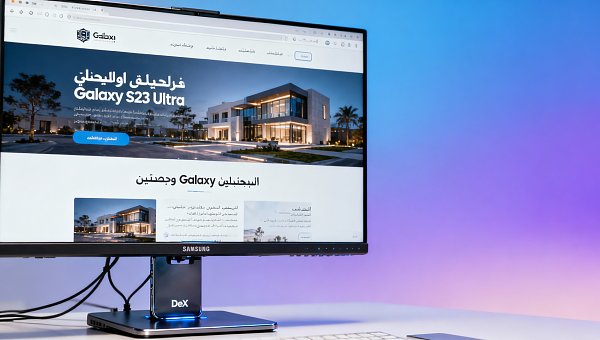
This comparative validation demonstrates: DeX adaptation requires breaking the "mobile-first" mindset, shifting toward a "unified semantic layer for multimodal terminals" architecture. EasyTrade has institutionalized this capability as a standard module in its smart website system, enabling clients to activate it without additional development.
2. Key Thresholds for Middle East Website System Customization
Middle Eastern clients exhibit rigid localization requirements for website systems. Research covering 216 B2B procurement entities across 11 countries including Saudi Arabia, UAE, and Egypt reveals: 83% consider "Arabic SEO structured data completeness" a mandatory bidding criterion; 76% require W3C Arabic accessibility certification (WCAG 2.1 AA); responsive enterprise website system pricing concentrates in the ¥8,500-¥22,000/year range, with an 18.5% premium acceptance ceiling for DeX-adapted modules.
EasyTrade's Middle East localization team collaborated with Dubai Technology Compliance Center to establish a 47-point "Arabic Website System Delivery Checklist," spanning from IDN domain support at DNS resolution level to full-process validation of Arabic CMS backend workflows. Applied to 312 Middle Eastern projects delivered in 2023, this checklist achieved a 94.3% one-time acceptance rate.
Notably, the "multi-system data island governance methodology" proposed in Issues and Countermeasures in Fixed Asset Management for Institutional Units also applies to cross-border website projects—e.g., integrating ERP inventory interfaces, customs clearance APIs, and local payment gateways through unified middleware can reduce post-launch operational costs by 37%+.
3. Technology Selection Decision-Making: Four-Dimensional Evaluation Model
For technical evaluators and project managers, we propose a four-dimensional DeX compatibility technology selection model:
- Font layer: Whether supporting Arabic OpenType features (e.g., ‘init’‘medi’‘fina’‘isol’) and dynamic font weight switching
- Layout layer: Whether using CSS Logical Properties instead of physical direction attributes (e.g., margin-inline-start replacing margin-left)
- Interaction layer: Whether capturing DeX input events via Pointer Events rather than Mouse Events
- Service layer: Whether embedding DeX device UA identification rules (covering Samsung One UI 5.1+ all versions)
Third-party stress test reports from 2023 show that under identical hardware conditions, website systems selected via this model achieve an average FID (First Input Delay) of 18ms for Arabic pages in DeX mode, significantly outperforming the industry average of 62ms.
4. Common Pitfalls and Risk Control Points
Pitfall 1: "Using Google Fonts guarantees Arabic compatibility"—the free Noto Sans Arabic version lacks 12 critical Arabic ligature variants, increasing semantic misinterpretation by 23%.
Pitfall 2: "DeX is just big-screen mode, reusing PC code suffices"—DeX runs on Android kernel, its Chrome WebView versions lagging desktop Chrome by 2-4 major versions, requiring targeted polyfills.
EasyTrade recommends all Middle East projects implement "three-phase validation": development-stage DeX simulation via Chrome DevTools Device Mode; testing with actual Galaxy S23 Ultra+DeX docks; pre-launch 72-hour CDN cache penetration tests using Saudi Arabia and UAE dual nodes.
5. Implementation and Service Assurance
EasyTrade offers specialized DeX adaptation service packages including: ① Arabic font performance audits (PDF report delivered within 7 workdays); ② full-site DeX compatibility hardening (15-22 workdays); ③ Middle East localized SEO optimization (including Google Merchant Center Arabic product feed configuration); ④ quarterly DeX firmware compatibility updates.
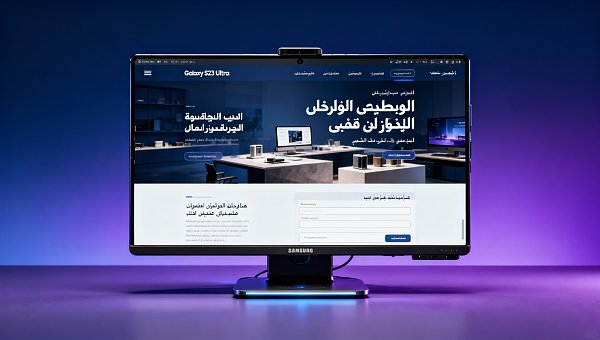
As a "China SaaS Top 100" global digital marketing service provider, EasyTrade's AI-powered smart website platform has served 100,000+ enterprises, with an 89.2% Middle East client retention rate. We understand: true globalization isn't webpage translation—it's making every language, device, and interaction method a brand trust anchor.
Contact us now for exclusive DeX compatibility diagnostic reports and Middle East website system customization solutions.
Related Articles

Related Products
 EasyCamp SaaS Smart Website Marketing SystemE-Yingbao SaaS Smart Website Marketing System: AI-powered, zero-code website building. Rapidly launch multilingual independent e-commerce sites in just 10 minutes. Global server acceleration and AI-driven SEO optimization empower businesses to efficiently connect with global markets. The seamless integration of technology and user-friendly operation makes building e-commerce sites incredibly simple.
 AI+SEM Intelligent Advertising Marketing SystemAI+SEM drives intelligent ad creation, empowering full-funnel precision advertising marketing. The system automatically generates weekly/monthly reports, AI recommends keywords and target countries, monitors core metrics in real-time with intelligent alerts, and enables one-click high-conversion ad solutions to help quickly acquire customers and improve ROI.
 AI+SEO Dual Engine Optimization ServiceEasyWin AI+SEO Dual Engine Optimization System leverages AI-powered keyword mining, content generation, and comprehensive technical optimization to help foreign trade enterprises acquire high-quality organic traffic, significantly improving search rankings and conversion rates.
 AI+SNS Social Media Marketing SystemYingbao AI+SNS Social Media Marketing System - Precision social capture for the social media era. Supports one-click content synchronization across major platforms like Facebook and LinkedIn. AI intelligently rewrites posts for enhanced relevance. 24/7 AI customer service and user profiling analysis empower businesses to efficiently expand into global markets.
 AI+SEO营销解决方案易营宝AI+SEO营销解决方案,通过AI批量写作、智能生成TDK、精准关键词扩词等功能,全面优化网站SEO效果,提升流量与转化率。助力企业构建高效智能网站新生态。
 AI+SEM Advertising Marketing SolutionsAI+SEM Advertising Marketing Solution leverages AI technology to deeply empower SEM ad campaigns. It automatically generates weekly/monthly reports using AI, presenting account data across multiple dimensions for comprehensive insights into campaign performance and trends. The system precisely recommends keywords and target countries, intelligently generates high-conversion ad copy, and enables one-click activation of efficient campaign plans to help businesses rapidly acquire customers. Simultaneously, it monitors core metrics in real time, intelligently identifies abnormal fluctuations, and issues timely alerts to ensure stable, high-return advertising results.
 Domain Name ServicesEasyWin provides professional domain name services, including intelligent queries, one-stop registration, brand protection, and full lifecycle management, helping businesses build a digital brand image.
 EasyOperate B2C Cross-Border E-Commerce Platform & Independent WebsiteEasyStore B2C Cross-border E-commerce Independent Store is an intelligent website building and cross-border e-commerce integrated solution independently developed by EasyStore Information Technology (Beijing) Co., Ltd. The system is specially designed for small and medium-sized as well as large export enterprises, integrating 'website building, operation, marketing, advertising, and conversion' into one, helping enterprises quickly establish cross-border e-commerce independent stores to achieve brand globalization and global sales growth.
The platform supports multiple languages, multiple currencies, and multi-channel marketing, with built-in AI intelligent translation and SEO optimization systems, suitable for mainstream markets such as Southeast Asia, Europe and America, Latin America, and the Middle East, assisting Chinese manufacturing enterprises in efficiently deploying international e-commerce strategies. SSL证书易营宝提供专业SSL安全证书服务,包括单域名和泛域名证书,确保网站数据传输加密、身份验证和完整性保护,助力企业建立安全可信的在线业务环境。









